Garden Mulch from Dried Grass: How I Turn Free Grass Into Great Garden Mulch
For years I was paying money for bags of mulch while perfectly good grass was sitting in my yard. Then I finally figured out that garden mulch from dried grass could save me money and put something useful back into my garden.
And let me tell you, my first attempt wasn’t exactly pretty.
I dumped a big pile of dried grass around some tomato plants and walked away feeling pretty proud of myself. Two weeks later, I pulled some of it back and found a damp, smelly mess underneath.
Yep. I had used way too much.
After that little lesson, I started using dried grass much more carefully. Now it’s one of the cheapest garden materials I keep around.
I use it around vegetables, fruit plants, herbs and sometimes along garden paths. It helps cover bare soil, and when I use it correctly, it saves me a surprising amount of watering and weeding.
So lemme show you how I use dried grass as garden mulch, what I learned the hard way, and the mistakes I’d avoid if you’re trying this for the first time.
Why I Started Using Dried Grass as Garden Mulch
The main reason was simple.
It was free.
When you’re running a backyard homestead, free is a pretty good price.
I was mowing the grass anyway. Instead of throwing all the clippings away, I started letting some of them dry out and saving the clean, dry material for the garden.
At first I didn’t think it would make much difference.
Then summer came.
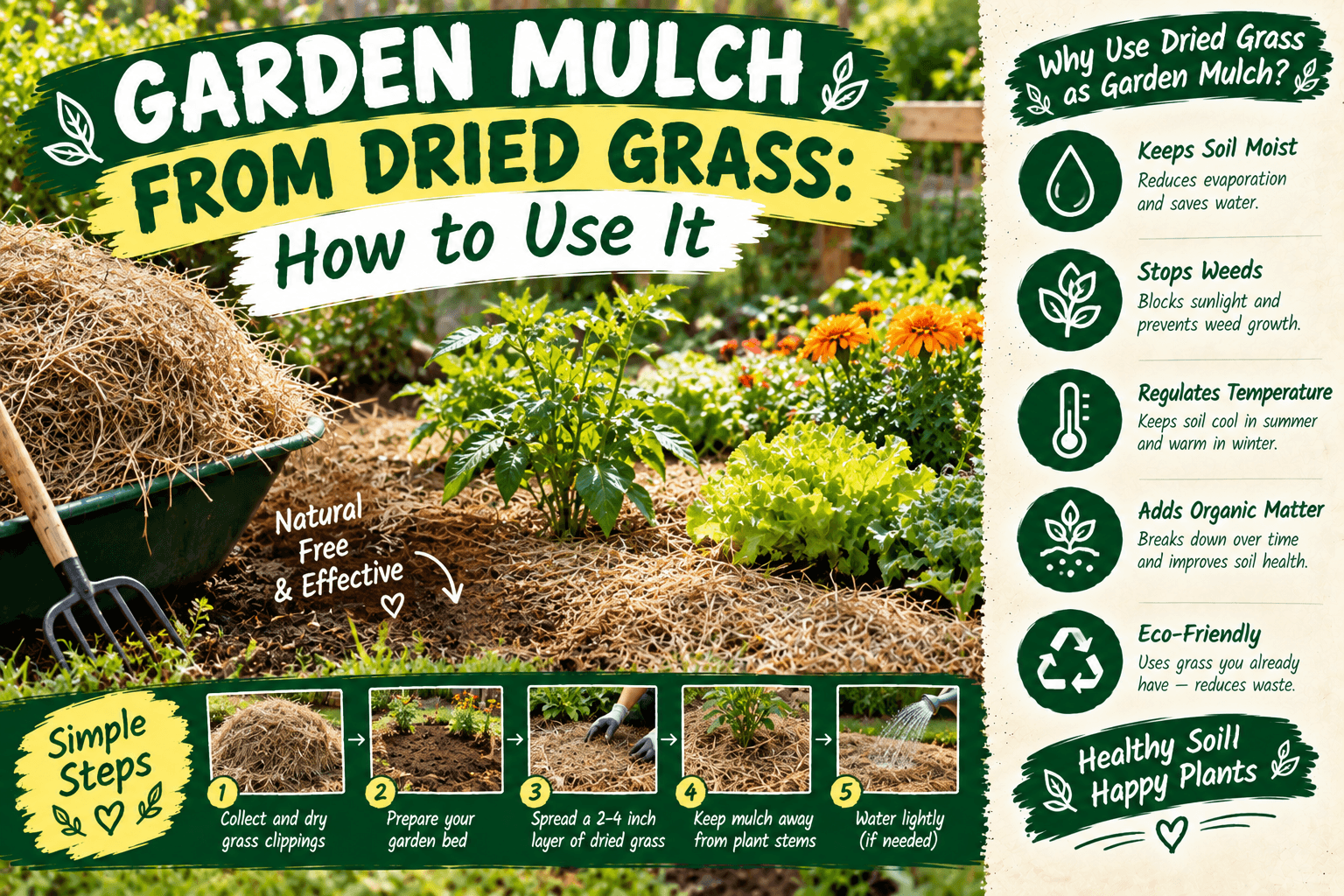
The soil under the mulch stayed noticeably more protected from the hot sun, and I wasn’t running outside with the hose quite as often.
That’s when I became a believer.
What’s the Difference Between Fresh Grass and Dried Grass?
This is important.
Fresh grass clippings can be wet, dense and quick to mat together. If you dump a thick layer around plants, they can form a heavy layer that doesn’t behave like the loose mulch you’re probably imagining.
Dried grass is much easier for me to work with.
Once the grass has dried, it becomes lighter and easier to spread. I can put down a thin layer and add more later if needed.
If I’m going to use grass as mulch, I prefer it dry rather than dumping a thick pile of fresh clippings straight onto my vegetable beds.
How I Dry Grass for Garden Mulch
You don’t need fancy equipment.
After mowing, I spread the grass out in a thin layer somewhere clean and let it dry.
A driveway, clean tarp, or another suitable area can work.
I don’t make a giant mountain of it because the middle can stay damp.
Instead, I spread it out and turn it occasionally if it needs help drying.
On a warm, dry day it can dry pretty quickly. Weather makes a big difference, obviously.
When it feels dry and light instead of cool and wet, that’s when I like using it as mulch.
Be Careful About Where Your Grass Comes From
This is probably the most important warning in the whole article.
I don’t use grass clippings from a lawn if I don’t know what has been applied to that lawn.
If herbicides, pesticides or other lawn treatments have been used, I don’t want to guess whether the clippings are appropriate for my vegetable garden.
Especially when I’m growing food.
If you’re collecting grass from somewhere else, ask questions first. If you’re not sure what’s been applied, I’d leave it alone and find another source.
How Thick Should Garden Mulch from Dried Grass Be?
This is where I screwed up in the beginning.
I thought more mulch meant better protection.
So I piled it on.
Big mistake.
A thick, wet layer can become compacted and slow down air movement. It can also stay damp longer than you want and make it harder to see what’s happening at the soil surface.
These days I use a relatively thin, loose layer and watch what happens.
I don’t make a giant mound around the plants.
And I leave some breathing room around plant stems.
Keep Grass Mulch Away From Plant Stems
This sounds like a tiny detail, but it matters.
I used to push mulch right up against the base of my tomato plants because I wanted every bit of soil covered.
Then I started getting worried about the stem staying damp.
Now I leave a small open area around the stem.
The mulch protects the soil around the plant without sitting directly against the plant itself.
Think of mulch like a blanket for the soil, not a blanket wrapped around the plant.
Does Dried Grass Mulch Help Stop Weeds?
Yep, this is one of the reasons I like it.
Bare soil is basically an invitation for weeds.
Give weeds sunlight, moisture and a little space, and they’ll show up like they pay rent there.
A layer of mulch can reduce the amount of light reaching the soil surface, which makes it harder for many weed seedlings to get established.
But don’t expect magic.
Some stubborn weeds will still push through. I still pull weeds. I just don’t have nearly as much bare soil to deal with.
Garden Mulch from Dried Grass Can Help With Watering
This is probably my favorite benefit during hot weather.
Bare soil dries out faster because the sun and wind can hit the surface directly.
Mulch creates a protective layer over the soil.
After watering, I can see the difference. The surface isn’t getting baked immediately.
That’s especially useful when you’re trying to keep a backyard garden productive during a hot summer.
I’m not saying you never need to water. You absolutely might. But good mulch can make your watering effort go further.
My Favorite Places to Use Dried Grass Mulch
I don’t use it everywhere.
Here are the places where I’ve had the best luck:
- Around tomato plants
- Between rows of vegetables
- Around peppers and eggplants
- Near fruit trees and berry plants
- Around established herbs
- Under larger garden plants
- In some areas around raised beds
I don’t cover every inch of my garden.
Sometimes I want bare soil around newly planted seeds so I can see exactly what’s coming up.
Should You Use Grass Mulch Around Seeds?
This is where I’d be a little careful.
Tiny seedlings don’t need a huge pile of mulch dropped on top of them.
I’ve accidentally covered little seedlings before and then wondered why they disappeared.
Now I wait until plants are established before putting much mulch around them.
If I’m using mulch near a seeded row, I keep it light and make sure the emerging plants can actually get through.
One Thing I Don’t Like About Dried Grass Mulch
Here’s the honest part.
Dried grass isn’t perfect.
It can blow around.
A strong wind can move it across the garden, especially if you’ve just put down a light layer.
I’ve walked outside after a windy night and found grass mulch halfway across the yard.
Very funny when you’re looking at it from the kitchen window.
Not so funny when you have to rake it all back.
If your yard is very windy, you may need a slightly heavier mulch material or a mix of materials to keep everything in place.
Can Dried Grass Go in the Compost Pile?
Absolutely, assuming the material is appropriate for your compost system.
In fact, I often have more grass than I need for mulch.
Some goes into the compost pile.
Some goes around established plants.
That’s one thing I really like about homesteading. You start seeing “waste” differently.
The grass I used to think of as something I had to get rid of can become mulch, compost material, or another useful resource.
How I Put Dried Grass Around My Garden
My process is pretty simple now.
I make sure I know where it came from and that I’m comfortable using it around food crops.
I spread it out instead of leaving it in a thick pile.
I don’t use a pile of dried weeds as if it’s clean mulch.
I put down a loose layer instead of creating a giant pile.
I keep mulch from sitting directly against the base of plants.
After rain and wind, I look at the mulch and add or move it where needed.
What About Grass Seeds in the Mulch?
This is something I think about before using grass from a lawn.
If the grass has gone to seed, I don’t want to spread a bunch of grass seed throughout my vegetable beds.
That could turn my nice mulch into a new gardening job.
And I already have enough weeds to deal with.
So I pay attention to what I’m mowing and what I’m collecting. I also avoid using material that contains obvious seed heads if I’m concerned about spreading them.
Can You Use Dried Grass Mulch in Raised Beds?
Yes, I do.
Raised beds can dry out quickly, especially when they’re in full sun.
A layer of dried grass can help protect the surface of the soil and keep the bed from looking like a dusty box by July.
Just remember that raised beds are also where you’re growing food, so I am extra careful about the source of any grass I use.
My Top 3 Rules for Using Dried Grass as Mulch
If you don’t know what was applied to the lawn, don’t assume the clippings are safe for your vegetable garden.
A thinner, loose layer is much easier to manage than a giant wet pile.
Don’t just spread mulch and forget about it. Check after rain, wind and hot weather. Your plants will tell you if something isn’t right.
Mini FAQ About Garden Mulch from Dried Grass
Yes, dried grass can be used as garden mulch, but the source matters. I only use grass when I know what has been applied to the lawn, especially around food crops. I also avoid putting thick layers directly against plant stems.
I prefer dried grass because it’s lighter and easier to spread without creating a dense, wet mat. Fresh clippings can behave differently, especially when applied in thick layers.
No. It can help reduce weed growth by covering the soil and limiting light, but stubborn weeds can still come through. I still pull weeds when I see them.
Why I Keep Using Dried Grass in My Homestead Garden
The older I get, the more I appreciate simple garden solutions.
I don’t need every project to involve buying something from a store.
Sometimes the stuff we already have is good enough.
Grass is one of those things.
I mow it anyway. It grows again anyway. And when I dry some of it and use it around my garden, it can help protect the soil, reduce some weeds and make watering easier.
Plus, there’s something satisfying about taking something that used to go into a trash bag and turning it into something useful for your backyard farm.
Just don’t make my first mistake and dump a giant wet mountain of it around your tomatoes.
Start small. Watch your plants. Add more when needed.
Turn That Grass Into Something Useful
If you’ve got clean, suitable dried grass sitting around after mowing, don’t automatically throw it away.
Dry it, save it, and try a small amount around one garden bed first. See how your soil and plants respond.
That’s how I learned most of my homesteading tricks anyway. Try something small, pay attention, and don’t be afraid to admit when you messed it up.
Got a question about using grass as garden mulch? Leave a comment. If I’ve made the mistake already, I’ll gladly tell you about it.