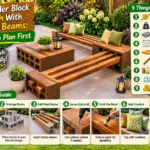
An old wooden pallet can become a useful vertical vegetable trellis but only if the pallet is safe, the structure is anchored well, and the crop actually suits that type of support.
Cucumbers are one of the easiest crops to train onto a pallet. Tomatoes can also be supported with extra tying. Smaller melons can climb, but the developing fruit usually needs its own sling so the vine is not carrying all the weight.
Quick answer
Choose a clean pallet with no MB treatment mark, remove sharp nails, anchor it securely at an angle or vertically, and plant climbing crops at the base. Use soft ties for tomatoes and fabric slings for melons as the fruit gains weight.
Why Use a Pallet as a Vegetable Trellis?
Vertical growing can save a surprising amount of garden space.
Instead of allowing cucumber or melon vines to spread several feet across the ground, you guide them upward and keep more soil available for other crops.
A pallet already provides:
- A rigid wooden frame
- Horizontal slats for tying plants
- Large openings for airflow
- Plenty of attachment points
- A useful leaning angle when installed correctly
- A low-cost way to reuse suitable wood
University of Minnesota notes that angled trellises can be especially useful because vines climb upward while fruit can hang more freely from the lower side for easier harvesting.
First: Make Sure the Pallet Is Safe
Not every pallet belongs in a vegetable garden.
Penn State recommends checking pallet markings and being cautious because pallets may have been exposed to chemicals, damaged cargo, dirty warehouses, or unknown substances during shipping.
Avoid MB-stamped pallets
MB means the pallet was treated with methyl bromide.
Penn State specifically says pallets with this marking should not be reused for home projects.
HT is different
An HT treatment mark generally refers to heat treatment rather than methyl bromide fumigation.
Even then, inspect the pallet for stains, odors, oil, chemicals, mold, or unknown contamination before placing it near food crops.
Skip the pallet if you cannot identify where it came from and it looks contaminated. Free wood is not worth introducing an unknown chemical or biological contaminant into a vegetable garden.
Check for Nails, Staples, and Splinters
Used pallets often contain damaged fasteners.
Before installation:
- Pull loose nails.
- Hammer protruding fasteners flush or replace them.
- Remove exposed staples.
- Sand sharp splinters.
- Replace cracked slats.
- Check the corners for broken wood.
Penn State specifically warns that rusty pallet nails can cause puncture injuries, so gloves and careful handling are important.
Vertical or Leaning Pallet?
Both can work, but a lean-to pallet trellis is often easier for vining vegetables.
An angled trellis lets vines climb one surface while fruit can hang away from the foliage.
UMN specifically notes that angled trellises can help maximize sun exposure and allow fruit to hang more freely underneath.
Do Not Just Lean the Pallet Against a Fence
A pallet covered in mature vines can become much heavier than it looks.
Add:
- Wet foliage
- Fruit
- Wind pressure
- Rainwater
- Several vines pulling in different directions
Use strong stakes or posts and secure the pallet so it cannot fall forward onto plants, pets, children, or the gardener.
Simple Pallet Trellis Materials
- One clean, suitable pallet
- Two strong garden stakes or wood posts
- Exterior-rated screws or bolts
- Washers if needed
- Soft plant ties
- Natural garden twine
- Fabric for melon slings
- Gloves
1. Choose the Location
Most fruiting vegetables need plenty of sunlight.
Place the trellis where it will not create unwanted shade over smaller crops.
In the Northern Hemisphere, tall trellises are often placed toward the north side of a bed when practical so they cast less shade across shorter crops.
2. Install the Support Posts
Drive or set two strong posts where the sides of the pallet will sit.
The exact depth depends on:
- Soil type
- Pallet height
- Wind exposure
- Crop weight
- Whether the trellis is vertical or angled
The final structure should feel rigid when you push on it by hand.
3. Fasten the Pallet to the Posts
Do not depend on gravity alone.
Attach both sides securely using exterior-rated hardware.
If the pallet is leaning, make sure the base cannot slide outward as weight increases.
4. Plant at the Base of the Trellis
Plant crops at normal spacing for the variety rather than crowding several plants underneath one pallet just because vertical space is available.
Vertical gardening saves surface area, but the plants still compete underground for:
- Water
- Nutrients
- Root space
- Oxygen
Cucumbers: One of the Best Pallet Trellis Crops
Cucumbers are a natural match for this project.
They climb with tendrils and can use the pallet slats or additional twine for support.
UMN notes that cucumbers grown on trellises usually do not require individual fruit slings, and Illinois Extension points out that trellised cucumbers can grow straighter and stay cleaner than fruit resting on the soil.
Guide young cucumber vines early
When the vines are still short, gently weave or guide them toward the openings.
Once the tendrils begin grabbing the structure, the plants usually need much less help.
Tomatoes Need Ties, Not Just Slats
Tomatoes do not climb in the same way cucumbers do.
They need stems tied or supported against the structure.
A pallet can work as a support surface for a few plants, especially indeterminate tomatoes, but use soft ties rather than forcing stems through narrow pallet gaps.
Tie loosely
Leave room for stems to thicken.
Avoid thin wire or tight knots that can cut into growing stems.
Can You Grow Watermelons on a Pallet Trellis?
Yes—but only with the right varieties and extra fruit support.
Small-fruited melons are much easier to trellis than very large watermelons.
Illinois Extension notes that vertical supports work best with smaller fruits, roughly around 3 pounds or less, while heavier melons need substantially stronger support.
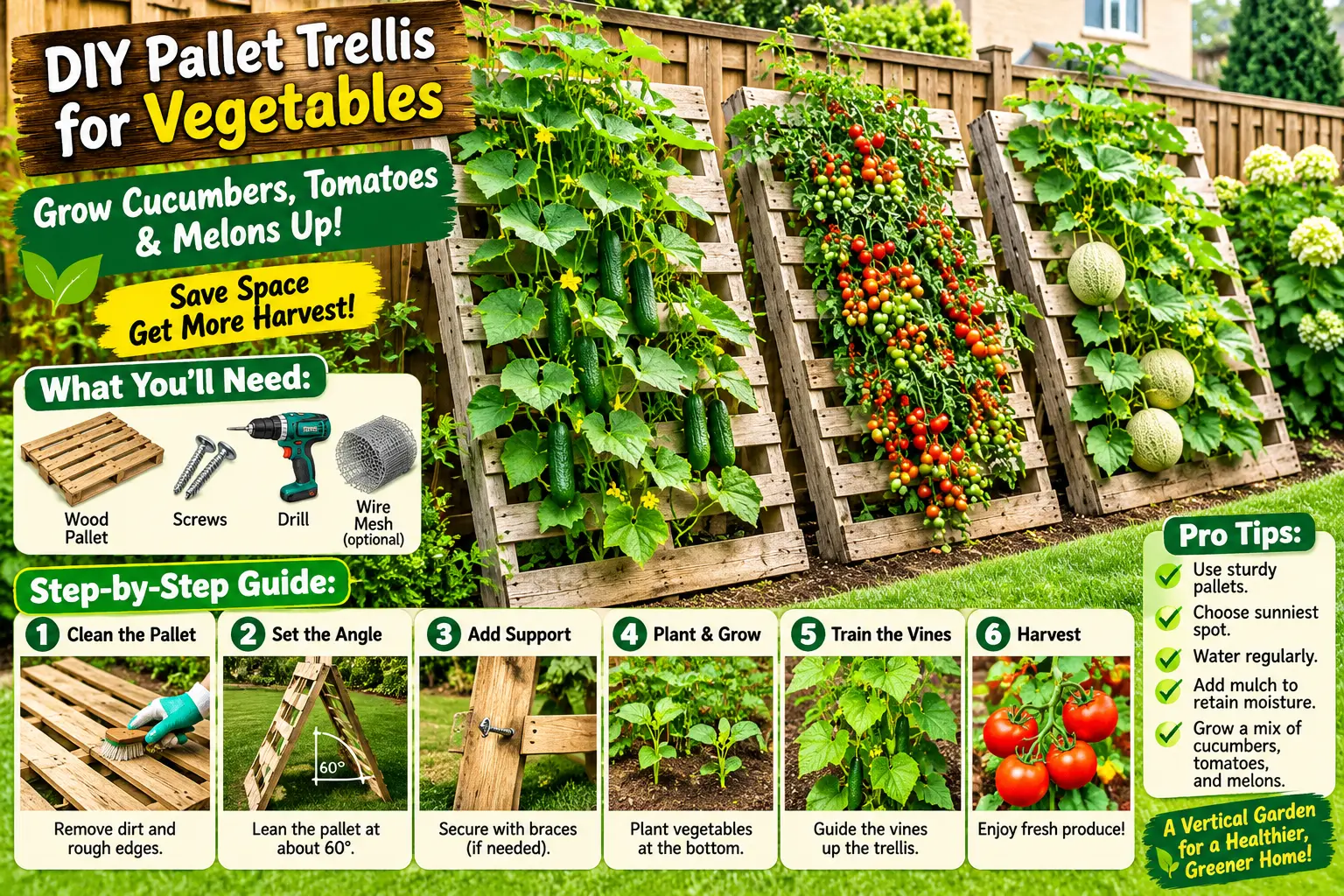
Use Slings Under Developing Melons
This is the biggest correction I would make to the Pinterest image.
The watermelons shown are hanging directly from vines.
UMN recommends supporting trellised melons with a hammock or sling because mature fruit can slip from the vine or place too much stress on it.
Good sling materials
- Old T-shirt strips
- Soft cloth
- Stretchy fabric
- Mesh produce bags if they do not constrict the fruit
Tie the sling to the pallet or structural support—not to another plant stem.
Let the sling grow with the melon. It should cradle the fruit rather than squeeze it tightly.
What About Heavy Pumpkins and Squash?
A pallet trellis is not automatically suitable for every cucurbit.
UMN recommends growing large squash and pumpkins on the ground because their mature fruit is usually too heavy for ordinary garden trellising.
Small squash varieties can be trained vertically when the support is strong enough.
Add Twine if the Pallet Openings Are Too Large
Many pallets have large gaps between slats.
That can make it difficult for young cucumber or melon vines to find something to grab.
Run vertical or diagonal twine across the open sections to create more climbing points.
UMN specifically recommends natural-fiber twine such as sisal, cotton, or hemp for some trellis systems because it can be composted later with plant material.
Keep Enough Airflow Between Plants
One danger of vertical growing is turning the trellis into a solid wall of foliage.
Dense growth can reduce:
- Air movement
- Light penetration
- Visibility during pest scouting
- Ease of harvest
Do not place three vigorous vines where one or two would fill the entire pallet by midsummer.
Does Trellising Help With Disease?
Keeping foliage and fruit off wet soil can help reduce splashing and improve air movement, which may reduce conditions favorable to some diseases.
Illinois Extension also notes that growing vine crops upward makes plants easier to inspect and can keep fruit cleaner.
However, trellising does not replace crop rotation, sanitation, proper spacing, watering practices, or disease-resistant varieties.
Water at the Base
Vertical plants can still develop a dense canopy.
Whenever practical, irrigate near the soil rather than routinely wetting all the leaves.
Mulch below the trellis can also reduce soil splash and help hold moisture.
Do Not Attach a Heavy Pallet to a Weak Fence
The image shows the pallets positioned in front of a privacy fence.
That does not mean the fence should automatically carry the load.
A wood privacy fence may not have been designed to support:
- A heavy pallet
- Several mature vines
- Multiple melons
- Wind load
Use independent stakes or posts whenever there is any doubt.
Which Vegetables Work Best?
| Crop | Pallet Trellis Fit | Extra Support |
|---|---|---|
| Cucumber | Excellent | Usually none |
| Indeterminate tomato | Good | Soft ties |
| Small melon | Good | Fruit sling |
| Pole beans | Excellent | Twine may help |
| Peas | Very good | Fine twine/netting can help |
| Small squash | Conditional | Strong support/slings |
| Large pumpkin | Poor | Usually better on ground |
What the Pinterest Idea Gets Right
- Uses vertical space efficiently.
- Keeps vine crops out of the lawn.
- Makes harvesting easier.
- Creates a clear growing zone along a fence.
- Reuses a potentially useful material.
- Can improve access to fruit compared with ground-grown vines.
What I Would Change
- Add slings under every trellised watermelon.
- Anchor each pallet independently instead of simply leaning it against the fence.
- Use soft tomato ties.
- Add twine across wide gaps for cucumber tendrils.
- Check pallet stamps and contamination before installation.
- Keep the planting density lower than the image suggests.
7 Pallet Trellis Mistakes to Avoid
1. Using an MB-stamped pallet
Penn State recommends avoiding pallets treated with methyl bromide.
2. Ignoring unknown spills or stains
A safe treatment stamp does not tell you everything the pallet may have transported.
3. Leaving rusty nails exposed
Repair fasteners before putting the pallet into a working garden.
4. Growing heavy melons without slings
Support the fruit independently as it gains weight.
5. Trusting a weak fence to hold everything
Use independent posts or stakes when needed.
6. Overcrowding the pallet
Vertical growing does not eliminate the need for root spacing and airflow.
7. Choosing fruit that is simply too heavy
Large pumpkins and very heavy squash are better grown on the ground or on a purpose-built heavy structure.
Pallet Trellis FAQ
Can I use a pallet as a cucumber trellis?
Yes. Cucumbers are one of the best crops for a sturdy pallet trellis. Add twine if the slats are too far apart for young tendrils to grab easily.
Can tomatoes grow on a pallet trellis?
Yes, but tomatoes do not naturally climb the pallet. Guide the stems upward and attach them with loose, soft plant ties.
Can watermelons grow vertically?
Smaller watermelon varieties can be trellised on a strong structure. Support developing fruit with fabric slings as it gains weight.
What does HT mean on a pallet?
HT generally indicates heat treatment. Still inspect the pallet for contamination, stains, odors, damaged wood, and unknown residues before garden reuse.
What does MB mean on a pallet?
MB indicates methyl bromide fumigation. Penn State recommends not using MB-marked pallets for home projects.
Should a pallet trellis be vertical or angled?
Both can work. An angled trellis can make harvesting easier and allow fruit to hang more freely, while a vertical trellis takes up less horizontal space.
Can I just lean the pallet against a fence?
It is safer to anchor the pallet. A mature crop can create much more weight and wind resistance than the empty pallet.
The Bottom Line
A pallet can make a surprisingly practical vegetable trellis for a small backyard garden.
Cucumbers and pole beans are natural choices. Tomatoes can use the structure with ties, while smaller melons need strong anchoring and individual fruit slings.
Choose the pallet carefully, remove hazards, anchor it securely, match the crop to the support, and never expect a melon vine to carry a heavy fruit unsupported.
Done that way, this recycled trellis idea can save ground space without creating a collapsing wall of vines halfway through summer.
Not sure which trellis style fits your crop?
See FarmSolo’s Best Trellis for Vegetables guide for cucumbers, melons, peas, beans, tomatoes, squash, and other vertical crops.
Sources
- University of Minnesota Extension — Trellises and Cages to Support Garden Vegetables
- University of Illinois Extension — Starting a Garden: Supporting Plants
- Penn State Extension — Be Safe Around Wooden Pallets