A hanging chicken treat table can keep watermelon, cabbage, leafy greens, and other occasional treats off dirty bedding while giving your flock something interesting to peck at. The idea is simple: build a shallow wooden frame, add a strong mesh bottom, suspend it at a comfortable height, and keep the birds’ complete feed in a separate trough.
The most important part of the project is not the carpentry. It is understanding that fruits, vegetables, scratch grains, and kitchen scraps are extras—not a replacement for nutritionally balanced poultry feed.
Quick answer
Build a sturdy shallow tray with a smooth frame and securely attached mesh, hang it low enough for adult hens to peck comfortably, and use it only for small amounts of fresh treats. Keep balanced layer feed and clean water available separately at all times, and remove uneaten produce before it spoils.
What Is a Hanging Chicken Treat Table?
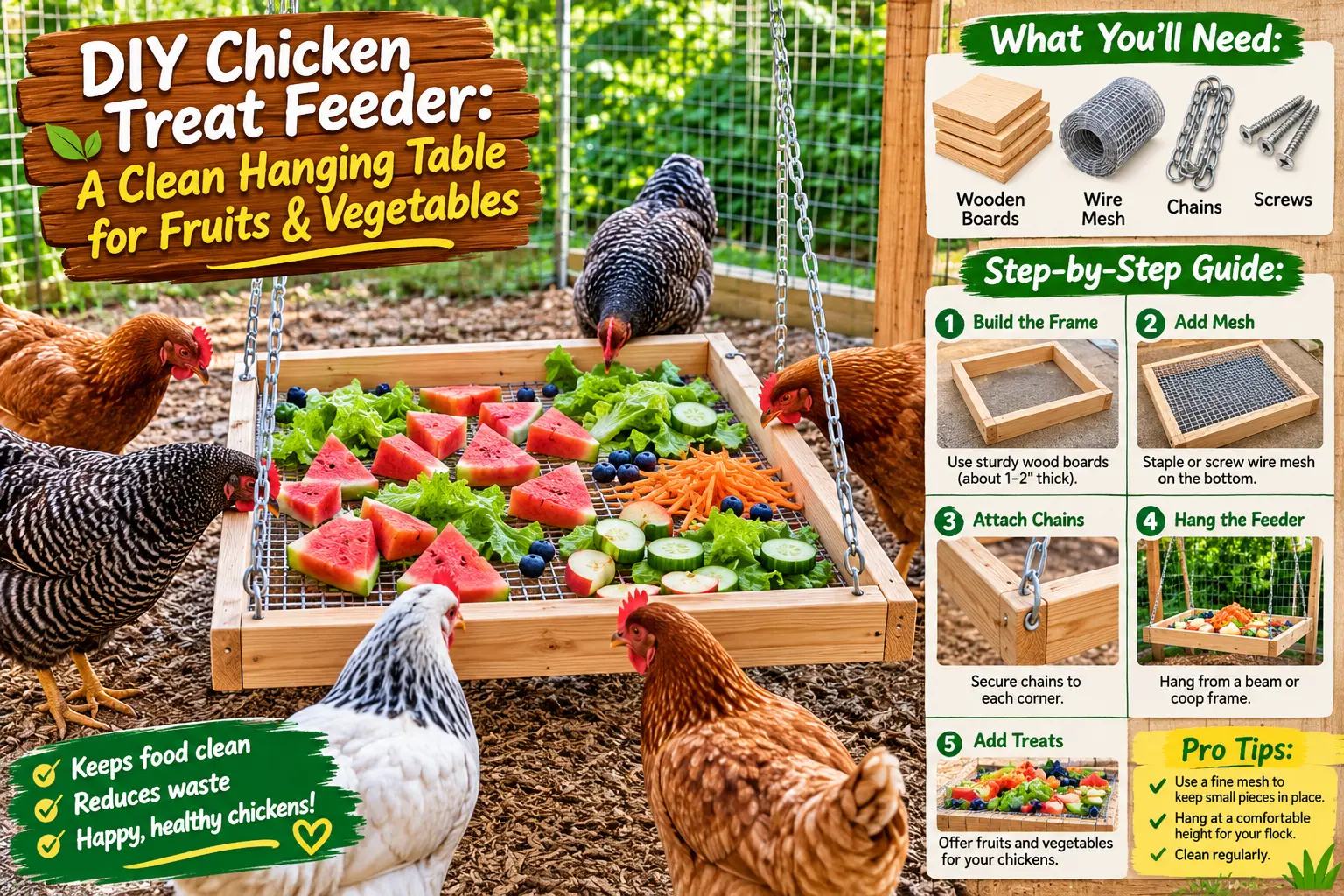
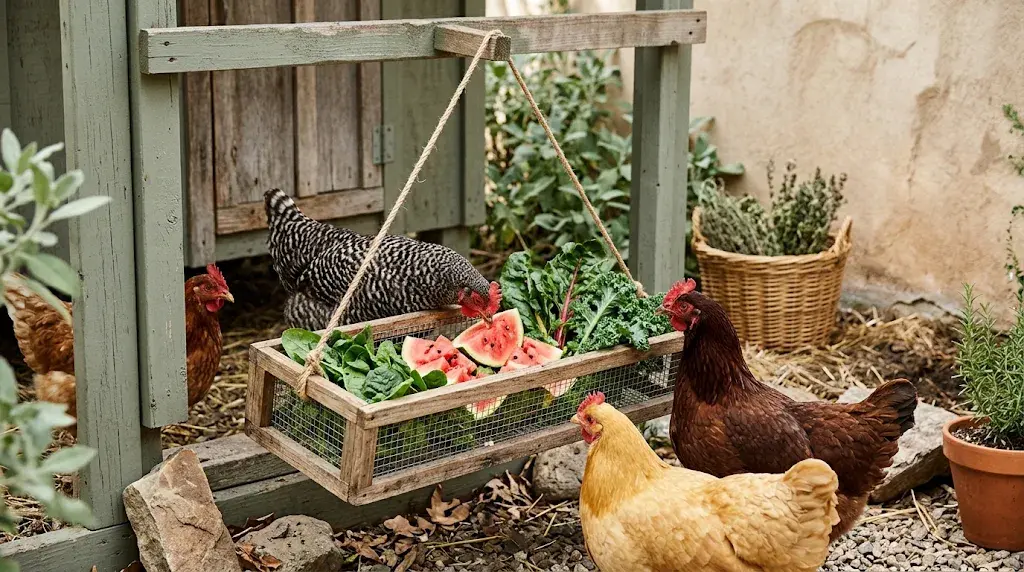
The feeder in the inspiration image is essentially a suspended feeding platform divided into two areas.
One narrow section holds dry poultry feed or grain, while the larger mesh section holds pieces of produce such as watermelon and leafy greens.
Suspending the tray can help keep food above bedding and manure while also creating a little movement as the hens peck.
Balanced Feed Still Comes First
Chickens are omnivores and enjoy a wide range of foods, but a laying flock has specific needs for protein, energy, vitamins, minerals, and calcium.
Use an age-appropriate complete poultry ration as the foundation of the diet.
Fruit, vegetables, scratch grain, and kitchen scraps should remain supplemental.
Do not fill the treat table all day and assume the hens will balance their own diet. Too many low-protein treats can displace the complete ration they need for normal body condition, feather growth, and egg production.
What Can You Put on the Treat Table?
Small amounts of fresh garden produce can work well.
- Watermelon
- Cabbage
- Lettuce and leafy greens
- Cucumber
- Zucchini
- Summer squash
- Pumpkin
- Carrots cut into manageable pieces
- Broccoli leaves and stems
- Peas
- Small amounts of berries or other fruit
Use clean, sound produce rather than moldy or spoiled scraps.
Watermelon Is a Treat, Not Summer Hydration
Watermelon is popular with chickens and contains a lot of water, but it should never replace drinking water.
Chickens need continuous access to clean, fresh water, especially during hot weather when they rely on panting to regulate body temperature.
Think of watermelon as enrichment with extra moisture—not as the flock’s water supply.
Materials for a Simple Hanging Feeder
- Exterior-suitable untreated or poultry-safe lumber
- Strong galvanized hardware cloth or suitable rigid mesh
- Exterior-rated screws
- Washers for securing mesh
- Four lengths of chain
- Four secure eye bolts or hanging points
- Optional wood divider for a separate dry-feed section
Choose materials that can tolerate moisture and repeated cleaning.
1. Build a Shallow Wooden Frame
A low-sided rectangular frame works better than a deep box because hens need easy access from the edges.
Round over or sand rough corners and remove splinters.
Make the structure large enough that several hens can use different sides without constantly pushing one another away.
2. Add a Mesh Bottom
The mesh bottom allows loose moisture and small debris to fall instead of collecting in a solid wooden tray.
However, the mesh must be strong, securely fastened, and free from sharp cut wire.
Fold or cover exposed cut edges so feet, combs, or skin cannot catch on them.
Design it as a feeder, not a perch. Do not encourage birds to stand for long periods on uncomfortable wire mesh. A broad smooth wooden rim gives them a better place to balance while pecking.
3. Add a Separate Feed Trough if You Want One
The Pinterest design has a narrow solid-bottom compartment beside the produce area.
That can hold a small amount of feed while keeping it from falling through the mesh.
For regular daily feeding, however, a purpose-built covered poultry feeder is usually better because it protects feed more effectively from rain, droppings, and rodents.
4. Suspend the Table Evenly
Attach one chain near each corner so the platform hangs level.
All four attachment points need to be strong enough to hold:
- The feeder itself
- Wet produce
- Several birds pushing against it
- Occasional birds attempting to stand on the rim
Check the chains and fasteners periodically for wear or corrosion.
5. Set the Height for Your Flock
The platform should hang low enough that hens can reach food comfortably without jumping onto the mesh.
Because chicken breeds vary greatly in height, there is no perfect universal measurement.
Start low, watch how the flock uses the feeder, and adjust the chains until most birds can reach without straining.
6. Offer Only What They Will Eat Soon
A feeder covered with watermelon looks impressive in a photograph, but leaving wet produce sitting in a warm coop for hours is not good management.
Wet food can attract:
- Flies
- Ants
- Mice and rats
- Wild birds
- Mold
- Other pests
Serve modest portions and remove leftovers rather than leaving them overnight.
7. Rodent Control Matters
Chicken feed is highly attractive to rodents.
Rodents can contaminate feed with feces and spread disease around poultry housing.
At the end of the day:
- Remove wet leftovers.
- Clean spilled grain.
- Do not leave open feed containers outside overnight.
- Store bulk poultry feed in rodent- and moisture-resistant containers.
8. Clean the Feeding Table Regularly
Anything that repeatedly holds moist fruit, vegetables, feed, and chicken saliva eventually gets dirty.
Scrape off food debris after use and clean the platform often enough that residue does not become slimy or moldy.
University of Minnesota recommends regular cleaning of poultry feeders and waterers as part of normal flock sanitation.
Keep the Feeder Away From the Vegetable Garden
If you grow food for your household, do not place the chicken feeding area directly inside the produce garden.
Chickens can carry organisms such as Salmonella without appearing ill, and their droppings can contaminate soil and harvestable produce.
Keep poultry housing and feeding areas separated from vegetable production whenever practical.
Can Chickens Eat Kitchen Scraps?
They can eat many ordinary fruit and vegetable scraps, but “chickens eat scraps” should not be interpreted as “anything from the kitchen belongs in the coop.”
Use only fresh, appropriate food and avoid anything moldy or spoiled.
Also remember that local rules on feeding household food waste to poultry can vary, especially outside the United States.
What About Scratch Grain?
Scratch grain is another treat rather than a nutritionally complete feed.
University of Minnesota recommends feeding scratch grains only in moderation and gives a practical winter example of no more than roughly a handful for ten birds.
Do not fill half the platform with scratch grain every day if hens are then ignoring their complete ration.
Don’t Forget Grit and Calcium
Adult laying hens may also need access to appropriate grit and a calcium source such as oyster shell, depending on how their feed program is managed.
These should normally be offered separately rather than mixed randomly into the treat table.
Why a Hanging Table Can Be Good Enrichment
Chickens naturally spend a lot of time pecking, scratching, investigating, and searching for food.
A lightly moving tray with cabbage leaves or pieces of squash gives them something to investigate instead of simply dumping treats onto the ground.
The feeder should still be stable enough that birds are not frightened or injured when several hens use it at once.
A Better Version of the Pinterest Design
I would make four changes to the feeder shown in the inspiration image:
- Use the large mesh section only for treats.
- Keep the main complete ration in a protected poultry feeder.
- Add a broad smooth wooden rim so chickens are less tempted to stand directly on wire.
- Make the entire table easy to unhook for cleaning.
Simple Build Order
- Build a strong rectangular wooden frame.
- Add a center divider if you want two sections.
- Attach strong mesh underneath the produce section.
- Cover or fold every sharp wire edge.
- Add four strong hanging points.
- Attach equal-length chains.
- Hang the feeder level.
- Adjust the height for your flock.
- Test with a small amount of food.
- Watch the birds before leaving it in regular use.
7 Mistakes to Avoid
1. Replacing layer feed with fruit and vegetables
Treats do not provide the complete nutrition laying hens need.
2. Leaving watermelon overnight
Wet produce can spoil and attract pests.
3. Leaving sharp mesh edges exposed
Fold, cap, or securely cover cut wire.
4. Hanging the feeder too high
Birds should be able to peck comfortably without repeatedly jumping onto the tray.
5. Hanging it where rain hits the feed
Wet feed can spoil and mold quickly.
6. Ignoring rodent control
Remove leftovers and spilled grain before night.
7. Never cleaning the platform
Moist food residue, droppings, and dirt can build up rapidly.
Chicken Treat Feeder FAQ
Can chickens eat watermelon?
Yes, watermelon can be offered as an occasional treat. It should not replace balanced feed or constant access to fresh drinking water.
Can chickens eat lettuce and cabbage?
They can eat leafy vegetables as supplemental foods. Offer them in moderation so they do not displace the flock’s complete ration.
Is a hanging feeder better than putting scraps on the ground?
It can keep produce out of bedding and give you a defined feeding area that is easier to monitor and clean. It still requires regular sanitation.
Can I put normal chicken feed in the hanging table?
You can use a separate solid compartment for small amounts, but a covered poultry feeder is generally a better choice for the flock’s main daily ration.
Should chickens have access to food all day?
Adult laying hens should have reliable access to an appropriate balanced ration. Treats should be limited and managed separately.
How do I stop the feeder attracting rats?
Do not leave scraps or exposed feed overnight, clean spilled grain, and store bulk feed in secure moisture- and rodent-resistant containers.
The Bottom Line
A hanging chicken feeding table is a useful backyard project when it is treated as a clean enrichment station rather than the flock’s entire feeding system.
Keep complete poultry feed as the nutritional foundation, use fruits and vegetables as occasional treats, remove leftovers promptly, and make the feeder easy to clean.
With those changes, the Pinterest idea can become a practical way to use small amounts of garden surplus while reducing food scattered through the coop.
Sources
- University of Minnesota Extension — Raising Chickens for Eggs
- University of Minnesota Extension — Caring for Chickens in Cold Weather
- Penn State Extension — Management Requirements for Laying Flocks
- Penn State Extension — Home Garden Food Safety: Protecting Produce From Contamination
- University of Minnesota Extension — Reducing Salmonella Risk in Table Egg Production