A layered shade garden can turn the bare ground beneath a mature tree into one of the most attractive parts of a backyard—but planting under a tree is very different from filling an ordinary flower bed.
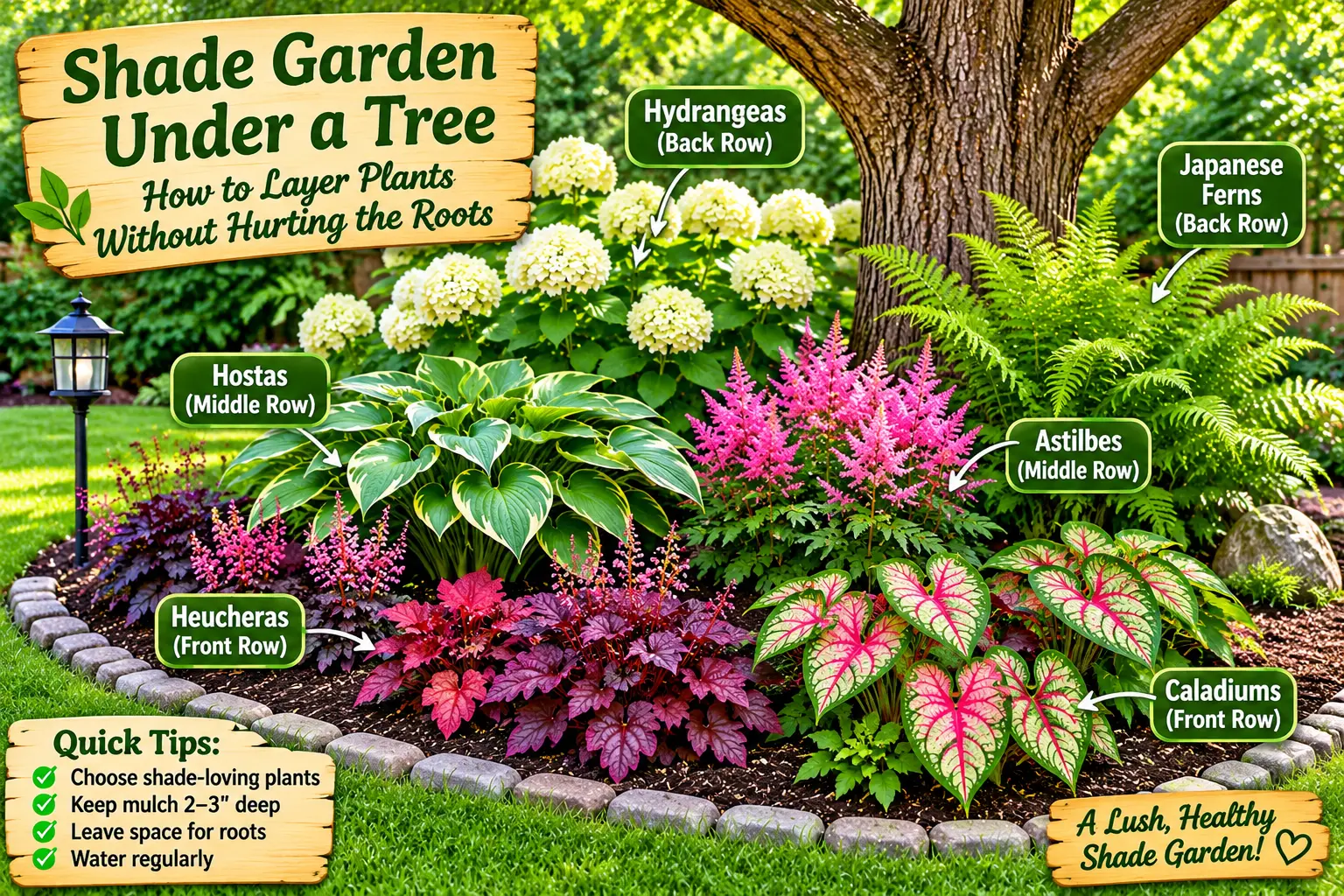
The Pinterest design uses a simple three-layer arrangement: taller hydrangeas and ferns in the back, hostas and astilbe in the middle, and colorful heuchera and caladium along the edge.
The visual idea is excellent. The real challenge is that mature tree roots compete aggressively for water and occupy much of the soil where new plants need to establish.
Quick answer
Keep the tree healthy first. Avoid cutting major roots, leave the root flare exposed, use small plants or plugs, choose species that tolerate the actual light and moisture conditions, mulch lightly, and expect to provide extra water during establishment.
Why Planting Under a Mature Tree Is Different
A mature tree already occupies most of the soil beneath its canopy.
The tree roots are competing for:
- Water
- Oxygen
- Nutrients
- Rooting space
That means a site that looks cool and shady can actually be surprisingly dry.
1. Protect the Tree Before Designing the Flower Bed
The tree is the permanent structure of the garden, so its health comes first.
When planting beneath a mature tree:
- Do not cut large roots to make space for flowers.
- Do not pile deep soil around the trunk.
- Do not cover the root flare.
- Do not build a raised bed around the tree.
- Use the smallest planting holes possible.
If you uncover a large structural root, move the plant instead of cutting the root. The flower bed should adapt to the tree—not the other way around.
2. Start About a Foot Away From the Trunk
The inspiration image places some plants quite close to the tree.
A safer layout leaves open space around the trunk and root flare.
Penn State recommends beginning underplanting roughly a foot away from the trunk and using small planting holes to reduce disturbance to roots.
3. Determine What Type of Shade You Actually Have
Not all shade is the same.
| Light Level | Typical Condition |
|---|---|
| Dappled shade | Filtered sunlight moving through a tree canopy |
| Part shade | Roughly a few hours of direct sun |
| Deep shade | Very little direct sunlight |
| Dry shade | Shade combined with strong root competition and low soil moisture |
A plant that tolerates shade may still struggle if it also needs consistently moist soil.
4. Use the Tallest Plants in the Back—But Check Mature Size
The basic front-middle-back layout shown in the image is a useful design technique.
A possible arrangement is:
- Back: hydrangeas and taller ferns
- Middle: hostas and astilbe
- Front: heuchera and seasonal caladium
But size plants according to their mature width, not the tiny nursery plants you bring home in spring.
5. Annabelle Hydrangea Needs More Room Than the Graphic Suggests
Hydrangea arborescens ‘Annabelle’ can become a substantial shrub.
It works well as a background plant in the right climate and light conditions, but do not squeeze several mature hydrangeas close to the trunk simply to match the image.
Allow enough room for the shrub to expand naturally and leave access for pruning and watering.
6. Hostas Are Excellent for Dappled Shade
Hostas are one of the strongest choices in the Pinterest layout.
They perform especially well in filtered or dappled shade and provide large foliage that contrasts nicely with ferns and fine-textured plants.
However, hostas still prefer consistent moisture. Under trees with shallow or aggressive roots, they may need supplemental irrigation during dry weather.
7. Astilbe Is the Plant I Would Watch Most Carefully
Astilbe gives beautiful pink, white, or red flower plumes and works visually in the middle layer.
The problem is moisture.
Astilbe generally performs best in shade or part shade with soil that stays reasonably moist.
A dry site beneath a large maple, spruce, or other strongly competitive tree can be much harder for astilbe than the graphic suggests.
If the area is dry shade: consider using more drought-tolerant woodland plants instead of relying heavily on astilbe.
8. Heuchera Works Well Along the Front Edge
Heuchera, commonly called coral bells, is useful near the front of a shade bed because the foliage stays relatively compact and comes in many colors.
Dark purple, bronze, lime green, and silver-leaved cultivars can create interest even when few plants are flowering.
9. Caladium Is Not the Same Kind of Plant as the Others
The graphic treats caladium like another permanent front-row perennial.
In many climates, caladium is a warm-season tropical plant rather than a cold-hardy perennial.
That means gardeners in colder regions often grow it as an annual or lift and store the tubers before freezing weather.
It is excellent for seasonal color, but it should not automatically be treated like hosta or heuchera.
10. “Japanese Fern” Is Too Vague
The graphic labels a plant simply as “Japanese fern.”
That name is too general for accurate planting advice.
A common shade-garden choice is Japanese painted fern, but gardeners should verify the exact species or cultivar before purchasing because mature size, moisture needs, hardiness, and appearance vary.
11. Smaller Plants Are Better Around Established Roots
Buying the biggest nursery container is not always best when planting under a tree.
Smaller plants, plugs, and divisions require smaller planting holes and are easier to fit between existing tree roots.
They may look sparse at first, but they usually create less disturbance to the tree.
12. Do Not Add a Thick Layer of New Soil
A common mistake is covering the entire tree-root zone with several inches of topsoil to create a fresh flower bed.
Tree roots need oxygen, and burying them under a deep new soil layer can interfere with gas exchange.
Work with the existing grade instead.
13. Mulch Lightly, Not Against the Trunk
Mulch helps conserve moisture and reduce weed competition, which is especially helpful in dry shade.
A light organic layer can include:
- Shredded leaves
- Fine bark
- Leaf compost
Keep mulch and soil away from direct contact with the tree trunk.
14. Expect to Water During the First Year or Two
Shade does not mean the ground stays moist.
Established tree roots often remove water faster than new perennials can access it.
Deep watering is usually better than frequent shallow sprinkling because it encourages stronger root development.
15. Use Drip or Soaker Irrigation Where Possible
A simple drip line or soaker hose can make a shade bed easier to maintain.
It delivers water near the soil instead of wetting foliage repeatedly and makes it easier to compensate for tree-root competition.
A More Realistic Layered Planting Plan
| Layer | Possible Plants | Watch For |
|---|---|---|
| Back | Hydrangea, larger ferns | Mature width and moisture needs |
| Middle | Hosta, astilbe | Astilbe may struggle in dry shade |
| Front | Heuchera, small hostas | Choose cultivars for local climate |
| Seasonal color | Caladium | Not winter hardy in many climates |
Better Plants for Very Dry Shade
If the site dries quickly despite shade, consider plants that tolerate harsher woodland conditions.
Depending on your region, options may include:
- Epimedium
- Christmas fern
- Marginal wood fern
- Hellebores
- Woodland sedges
- Foamflower
- Some native woodland geraniums
Choose plants that are appropriate for your climate and local growing conditions.
What the Pinterest Design Gets Right
- Uses height layers to create visual depth.
- Combines large hosta leaves with finer fern foliage.
- Uses foliage color instead of relying only on flowers.
- Places compact plants along the front edge.
- Creates a clean curved bed around the tree.
What I Would Change
- Move plants farther away from the trunk and root flare.
- Use smaller nursery plants to reduce root disturbance.
- Use fewer hydrangeas so mature shrubs have room.
- Use astilbe only where moisture can be maintained.
- Treat caladium as seasonal unless it is hardy in your climate.
- Use a named fern species rather than buying a vague “Japanese fern.”
- Do not add deep new soil around the tree.
7 Common Mistakes to Avoid
1. Cutting roots to fit large plants
Move the planting hole instead of cutting major tree roots.
2. Building a raised bed around the tree
Deep added soil can reduce oxygen reaching existing tree roots.
3. Assuming shade means moist soil
Tree roots can create extremely dry conditions even under a dense canopy.
4. Putting every shade plant in the same moisture zone
Hosta, astilbe, heuchera, hydrangea, and ferns do not all have identical water requirements.
5. Planting by nursery size
Plan for mature width and height.
6. Piling mulch against the trunk
Keep the root flare visible and the trunk dry.
7. Forgetting irrigation during establishment
New plants may need regular deep watering for their first growing seasons.
Shade Garden Under a Tree FAQ
Can you plant flowers under a mature tree?
Yes, but choose shade-tolerant plants, use small planting holes, avoid damaging major roots, and leave the trunk and root flare uncovered.
Are hostas good under trees?
Hostas are excellent shade plants, but tree-root competition can make the soil dry, so additional watering may be necessary.
Can hydrangeas grow under trees?
Some hydrangeas tolerate partial shade, but they still need sufficient light, moisture, and space. Dense dry shade directly under a large tree may not be ideal.
Does astilbe grow in dry shade?
Astilbe generally performs better where the soil stays reasonably moist. In very dry shade, choose a more drought-tolerant woodland perennial or provide reliable irrigation.
Can I add topsoil under a tree?
Avoid adding a deep soil layer over established tree roots. Work with the existing grade and use only a light layer of compost or mulch where appropriate.
How close can I plant to the tree trunk?
Leave clear space around the trunk and root flare. Starting roughly a foot or more away is a safer approach, with greater distance where major roots are visible.
The Bottom Line
The Pinterest layout gets the design principle right: tall plants toward the back, medium foliage through the middle, and compact colorful plants along the edge.
What matters more than the row labels, however, is the condition beneath the tree.
Respect the tree roots, match plants to both shade and moisture, and design around mature plant size rather than the young plants shown in the image.
Do that and the bed can become fuller and more attractive each year without sacrificing the health of the mature tree that creates the shade in the first place.
Sources
- Penn State Extension — Underplanting Trees: Respect the Roots
- University of Minnesota Extension — Growing Hostas
- University of Minnesota Extension — Shade Garden and Ornamental Plant Guidance
- Penn State Extension — Shade-Tolerant Perennials and Coral Bells