A good permaculture homestead layout starts with the land, water, and daily movement before it starts with plants. Food forests, chickens, bees, ponds, solar panels, compost, and vegetable beds can support each other, but only when each element is placed where it actually makes sense for the site.
Plan these first
- Observe sunlight, slope, runoff, wind, wet spots, and existing trees.
- Put frequently used areas close to the house or main work route.
- Plan water before planting permanent trees and shrubs.
- Separate poultry from actively growing food crops when needed for food safety.
- Add bees, ponds, earthworks, and solar only when they fit the real property.

What Is a Permaculture Homestead Layout?
A permaculture homestead layout is a site plan that looks at how different parts of the property interact instead of planning each feature separately.
The vegetable garden affects where you need water. The chicken area affects compost and food-safety planning. Fruit trees change future shade. A pond affects drainage and habitat. Solar panels depend on sunlight and nearby tree growth.
The goal is not to squeeze every permaculture feature onto one property.
The goal is to choose useful elements and place them so daily work becomes simpler and resources can move through the property efficiently.
If you are still learning the broader principles, FarmSolo’s permaculture garden design guide explains the basic approach to sunlight, soil, water, paths, planting, and zones.
Do Not Copy a Permaculture Map Exactly
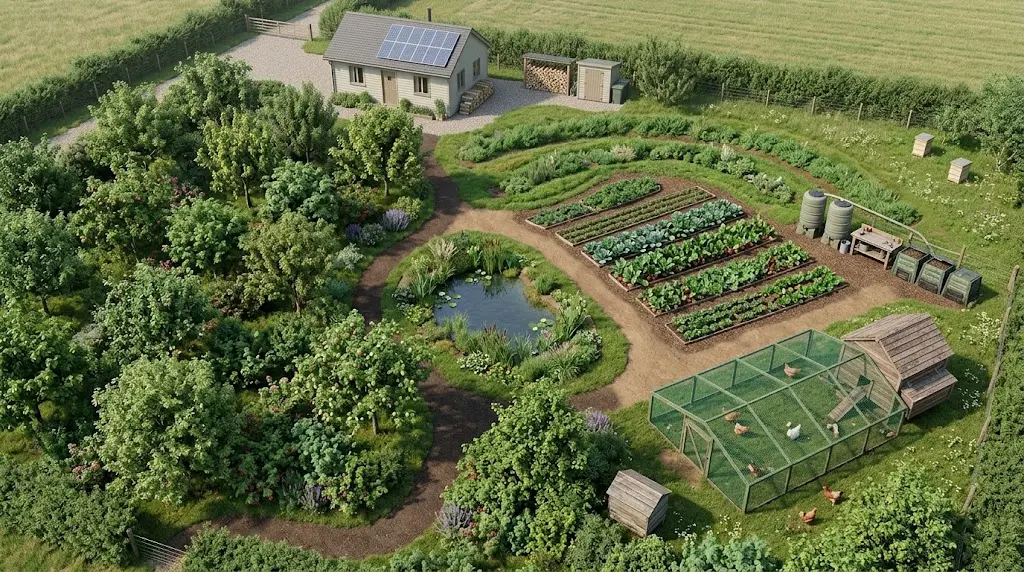
The inspiration image shows a beautiful system with circular food forests, swales, a pond, chickens, bees, a solar roof, and paths.
That does not mean those elements belong in those exact positions on your property.
Water follows elevation. Sun changes through the seasons. Cold air settles in low areas. Wind enters from particular directions. Soil depth and drainage can change within a surprisingly small property.
A successful layout therefore begins with observation and a basic site map rather than a list of features you want to copy.
Use the image for ideas, not measurements. Ponds, swales, berms, retaining earthworks, drainage systems, and large changes to site grading can create flooding or erosion problems when they are placed incorrectly.
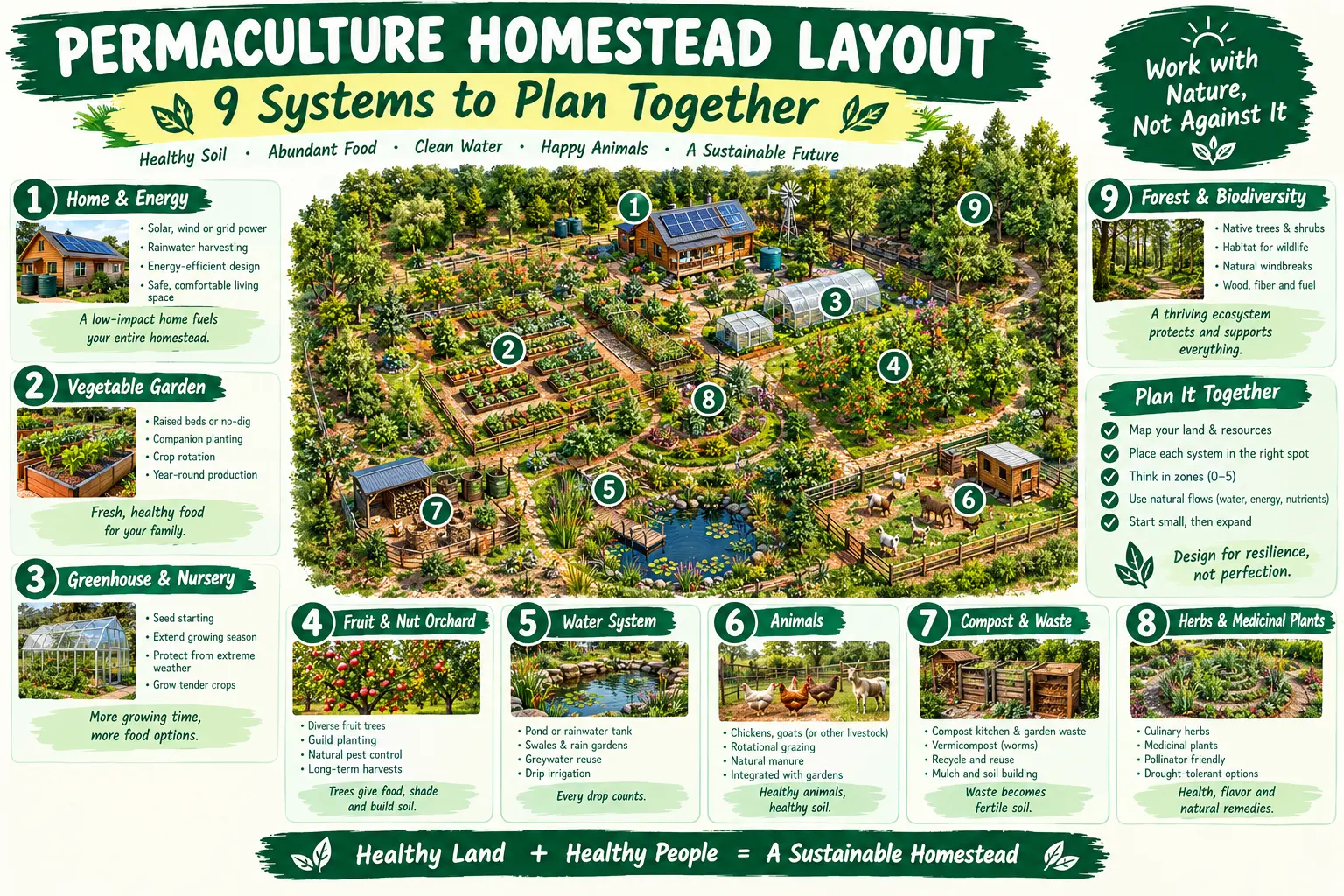
9 Systems to Plan in a Permaculture Homestead Layout
1. Start With Water Movement
Before deciding where the orchard, chicken run, greenhouse, or vegetable beds will go, watch what water already does on the property.
Walk outside during or just after a useful rain. Notice where runoff enters, where it slows down, which areas stay wet, where erosion begins, and where water naturally leaves the property.
This information is more valuable than starting with a decorative garden map because water problems affect almost every permanent feature you add later.
FarmSolo’s backyard drainage system guide is useful if you need to understand wet areas before adding water-harvesting features.
2. Put High-Attention Areas Close to Daily Routes
A productive homestead should not make you walk across the entire property for every small task.
Herbs used in the kitchen, salad greens, seedling areas, frequently harvested vegetables, a compost-drop point, and small tools generally make sense close to the house or another route you already use every day.
Large perennial plantings and lower-maintenance areas can often sit farther away.
This is the practical value behind permaculture zoning: placement is based largely on how often you need to visit and manage each element.
3. Build the Food Forest Around Mature Plant Size
A food forest is not simply an orchard with random plants filling every gap.
It combines woody plants and lower vegetation so vertical space, sunlight, roots, access, and harvest can work together over time.
Start with the largest and longest-lived plants first. Map the mature canopy width of fruit and nut trees before filling the understory with shrubs, herbs, groundcovers, or annual crops.
USDA agroforestry guidance emphasizes matching tree and shrub species to local soil and climate while allowing enough light for crops growing below or nearby.
Leave paths for pruning, harvest, wheelbarrows, irrigation repairs, and moving organic material. A food forest that becomes impossible to enter is harder to maintain than the attractive concept drawing suggests.
4. Use Swales Only Where the Site Supports Them
The image includes a swale and berm because slowing runoff can be useful on some properties.
A swale is generally a shallow landscape channel designed to collect, slow, infiltrate, or carefully convey runoff. Its size and slope should match the amount of water expected and the conditions of the site.
Do not assume every sloped yard needs a large earthwork.
Poorly located earthworks can concentrate water, saturate unstable soil, overflow toward buildings, or create erosion at the ends.
For a small residential property, a rain garden, shallow vegetated basin, mulch, soil improvement, or ordinary drainage correction may sometimes be simpler than a large permaculture-style swale.
5. Treat a Pond as Water Infrastructure, Not Decoration
A water-harvesting pond can become habitat, irrigation storage, a visual feature, or part of a wider runoff system.
But a pond changes the site much more than a small garden bed.
Its location depends on topography, soil, water source, overflow, local rainfall, dam or embankment safety, setbacks, groundwater, and local rules.
A pond should have a planned overflow route so unusually heavy rain does not send uncontrolled water toward buildings, roads, neighboring property, or unstable slopes.
If your goal is simply to reuse roof water for plants, a smaller system such as FarmSolo’s DIY rainwater harvesting setup may be a better first step.
6. Integrate Chickens Without Mixing Them Into Every Garden Bed
Chickens can fit well into a permaculture homestead, but integration does not mean giving them permanent access to every vegetable crop.
They scratch, eat young plants, disturb mulch, and deposit manure wherever they spend time.
A better layout uses gates, runs, temporary fencing, or movable chicken tractors so access can be controlled.
Research from Oregon State University has shown that chickens can be integrated into orchards and may help reduce some insects and weeds, but they still require secure housing, supplemental feed, water, predator protection, and management.
Food safety matters too. Poultry should generally be kept out of active vegetable production areas where droppings could contaminate produce.
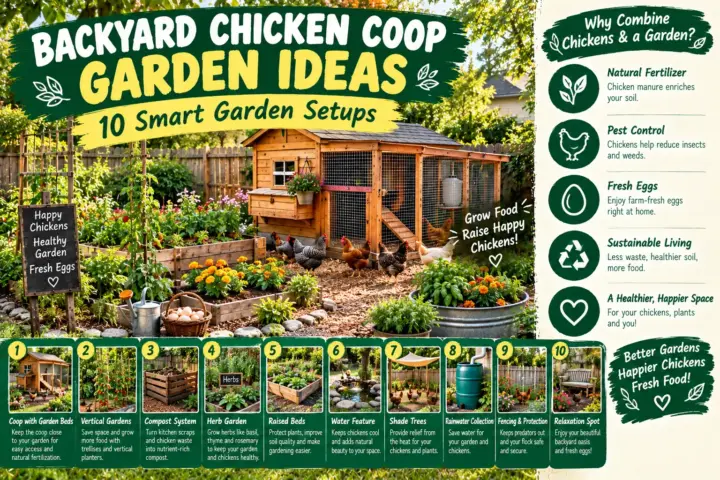
FarmSolo’s backyard chicken coop garden ideas guide shows simpler ways to connect the coop, compost, and garden without giving birds unrestricted access.
7. Put Beehives Where Bees and People Can Both Function
A beehive does not need to sit in the middle of the food forest to pollinate it.
Choose a location that gives the beekeeper safe access while directing normal bee traffic away from doors, play spaces, paths, livestock areas, and places where people gather.
Utah State University Extension recommends considering neighboring properties, keeping the immediate flight path clear, and selecting a relatively low-traffic location.
Check local beekeeping rules before installing a hive. Residential requirements can cover hive numbers, setbacks, registration, fencing, water, or neighbor considerations.
8. Keep Solar Access in Mind as Trees Grow
The solar roof shown in the inspiration image is a useful reminder that today’s garden layout can affect tomorrow’s energy production.
A young fruit tree may create almost no shade on a roof today and a large amount of shade after years of growth.
When placing permanent trees, consider their mature height and canopy in relation to solar panels, greenhouse areas, vegetable gardens, and south-facing windows where relevant.
If off-grid systems are part of your larger goal, FarmSolo’s off-grid home essentials guide covers energy, water, food production, storage, and backup systems in more detail.
9. Connect Everything With Useful Paths
Paths are one of the least exciting parts of a homestead map and one of the most important parts in real life.
You need to reach chickens with feed, move compost to gardens, carry harvest baskets, inspect water systems, prune trees, access beehives, and repair irrigation.
Design at least one practical route for the largest equipment you regularly use, whether that is a wheelbarrow, garden cart, mower, or small tractor.
Do not use every square foot for planting. Access is part of production.
A Simple Order for Designing the Property
Trying to design the pond, orchard, chicken system, greenhouse, food forest, and solar setup at the same time can become overwhelming.
A simpler approach is to make decisions in layers.
- Map what already exists. House, driveway, utilities, fences, large trees, slopes, wet spots, and property boundaries.
- Observe sun, water, and wind. Do this before placing permanent systems.
- Mark daily movement. Identify the routes between the house, vehicles, garden, animals, water, and storage.
- Plan water. Decide how runoff will safely move, infiltrate, overflow, or be stored.
- Place permanent woody plants. Consider mature tree size and future shade.
- Add intensive growing areas. Keep high-maintenance crops easy to visit and irrigate.
- Add animals only where management works. Include fencing, feed access, water, waste handling, and predator protection.
- Add infrastructure. Compost, storage, greenhouse, solar, tanks, and workshop areas should support the existing plan.
- Expand gradually. Learn how the first systems behave before changing the entire property.
Where Should the Food Forest Go?
There is no universal best corner of a property for a food forest.
Choose the location based on sunlight, soil, drainage, available irrigation, mature canopy size, access, and the species you intend to grow.
A food forest placed too close to the vegetable garden can eventually shade it. One placed too far away may receive less attention during establishment, when young trees and shrubs often need watering, mulch, pruning, and protection.
Think several years ahead instead of designing around the size of young nursery plants.
Should a Pond Be at the Lowest Point?
Not automatically.
The lowest visible point may collect runoff, but that does not prove it is a safe or practical pond location.
Soil permeability, groundwater, the size of the drainage area, overflow, excavation conditions, nearby structures, utilities, access, and local rules all matter.
Large water-harvesting earthworks deserve site-specific planning rather than a rule such as “always put the pond at the bottom.”
Swales and Drainage Ditches Are Not the Same Thing
This distinction matters when planning water.
Some swales are designed to slow runoff and encourage infiltration. Other vegetated swales are designed to convey runoff toward another location while also treating or slowing the water.
The correct design depends on what problem you are trying to solve.
If water needs to be kept away from a foundation, the goal is different from trying to increase soil moisture around a perennial planting.
Do not use a water-harvesting feature in a location where infiltration itself creates a problem.
How Chickens Can Fit Into a Food Forest
Managed poultry can be useful around established woody crops because chickens naturally scratch for insects, seeds, and vegetation.
That does not mean permanent free range is always the best system.
Young plants need protection, predators remain a concern, and poultry manure creates food-safety considerations near edible crops.
Movable fencing or a chicken tractor makes it easier to control when and where birds forage.
The most useful question is not “Can chickens go in a food forest?” but “What job are the chickens doing here, and how will I control their access?”
Common Permaculture Homestead Layout Mistakes
- Starting with plants instead of the site. Observe water, sun, access, and wind before installing permanent systems.
- Copying somebody else’s zone map. Zones should reflect your actual routines and property.
- Digging swales without understanding runoff. Earthworks can create erosion or unwanted saturation if poorly placed.
- Putting a pond somewhere because it looks low. Water storage needs site-specific drainage and overflow planning.
- Planting trees without considering mature shade. Today’s small tree can become tomorrow’s shaded vegetable garden or solar roof.
- Giving poultry uncontrolled access to food crops. Use fencing and managed rotations.
- Putting beehives beside busy paths. Think about flight paths, neighbors, children, animals, and beekeeper access.
- Making the design too complicated. Every feature adds maintenance as well as benefits.
- Building everything in the first season. Start with water, access, soil, and a manageable amount of planting, then expand.
Permaculture Homestead Layout FAQ
How much land do you need for a permaculture homestead?
There is no minimum acreage. Permaculture design principles can be used on a small urban lot or a much larger rural property. The number and scale of systems should match the space, climate, local rules, water, and the amount of work you can realistically manage.
What should you design first?
Start with the existing site and water movement. Map structures, access, utilities, slopes, sun, wind, wet areas, and existing vegetation before placing permanent new systems.
What is the difference between a food forest and an orchard?
An orchard is primarily organized around fruit or nut trees. A food forest or forest garden generally combines woody plants with useful understory vegetation in a more layered system, although the exact design can vary widely.
Do I need a swale for permaculture?
No. A swale is one possible water-management tool, not a requirement. Flat sites, poorly draining soils, small lots, steep slopes, or properties with foundation concerns may need completely different approaches.
Should chickens be inside a food forest?
They can sometimes be integrated into established orchard or perennial systems, but access should be managed. Protect young plants and edible growing areas from excessive scratching and manure contamination.
Where should beehives go on a homestead?
Choose a low-traffic location with practical beekeeper access and a flight path that does not cross busy walkways, neighboring activity areas, or places where children and animals regularly gather. Check local beekeeping rules before installation.
Build the Connections Before You Build the Features
The inspiration image is attractive because everything appears connected: trees feed the landscape, water moves through the property, chickens have dedicated areas, bees support pollination, and the building contributes solar energy.
That is the useful lesson to take from it.
You do not need circular beds, a pond, two beehives, a chicken run, and solar panels to create a permaculture homestead.
Start by understanding your property. Place the systems you will use most often. Manage water safely. Plant permanent trees with their mature size in mind. Give animals controlled spaces. Keep paths practical.
Then add new elements only when they solve a real problem or strengthen a connection that already exists.