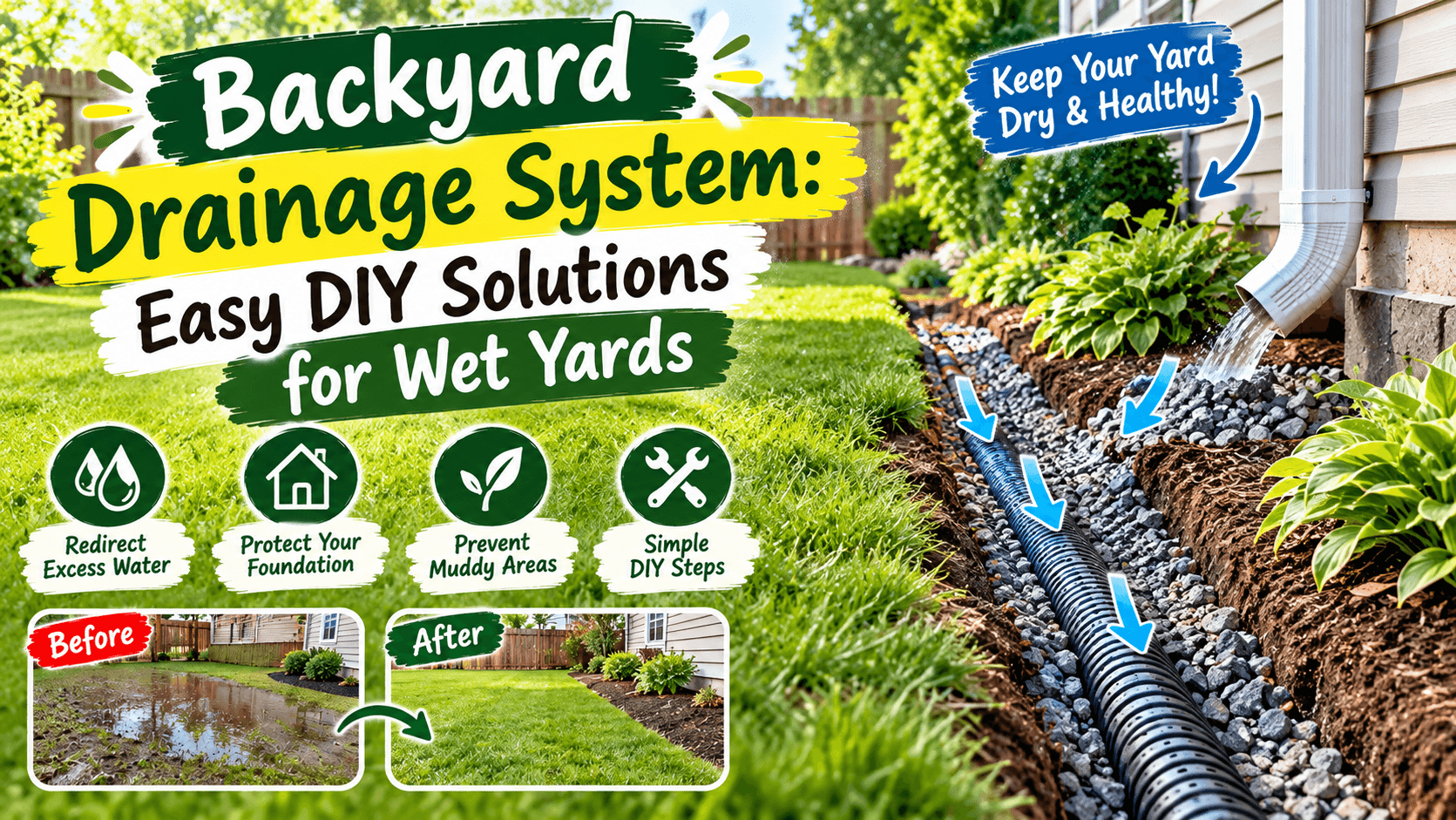
Backyard Drainage System: Simple Fixes for a Yard That Turns Into a Mud Pit
A good backyard drainage system isn’t something most people think about until they’re standing outside after a hard rain with wet shoes and a yard that looks more like a pond.
Then suddenly drainage becomes very interesting.
Water sitting around the garden can cause muddy paths, unhappy plants, erosion, soggy soil and even problems around the house. And if you’re trying to grow vegetables, keep chickens, compost, or build a little backyard homestead, standing water can turn into a real headache.
The good news is you don’t always need some huge expensive drainage project. Sometimes the fix is surprisingly simple. A better slope here. A gravel path there. A shallow swale in the right place. Even cleaning out a clogged gutter can make a bigger difference than you’d expect.
Let’s look at the practical stuff first, because nobody wants to spend three weekends digging a trench only to discover the real problem was somewhere else.
First, Figure Out Where the Water Is Coming From
This is the part I’d never skip.
Before digging anything, watch your yard during a good rainstorm if you can do it safely. Where does water enter? Where does it collect? Which direction does it naturally want to travel?
You may notice water coming off the roof, running down a driveway, spilling from a neighbor’s property, or simply collecting in a low spot in your yard.
These are completely different problems.
I’ve seen people try to fix a soggy garden when the actual issue was a downspout dumping hundreds of gallons of water into that exact corner every time it rained.
Move the water source and suddenly the “drainage problem” isn’t nearly as bad.
Check Your Gutters and Downspouts First
This one is boring, but it matters.
Clogged gutters can overflow, and badly positioned downspouts can dump roof water right next to your foundation or into a garden bed.
Make sure gutters are reasonably clear and that downspouts send water somewhere appropriate.
You can use extensions to move discharge farther away from the house, but don’t simply send it toward your neighbor’s property or onto a sidewalk where it can create another problem.
In some places, local rules may affect how stormwater can be redirected, especially if you’re changing drainage near property lines or public areas.
Does Your Backyard Actually Have Enough Slope?
Water likes to go downhill. That’s about the only drainage rule you really need to remember at first.
If your yard is nearly flat, water may have nowhere to go after heavy rain.
A gentle grade can help move surface water toward an appropriate drainage area.
But don’t start reshaping the entire yard without thinking about where that water will end up.
Moving water away from one problem spot only to create a flooded area somewhere else isn’t really fixing anything.
A French Drain Can Help With Persistent Wet Areas
A French drain is one of the more common backyard drainage solutions.
The basic idea is simple: water enters a gravel-filled trench and moves through a perforated drainage pipe toward an appropriate outlet.
The trench is usually covered so the finished area can blend into the landscape.
This can be useful when groundwater or surface water keeps collecting in one particular area.
But here’s the thing people sometimes miss: a French drain needs somewhere for the water to go.
You can’t just bury a pipe and hope the water disappears.
The outlet needs to be designed carefully, and depending on your property and local regulations, you may need professional help before changing drainage patterns.
Try a Simple Gravel Drainage Strip
Not every drainage problem needs a buried pipe.
A gravel strip can help manage water along certain paths or low-traffic areas while also giving you a cleaner walking surface.
For example, if rainwater regularly runs beside a shed, you might create a properly designed gravel area that helps keep the ground from becoming a muddy mess.
Gravel also works nicely around garden structures because it doesn’t turn into a giant mud puddle every time somebody walks across it.
Just remember that gravel itself isn’t a magic drain. The underlying soil and slope still matter.
What About a Backyard Swale?
A swale sounds fancy, but the idea is pretty simple.
It’s a shallow depression designed to slow, spread or redirect water across the landscape.
Swales can be useful in certain yards, particularly where you want to manage surface runoff without immediately sending all the water away.
They can also fit nicely into a permaculture-style landscape when they’re designed around the natural contours of the property.
But please don’t dig a giant trench just because you saw a picture online.
Water management needs to match your soil, slope, rainfall and property layout. A poorly placed swale can create a bigger soggy area instead of solving the original problem.
Rain Gardens Are Pretty and Practical
This is probably one of my favorite ideas for a backyard where it makes sense.
A rain garden is a planted area positioned to temporarily receive and absorb runoff.
Instead of trying to make every drop of rain disappear as quickly as possible, you give some of the water a place to soak into the ground.
Native plants that tolerate periods of wet soil can make a rain garden look like an intentional part of the landscape instead of a drainage ditch.
And that matters if you’re trying to make a backyard homestead look good, not just functional.
Could Your Soil Be the Problem?
Sometimes the drainage problem is right underneath your feet.
Heavy clay soil can drain slowly. Compacted soil can also prevent water from soaking in properly.
Garden beds that have been walked on repeatedly can become surprisingly hard.
If water disappears quickly in one area but sits for hours in another, soil differences may be part of the problem.
Adding organic matter can improve some garden soils over time, but don’t assume compost will magically fix a serious drainage problem. Soil structure, grading and the underlying layers all matter.
Raised Beds Can Save a Soggy Vegetable Garden
If the main problem is a wet vegetable patch, raising the growing area may be much easier than trying to completely drain the backyard.
Raised beds give you more control over the soil where your vegetables actually grow.
You can build them from suitable untreated materials, fill them with a good growing mix and keep the root zone above the soggy native soil.
Of course, the surrounding area still needs drainage. If the whole yard floods, a raised bed sitting in a bathtub of water isn’t going to solve everything.
Don’t Forget About Garden Paths
This is a small thing that makes a huge difference.
Grass paths can become muddy when they’re walked on repeatedly during wet weather.
A gravel path, stepping stones or another permeable surface can give you a dry route through the garden.
That means fewer muddy footprints inside the house, which everybody appreciates.
It also keeps you from compacting the soil in the actual growing beds.
What I Wouldn’t Do With Backyard Drainage
There are a few things I’d be careful about.
Don’t dump water onto someone else’s property
Moving your drainage problem across the property line isn’t a solution. It can also create legal and neighbor problems.
Don’t dig near underground utilities without checking first
This one is serious. Before digging trenches or installing buried drainage, identify underground utility lines and follow your local utility-locating process.
Don’t undermine your house foundation
Water management around a house deserves extra care. If you have persistent foundation moisture, significant erosion, cracks, or water entering the building, get advice from a qualified professional rather than guessing.
Don’t create a drainage system with nowhere to drain
A pipe underground doesn’t make water disappear. It just moves it.
A Simple Backyard Drainage System for a Small Homestead
If I were planning drainage for a modest backyard homestead, I’d think about the yard in zones.
First is the house.
Keep roof runoff under control and away from the foundation.
Next is the garden.
Figure out whether water should soak into the soil, move around the beds, or be collected in a suitable drainage feature.
Then you’ve got paths, sheds, chicken areas and other structures.
Each one creates or receives water differently.
Here’s a simple way to think about it:
- Roof: control downspout discharge.
- Garden: improve soil and consider raised beds or rain gardens.
- Paths: use stable, permeable surfaces where practical.
- Low spots: investigate whether grading, a swale or another drainage feature makes sense.
- Persistent flooding: get professional advice before major excavation.
Can You Use Drainage Water for the Garden?
Sometimes, but be careful about what that water has touched.
Clean rainwater from a suitable collection area can potentially be useful for gardening when handled appropriately.
But runoff from driveways, roads, treated surfaces or areas contaminated with chemicals shouldn’t automatically be directed into food-growing beds.
You need to know where the water came from before deciding where it should go.
How to Test Your Backyard Drainage Before Spending Money
Here’s a simple approach.
After rainfall, take a walk around your property.
Look for standing water, muddy paths, eroded soil, washed-out mulch and areas where water is moving quickly.
Take a few pictures.
Then look at them later when the rain has stopped.
You may notice patterns you didn’t see while standing outside getting soaked.
If you’re considering a larger drainage project, it can also be worth getting accurate information about your property’s grade and consulting someone experienced with residential drainage.
Mini FAQ About Backyard Drainage Systems
What’s the easiest backyard drainage solution?
It depends on the cause. Sometimes moving a downspout is enough. Other yards may need grading, a rain garden, a swale, a French drain or another properly designed system. Find the source first instead of picking a solution at random.
Does gravel improve drainage?
Gravel can provide a permeable surface and help create drainage layers, but gravel alone doesn’t solve every drainage problem. The slope, soil and final outlet still matter.
Should I install a French drain myself?
Small drainage projects may be manageable for an experienced DIYer, but buried utilities, foundation drainage, major grading and drainage that affects neighboring properties deserve extra caution and often professional input.
Don’t Make Your Backyard Drainage System More Complicated Than It Needs to Be
It’s tempting to see a soggy backyard and immediately start thinking about trenches, pipes, pumps and a giant pile of gravel.
Sometimes that’s necessary.
But sometimes the answer is much simpler.
Clean the gutters. Extend the downspout. Stop compacting the soil. Add a proper garden path. Raise the vegetable beds. Create a small rain garden. Fix the slope where appropriate.
Start with the water and work backward.
That’s the approach that makes the most sense to me. Your backyard is a system. The house, roof, garden, soil, paths and low spots are all connected.
Once you understand where the water wants to go, building a backyard drainage system becomes a whole lot less mysterious.
And if you’re standing outside after the next big storm wondering why one corner of your yard looks like a swimming pool, don’t panic. Grab a cup of coffee, watch where the water moves, and start there.
Got a weird drainage problem? Leave a comment and describe what the water is doing. Sometimes the strange little backyard problems are the most interesting ones to figure out.