An old tree stump does not always have to be removed. If it is in a useful garden location and is still stable enough to work around, you can turn it into a planter for ferns, flowers, trailing plants, herbs, or a playful garden feature. The key is matching the plants to the light and giving the planting pocket somewhere to drain.
Before turning a stump into a planter
- Check whether the stump is stable enough to remain in place.
- Choose plants for the actual sun or shade at that spot.
- Give the planting pocket drainage instead of creating a water-filled bowl.
- Use fresh container mix rather than packing the cavity with heavy yard soil.
- Expect the wood to keep weathering and decomposing over time.

Can You Really Turn a Tree Stump Into a Planter?
Yes. A stump with a natural hollow or a suitable planting cavity can hold potting mix and plants much like a rustic container.
The idea works especially well when removing the stump would create more work than leaving it in place and the stump already sits in a useful part of the landscape.
But it will not behave exactly like a plastic or ceramic pot. The wood continues to absorb moisture, weather, soften, and eventually decompose.
Think of a stump planter as an evolving garden feature rather than a permanent container that will look identical for twenty years.
Skip the planter idea when removal makes more sense. A badly unstable stump, one interfering with a structure or path, or one associated with an active pest or tree-disease problem may be a better candidate for professional removal instead of decoration.
9 Tree Stump Planter Ideas for the Garden
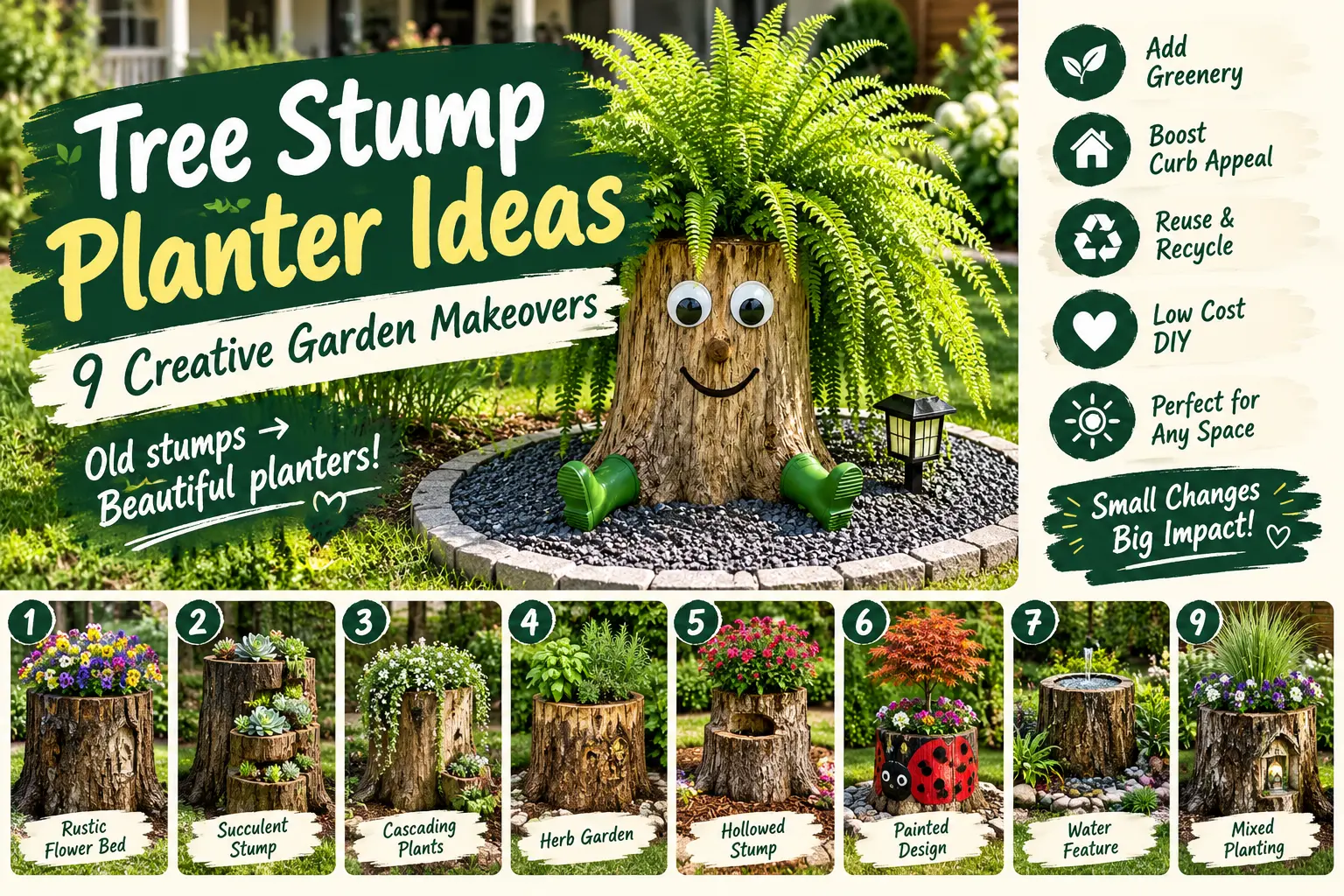
1. Give the Stump a Fern “Haircut”
This is the idea closest to the inspiration image.
A large arching fern planted at the top of a wide stump creates the appearance of green hair. Add a simple removable face or a pair of outdoor decorative eyes and the stump becomes a playful garden character.
A Boston fern can work when the location provides enough shade and moisture. Wisconsin Horticulture recommends full to partial shade outdoors and a growing medium that stays consistently moist but still drains well.
Remember that Boston fern is not winter-hardy everywhere. In colder climates it is often grown seasonally outdoors or brought under protection before cold weather.
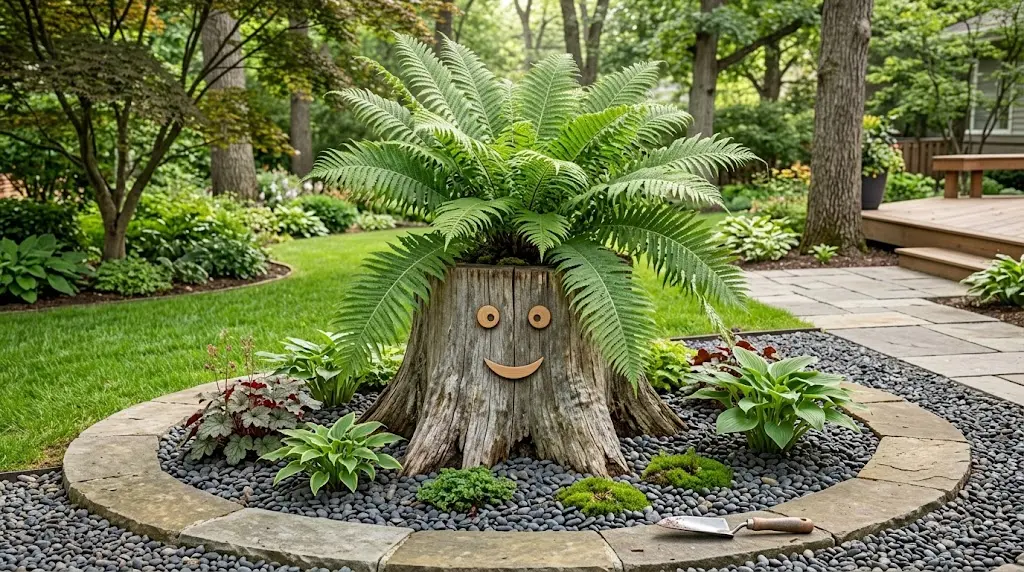
2. Make a Woodland Stump Planter
A stump already has the right texture for a woodland-style planting.
Use locally suitable shade plants around it and let the weathered bark remain visible. Ferns, sedges, woodland perennials, and other shade-tolerant plants can help the stump blend into an existing shady garden rather than looking like a separate decoration.
Choose plants that are suited to your climate instead of assuming every fern shown online will survive outdoors where you live.
If your yard has a larger shaded area, FarmSolo’s hosta growing guide has more ideas for planting around shady fences, paths, and trees.
3. Fill It With Trailing Flowers
A short, wide stump can act like a natural pedestal for trailing flowers.
Choose annuals or perennials that match the amount of sun at the stump. Let some stems grow over the edge so they soften the cut top and partially cover the sides.
This approach works especially well when the stump sits in an open lawn or near the front of a planting bed where the flowers can be seen from several directions.
4. Create a Pollinator Stump Planter
If the stump receives enough sun, consider flowering plants that provide nectar or pollen rather than using the planter only as decoration.
Choose native or regionally appropriate species whenever practical. The right choices depend on where you live, the size of the planting cavity, and the amount of sun and moisture available.
Illinois Extension notes that native plants can also be grown in containers and recommends selecting species suited to the actual sun exposure of the site.
5. Use a Removable Pot Inside the Stump
You do not have to fill the wood itself with soil.
If the top is already hollow, place a nursery pot or other suitable container inside the opening and hide the rim with bark, moss, or trailing foliage.
This makes plant replacement much easier and gives you predictable drainage holes.
It is also useful when you want to bring a tender fern or flowering plant indoors for winter instead of leaving it permanently inside the stump.
6. Turn a Tall Stump Into a Garden Pedestal
A tall stump does not need to be hollowed deeply.
Place a container on the top and use the stump as a natural plant stand. This keeps more of the wood intact and gives the garden vertical interest without cutting a large cavity.
A trailing plant can hide much of the pot as it grows, making the planter look like it is emerging directly from the wood.
7. Make a Mini Herb Stump
A stump in a sunny location can hold a small herb planting when the cavity is wide enough.
Choose compact herbs that suit the available root space. Avoid aggressive spreaders that will quickly overwhelm a small planting pocket.
For edible plants, do not use wood that has recently been treated with unknown preservatives, stains, or chemicals where those materials could contact the growing mix.
8. Add a Simple Gravel Ring Around the Stump
The inspiration image uses dark gravel and a light edging ring to turn the stump into a complete landscaping feature rather than leaving it alone in the grass.
You can use a small mulched or gravel area around the base to make mowing easier and visually separate the feature from the lawn.
Do not pile soil, mulch, or gravel high against living tree trunks nearby. Keep the decorative treatment focused on the dead stump and maintain normal care around living plants.
9. Make a Whimsical Garden Character
The giant eyes and smile are what make the Pinterest image memorable.
You can create the same mood without permanently modifying the stump. Use removable outdoor decorations, painted wooden pieces, or weather-resistant features that can be replaced as they fade.
Keep small loose decorations out of areas where a mower, string trimmer, pets, or very young children could pick them up.
How to Prepare a Tree Stump for Planting
If the stump already has a natural hollow, you may need very little preparation.
If you plan to enlarge the cavity, first make sure the stump is stable and wear appropriate eye and hand protection for the tools you use. Avoid trying to hollow a dangerously unstable or partially falling stump.
- Remove loose debris from the top of the stump.
- Create or clean out a planting pocket without weakening the remaining wood unnecessarily.
- Provide a route for excess water to escape.
- Add fresh container potting mix.
- Plant at the same depth appropriate for the plant you selected.
- Water thoroughly and confirm that the cavity drains instead of remaining flooded.
Why Drainage Matters in a Stump Planter
A hollow stump can accidentally become a wooden bowl.
If rainwater and irrigation have nowhere to go, the potting mix can remain saturated and leave too little air around plant roots.
Illinois Extension calls drainage holes critical for container plants because roots need both water and air. Few plants tolerate stagnant, waterlogged growing media for long.
That is especially important with the fern look shown in the inspiration image. Ferns may prefer consistent moisture, but consistent moisture is not the same thing as sitting in standing water.
Simple check: After watering, watch the planting cavity. If water sits on the surface for a long time instead of draining, fix the drainage before adding more water.
What Should You Plant in a Tree Stump?
Choose the plant from the location, not from the stump.
| Stump location | Planting direction | Main thing to watch |
|---|---|---|
| Partial to full shade | Suitable ferns and shade perennials | Consistent moisture without waterlogging |
| Morning sun, afternoon shade | Many foliage plants and shade-tolerant flowers | Drying during hot weather |
| Full sun | Sun-loving annuals, herbs, or suitable native flowers | Small cavities can dry quickly |
| Very small cavity | Use a removable small pot | Limited root volume |
Do not choose a large plant simply because the stump looks large from the outside. What matters to the roots is the actual volume of growing mix available inside the planting pocket.
Is Boston Fern a Good Choice?
It can be a very good visual match for a wide stump because its arching fronds create the full “hair” effect shown in the image.
Wisconsin Horticulture recommends full or partial shade outdoors for Boston fern. The growing medium should hold moisture but also drain well.
It can grow surprisingly large in good conditions, so give the fronds enough space instead of placing the stump immediately beside a busy path.
Cold tolerance is another consideration. Boston fern is tropical to subtropical and is commonly treated as a seasonal outdoor plant in colder climates.
Should You Line the Inside of the Stump?
You do not always need a liner.
If you want the stump to remain as natural as possible, you can add potting mix directly to a suitable cavity as long as excess water has a way to escape.
If you want easier plant replacement, a removable nursery pot is often simpler. It also keeps most of the growing medium separate from the decomposing wood.
Avoid creating a waterproof plastic bowl with no drainage opening. That can trap water around the roots.
How Long Will a Tree Stump Planter Last?
There is no exact lifespan.
Wood species, stump condition, rainfall, irrigation, soil contact, insects, climate, and how much of the stump has already decayed all affect how quickly it breaks down.
Using the stump as a planter keeps moisture and organic material close to the wood, so continued decomposition should be expected.
That does not automatically make the project a failure. The gradual weathering can be part of the natural look. Just inspect the stump periodically and stop using it as a raised planter if large pieces become unstable.
Common Tree Stump Planter Mistakes
- Choosing a plant before checking the light. A fern in harsh all-day sun may struggle even if it looks perfect in the inspiration photo.
- Creating a cavity with no drainage. A stump should not become a bucket of wet soil.
- Using heavy compacted yard soil. A suitable container mix gives roots better air and drainage.
- Using an unstable stump. Soft wood can eventually break apart under the weight of wet soil and a large plant.
- Planting something much larger than the cavity. Root space still matters.
- Forgetting seasonal care. Tender ferns and annual flowers may not survive winter outdoors in your climate.
- Making decorations permanent too soon. Removable garden faces are easier to repair or change as the wood weathers.
If the stump sits near the front of the property, FarmSolo’s front yard garden bed guide has more ideas for making productive and decorative planting areas fit naturally into the landscape.
Tree Stump Planter FAQ
Can you plant directly inside a tree stump?
Yes, when the stump has a suitable planting cavity and excess water can drain. You can also place a separate pot inside the stump if you want easier maintenance.
What plants grow well in a tree stump?
The best plants depend on sunlight, climate, moisture, and the size of the cavity. Ferns can work well in shaded, moist locations, while suitable flowers or herbs may be better in sunny areas.
Does a stump planter need drainage?
Yes. Plant roots need air as well as water. A cavity that holds stagnant water can cause root problems even for plants that prefer consistent moisture.
Will planting in a stump make it rot faster?
The stump will continue decomposing naturally, and regular moisture around the planting area can contribute to that process. Treat it as a temporary natural garden feature rather than permanent masonry or a plastic planter.
Can I use a Boston fern in a stump planter?
Yes, if your conditions suit it. Boston fern prefers outdoor shade or partial shade and consistently moist but well-drained growing media. In colder climates, it may need winter protection or indoor overwintering.
Can I decorate the stump with a face?
Yes. Removable outdoor eyes, painted wood pieces, or other weather-resistant decorations can create the playful look without requiring major changes to the stump.
Turn the Stump Into Something Worth Keeping
The fun part of the inspiration image is not just the giant fern or the funny face. It takes something that normally looks unfinished and makes it feel intentional.
You can keep that idea simple.
Check the stump, create a well-drained planting area, choose a plant that matches the sunlight, and let the natural wood remain part of the design.
Whether you add a dramatic fern, trailing flowers, a woodland planting, or a playful garden face, the best tree stump planter is one that works with the spot you already have.