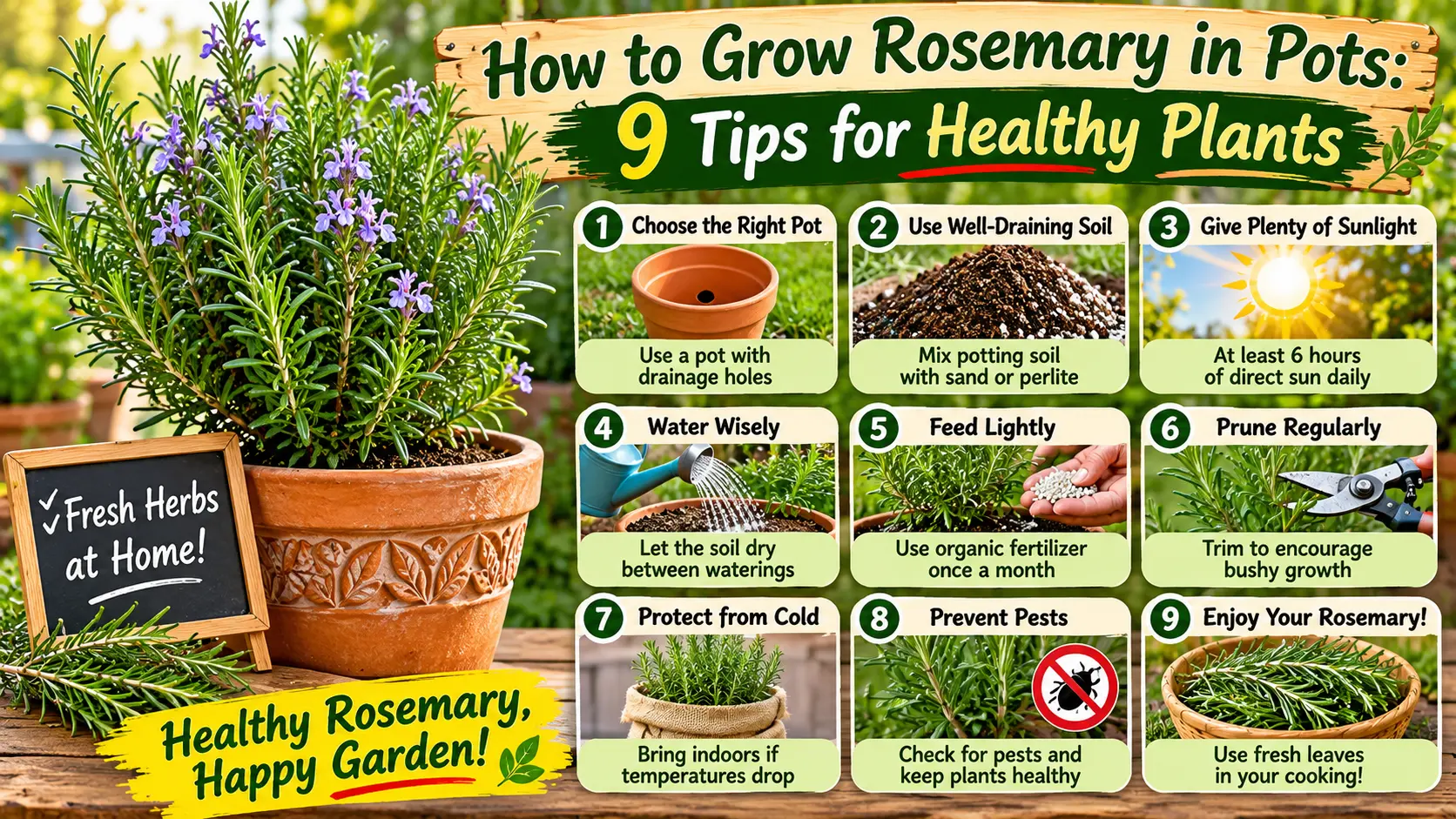
Rosemary is one of the best herbs to grow in a pot. It loves sun, prefers fast-draining soil, tolerates the soil drying between waterings, and gives you fragrant stems for cooking throughout much of the year.
Container growing can actually make rosemary easier to manage because you control the drainage and can move the plant when temperatures become too cold.
The biggest mistake is treating rosemary like a thirsty leafy herb. Rosemary comes from Mediterranean conditions and is much more likely to struggle from wet roots than from slightly dry soil.
Quick answer
Grow rosemary in a pot with drainage holes, loose well-draining potting mix, and plenty of direct sun. Water thoroughly, then let the upper portion of the mix dry before watering again. Avoid keeping the roots constantly wet, harvest regularly, and move the pot to protected conditions if winter temperatures are too cold for your variety.
Why Rosemary Grows So Well in Pots
Rosemary is a perennial woody herb native to the Mediterranean region.
Its natural growing conditions help explain what it wants in a container:
- Strong sunlight
- Excellent drainage
- Air around the roots
- Moderate rather than excessive fertility
- Periods when the soil becomes somewhat dry
University of Illinois Extension specifically lists rosemary as a good container herb, especially in places where plants need to be moved indoors for winter.
1. Start With the Right Rosemary Plant
You can start rosemary from seed, cuttings, or a nursery plant.
For most home gardeners, buying a healthy young plant or rooting a cutting is much faster than starting from seed.
When choosing a nursery plant, look for:
- Firm green or gray-green foliage
- Several healthy branches
- No blackened stem bases
- No obvious spider mites or other pests
- No sour smell coming from waterlogged soil
Avoid buying a badly wilted plant and assuming extra water will bring it back. Wilted rosemary can also be suffering from damaged, overly wet roots.
2. Choose a Pot With Drainage Holes
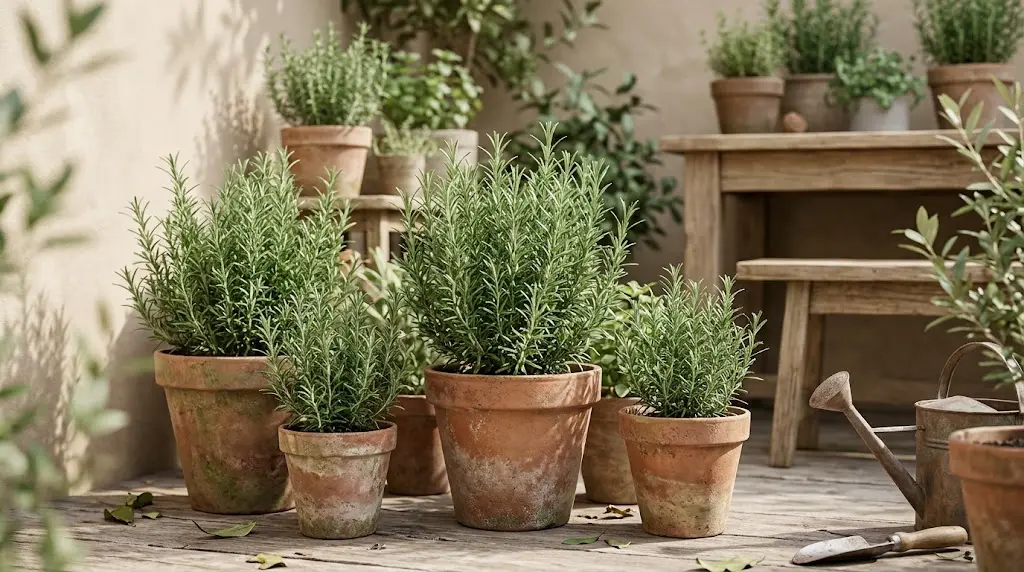
The drainage hole is more important than whether the pot is clay, plastic, ceramic, or another material.
Illinois Extension recommends containers with drainage holes for herbs because excess water needs a way to leave the root zone.
Do not plant rosemary in a decorative pot with no drainage hole unless the decorative container is being used only as a cachepot and the actual plant sits inside a separate draining nursery pot.
What Size Pot Does Rosemary Need?
Do not jump from a tiny nursery plant into a huge container immediately.
Oversized pots hold a large volume of wet potting mix around a small root system, which can keep the roots damp for too long.
A good approach is to move the plant into a container only somewhat larger than its current root ball, then repot again as the rosemary grows.
Illinois Extension recommends moving houseplants up gradually rather than dramatically over-potting them for exactly this reason.
Terracotta vs. Plastic Pots for Rosemary
| Pot Type | Advantage | What to Watch |
|---|---|---|
| Terracotta | Porous walls help the mix dry faster. | Can dry quickly in very hot, windy weather. |
| Plastic | Lightweight and holds moisture longer. | Overwatering becomes easier. |
| Glazed ceramic | Attractive and relatively moisture-retentive. | Must have good drainage holes. |
Terracotta is often especially forgiving for gardeners who tend to overwater rosemary.
3. Use a Loose, Fast-Draining Potting Mix
Do not fill a rosemary pot with dense garden soil.
Soil dug from the yard can compact inside containers and may drain very differently from prepared potting mix.
Start with a quality container potting mix that drains freely and still holds enough moisture for the plant between waterings.
If your mix stays wet for a long time, additional coarse aeration material such as perlite can help create a looser root environment.
FarmSolo tip: You should be able to water the pot thoroughly and see excess water begin leaving the drainage holes rather than sitting in muddy soil for hours.
Do You Need Gravel in the Bottom of the Pot?
No thick gravel layer is necessary to make the pot drain.
What rosemary actually needs is a drainage hole and suitable potting mix throughout the root zone.
If loose mix is escaping through a very large hole, cover the opening with a piece of mesh or another suitable material that keeps soil in while allowing water to leave.
4. Give Rosemary Plenty of Sun
Rosemary is a sun-loving herb.
Strong light encourages sturdy growth and aromatic foliage.
For outdoor containers, choose your brightest practical location, such as a sunny:
- Patio
- Balcony
- Deck
- Porch
- Kitchen garden
University of Minnesota Extension notes that herbs generally perform best in full sun and that strong light supports essential-oil production, flavor, and fragrance.
Can Rosemary Get Too Much Sun?
Established rosemary handles strong sun very well.
The bigger issue in an exposed container is that the root ball can dry much faster than soil in the ground.
During extreme summer heat, especially with wind and a small terracotta container, check moisture more frequently.
Do not respond by keeping the pot permanently saturated. Adjust the frequency based on how quickly the mix actually dries.
5. Water Deeply—Then Let the Soil Dry Somewhat
Rosemary watering is where most container problems begin.
Instead of giving a little splash every morning, water enough that the entire root ball becomes moist and excess water drains from the bottom.
Then wait until the mix has begun to dry before watering again.
Illinois Extension specifically advises keeping indoor rosemary on the dry side because excess water can lead to root rot.
How Often Should You Water Potted Rosemary?
Do not water by calendar.
The same rosemary plant may need water much more frequently during hot summer weather than during a cool cloudy week.
Watering frequency changes with:
- Pot size
- Pot material
- Temperature
- Wind
- Humidity
- Plant size
- Potting mix
- Sun exposure
Check the pot with your finger and learn how heavy it feels when wet compared with when it is approaching watering time.
Signs You May Be Overwatering Rosemary
- Soil remains wet for many days
- Growth becomes weak
- Branches begin dying back
- Leaves discolor despite wet soil
- Stem bases become dark or soft
- The pot develops a sour or swampy smell
A wilted rosemary plant is not automatically thirsty. Always check the root-zone moisture before adding more water.
Signs Rosemary May Be Too Dry
- Potting mix pulls far away from the pot edge
- Leaves become crisp
- Young tips droop
- Container feels extremely light
- Leaves begin dropping after prolonged drought
Repeated severe drying can still stress rosemary even though the plant tolerates moderate dryness better than many leafy herbs.
6. Do Not Overfeed Rosemary
Rosemary does not need aggressive fertilization to produce useful kitchen growth.
Container plants eventually need nutrients because repeated watering leaches some fertility from potting mix, but more fertilizer is not always better.
Illinois Extension warns that excessive fertilizer can make herb plants grow rapidly while reducing flavor and aroma.
Use a container fertilizer according to its label and stay on the conservative side rather than repeatedly pushing soft growth.
7. Harvest and Prune Regularly
Harvesting rosemary can double as light pruning.
Cut tender stem tips when you need them for cooking, taking growth from different areas of the plant instead of repeatedly stripping one branch.
Regular trimming encourages a denser, bushier plant.
For perennial herbs, Illinois Extension recommends lighter harvesting than with annual herbs and suggests removing no more than roughly the upper third at one time before allowing regrowth.
Have more rosemary than you can use fresh?
See FarmSolo’s guide to drying herbs at home for a simple way to save extra rosemary for the pantry.
Where Should You Cut Rosemary?
For normal harvests, cut young leafy portions rather than repeatedly cutting deep into old bare woody stems.
Avoid removing most of the green growth at once.
Use clean scissors or pruners, especially if you are harvesting stems for cooking.
8. Repot When the Plant Becomes Root-Bound
A rosemary plant can live in a container for years, but it cannot stay indefinitely in the same small nursery pot.
Possible signs that it needs more root space include:
- Roots circling tightly inside the pot
- Water runs through immediately because roots fill most of the container
- The plant dries unusually quickly
- Growth slows despite good light and normal care
- The plant becomes top-heavy
Move it only one reasonable pot size larger rather than putting a small root ball into an enormous container.
9. Protect Potted Rosemary in Cold Winters
Cold tolerance depends on the rosemary cultivar and your climate.
University of Illinois notes that rosemary is not reliably hardy in colder regions and recommends container growing when plants need to be moved indoors for winter.
A pot is also more exposed to cold than roots growing deep in garden soil, so container plants may need protection sooner.
How to Bring Rosemary Indoors for Winter
Do not wait until the plant has been repeatedly frozen and then suddenly move it into a hot, dark living room.
Transition it gradually when possible.
Before bringing the container indoors:
- Inspect foliage and stems for pests.
- Remove dead leaves.
- Check drainage.
- Move the plant gradually toward its winter location.
- Give it the brightest indoor light available.
Illinois Extension recommends a cool, sunny indoor location for overwintering rosemary.
Growing Rosemary Indoors
Rosemary can survive indoors, but indoor winter care can be trickier than summer container growing.
The two biggest challenges are usually:
- Too little light
- Incorrect watering
Put the plant in your brightest suitable window. University of Minnesota notes that indoor herbs often need supplemental lighting to maintain compact growth when natural light is insufficient.
Keep the soil from staying soggy. Growth slows during low-light winter conditions, so the plant may use water much more slowly than it did outdoors.
Why Is My Potted Rosemary Turning Brown?
Brown rosemary leaves can have several causes, so do not diagnose from color alone.
| Possible Cause | What to Check |
|---|---|
| Overwatering | Mix stays wet, poor drainage, dying lower branches. |
| Severe drought | Very dry mix, light pot, crispy foliage. |
| Low indoor light | Weak elongated growth and gradual decline. |
| Indoor pest pressure | Fine webbing, stippling, insects under leaves. |
| Root-bound plant | Dense circling roots and extremely fast drying. |
Why Is My Rosemary Dropping Leaves?
Sudden environmental changes can cause stress, especially when a plant is moved indoors.
Check:
- Light levels
- Root moisture
- Drainage
- Temperature changes
- Spider mites and other indoor pests
Do not immediately increase watering unless the soil actually needs it.
Can Rosemary Share a Pot With Other Herbs?
Yes, if the herbs want similar conditions and the container is large enough.
Rosemary combines more naturally with Mediterranean-style herbs that also appreciate sun and good drainage, such as:
- Thyme
- Oregano
- Sage
Be careful mixing rosemary with herbs that prefer consistently moist soil because one watering schedule may not suit both plants.
Can You Grow Trailing Rosemary in Hanging Pots?
Yes.
Trailing or prostrate rosemary varieties can spill attractively over container edges and hanging baskets.
Illinois Extension specifically notes that prostrate rosemary forms work well in hanging baskets.
Remember that hanging baskets can dry quickly, especially in sunny, windy conditions.
A Simple Rosemary Potting Routine
- Choose a healthy rosemary plant.
- Use a container with drainage holes.
- Move up only one sensible pot size.
- Fill with loose, well-draining potting mix.
- Plant at roughly the same depth it was already growing.
- Water thoroughly after planting.
- Move it into strong sunlight.
- Let the mix dry somewhat between waterings.
- Harvest lightly and regularly.
7 Common Rosemary Container Mistakes
1. Using a pot without drainage
Rosemary roots do not appreciate sitting in waterlogged potting mix.
2. Watering every day automatically
Water based on soil moisture and weather rather than a fixed calendar.
3. Using dense garden soil
Use a container potting medium that provides good aeration and drainage.
4. Putting rosemary in deep shade
Strong light produces sturdier growth and better culinary quality.
5. Overfertilizing
Too much fertilizer can produce excessive soft growth and reduce herb quality.
6. Moving it indoors too late
If rosemary is not hardy in your climate, transition it before damaging cold becomes severe.
7. Assuming brown leaves always mean thirst
Wet roots can produce stress symptoms too. Check the potting mix before adding water.
Growing Rosemary in Pots FAQ
Does rosemary grow well in pots?
Yes. Rosemary is well suited to containers when it receives strong light, excellent drainage, and appropriate watering.
What is the best pot for rosemary?
Use a suitably sized pot with good drainage holes. Terracotta is popular because its porous walls allow the potting mix to dry relatively quickly, but other containers can work well when watering is managed carefully.
How much sun does potted rosemary need?
Give rosemary a bright, sunny location. Herbs generally produce stronger growth, flavor, and fragrance in full sun.
How often should I water rosemary in a pot?
There is no fixed schedule. Water thoroughly when the potting mix has dried sufficiently, then allow excess water to drain. Check more frequently during hot or windy weather.
Why does my rosemary keep dying indoors?
Low light and watering problems are common causes. Indoor rosemary prefers very bright light and should not remain constantly wet. Also inspect for spider mites and other pests.
Can rosemary stay outside during winter?
It depends on the cultivar and local winter temperatures. Container roots are more exposed to cold than plants growing in the ground, so potted rosemary may need winter protection even where garden plants sometimes survive.
How do you make potted rosemary bushy?
Provide strong light and regularly harvest or lightly prune young stem tips. Avoid removing too much growth at once.
Can I grow rosemary on a balcony?
Yes. A sunny balcony is often an excellent place for container rosemary. Watch moisture closely because elevated balconies can be windy and pots may dry faster.
The Bottom Line
Rosemary does not need complicated care to grow well in a pot.
Most problems come from getting one of the basics wrong: too little light, poor drainage, too much water, or an unsuitable winter location.
Give rosemary a sunny location, an appropriately sized pot with drainage holes, loose potting mix, and time to dry somewhat between waterings.
Harvest the tips regularly, repot gradually as the roots expand, and protect the container when winter temperatures exceed the plant’s cold tolerance.
Get those few things right and one rosemary plant can provide fragrant kitchen harvests for years.
Sources
- University of Illinois Extension — Rosemary
- University of Illinois Extension — Growing Herbs in Containers
- University of Minnesota Extension — Growing Herbs in Home Gardens
- University of Illinois Extension — Container and Houseplant Care