Broom Salad Recipe: The Crunchy Garden Salad I Keep Coming Back To
I’ll be honest, the first time I heard the name Broom Salad Recipe, I thought somebody had lost their mind. A broom? In a salad? Nope. Turns out, there’s no actual broom involved. It’s a crunchy raw vegetable salad made with things like cabbage, carrots, beets, and sometimes apple.
And once I started making it with vegetables from my own backyard garden, I understood why people keep coming back to it. It’s cheap, colorful, crunchy, easy to make, and doesn’t require a bunch of fancy ingredients.
This is the kind of food I like on a homestead. You grab a few vegetables, shred them up, throw on a simple dressing, and you’re eating. No complicated cooking. No giant pile of dishes.
So lemme show you how I make my version of Broom Salad, what I’ve learned from making it a bunch of times, and a few things I’d do differently if I was just starting.
So, What Exactly Is Broom Salad?
Broom Salad is a name used for a simple raw vegetable salad, also known as Brush Salad in some places. The basic idea is pretty simple: shredded crunchy vegetables mixed together with a light dressing.
The classic combinations often include cabbage, carrots, and beets. Apple, radish, celery, parsley, or other vegetables can be added depending on what you have around.
That’s one reason I like it for homesteading. There’s no rule saying you have to use exactly the same vegetables every single time.
If I have a carrot that needs using, it goes in. If there’s half a cabbage sitting in the refrigerator, into the bowl it goes.
That’s how real kitchen gardening works around here.
My Favorite Broom Salad Recipe
Ingredients
- 2 cups finely shredded green or red cabbage
- 2 medium carrots, grated
- 1 small beet, grated
- 1 small apple, grated or cut into thin strips
- 1 small handful of fresh parsley, chopped
- 1 to 2 tablespoons olive oil
- 1 to 2 tablespoons fresh lemon juice
- A small pinch of salt
- Black pepper, if you like it
Optional: Add a little shredded radish, celery, cucumber, raisins, or a few chopped walnuts. I don’t always have all of these, so I use whatever makes sense from the garden or refrigerator.
Why I Like This Salad for Homesteading
One thing I’ve learned after more than 10 years of trying to grow and preserve food is that simple recipes usually survive the longest.
You can grow carrots. You can grow cabbage. Beets don’t need some giant backyard either. Even if you’re doing urban homesteading with a few containers, some of these vegetables can fit into a small garden plan.
And when harvest time comes around, you suddenly have a pile of vegetables staring at you.
That’s when recipes like this become useful.
I’ve had days where I looked at the kitchen counter and thought, “What the heck am I going to do with all this?” A Broom Salad is one answer.
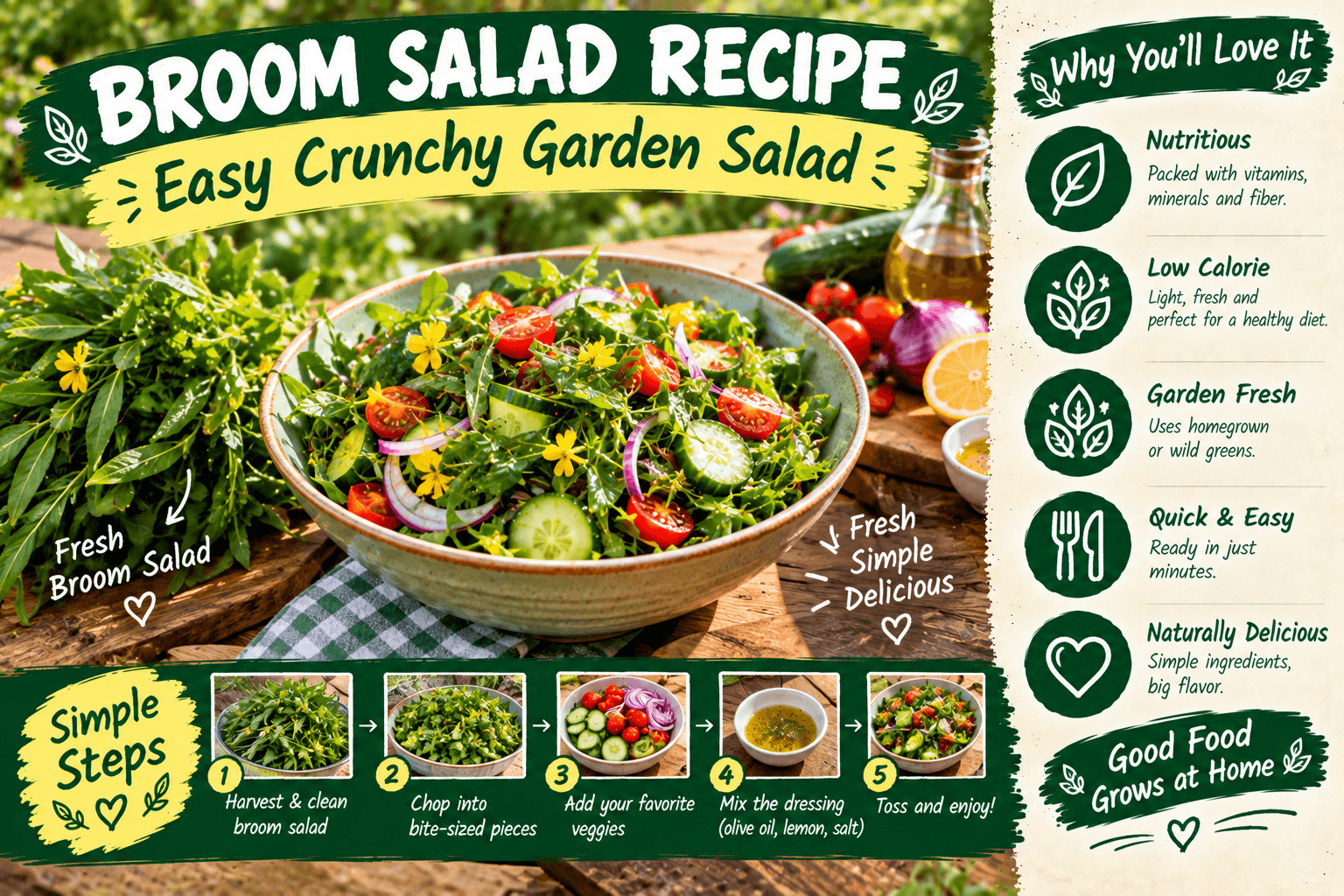
How I Make Broom Salad
1. Wash Everything First
I know this sounds obvious, but I’ve skipped this step when I was in a hurry. Don’t do what I did.
Wash your cabbage, carrots, beet, apple, parsley, and any other fresh produce you’re using. Remove dirt and damaged parts.
If you’re using vegetables straight from the garden, you may need a little extra cleaning. Garden dirt has a way of hiding in cabbage leaves like it pays rent.
2. Shred the Cabbage
Start with the cabbage because it gives the salad most of its crunch.
I like thin slices rather than big chunky pieces. A sharp knife works fine, but a food processor makes this job ridiculously fast if you’re making a big batch.
Don’t turn it into cabbage mush, though. You want some texture.
3. Grate the Carrots and Beet
Next comes the carrots and beet.
This is where the salad starts looking crazy good. The beet turns everything a beautiful color, especially if you let the salad sit for a little while.
And here’s a warning from my own kitchen: wear an old shirt when you’re grating beets.
You’re gonna laugh at this, but I once wiped my beet-covered hands on a white kitchen towel. That towel was never white again.
4. Add the Apple
The apple is optional, but I really like it.
It gives the salad a little sweetness and makes the raw vegetables easier to enjoy if you’re not used to eating a big bowl of cabbage and carrots.
If you don’t have an apple, skip it. The salad will still work.
5. Mix Everything Together
Put the cabbage, carrots, beet, apple, and parsley into a large bowl.
Give everything a good toss with clean hands or salad tongs.
I actually prefer using my hands sometimes because I can gently mix the vegetables without smashing them. Just make sure your hands are clean first.
What Dressing Do I Use?
I keep the dressing really simple.
My everyday dressing:
- 1 to 2 tablespoons olive oil
- 1 to 2 tablespoons lemon juice
- Small pinch of salt
- Black pepper if wanted
Mix the dressing in a small cup and pour it over the vegetables.
Then toss everything again.
That’s it.
Sometimes I use apple cider vinegar instead of lemon juice. Both give you that little sharp flavor that helps balance the sweetness from the carrots and apple.
Start with a small amount of dressing. You can always add more.
I learned this one the hard way too. I once poured way too much vinegar into a giant bowl and basically turned lunch into a vegetable punishment.
Should You Let Broom Salad Sit?
I usually let mine sit for about 10 to 15 minutes before eating.
This gives the vegetables time to soften just a little and lets the flavors mix together.
But don’t let it sit all afternoon on the kitchen counter. Fresh cut vegetables should be handled and stored safely like other perishable foods.
If I’m making extra, I put it into a covered container and refrigerate it.
What If You Don’t Like Raw Beets?
That’s completely fine.
Beets have a strong earthy flavor and not everybody likes them raw. I didn’t always love them myself.
Try using a smaller amount the first time. You don’t need to throw a whole giant beet into the bowl.
You can also make the salad without beets and use extra carrots, cabbage, apple, or radish instead.
Remember, the goal is to make food you’ll actually eat.
Can You Make Broom Salad From Garden Vegetables?
Absolutely. This is probably my favorite reason to make it.
If you’ve got a backyard garden, you can grow several of the main ingredients yourself.
Carrots don’t need a huge amount of space. Cabbage can be grown in a garden bed or large container with the right conditions. Beets are another handy crop for small gardens.
Even if you live in an apartment or have a tiny urban backyard, you can still grow some salad ingredients in containers.
That’s one of the little things I love about self-sufficient living. You don’t have to produce 100 percent of your food to feel the difference.
My Favorite Broom Salad Add-Ins
Here’s where I stop following recipes too closely.
Depending on what I have available, I’ll throw in:
- Thinly sliced radish
- Celery
- Fresh parsley
- Green onion
- Cucumber
- A few raisins
- Chopped walnuts
- Sunflower seeds
- A little fresh dill
Don’t add everything at once. I’ve made that mistake too. You end up with a salad that tastes like the entire garden sneezed into one bowl.
Pick two or three extras and see what you like.
Is Broom Salad Good for Meal Prep?
It can be useful for meal prep, but I don’t make a huge week’s worth and expect it to stay exactly the same.
Fresh vegetables can release water after they’re shredded, especially cabbage and beets. The texture can change after sitting for a while.
For that reason, I prefer making a smaller batch every couple of days.
If I’m packing lunch, I’ll sometimes keep the dressing separate and add it right before eating. That keeps the vegetables crunchier.
Does Broom Salad Really “Clean Out” Your Body?
You’ve probably seen Broom Salad described online as a “colon cleanser,” “detox salad,” or something that will “sweep your digestive system clean.”
I wouldn’t make those promises.
Your body already has organs that handle waste removal, and one salad isn’t going to magically clean your body.
What I can say is that this recipe gives you a simple way to eat more vegetables and fiber-rich foods. That’s a much more useful reason to make it.
I also don’t treat it like some kind of crash diet.
It’s just food.
Good food, crunchy food, garden food. That’s enough for me.
When I Like Eating Broom Salad
I like it next to a simple lunch or dinner.
For example, I’ll have a bowl of Broom Salad beside eggs, roasted potatoes, beans, grilled chicken, or whatever leftovers are hanging around.
It’s especially nice when you’ve been eating heavier food for a few days and want something fresh and crunchy.
During garden season, I’ll sometimes eat a big bowl for lunch with whatever protein I already have prepared.
It’s not fancy homestead cooking. That’s exactly why I like it.
Three Mistakes I Wouldn’t Make Again
1. Don’t Overdress It
Start small with the lemon juice and oil. You can always add more.
2. Don’t Grate Everything Too Fine
You want texture. If the vegetables become mushy, the salad isn’t nearly as fun to eat.
3. Don’t Make a Giant Batch
Unless you’re feeding a whole family, start with a medium bowl. It’s better to make another fresh batch later than watch half of it turn watery in the refrigerator.
Broom Salad FAQ
Can I make Broom Salad without beets?
Yep. Use more cabbage and carrots, or add radish or apple. The recipe is flexible.
Can I use red cabbage?
Absolutely. Red cabbage works great and gives the salad a beautiful color. Just remember that the beet can make the whole thing turn even more purple.
Can I make Broom Salad ahead of time?
You can prepare it ahead, but I prefer making it fairly close to when I’m eating it. If you’re prepping ahead, keep it covered and refrigerated, and consider keeping the dressing separate until serving.
Would I Make This Broom Salad Recipe Again?
Yep. And that’s probably the biggest compliment I can give a recipe.
I’ve tried plenty of complicated “healthy” recipes that sounded great on paper and then disappeared from my kitchen after one attempt.
This one stayed.
The ingredients are cheap, the vegetables are easy to find, and if you’re growing food at home, you can use a good chunk of your own harvest.
It also gives me another way to use vegetables before they get forgotten in the refrigerator, which is a very real problem when you’re growing a backyard garden.
So if you’ve got some cabbage, carrots, a beet, and an apple sitting around, give this Broom Salad Recipe a shot.
Don’t worry about making it perfect. Add what you like. Leave out what you don’t. That’s how I cook most days anyway.
Got a Weird Salad Question?
Give it a try and make it your own. If you end up adding some strange garden vegetable to it, I wanna hear about it. And if you get stuck, just ask. I’ve messed up plenty of recipes myself.
Got a weird question? Leave a comment below. I actually read them.