A good stir-fry sauce can turn leftover vegetables, garden produce, rice, noodles, chicken, beef, tofu, or shrimp into dinner in minutes.
The easiest approach is to mix a few sauces ahead of time, keep a small batch in the refrigerator, or freeze portions for later.
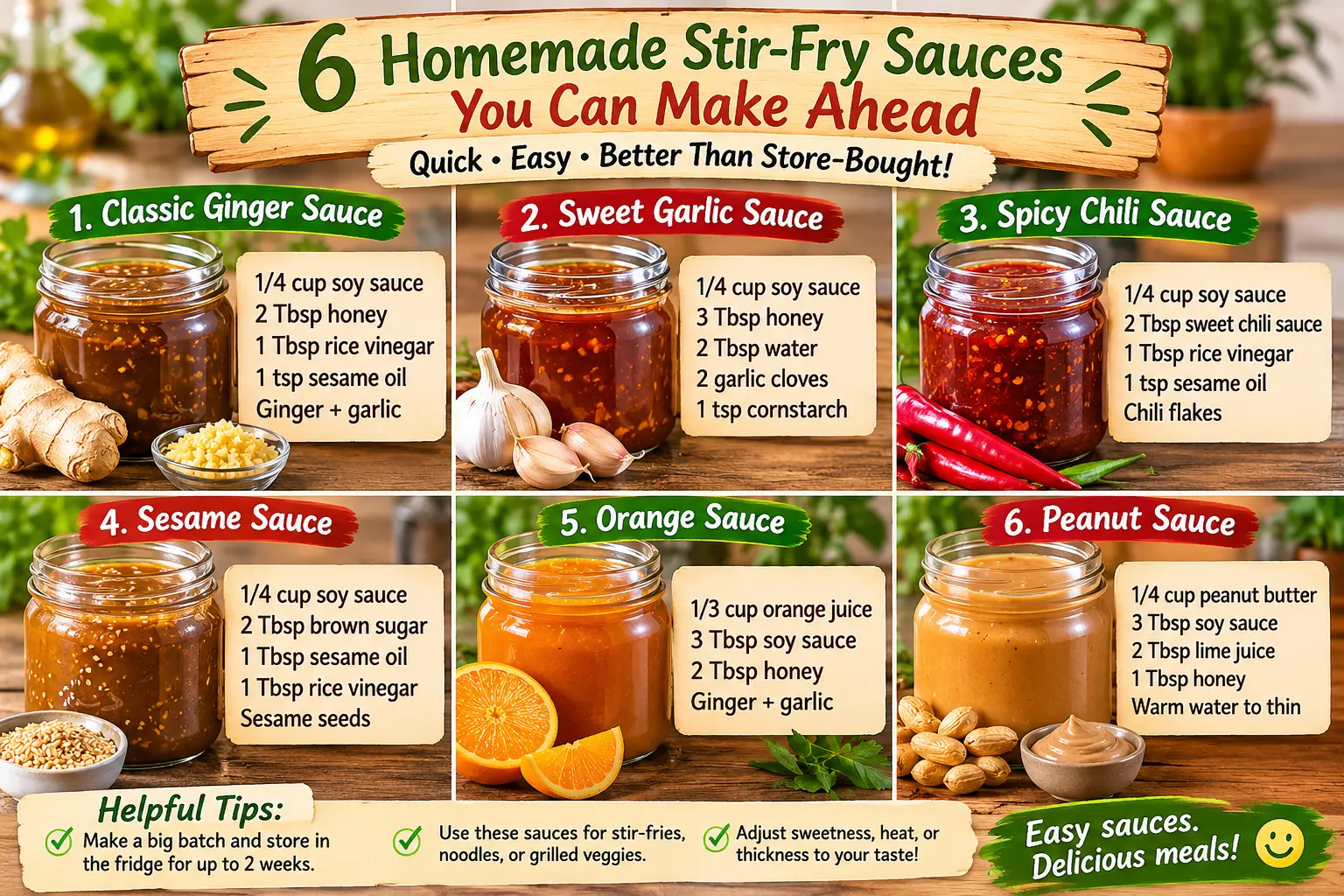
These six sauces use simple pantry ingredients and give you very different flavors: ginger, garlic, chili, sesame, orange, and peanut.
Quick answer
Whisk the sauce ingredients together, refrigerate small batches for short-term use, or freeze portions for later meals. For freezer batches, it is usually better to add cornstarch or another thickener during cooking rather than before freezing.
A Simple Stir-Fry Sauce Formula
Most stir-fry sauces are built from the same basic parts:
- Salt: soy sauce or tamari
- Sweetness: honey, brown sugar, or sweet chili sauce
- Acidity: rice vinegar, lime juice, or orange juice
- Aromatics: garlic, ginger, scallions
- Fat and aroma: sesame oil or peanut butter
- Heat: chili sauce, red pepper, or fresh chili
- Thickener: cornstarch added during cooking when needed
Once you understand that balance, it is easy to adjust the sauces to match whatever vegetables or protein you have.
1. Classic Ginger Stir-Fry Sauce
This is the most versatile sauce in the group.
Ingredients
- 1/4 cup soy sauce
- 2 tablespoons honey
- 1 tablespoon rice vinegar
- 1 teaspoon sesame oil
- 1 teaspoon freshly grated ginger
- 1 small garlic clove, finely grated
- 2 tablespoons water
Best with: broccoli, peppers, carrots, green beans, chicken, beef, tofu, or mushrooms.
2. Sweet Garlic Sauce
Sweet garlic sauce works especially well with vegetables that benefit from a sticky glaze.
Ingredients
- 1/4 cup soy sauce
- 2 tablespoons honey
- 2 tablespoons water
- 2 garlic cloves, finely grated
- 1 teaspoon rice vinegar
For cooking: mix 1 teaspoon cornstarch with 1 tablespoon cold water and add near the end if you want a thicker glaze.
Freezer tip: Leave the cornstarch out before freezing. Regular cornstarch-thickened sauces can separate after freezing and thawing. Add the slurry while reheating instead.
3. Spicy Chili Sauce
Ingredients
- 1/4 cup soy sauce
- 2 tablespoons sweet chili sauce
- 1 tablespoon rice vinegar
- 1 teaspoon sesame oil
- 1 teaspoon honey, optional
- Fresh chili or red pepper flakes to taste
Best with: peppers, onions, cabbage, chicken, shrimp, tofu, or noodles.
4. Sesame Stir-Fry Sauce
Ingredients
- 1/4 cup soy sauce
- 2 tablespoons brown sugar
- 1 tablespoon toasted sesame oil
- 1 tablespoon rice vinegar
- 1 teaspoon grated ginger
- 1 teaspoon sesame seeds
- 2 tablespoons water
Best with: bok choy, broccoli, mushrooms, carrots, noodles, beef, or tofu.
5. Orange-Ginger Sauce
Ingredients
- 1/3 cup orange juice
- 3 tablespoons soy sauce
- 2 teaspoons honey
- 1 teaspoon freshly grated ginger
- 1 small garlic clove, grated
- 1 teaspoon rice vinegar
Best with: chicken, broccoli, snap peas, carrots, peppers, or tofu.
For thicker orange sauce
Add a cornstarch slurry during the final minute of cooking rather than storing the sauce already thickened.
6. Peanut-Lime Stir-Fry Sauce
Ingredients
- 1/4 cup peanut butter
- 3 tablespoons soy sauce
- 2 tablespoons fresh lime juice
- 1 tablespoon honey
- 1 teaspoon grated ginger
- Warm water as needed to thin
Best with: noodles, cabbage, carrots, broccoli, chicken, tofu, or green beans.
The sauce may thicken significantly in the refrigerator. Whisk in a little warm water before cooking.
How to Use Stir-Fry Sauce
- Prepare all vegetables and protein before heating the pan.
- Cook protein first if using it, then remove when needed.
- Stir-fry vegetables until nearly tender.
- Return the protein to the pan.
- Whisk the sauce again.
- Pour it around the hot pan rather than leaving it in one spot.
- Cook until bubbling and evenly coating the ingredients.
If you use a cornstarch slurry, add it near the end and let the sauce come to a brief simmer so it thickens properly.
How Much Sauce Do You Need?
Start with about 1/3 to 1/2 cup sauce for a large skillet of stir-fry, then adjust depending on how many vegetables, noodles, or rice you are using.
It is easier to add more sauce than to rescue vegetables swimming in too much liquid.
Can You Make Stir-Fry Sauce Ahead?
Yes.
Keep homemade uncooked sauces in clean covered containers in the refrigerator and make relatively small batches.
For a conservative home-kitchen approach, plan to use refrigerated homemade sauce within about 3 to 4 days.
These are refrigerator sauces—not shelf-stable preserves. A jar with a lid does not make soy, garlic, ginger, juice, or peanut sauces safe for pantry storage.
Can You Freeze Stir-Fry Sauce?
Most of these sauces can be frozen successfully.
Missouri Extension recommends freezing homemade sauces in suitable containers with a little headspace and notes that many sauces maintain good quality for several months.
Best freezer method
- Mix the sauce without cornstarch.
- Portion it into small freezer-safe containers or bags.
- Remove excess air.
- Label the flavor and date.
- Freeze flat when using freezer bags.
- Thaw in the refrigerator or add to cooking when practical.
For best quality, aim to use frozen homemade sauces within roughly 3 to 4 months, even though some general sauce guidance allows longer storage.
Why Cornstarch Is Better Added Later
Regular cornstarch can lose its smooth texture after freezing and thawing.
Penn State and other Extension freezing guidance note that cornstarch-thickened sauces may separate during freezing.
For meal prep, freeze the sauce thin and add a fresh cornstarch slurry during cooking.
What About Peanut Sauce?
Peanut butter sauce may look slightly separated after refrigeration or freezing.
Usually, vigorous whisking with a little warm water brings it back together.
Freeze it in small portions because you may only need a little at a time.
Use Your Garden Harvest
Stir-fry is one of the easiest ways to use mixed garden vegetables before they become overripe.
Try these vegetables:
- Bell peppers
- Hot peppers
- Green beans
- Carrots
- Broccoli
- Cabbage
- Zucchini
- Snap peas
- Scallions
- Garlic
- Ginger grown in containers
Cut harder vegetables smaller so they finish cooking at roughly the same time as softer ones.
Which Sauce Goes With Which Vegetable?
| Sauce | Great With |
|---|---|
| Classic Ginger | Broccoli, carrots, peppers, green beans |
| Sweet Garlic | Broccoli, mushrooms, cabbage |
| Spicy Chili | Peppers, cabbage, onions, snap peas |
| Sesame | Bok choy, carrots, mushrooms, broccoli |
| Orange-Ginger | Peppers, carrots, broccoli, snap peas |
| Peanut-Lime | Cabbage, carrots, green beans, broccoli |
6 Common Stir-Fry Sauce Mistakes
1. Adding sauce too early
Cook the vegetables first so they sear instead of simmering in sauce.
2. Using too much soy sauce
Taste before adding extra salt. Soy sauce is already salty.
3. Freezing cornstarch-thickened sauce
Freeze the base and thicken it while cooking for better texture.
4. Making the peanut sauce too thick
Warm water can loosen peanut butter without overwhelming the flavor.
5. Treating jarred sauce as shelf-stable
These formulas are refrigerator or freezer sauces, not home-canning recipes.
6. Cooking all vegetables for the same amount of time
Start dense carrots and broccoli earlier than tender greens or zucchini.
Homemade Stir-Fry Sauce FAQ
How long does homemade stir-fry sauce last in the refrigerator?
For a conservative home approach, use homemade sauce within about three to four days and keep it at 40°F (4°C) or below.
Can I freeze homemade stir-fry sauce?
Yes. Most of these sauces freeze well. Freeze in small portions and add cornstarch only after thawing or during cooking.
Do I need cornstarch?
No. It is only used when you want a thicker glaze. Many stir-fries taste great with a thinner sauce.
Can I replace soy sauce?
You can use another suitable salty seasoning such as tamari, but the flavor and sodium level may change, so taste before adding more salt.
Can I use fresh ginger?
Yes. Freshly grated ginger gives the strongest fresh flavor and works especially well in ginger, orange, and peanut sauces.
Are these sauces safe to can?
No shelf-stable canning instructions are provided for these formulas. Refrigerate or freeze them instead.
The Bottom Line
You do not need six store-bought bottles to make six different stir-fries.
Soy sauce, vinegar, honey, garlic, ginger, sesame oil, citrus, chili, and peanut butter can create very different flavors with only small changes in the ratios.
Make small refrigerator batches for the week or freeze portions without cornstarch for future meals.
Then use whatever vegetables are coming out of the garden instead of letting the harvest dictate a completely new recipe every night.
Want more homemade sauces?
See FarmSolo’s 8 Homemade Dipping Sauces for ranch, honey mustard, tzatziki, chipotle mayo, tartar sauce, and other quick refrigerator sauces.
Sources
- USDA Food Safety and Inspection Service — Leftovers and Safe Refrigeration
- University of Missouri Extension — How to Freeze Home-Prepared Foods
- Penn State Extension — Freezing Soups and Sauces
- University of Minnesota Extension — Preserving Food at Home: Freezing