FARMSOLO • BACKYARD FARMING • GARDENING
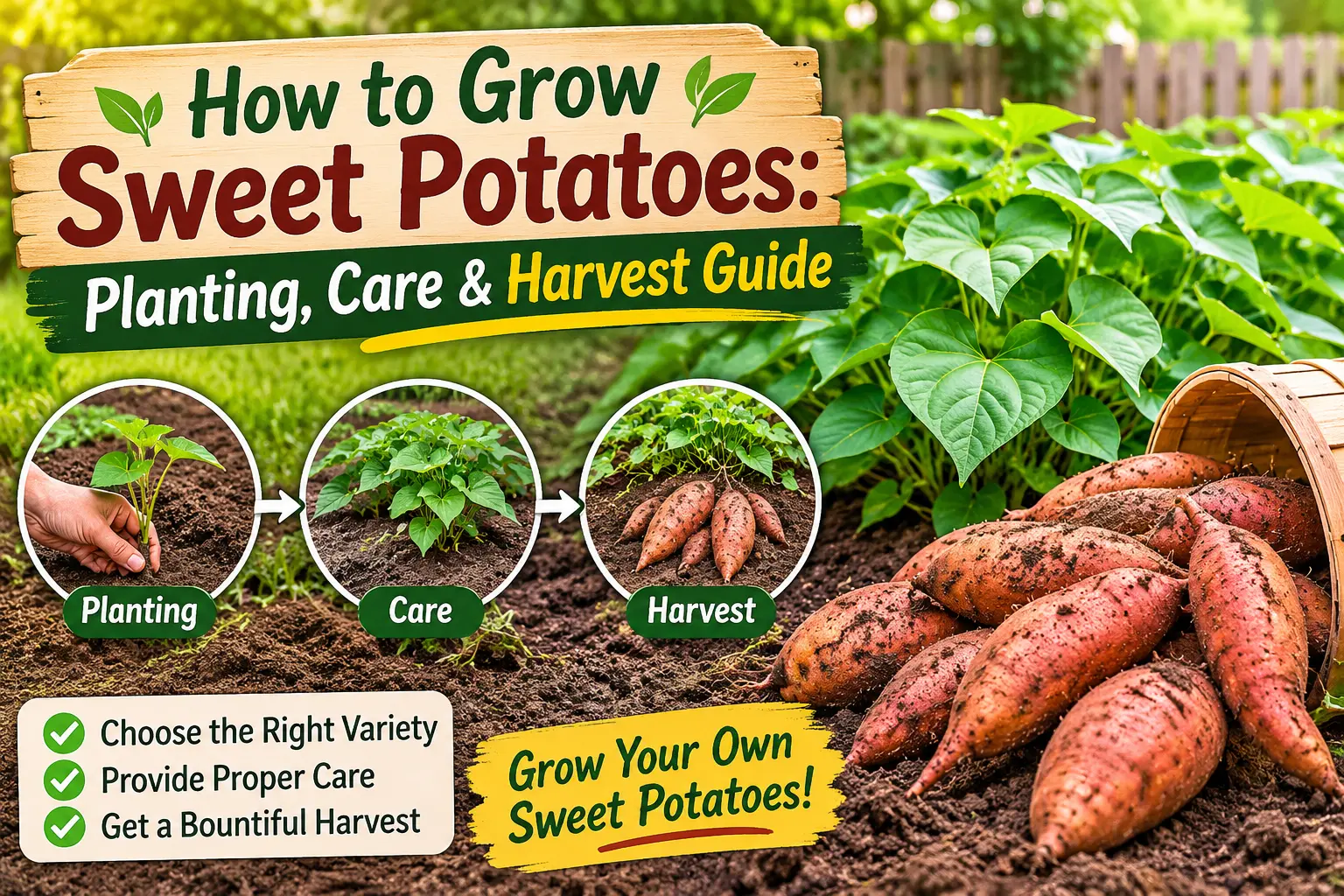
How to Grow Sweet Potatoes: Planting, Care & Harvest Guide
Learning how to grow sweet potatoes is one of those backyard gardening projects that can make you feel like a real homesteader. You plant a few slips, give them warm weather and room to spread, and eventually dig up a crop of sweet, colorful roots hiding beneath the soil.
Sweet potatoes are a great choice for backyard farmers because they can grow in garden beds, raised beds, large containers, and fabric grow bags. They need a reasonably long, warm growing season, but once you understand their basic needs, they are not difficult to manage.
In this guide, we’ll cover choosing sweet potato slips, preparing the soil, planting, watering, fertilizing, dealing with common problems, and harvesting your crop. You’ll also learn how to cure and store sweet potatoes so you can enjoy them long after the growing season ends.
Quick Answer: How Do You Grow Sweet Potatoes?
Sweet potatoes are grown from young shoots called slips rather than ordinary seed potatoes. Plant healthy slips after the danger of frost has passed and the soil is warm, ideally around 65°F (18°C) or warmer.
- Choose a sunny location with at least 6–8 hours of direct sunlight.
- Use loose, well-drained soil.
- Space plants about 12 inches apart as a starting point.
- Water regularly while plants establish.
- Keep weeds under control, especially during early growth.
- Harvest before frost damages the roots.
- Cure harvested roots in warm, humid conditions before long-term storage.
1. Choose the Right Sweet Potato Variety
Before planting, think about your climate, garden size, and how you plan to use your harvest. Some sweet potato varieties have orange flesh, while others have white, cream, or purple flesh.
Here are a few popular varieties worth researching before you order your slips.
Beauregard
Beauregard is a popular orange-fleshed variety known for its attractive roots and relatively quick maturity compared with many sweet potatoes. It is commonly grown by backyard gardeners and is a useful option for beginners to research.
Georgia Jet
Georgia Jet is known for relatively fast growth and is often considered by gardeners who want a variety suited to shorter growing seasons. Check the supplier’s growing information to see whether it suits your local climate.
Japanese Sweet Potato
Japanese sweet potatoes typically have reddish-purple skin and pale, creamy flesh. They offer a different flavor and texture from familiar orange varieties and can add variety to a backyard harvest.
My advice is to start with one or two varieties instead of filling your entire backyard with different plants. That makes it easier to compare their growth and harvest results.
2. Get Healthy Sweet Potato Slips
Sweet potatoes are usually planted using slips. These are young leafy shoots that develop from a mature sweet potato.
You can purchase slips from a reputable garden supplier or grow your own. Buying healthy slips is often the easiest option for beginners because you can start with plants that are ready for the garden.
How to Grow Your Own Slips
If you want to try producing your own slips, follow these steps:
- Choose a healthy sweet potato without soft spots, rot, or visible damage.
- Place it in a warm location with suitable light.
- You can partially suspend it in water using toothpicks or place it in a suitable moist growing medium.
- Wait for shoots to develop from the sweet potato.
- When shoots have grown several inches, carefully separate suitable shoots.
- Allow the separated shoots to develop roots in water or moist growing medium before planting.
Keep the shoots warm and provide bright light. Change the water regularly if you are rooting them in a container of water. Do not leave them sitting in dirty, stagnant water.
One important detail: a sweet potato from the grocery store may be treated, damaged, or unsuitable for producing strong slips. Starting with a healthy planting variety is usually more reliable.
GARDENER’S TIP
Choose healthy, disease-free slips. Strong planting material gives your sweet potato plants a better start and reduces the risk of introducing problems into your garden.
3. Prepare the Soil Before Planting
Good soil preparation can make a big difference when growing sweet potatoes. The roots need room to develop, so heavy, compacted soil is not ideal.
Look for a garden location with loose, well-drained soil. Sandy loam or loamy soil is often suitable. If your soil contains a lot of clay, consider improving its structure or using raised beds.
Prepare Your Garden Bed
- Remove weeds, stones, and old plant debris.
- Loosen the soil to a depth of approximately 8–12 inches where practical.
- Mix in mature compost to improve soil structure.
- Break up large clumps without overworking wet soil.
- Create raised planting rows or mounds if drainage is poor.
Avoid adding excessive nitrogen fertilizer. Too much nitrogen can encourage leafy vines while reducing the balance between vine growth and root development.
A soil pH around 5.8–6.5 is generally suitable. A soil test is a better way to decide whether you need to adjust your garden soil.
IMPORTANT REMINDER
Do not plant sweet potatoes in soil that stays waterlogged. Good drainage is essential for healthy root development.
4. When to Plant Sweet Potatoes
Sweet potatoes love warm weather. Planting too early, when the soil is cold, can slow root development and stress young slips.
Wait until the danger of frost has passed and the soil temperature is consistently around 65°F (18°C) or warmer.
In many parts of the United States, planting takes place in late spring or early summer. Gardeners in cooler regions may need to choose early-maturing varieties and use season-extension methods.
For Canadian gardeners, the length of the frost-free season is especially important. Choose a suitable variety and check your local planting calendar before ordering slips.
5. How to Plant Sweet Potato Slips
Once the soil is warm and your slips are ready, it is time to plant. This is one of the easiest parts of the whole process.
- Choose a sunny garden bed with loose soil.
- Make small planting holes deep enough to cover the roots and lower portion of each slip.
- Place each slip carefully into the soil.
- Cover the roots and gently firm the soil around the plant.
- Water immediately after planting.
- Leave approximately 12 inches between plants as a starting point, with more space if your variety or garden layout requires it.
Sweet potato vines spread across the ground, so allow enough room between rows. Around 3 feet between rows is a useful starting point for a traditional garden bed.
Do not worry if the plants look a little tired during the first few days. Transplanted slips may temporarily wilt while their roots become established. Keep the soil lightly moist and protect young plants from extreme heat.
6. Growing Sweet Potatoes in Containers and Grow Bags
Do not have a large backyard? No problem. Sweet potatoes can also be grown in containers, which makes them useful for patios, small gardens, and urban homesteads.
Choose a large container or fabric grow bag with good drainage. A container holding around 15–20 gallons can be a reasonable starting point for one plant, although larger containers may provide more room.
Container Growing Tips
- Use a container with drainage holes.
- Fill it with a loose, well-draining potting mix.
- Plant one slip in a smaller container or adjust the number according to its size.
- Place the container somewhere that receives plenty of direct sunlight.
- Check moisture more frequently because containers dry out faster than garden beds.
- Make sure the container is large enough for the roots to develop.
Fabric grow bags are particularly useful because they allow excess water to drain and can be moved when necessary. However, they may dry out faster during hot weather.
Container-grown sweet potatoes may produce a smaller harvest than plants grown in spacious garden beds. Good drainage, sufficient soil volume, and consistent watering help improve your chances.
SMALL BACKYARD TIP
If you are short on garden space, try one large grow bag first. It is an easy way to learn how sweet potatoes grow without changing your entire backyard layout.
7. Watering Sweet Potato Plants
Water is important, especially while slips are establishing themselves. Young plants need consistent moisture to develop healthy roots and begin producing vines.
During the first few weeks, check the soil regularly. Water when the upper layer begins to dry rather than following a rigid daily schedule.
Once plants are established, they can tolerate some dry conditions, but prolonged drought may reduce root size and affect the harvest.
Common Watering Mistakes
- Watering too frequently when the soil is already wet.
- Allowing containers to dry out completely.
- Using poorly drained soil that stays waterlogged.
- Ignoring plants during hot, dry weather.
Water near the base of the plants when possible. A layer of organic mulch can help reduce moisture loss and suppress weeds.
8. Sunlight and Fertilizing
Sweet potatoes need plenty of sunlight to grow well. Choose a location with at least 6–8 hours of direct sunlight each day.
They also need nutrients, but more fertilizer does not automatically mean more sweet potatoes.
Use mature compost before planting and consider a soil test to identify nutrient deficiencies. If additional fertilizer is needed, choose a balanced product appropriate for your soil and follow its label directions.
Avoid excessive nitrogen. Too much can produce large, beautiful vines without giving you the root harvest you hoped for.
GARDENER’S TIP
Healthy vines are important, but remember that the goal is to grow healthy roots. Do not keep adding nitrogen just because you want the plants to look greener.
9. Common Sweet Potato Problems and How to Prevent Them
Even a healthy backyard garden can have problems. The good news is that many sweet potato issues can be reduced with good growing practices.
Yellowing Leaves
Yellow leaves can result from overwatering, poor drainage, nutrient problems, or natural aging. Check the soil before adding fertilizer. If it is constantly wet, improve drainage and adjust watering.
Sweet Potato Weevils
Sweet potato weevils can damage vines and roots. Look for unusual holes, damaged stems, and signs of feeding. Remove badly affected plant material and use clean planting stock. Crop rotation can help reduce the risk of recurring problems.
Root Rot
Excess moisture and poorly drained soil can encourage root problems. Plant in well-drained soil and avoid keeping the garden bed waterlogged.
Cracked or Misshapen Roots
Irregular moisture, compacted soil, and other growing stresses can affect root shape. Keep watering reasonably consistent and provide loose soil for root development.
10. When and How to Harvest Sweet Potatoes
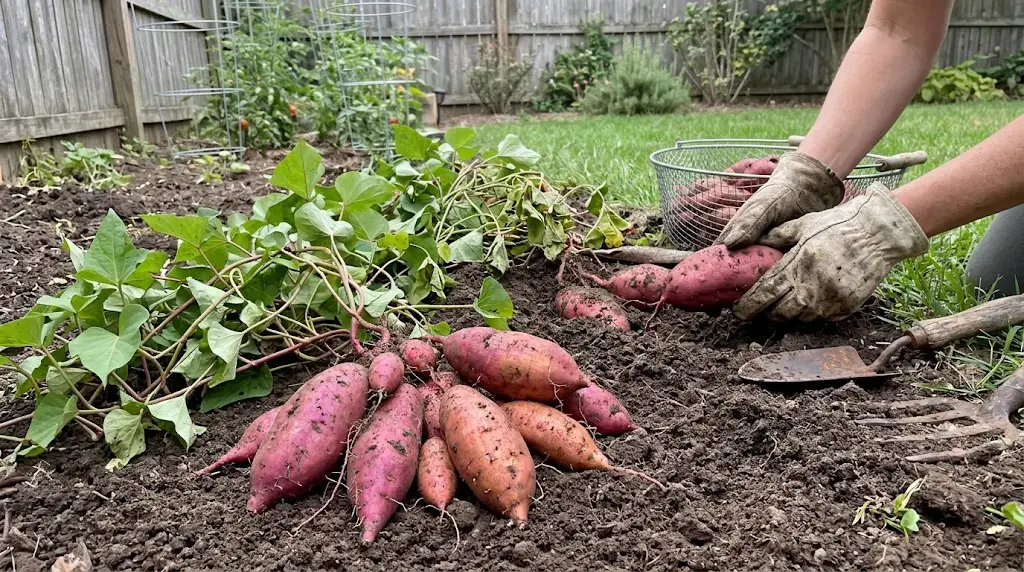
Harvesting is probably the most exciting part of growing sweet potatoes. After months of caring for the vines, you finally get to discover what has been developing underground.
Many varieties need around 90–120 days to mature, although the actual growing period depends on the variety and conditions.
Watch the calendar and local weather. Sweet potatoes are sensitive to frost, so harvest before freezing temperatures damage the roots.
Harvesting Step by Step
- Choose a dry day when the soil is not excessively wet.
- Carefully move the vines away from the area you plan to dig.
- Use a garden fork or spade to loosen the soil outside the main root area.
- Lift the soil gently and search for the sweet potatoes.
- Handle each root carefully to avoid cuts and bruises.
- Remove loose soil without aggressively scrubbing the roots.
Sweet potato skins can be easily damaged during harvesting. Work slowly, especially around the base of the plant. A little patience now can help reduce storage problems later.
11. How to Cure Sweet Potatoes After Harvest
Here is a step many beginners overlook: curing. Freshly harvested sweet potatoes are not always at their best for eating or storage immediately after digging.
Curing helps heal small surface injuries and improves the sweetness and eating quality of the roots.
For proper curing, aim for approximately 80–85°F (27–29°C) with 85–90% relative humidity for about 7–10 days. Good airflow is important, and the roots should not become wet or sit in standing water.
If you cannot create these conditions at home, do the best you can in a warm, humid, well-ventilated location. Avoid exposing the roots to direct sunlight or excessive heat.
IMPORTANT STORAGE NOTE
Do not place freshly harvested sweet potatoes directly into cold storage. Give them time to cure first, and handle them carefully to protect their skins.
12. How to Store Sweet Potatoes
After curing, move sweet potatoes into a cool, dry, dark storage area with good ventilation.
A storage temperature around 55–60°F (13–16°C) is generally recommended. Avoid refrigerating raw sweet potatoes because cold temperatures can negatively affect their texture and quality.
- Do not store damaged or rotting roots with healthy ones.
- Keep the roots away from direct sunlight.
- Use ventilated boxes or crates.
- Check stored roots regularly for signs of spoilage.
- Avoid washing the roots before storage unless necessary.
With proper curing and storage conditions, sweet potatoes can often keep for several months.
13. Simple Sweet Potato Growing Checklist
Before planting, use this quick checklist to make sure your backyard garden is ready.
- Choose a suitable sweet potato variety.
- Buy healthy slips or prepare your own.
- Wait until the soil is warm and frost danger has passed.
- Prepare loose, well-drained soil.
- Choose a sunny planting location.
- Water regularly while plants establish.
- Control weeds and monitor for pests.
- Harvest before frost.
- Cure the roots before long-term storage.
Frequently Asked Questions
How long does it take to grow sweet potatoes?
Most sweet potato varieties take approximately 90–120 days from planting slips to harvest. Some varieties need more time, depending on the climate and growing conditions.
Can you grow sweet potatoes in a small backyard?
Yes. You can grow sweet potatoes in raised beds, large containers, and fabric grow bags. Choose a sunny location and provide enough soil volume for the roots to develop.
Do sweet potatoes need full sun?
Sweet potatoes grow best with plenty of direct sunlight, ideally around 6–8 hours daily. Suitable sunlight helps support healthy vine and root development.
Can you grow sweet potatoes from a store-bought sweet potato?
Yes, sometimes. A healthy sweet potato may produce shoots that can become slips. However, grocery-store roots are not always suitable for propagation, so buying planting slips from a reliable supplier is usually more predictable.
Final Thoughts: Start Your Own Sweet Potato Garden
Learning how to grow sweet potatoes is a rewarding way to make better use of your backyard garden. You do not need a huge farm or expensive equipment to get started. A sunny spot, healthy slips, loose soil, and consistent care can take you a long way.
Start with a few plants, learn how they respond to your local weather, and adjust your watering and soil preparation as needed. Once you harvest your first sweet potatoes, you may find yourself making room for an even bigger crop next season.
Have you grown sweet potatoes in your backyard or in containers? Share your growing experience and favorite varieties with other backyard gardeners!
Keep Growing with Farmsolo
Enjoy practical backyard farming, gardening, food preservation, and self-sufficiency guides? Explore more Farmsolo articles and make the most of your home garden.