A good duck run with pond should give ducks water without turning the entire enclosure into mud. The easiest layout separates the wet splash zone from a dry sleeping and feeding area, keeps the house secure from predators, provides clean drinking water, and makes the pond simple to drain or clean.
Plan these five things first
- Keep a dry sheltered area separate from the main splash zone.
- Make the water area easy to empty, clean, or refresh.
- Protect the run from digging and flying predators.
- Give ducks clean drinking water even if they also have a pond.
- Plan drainage before the ducks turn the area around the pond into mud.

Why This Duck Run With Pond Layout Works
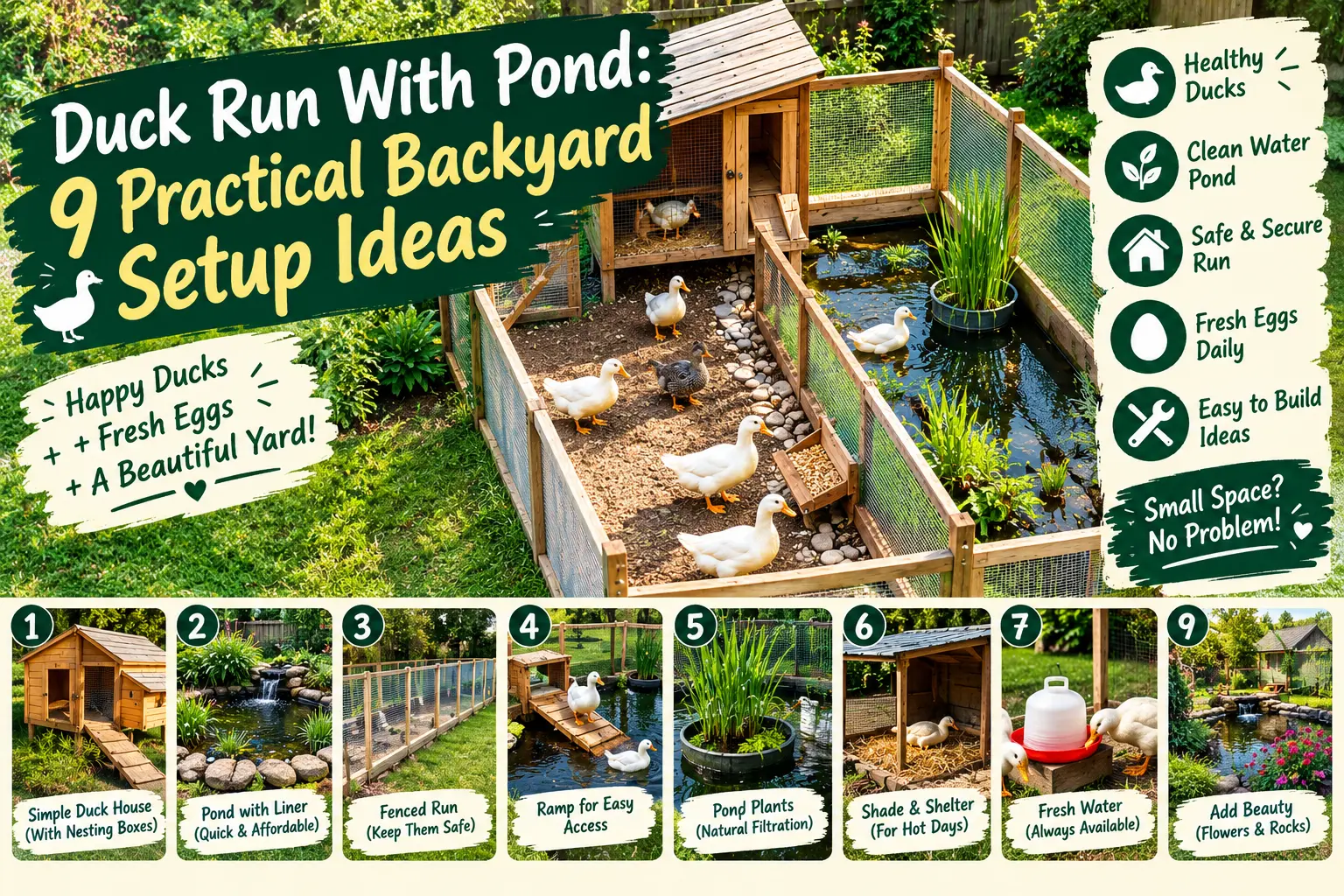
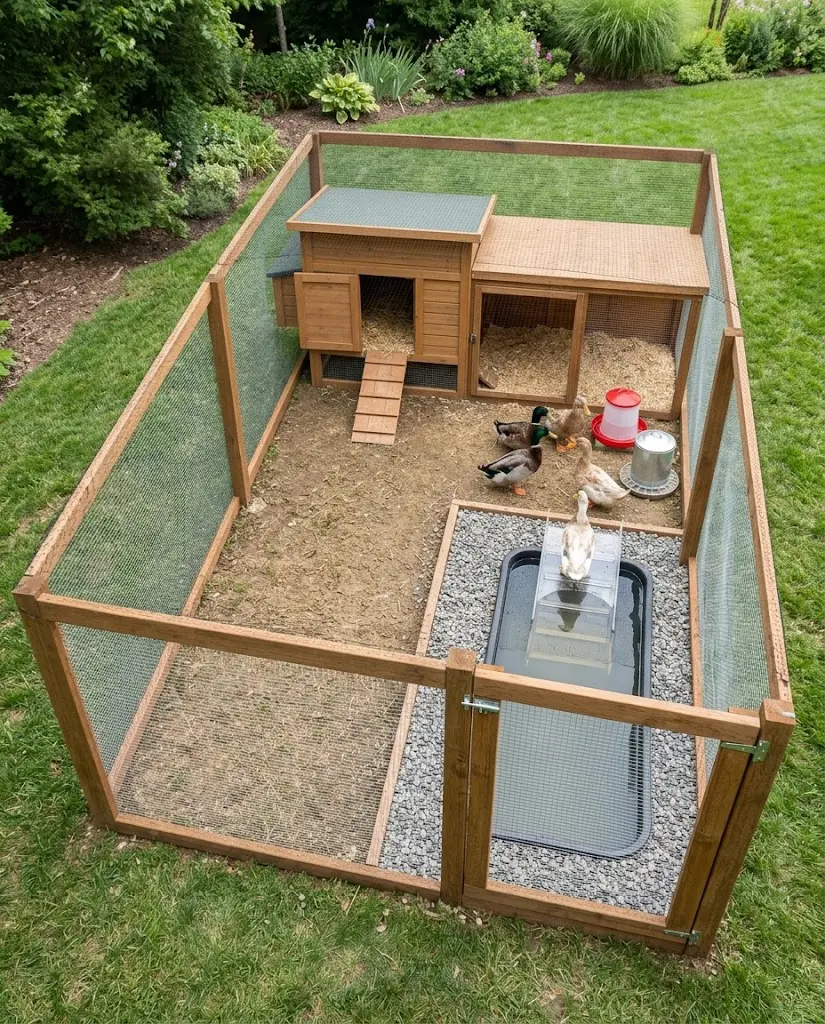
The inspiration image uses a surprisingly useful layout for a small backyard flock.
The sleeping house is at one end, the main walking and feeding area stays relatively dry, and the swimming water is contained in a separate narrow section.
That separation matters because ducks are extremely good at moving water out of containers and into the surrounding ground.
When the pool, waterer, feeder, bedding, and sleeping space are all placed together, the entire area can become wet quickly.
A better setup gives water its own management zone and protects the dry shelter from constant splashing.
The main improvement I would make to the Pinterest design is stronger overhead and predator protection where local predators require it. The attractive open-top look should not be copied without considering hawks, owls, raccoons, foxes, dogs, and other threats in your area.
Do Backyard Ducks Need a Pond?
No. Domestic ducks do not require a swimming pond to grow and live successfully.
Cornell University notes that swimming water is not essential, although access to water for wading or swimming can be beneficial, particularly in warm weather.
What ducks absolutely need is clean drinking water.
The drinking area should allow them to use their bills properly. Cornell recommends a drinking opening wide enough for ducks to submerge the bill, while University of Maryland guidance for waterfowl emphasizes providing liquid water deep enough for birds to dunk and wash their heads.
That means a backyard flock can be managed without a decorative pond, but a clean pool or pond can still provide enrichment and allow natural water behavior.
Think maintenance before beauty: A small clean pool that you can dump, scrub, and refill may be more practical for a backyard flock than a beautiful permanent pond that becomes difficult to clean.
9 Practical Duck Run With Pond Ideas
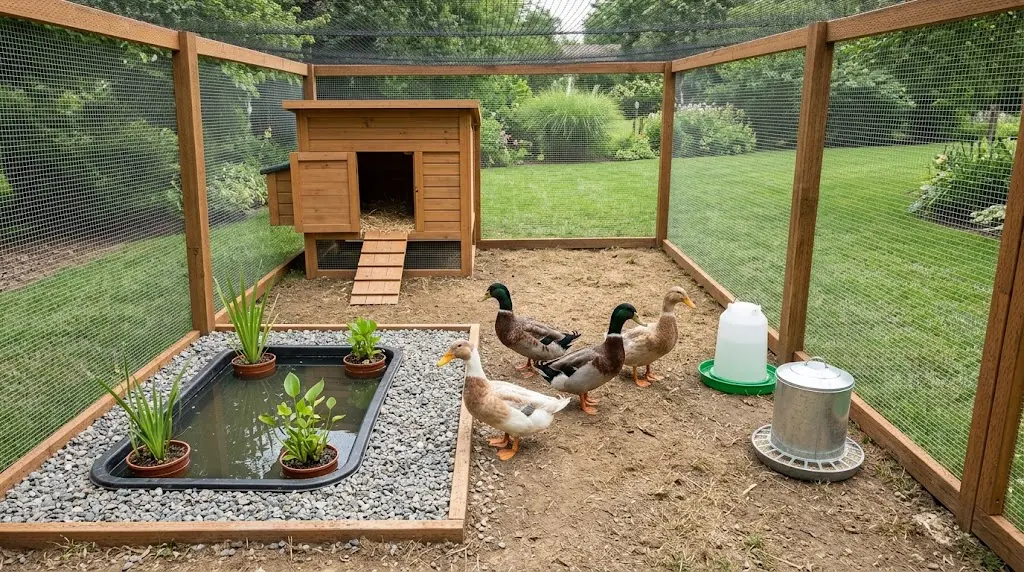
1. Split the Run Into Wet and Dry Zones
This is the strongest idea in the inspiration image.
Keep the pond or bathing container on one side and give the ducks a separate area for walking, resting, and feeding.
The separation does not need to be complicated. A low internal divider, short fence, path, or change in ground material can help contain splashed water.
The goal is not to keep ducks perfectly dry. That is unrealistic. The goal is to prevent one small pool from turning the entire enclosure into permanently saturated ground.
2. Keep the Duck House Dry
Ducks may enjoy water, but they still need a clean, dry place to rest.
Cornell’s basic duck-care guidance specifically includes a clean, dry sheltered area among the essential requirements for healthy ducks.
Keep the main pond, tubs, and splashiest waterers away from bedding whenever possible.
The sleeping area should also have good ventilation so moisture does not build up inside the house.
A slightly raised house can help keep runoff away from the floor, but make the entrance easy for ducks to use rather than designing a steep chicken-style ladder.
3. Use a Pond You Can Actually Clean
Ducks bring feed, dirt, feathers, droppings, and mud into water.
University of Wisconsin Extension warns that small pools and ponds can become dirty quickly and need frequent attention to keep the water fresh.
For a small backyard flock, a stock tank, rigid pond shell, or other drainable pool can be easier than a deep permanent pond.
If you install a permanent water area, decide how you will remove dirty water before the pond is built.
A drain, pump access, or simple cleaning route is far easier to plan now than after the entire enclosure is finished.
4. Create a Draining Splash Zone
The ground immediately around duck water usually receives the most abuse.
Instead of expecting grass to survive right beside the pond, create a surface that can handle repeated wetting.
A firm base with suitable washed gravel, pavers, or another well-draining surface can make the wet zone easier to clean.
Keep sharp materials away from duck feet and make sure wastewater has somewhere safe to go rather than flowing into the sleeping area or a neighboring property.
If your yard already struggles with standing water, review FarmSolo’s backyard drainage system guide before installing a permanent duck pond.
5. Predator-Proof the Whole Run, Not Just the House
A secure sleeping house is important, but predators can also enter the outdoor run.
Use strong mesh sized for the predators in your region and secure doors with reliable latches.
Where digging predators are a concern, poultry-extension guidance commonly recommends buried fencing or an outward-facing wire apron at ground level.
Overhead protection can also help where hawks, owls, climbing predators, or wild birds are a problem.
Penn State Extension recommends fully fenced and covered runs as one of the strongest forms of predator protection for confined poultry.
6. Keep Feed Out of the Pond Zone
The closer dry feed sits to the swimming area, the faster the water can become dirty.
Place the main feeder in a covered section of the run where rain and pond splash will not soak the feed.
North Carolina State Extension recommends keeping feeders protected from rain and maintaining feed and water equipment carefully.
Clean up spilled feed too. Leftover feed can attract rodents and wildlife and may spoil when it remains wet.
7. Give Ducks an Easy Way In and Out of the Water
A decorative pond edge can be surprisingly awkward for ducks if it has a high vertical wall.
Plan an easy entry and exit point appropriate for the size of your birds.
A broad low step, stable ramp, or gently sloped edge can be easier to use than forcing birds to jump over a tall rim.
Keep the surface stable when wet and inspect it regularly for algae, damage, or anything that could trap a foot.
8. Add Plants in Containers Instead of the Pond Bottom
The tall water plants in the inspiration image make the pond look natural, but ducks can be rough on plants.
A removable pot or protected planting basket is easier to replace than a carefully planted pond bottom.
Choose non-toxic plants appropriate for your climate and the birds, and do not use aquatic chemicals or fertilizers unless they are safe for the intended livestock environment.
Also remember that dense planting can make cleaning harder, so keep the maintenance route simple.
9. Build a Service Gate Near the Pond
This small detail can save a surprising amount of work.
Put a gate where you can bring in a hose, bucket, brush, pump, wheelbarrow, or replacement pool without carrying everything through the duck house.
You will clean the water area far more often than a decorative backyard pond, so design for maintenance from the beginning.
Duck Pond, Stock Tank, or Kiddie Pool?
There is no single best water setup for every backyard.
| Water setup | Best feature | Main challenge |
|---|---|---|
| Small rigid pool | Cheap and easy to replace | Needs frequent dumping and refilling |
| Stock tank | Durable and easy to place | Heavy when full; drainage needs planning |
| Preformed pond shell | Cleaner built-in appearance | Harder to move and may need pumping or drainage access |
| Permanent lined pond | Can create a natural-looking water feature | Most difficult to clean and manage around ducks |
For a small flock, easy cleaning often matters more than making the water area look like a natural lake.
How to Keep a Duck Run From Turning Into Mud
You cannot completely eliminate water from an active duck area.
You can control where most of it goes.
- Keep the pool in one dedicated wet zone.
- Move drinking water away from bedding.
- Use a firm, draining surface around water.
- Direct wastewater away from the duck house.
- Repair low spots where water constantly pools.
- Use enough run space that every bird is not standing in the same wet area all day.
USDA biosecurity guidance also recommends correcting areas where standing water remains after heavy rain because stagnant wet areas can attract wildlife and make flock management harder.
Keep Wild Waterfowl Away From the Duck Run
A pretty pond can accidentally attract wild ducks and other birds.
That matters because wild waterfowl can carry avian influenza and other diseases without appearing sick.
USDA APHIS recommends reducing contact between backyard poultry and wildlife, keeping feed from attracting wild animals, and separating poultry from natural ponds that wild waterfowl use.
A contained water area inside a protected run is easier to manage than allowing your domestic ducks to share an open pond visited by wild birds.
Keep fencing and screens in good repair, clean up spilled feed, and avoid creating an easy feeding station for wild birds around your flock.
Biosecurity upgrade: A duck pond inside a secure managed run is different from giving the flock access to an open natural pond that wild ducks and geese regularly visit.
How Big Should a Duck Run Be?
There is no useful single run dimension for every flock.
The number of ducks, breed size, how much time they spend in the enclosure, climate, ground conditions, and whether they have access to other secure areas all matter.
In practical backyard management, more usable space usually makes it easier to keep the ground clean and reduces the amount of traffic concentrated around one feeder or water source.
Do not choose the smallest enclosure that can physically hold the birds. Design around movement, cleaning, feeding, dry resting space, and water management.
If you are choosing a duck breed for a backyard setup, FarmSolo’s Silver Appleyard duck guide shows how breed size, temperament, eggs, and space can affect the setup you need.
Does a Duck Pond Need a Filter?
Not every backyard duck pool needs a filtration system.
For a small drainable pool, the simplest approach may be to empty dirty water, clean the container, and refill it.
A permanent pond is different. Pumps, mechanical filtration, plant zones, drains, and other systems can help manage water, but ducks continuously add organic material, so a decorative pond filter should not be expected to remove the need for maintenance.
Before buying pumps and filters, decide whether a smaller water area that can simply be cleaned is more realistic for your flock.
Can You Reuse Dirty Duck Pond Water?
Duck water contains manure, feed, sediment, feathers, and other organic material, so do not assume it can be sent anywhere in the garden without planning.
Avoid creating standing wastewater around the coop or allowing it to run into wells, surface water, neighboring property, or places where people frequently walk.
If you intend to reuse manure-rich water around non-food landscape plants, consider local runoff rules, sanitation, the amount being applied, and whether the soil can absorb the water without creating a wet area.
Be especially cautious around edible crops that may contact manure-contaminated water directly.
Common Duck Run With Pond Mistakes
- Putting the pond beside the bedding. Splashing can keep the sleeping house wet.
- Building a permanent pond with no cleaning plan. Ducks can foul small bodies of water quickly.
- Expecting grass to survive around the pond. Concentrated duck traffic and water often turn the immediate splash area into mud.
- Using chicken wire as the only predator barrier. Choose fencing and mesh according to the predators you need to exclude.
- Leaving the run open above where predators are a concern. Overhead protection may be needed.
- Keeping feed directly beside the pool. Wet feed and spilled grain quickly make water management harder.
- Giving ducks access to a wild-bird pond. Shared water can increase disease exposure.
- Forgetting drainage. The water you remove from the pond still needs somewhere appropriate to go.
- Building for appearance instead of cleaning access. Ducks make maintenance a daily part of the design.
Duck Run With Pond FAQ
Do ducks need a pond in their run?
No. Ducks do not require swimming water, but they do need clean drinking water. Water that allows normal bill and head cleaning is useful, and a clean pool can provide additional enrichment.
How do you keep a duck pond clean?
For a small backyard setup, make the pond easy to drain or dump, remove dirty water regularly, clean accumulated waste, and refill with clean water. Smaller pools are often easier to maintain than complex permanent ponds.
What should go around a duck pond?
A firm, well-drained surface is usually easier to manage than exposed soil immediately around the water. The exact material depends on climate, drainage, bird safety, and how you plan to clean the area.
Should the duck pond be inside the run?
For many backyard flocks, placing the water area inside a controlled enclosure makes predator management and biosecurity easier. An open pond visited by wild waterfowl creates different disease and management concerns.
Do ducks still need a drinking waterer if they have a pond?
Providing a dependable source of clean drinking water is still a good management practice. Pond water can become dirty quickly as ducks swim, feed, and defecate in it.
Can ducks sleep beside their pond?
They need access to a clean, dry sheltered resting area. Keeping the main pond and splash zone away from sleeping bedding makes that easier to maintain.
Can a duck run have plants?
Yes, but ducks may eat, trample, or dig around plants. Protected beds or removable containers are often easier than expecting delicate plants to survive inside a heavily used run.
Design the Duck Run Around the Water Mess
The Pinterest image gets the most important idea right: the water should have its own zone.
Keep the sleeping shelter dry, create a manageable pond area, protect the run from predators, provide dependable clean drinking water, and make drainage part of the design before the ducks arrive.
You do not need a large natural-looking pond to keep backyard ducks successfully.
A smaller water area that is easy to clean can be a better system because the best duck setup is not the one that looks perfect on the first day. It is the one you can still keep clean, dry, secure, and healthy months later.