A good firewood storage rack should do more than make a pile look tidy. It should keep wood off wet soil, allow air to move through the stack, separate kindling from larger logs, and keep firewood far enough from the house to reduce moisture and pest problems.
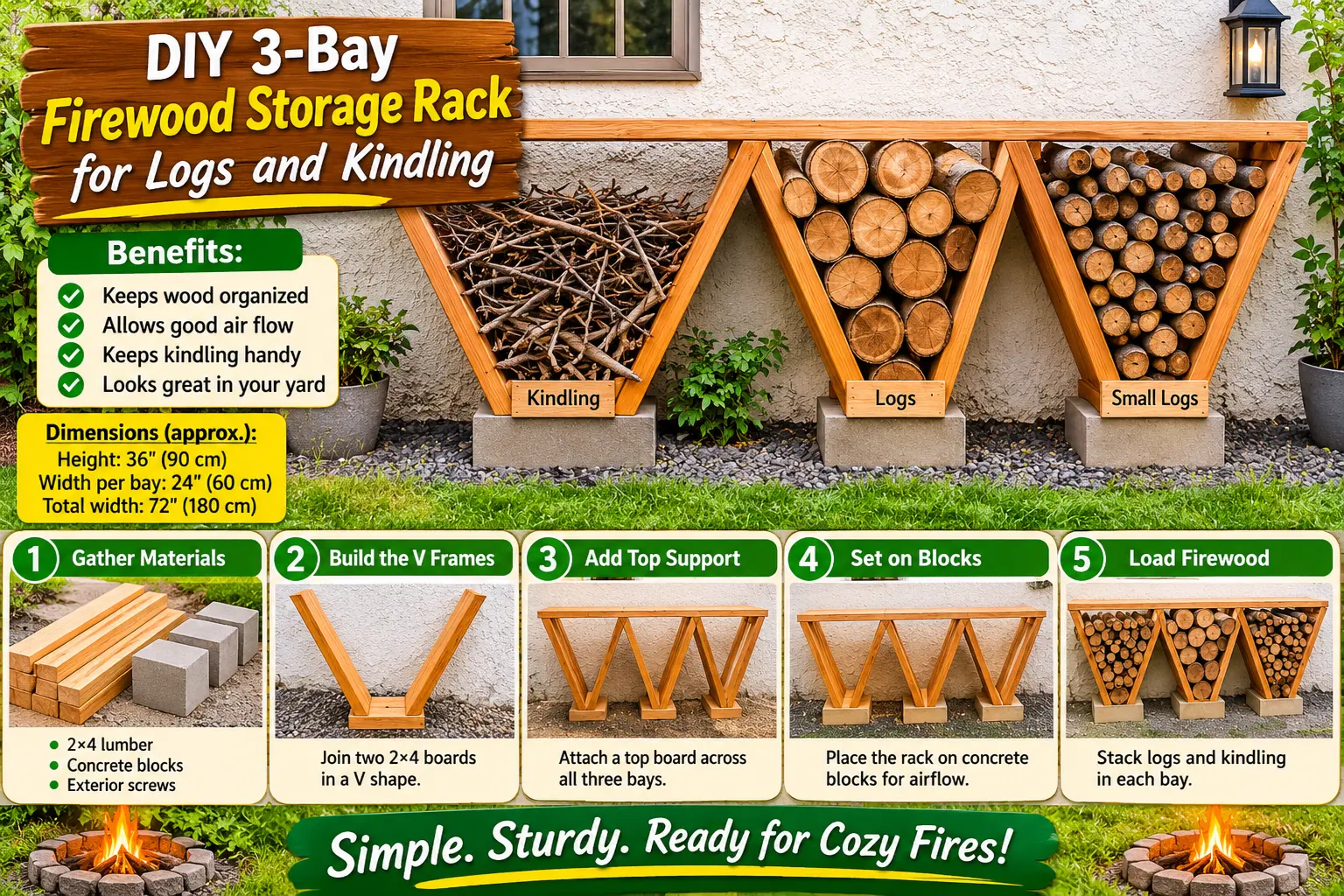
The Pinterest design uses three simple V-shaped wood bays. One holds thin sticks and kindling, another holds medium logs, and the last stores larger rounds. The sorting idea is excellent, but the location directly against the exterior wall is the part I would change.
Best practice: store firewood off the ground, with plenty of airflow, and as far from the house as practical. Firewood stacked directly against a foundation or wall can hold moisture and provide shelter for insects.
Why This V-Shaped Firewood Rack Is Useful
The strongest part of the design is the separation.
- Bay 1: twigs and kindling
- Bay 2: medium-size logs
- Bay 3: larger firewood
That means you do not have to dig through a large pile every time you want small dry pieces to start a fire.
1. Keep Firewood Off the Ground
Logs sitting directly on soil can absorb moisture from below and stay damp much longer.
Penn State recommends raising firewood on pallets, metal supports, or another base that reduces ground moisture and lets air move below the stack.
The concrete blocks in the inspiration image are useful for this purpose, but the wood itself should not be allowed to sag until it touches soil.
2. Do Not Press the Rack Against the House
This is the biggest change I would make to the Pinterest setup.
University of Minnesota advises storing firewood as far away from buildings as possible, and Penn State also recommends keeping firewood away from the house and off the ground.
Reasons include:
- Carpenter ants
- Termites
- Spiders
- Rodents
- Trapped moisture
- Reduced airflow
- Potential wildfire fuel near the structure
3. Leave Air Around the Stack
A dense wall of logs may look tidy but can dry poorly.
Penn State specifically recommends stacking wood loosely enough to allow sunlight and airflow while still keeping the pile stable.
The open sides of a V-shaped rack help because they avoid enclosing the wood inside a solid box.
4. Cover the Top, Not the Whole Pile
Rain protection is useful, but fully wrapping a firewood pile in plastic can trap moisture.
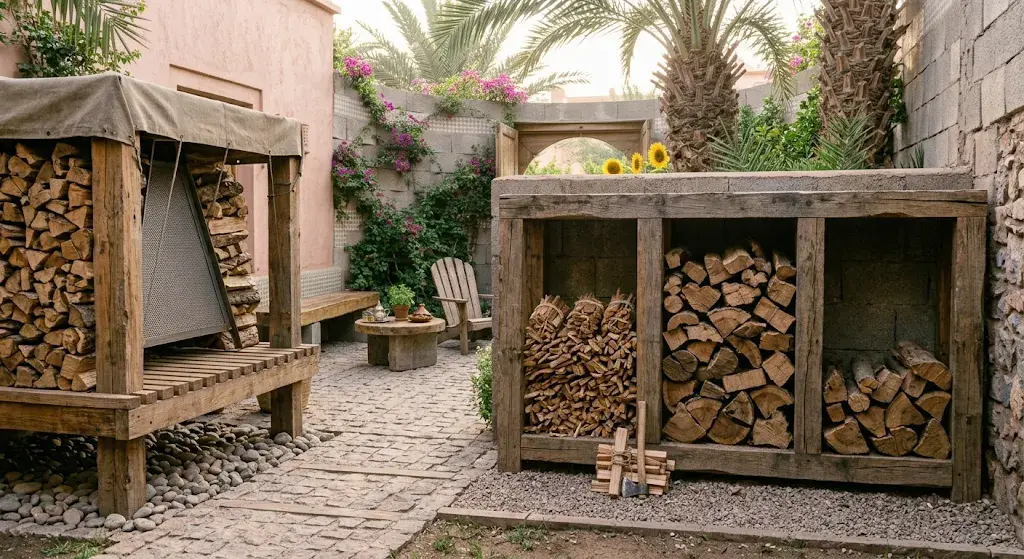
A better approach is a small roof or top cover that sheds rain while leaving the sides open.
Penn State warns against fully covering a stack in tarp or plastic because trapped moisture can accelerate decay.
5. Separate Kindling From Full-Size Logs
This is where the Pinterest design really works.
Keep:
- Very thin twigs in one section
- Finger- to wrist-thick kindling in another
- Split firewood in the largest bay
When everything is mixed together, the small dry pieces tend to disappear under heavier logs.
6. Use a Stable Base
The rack is only as stable as the surface beneath it.
Avoid placing a tall loaded rack on loose mud or soft soil where one side can settle lower than the other.
A compacted gravel pad, pavers, or another stable drained base works better.
7. Build the Sides Strong Enough for Outward Pressure
A V-shaped bay pushes sideways as more logs are added.
Do not depend on two loose boards leaning against concrete blocks.
The angled uprights should be securely connected to a stable base or frame so the entire pile cannot spread outward.
8. Use Exterior-Rated Materials
A permanent outdoor rack gets wet, dries out, freezes, heats up, and repeatedly carries heavy loads.
Use lumber and fasteners appropriate for exterior exposure.
If you use reclaimed lumber, inspect it carefully for rot, severe splitting, nails, screws, and chemical contamination before using it structurally.
9. Sort by Dryness Too
Size is not the only useful way to organize a firewood rack.
Consider separating:
- Freshly split wood
- Seasoning wood
- Ready-to-burn wood
- Kindling
That prevents newly cut wet wood from being mixed into your driest fuel.
10. Keep the Bark Side in Mind
There is no single universal stacking direction that magically dries every piece faster, but consistency matters.
Focus first on loose stacking, sun exposure, airflow, and protection from direct rain rather than obsessing over one exact bark orientation.
11. Do Not Store Green Firewood Indoors
Freshly cut wood can contain substantial moisture.
Season it outdoors where air can move around it rather than filling a basement, shed, or living area with damp wood.
12. Bring Only a Small Amount Close to the House
Penn State recommends bringing firewood into the home only when needed.
A practical system is:
Main outdoor rack → small daily-use rack → fireplace or wood stove.
That keeps the large pest-friendly wood pile away from the building while still making daily fires convenient.
13. Think About Wildfire Risk
In wildfire-prone regions, the distance between a wood pile and a house matters for more than insects.
Oregon State wildfire guidance recommends keeping combustible materials such as firewood away from the immediate area around a home and gives about 30 feet as a target for firewood storage in its defensible-space guidance.
Local guidance may differ, so follow the recommendations for your region.
If wildfire is a realistic hazard where you live, do not copy the Pinterest location beside the wall. Move the firewood rack well away from the structure.
14. Keep the Area Around the Rack Clean
Leaves, bark, wood chips, weeds, and sawdust can accumulate underneath a firewood rack.
Clean the area periodically to reduce:
- Moisture buildup
- Pest hiding places
- Rotting organic debris
- Wildfire fuel
15. Do Not Stack Higher Than You Can Safely Reach
A taller pile stores more wood, but unstable stacks can shift or roll.
Keep the rack low enough that you can remove logs without pulling heavy pieces down from above shoulder height.
Simple Three-Bay Firewood Rack Layout
| Bay | What to Store | Why |
|---|---|---|
| Small | Twigs and dry kindling | Easy fire starting |
| Medium | Small split logs | Builds the fire after ignition |
| Large | Full-size seasoned firewood | Main heating fuel |
What This Pinterest Firewood Rack Gets Right
- Separates kindling and logs by size.
- Keeps the wood organized.
- Uses an open design with good potential airflow.
- Raises the stack above bare soil.
- Uses a compact footprint.
- Makes it easy to see how much of each wood size remains.
What I Would Change
- Move the entire rack away from the house.
- Add a simple roof over the top while leaving the sides open.
- Build a more permanent stable base rather than relying only on loose blocks.
- Secure the angled sides so outward pressure cannot spread them apart.
- Keep debris cleaned out from underneath.
- Separate wet seasoning wood from ready-to-burn wood.
Firewood Storage FAQ
Should firewood be stored against the house?
It is better to keep the main firewood pile away from the house. Extension guidance recommends distance from buildings to reduce moisture and pest problems, and wildfire-prone regions may recommend substantially greater clearance.
Should firewood sit directly on the ground?
No. Raising the stack helps reduce moisture coming from the soil and improves airflow beneath the wood.
Should I cover firewood with a tarp?
Covering the top can help shed rain, but wrapping the entire pile can trap moisture. Leave the sides open for ventilation.
Can firewood attract insects?
Yes. Firewood can provide shelter for carpenter ants, spiders, beetles, and other organisms. Keeping the main pile away from the structure reduces the chance of carrying pests directly to the house.
How should kindling be stored?
Keep kindling dry, elevated, and protected from direct rain while still allowing airflow. A separate narrow bay or crate makes it much easier to find small dry pieces when starting a fire.
How can I tell if firewood is dry enough to burn?
Appearance alone is not always reliable. A moisture meter can provide a more useful measurement when checking seasoned wood for a wood stove or fireplace.
The Bottom Line
The three-bay V-shaped rack is a smart organizing idea because it separates small kindling, medium pieces, and larger logs without enclosing the wood in a solid shed.
The part worth changing is the location.
Build the rack on a stable drained base, lift the wood above the soil, keep the sides open, protect the top from rain, and place the main pile away from the house. That gives you the visual organization of the Pinterest idea without creating unnecessary moisture, pest, or fire risk beside the building.