Vertical Herb Garden: How I Grow More Herbs in Less Space
I didn’t build my first vertical herb garden because I had some fancy garden plan. Nope. I built it because I ran out of room.
My backyard was already packed with tomatoes, peppers, chickens, a compost pile, and more pots than I care to admit. Then I wanted basil, parsley, thyme, mint, rosemary, and chives too.
My wife looked at me and said, “Where are you going to put all that?”
Good question.
That’s when I started looking up instead of looking across the yard.
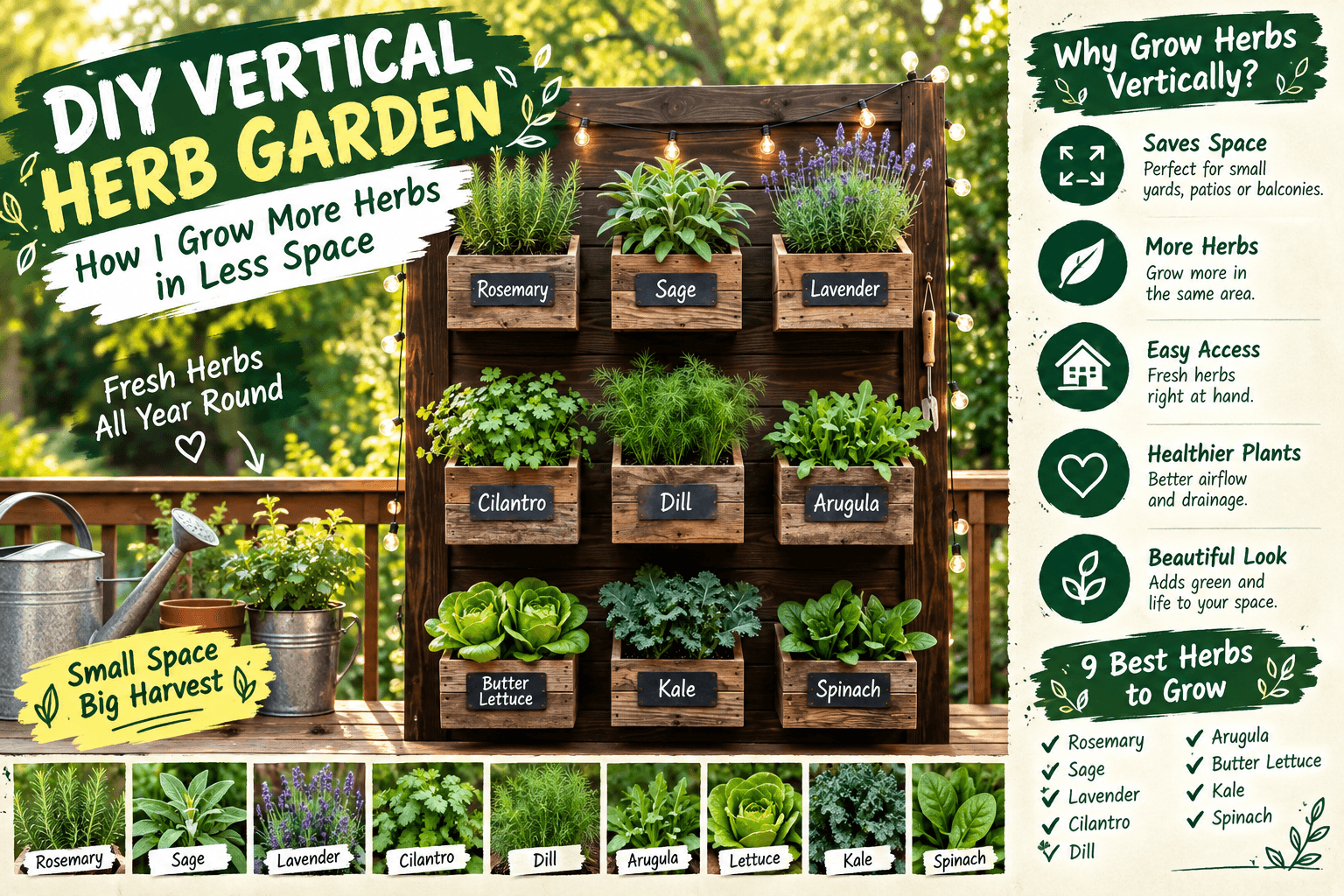
A vertical herb garden lets you use walls, fences, shelves, pallets, and other small spaces to grow herbs. After a few ugly attempts, a lot of watering, and one mint plant that tried to take over the neighborhood, I finally figured out what works for me.
So, lemme show you how I do it now.
Why I Started Growing Herbs Vertically
When I first got into homesteading, I thought I needed more land.
More garden beds. More rows. More space.
Then I realized I wasn’t using the space I already had very well.
The fence was sitting there doing nothing. One sunny wall was empty. I also had an old wooden shelf leaning against the shed.
That was my first clue.
Instead of spreading plants across the ground, I could grow them upward.
For a small backyard or urban garden, this can make a big difference. You can grow fresh herbs without giving up a whole garden bed.
It’s also handy if you’re renting a house or working with a balcony.
What Makes a Good Vertical Herb Garden?
You don’t need anything complicated.
My first setup was basically a few pots attached to a piece of scrap wood. It wasn’t pretty, but it grew herbs.
That’s what I care about.
A good setup should have three things:
- Enough sunlight
- Good drainage
- Easy access for watering and harvesting
Everything else is extra.
I’ve seen beautiful vertical gardens online with perfect wooden frames and little matching pots. They look great. But if you can’t reach the top shelf without a ladder, you’ll probably stop using it.
Trust me, I’ve learned that one the hard way.
Where Should You Put a Vertical Herb Garden?
Before building anything, watch the sun.
Don’t guess.
Spend one day looking at the spot in the morning, around noon, and later in the afternoon.
That little test can save you a lot of trouble.
Most herbs I grow prefer plenty of sunlight. However, some herbs can handle a little less sun than others.
For example, I usually put my sun-loving herbs in the brightest spots. Herbs that tolerate some shade can go on the lower shelves or slightly less sunny side.
Here’s one mistake I made: I once built a beautiful herb shelf beside my shed. It looked fantastic. The problem? The shed blocked the afternoon sun. My herbs stayed alive, but they looked thin and sad.
I moved the shelf about six feet and the difference was huge.
My Favorite Herbs for a Vertical Herb Garden
Not every herb behaves nicely in a vertical setup.
Some get huge. Others spread everywhere. A few are just plain difficult.
These are the ones I reach for most often.
Basil
Basil is probably my favorite.
It grows well in containers, and I use it constantly during tomato season.
One small basil plant can give you plenty of leaves if you keep harvesting it.
I pinch the top leaves instead of letting the plant grow tall and skinny. That encourages more side growth.
Plus, fresh basil makes even a simple tomato sandwich taste like you know what you’re doing in the kitchen.
Parsley
Parsley is another easy choice.
It doesn’t need a huge container, and I can reach it easily from a shelf.
I use parsley in soups, potatoes, eggs, salads, and just about anything that needs a little green on top.
Because it isn’t a giant plant, it’s perfect for smaller vertical pockets.
Thyme
Thyme has been great for my vertical garden.
It stays fairly compact and doesn’t need a huge pot.
It also spills over the edge nicely.
Just don’t keep the soil soaking wet. Thyme likes good drainage, and that’s especially important in containers.
Oregano
Oregano is tough.
Almost too tough.
Mine keeps coming back and spreading whenever it gets the chance.
That’s why I like growing it in its own container.
In a vertical setup, that container keeps the roots from wandering into every nearby pot.
Chives
Chives don’t need much space.
That’s a big win when you’re growing upward.
I keep mine near the kitchen because I use them often with eggs and potatoes.
They also look nice when they flower.
Rosemary
Rosemary can work in a vertical garden, but I give it more room.
This plant can become a small bush if you let it.
I use a larger pot and put it on a strong lower shelf.
Don’t put a heavy rosemary container on a flimsy little wall planter. That’s just asking for trouble.
Mint
Now let’s talk about mint.
Mint is useful, smells great, and grows like it has somewhere to be.
That’s exactly why I keep it in its own container.
How I Built My Simple Vertical Herb Garden
You can buy a ready-made vertical planter, but I wanted to build mine cheaply.
I used an old wooden frame, several small pots, screws, and a few pieces of scrap wood.
Here’s the basic process.
Step 1: Find a Strong Wall or Frame
First, choose something solid.
A wooden fence can work. So can a strong wall or free-standing garden frame.
Remember that wet soil gets heavy.
Five little dry pots may feel light. Five pots full of wet soil are a different story.
Step 2: Choose the Containers
I like containers with drainage holes.
Always check the bottom before buying.
I’ve brought home plenty of cheap pots that looked perfect until I discovered they had nowhere for water to escape.
That usually ends with unhappy roots.
Step 3: Leave Room Between Shelves
Don’t pack every shelf together.
Plants need room to grow, and you need room to reach them.
Leave enough space for the herb to grow upward without hitting the shelf above it.
Step 4: Secure Everything
This part isn’t exciting, but it’s important.
Check every screw and bracket.
Give the shelf a little shake before adding plants.
If it moves too much when it’s empty, it definitely won’t handle several wet pots.
What Soil Do I Use?
For containers, I like a good quality potting mix.
Regular backyard soil can become hard and heavy inside pots.
Water may also have trouble moving through it.
I usually mix potting soil with finished compost when the herbs need a little extra food.
However, don’t go crazy with compost.
More isn’t always better.
I used to think extra compost meant extra growth. Sometimes it just meant I created a muddy pot full of unhappy roots.
Watering a Vertical Herb Garden
This is where vertical gardens can get annoying.
The top containers may dry out faster than the lower ones.
That’s because they are more exposed to sun and wind.
So I don’t use one watering schedule for every pot.
I check the soil with my finger.
If the top feels dry and the plant needs water, I water it.
If the soil is still damp, I leave it alone.
Simple.
Also, water from the top slowly.
Let the water soak in instead of blasting the soil out of the container.
How Often Should You Harvest Herbs?
Harvesting is actually one of the fun parts.
I don’t wait until the plants look huge.
Instead, I take small amounts often.
With basil, I pinch leaves and stems regularly.
With chives, I cut what I need with scissors.
For parsley, I take the outer stems first.
That way, the plants keep producing instead of becoming one giant mess.
Don’t Make Your Herb Garden Too Crowded
This was my biggest mistake.
I wanted every herb.
Basil. Thyme. Parsley. Oregano. Mint. Rosemary. Sage. Chives.
So I packed them into one vertical planter.
Within a few weeks, everything was touching everything else.
Airflow was poor, watering was annoying, and harvesting became a game of pulling one plant away from another.
Now I leave space.
I’d rather have six healthy herb plants than twelve struggling ones.
Can You Make a Vertical Herb Garden on a Balcony?
Absolutely.
In fact, balconies can be perfect for this kind of gardening.
A wall-mounted planter, hanging pots, or a narrow shelf can give you plenty of growing space without taking over the floor.
However, check your local rules if you’re renting or living in an apartment.
Also, think about weight.
Wet soil, containers, and water add up quickly.
Don’t attach a heavy garden system to a weak railing or wall.
My Cheap Vertical Herb Garden Ideas
If you’re trying to spend as little as possible, here’s what I’d look for first:
- Old wooden shelves
- Unused pots
- Strong fence boards
- Wooden crates
- Wall-mounted planters
- Food-safe recycled containers with drainage holes
You don’t need everything to match.
Honestly, I prefer when it doesn’t.
A vertical herb garden should be useful first and pretty second.
If you can make it look good too, great.
Three Things I Wish I Knew Before Starting
1. Put the Herbs You Use Most at Eye Level
This sounds obvious, but I didn’t do it.
I put basil on the bottom shelf and rosemary right at eye level.
Guess which one I used every day?
Now my most-used herbs are easy to grab.
2. Don’t Put Mint Everywhere
Seriously.
One pot is enough for me.
Unless you’re planning to open a tea shop.
3. Make Watering Easy
If you need to drag a hose across the whole yard every time, you’ll get tired of the garden.
Put the vertical planter somewhere you can reach with a watering can or hose.
Convenience matters more than people think.
Can a Vertical Herb Garden Help With Homesteading?
For me, yes.
Growing herbs isn’t going to make me fully self-sufficient.
But that’s not the point.
Homesteading is often about doing lots of small things yourself.
Grow some food.
Preserve some food.
Compost kitchen scraps.
Keep a few chickens if you have the space and local rules allow it.
Learn how to save seeds.
Every little piece adds up.
A vertical herb garden is one of those small projects that can give you fresh food every day without needing a huge backyard.
My Simple Vertical Herb Garden Setup
If I were starting over today, I’d keep it simple.
Top shelf: Basil and oregano
Middle shelf: Parsley, thyme, and chives
Lower shelf: Rosemary and sage
Separate pot: Mint
That gives me a useful mix without turning the whole thing into a jungle.
Vertical Herb Garden FAQ
What herbs grow best in a vertical herb garden?
Basil, parsley, thyme, oregano, chives, rosemary, sage, and mint can all work. Just remember that bigger herbs need bigger containers and stronger shelves.
How much sunlight does a vertical herb garden need?
Most common cooking herbs like plenty of sunlight. Watch the spot before building your garden. If a wall gets very little sun, choose herbs that can handle those conditions instead.
Can I make a vertical herb garden from pallets?
You can, but be careful about the pallet you use. I prefer clean, sturdy wood and containers that hold the soil rather than putting food plants directly into unknown treated wood.
How do I keep a vertical herb garden from drying out?
Check the soil often, especially in hot weather. Smaller containers dry faster, so you may need to water them more often. Mulch can also help hold moisture in some containers.
Would I Build One Again?
Yep.
Actually, I’ve already built more than one.
The best part isn’t the fancy wooden frame or how good it looks in the backyard.
It’s walking outside while cooking dinner, grabbing a handful of basil, and walking right back inside.
No trip to the store.
No plastic package of herbs sitting in the refrigerator until it turns into green slime.
I’ve thrown away enough store-bought herbs in my life to know how nice that feels.
If you have a small backyard, balcony, patio, fence, or even a sunny wall, give vertical growing a try.
Start with three herbs.
Don’t build some giant system on day one.
See what works where you live. Then add more.
Give Vertical Growing a Try
A vertical herb garden doesn’t need to be perfect. Mine certainly isn’t.
Use an old shelf. Reuse some pots. Grow basil by the kitchen door. Put thyme on a sunny wall. Keep mint in its own container unless you enjoy garden battles.
Most of all, make the setup easy enough that you’ll actually use it.
That’s the trick I’ve learned after more than ten years of messing around with backyard gardening. The best garden isn’t always the prettiest one. It’s the one that gives you food and herbs you actually use.
Got a weird herb-growing problem? Leave a comment. I might have already messed it up myself.