How to Grow Vanilla Beans at Home: My Slow but Surprisingly Fun Vanilla Experiment
How to grow vanilla beans at home is one of those gardening questions that sounds simple until you actually try it.
I mean, you plant something, give it water, wait for the beans, right?
Not exactly.
Vanilla is an orchid, and it has a few very specific demands. It wants warmth, humidity, something to climb, bright filtered light, and a whole lot of patience. Oh, and if you actually want vanilla beans, you may have to become a bee for a few minutes.
Yep. You heard me.
Vanilla flowers usually need to be pollinated by hand when you’re growing them at home.
That’s the part that surprised me the most.
But don’t let that scare you away. If you’ve got a warm indoor space, greenhouse, sunroom, or tropical backyard, growing vanilla can be a really fun homesteading project.
Let me show you how I would approach it without making things more complicated than they need to be.
First, What Exactly Are Vanilla Beans?
Before we start growing, there’s one thing worth understanding.
The vanilla bean isn’t actually a bean like a green bean or kidney bean. It’s the long seed pod produced by the vanilla orchid.
The plant most commonly grown for culinary vanilla is Vanilla planifolia.
It’s a climbing orchid native to tropical parts of the Americas, and it really likes warm, humid conditions.
This is not a plant that’s going to be happy sitting outside in a cold northern backyard while you forget about it for three weeks.
Trust me, vanilla is more of a spoiled houseguest.
Give it what it wants and it can grow into a beautiful vine. Ignore it and it’ll let you know pretty quickly.
Can You Really Grow Vanilla Beans at Home?
Yes, but your climate matters a lot.
If you live somewhere warm and humid with no freezing temperatures, you may be able to grow vanilla outdoors with the right support.
If you live somewhere colder, growing vanilla in a greenhouse or indoors is usually the more realistic option.
Vanilla doesn’t like cold weather. It needs consistently warm conditions to grow well.
And here’s another thing people don’t always realize: getting a healthy vanilla vine is much easier than getting actual vanilla pods.
The plant can grow for years before flowering, depending on the cutting, growing conditions and maturity of the plant.
So this is not a “plant it Saturday and make homemade vanilla extract next month” kind of project.
It’s a patience project.
Start With a Vanilla Cutting, Not Seeds
If you’re serious about learning how to grow vanilla beans at home, I’d start with a healthy vanilla cutting from a reputable nursery or grower.
Growing vanilla from seed is not the easy backyard-gardening route. Vanilla seeds are tiny and have a complicated relationship with germination because they naturally depend on specific fungal relationships.
A healthy cutting is much more practical for a home grower.
Look for a cutting that has several healthy nodes and firm green growth. Avoid anything that looks mushy, badly damaged or covered in pests.
When I buy unusual plants, I always inspect the plant before bringing it near my other plants. I’ve learned this lesson with enough houseplants already.
You bring home one tiny pest and suddenly the whole garden knows about it.
Vanilla Needs Something to Climb
Vanilla is a climbing vine, so don’t plant it in a tiny pot and expect it to behave like basil.
Give it something sturdy to climb.
A moss pole, trellis, wooden support or another suitable structure can work.
In tropical growing areas, vanilla can climb trees or other supports. At home, though, I like having the vine where I can actually see it.
That becomes especially useful later when you’re trying to find those little flowers for hand pollination.
And vanilla can get long.
Really long.
So think about the final location before you put the plant there. You don’t want a six-foot vine taking over your kitchen window three months later.
What Kind of Soil Does Vanilla Need?
Vanilla doesn’t want to sit in heavy, soggy soil.
That’s one of the easiest ways to get yourself into trouble.
I like a loose, well-draining growing mix with plenty of organic material and good airflow around the roots.
You can use an orchid-style growing medium as a starting point, then adjust it depending on your growing setup.
The important thing is drainage.
If you water the plant and the pot stays wet forever, something needs changing.
Vanilla likes moisture and humidity, but that doesn’t mean its roots should be sitting in stagnant water all day.
How Much Light Does Vanilla Need?
This one confused me at first because vanilla wants plenty of light, but direct blazing sunlight can be too much.
Think bright, filtered light.
If you’re growing vanilla indoors, a bright window with filtered light can work. A greenhouse can also be excellent if you can control the heat and humidity.
Watch the leaves.
If the plant is getting harsh direct sunlight and the leaves start looking scorched, move it or add some shade.
On the other hand, if the vine is stretching badly and producing weak growth, it may not be getting enough light.
Plants are pretty good at complaining when you learn how to read them.
Vanilla Likes Warmth and Humidity
This is probably the biggest challenge for people learning how to grow vanilla beans at home.
Vanilla comes from tropical environments, so it likes warm temperatures and fairly high humidity.
If your home is dry, especially during winter when the heater is running, you may need to create a more humid environment.
A greenhouse, humidity tray, humidifier or enclosed growing area can help, depending on your setup.
But don’t turn the whole room into a swamp.
Good air movement matters too.
High humidity plus stagnant air can create its own set of problems.
Watering Vanilla: Don’t Love It to Death
Here’s one of my biggest general gardening lessons: sometimes loving a plant too much is worse than forgetting it for a day.
Vanilla likes consistent moisture, but I wouldn’t keep pouring water into the pot just because the surface looks slightly dry.
Check the growing medium and the plant’s overall condition.
Water thoroughly when needed, then let excess water drain away.
Never leave the pot sitting in a tray full of old water for long periods.
If you’re growing in a greenhouse, your watering schedule may be very different from somebody growing indoors with dry winter air.
That’s why I don’t like strict “water every three days” rules.
Your plant doesn’t own a calendar.
When Will Vanilla Flowers Appear?
This is where patience really comes into the picture.
A mature vanilla vine can take several years before it flowers, especially if you start with a young cutting.
That’s why buying a mature, flowering-size cutting can save you a lot of waiting.
Once the plant is mature enough, you’ll eventually start looking for flower buds.
Vanilla flowers are beautiful but they don’t stay open for very long. This becomes important because you have a very small window to pollinate them.
How to Hand-Pollinate Vanilla Flowers
Okay, this is the fun part.
In many home-growing situations, you’ll need to hand-pollinate the flowers if you want pods.
Vanilla flowers have a structure that makes natural pollination difficult outside their native environment.
You can use a small toothpick, skewer or similar clean tool to carefully move the pollen onto the female part of the flower.
The timing matters.
Vanilla flowers generally open for only a short period, often during the morning, so you need to pay attention when your plant starts flowering.
Don’t go poking around randomly at night and wonder why nothing happened.
When the flower is ready, gently lift the flap separating the male and female parts and transfer the pollen according to the plant’s floral structure.
Be gentle.
The flower is delicate, and there’s no prize for doing it in five seconds.
If successful, the flower can begin developing into a vanilla pod.
How Long Do Vanilla Beans Take to Mature?
Here’s another patience test.
After successful pollination, the vanilla pod still needs many months to mature.
You’re looking at roughly several months, often around eight to nine months, before pods are ready for harvesting depending on growing conditions.
So don’t get excited when you see the little green pod.
That’s the beginning, not the finish line.
I know how tempting it is to pick something because you’re excited. Don’t do it with vanilla.
How Do You Know When Vanilla Beans Are Ready?
Mature vanilla pods are usually harvested when they’ve reached full size and begin showing signs that they’re approaching maturity, such as changes in color at the tips.
The exact timing matters because harvesting too early can affect the final quality.
Commercial vanilla growers have their own methods for judging maturity, and conditions can vary by variety and location.
For a home grower, I’d rather watch the plant carefully than blindly follow one exact calendar date.
The Vanilla Bean Isn’t Ready to Eat After Picking
This part surprises almost everybody.
You don’t pick a vanilla pod and immediately scrape vanilla seeds into your cake batter.
Freshly harvested vanilla pods need curing.
The curing process is what develops that familiar dark color, soft texture and strong vanilla aroma we associate with vanilla beans.
Traditional curing involves steps such as blanching or heat treatment, sweating, drying and conditioning over a period of time.
It takes patience.
And honestly, after waiting months for the pod to mature, the curing stage is where you really need to slow down and follow a reliable food-safe process.
Don’t improvise food preservation methods just because something worked for a random plant on social media.
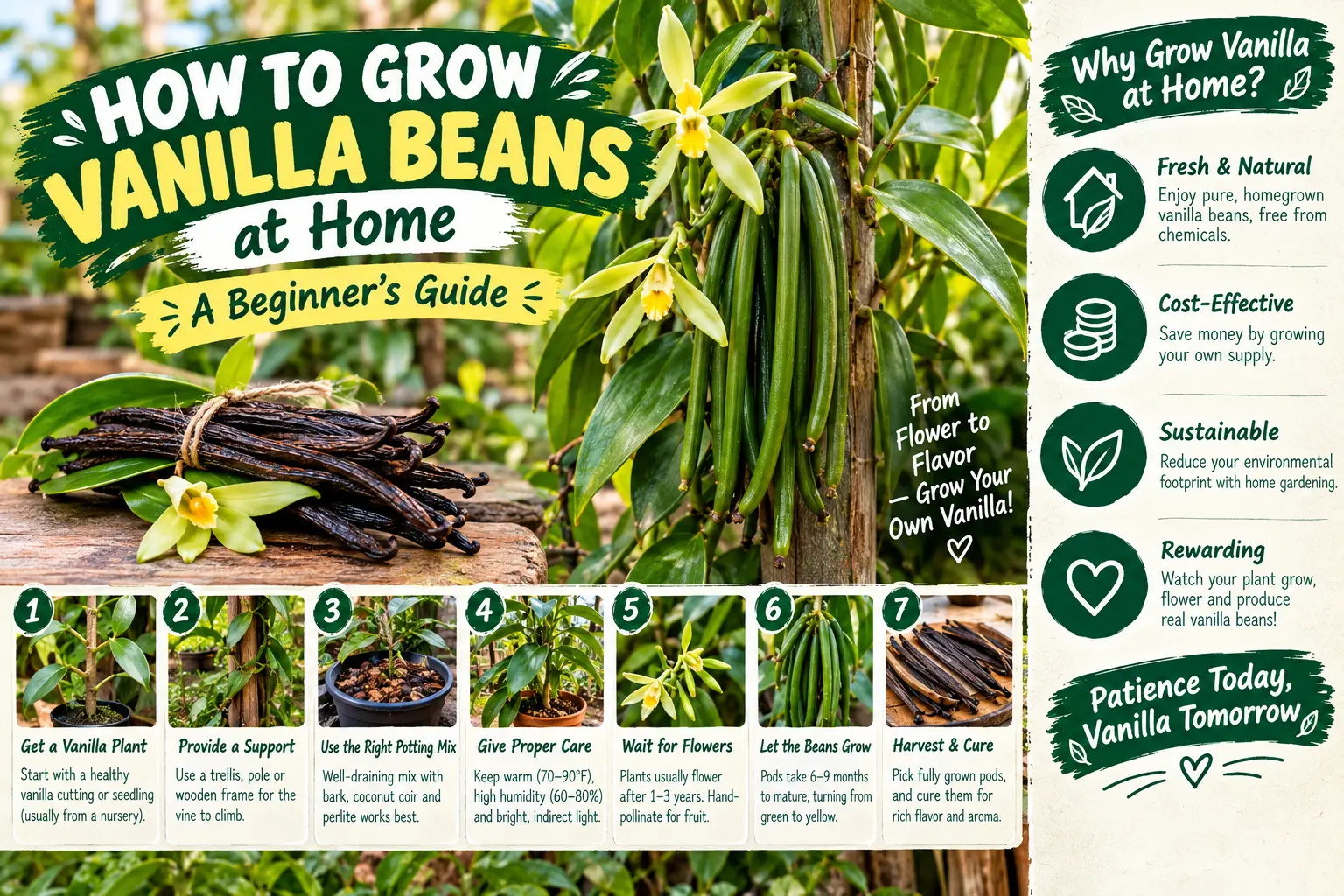
My Simple Vanilla Growing Checklist
If you want to try this project, here’s what I’d focus on first:
- Start with a healthy vanilla cutting.
- Use a loose, well-draining growing medium.
- Give the vine a strong support to climb.
- Provide bright filtered light.
- Keep the growing area warm.
- Maintain good humidity without creating stagnant air.
- Water consistently but avoid soggy roots.
- Be ready to hand-pollinate flowers.
- Give the pods many months to mature.
- Learn a safe curing method before harvesting.
Can You Grow Vanilla in a Small Apartment?
Yes, but this is one of those situations where your climate control matters more than your backyard size.
You could grow a vanilla vine indoors if you can provide enough warmth, humidity, light and climbing space.
The problem is that vanilla isn’t exactly a tiny windowsill herb.
It’s a vine.
So if you live in a small urban apartment, I’d think about a vertical setup. Give the plant something to climb and train the vine rather than letting it run all over the room.
A greenhouse cabinet or controlled indoor growing area can also make things easier for serious growers.
Vanilla Growing Mistakes I’d Avoid
If you’re just starting, don’t make this harder than it needs to be.
Don’t put vanilla in freezing temperatures.
Don’t leave the roots sitting in water.
Don’t blast it with harsh afternoon sunlight without protection.
Don’t expect flowers from a tiny young cutting.
And don’t forget that producing vanilla pods takes time.
That’s probably the biggest mistake people make. They see pictures of beautiful vanilla orchids covered in pods and assume their little cutting will do the same thing in a few months.
Maybe someday.
But plants have their own schedule.
Vanilla Growing FAQ
Can I grow vanilla from a grocery store vanilla bean?
It’s not the practical way to start. I’d recommend buying a healthy vanilla cutting from a reputable plant source instead. You’ll have a much better starting point.
Does vanilla need a greenhouse?
Not always. If you live in a naturally warm, humid tropical climate, you may be able to grow it outdoors. In cooler climates, a greenhouse or indoor setup can make the required conditions much easier to maintain.
Why isn’t my vanilla producing beans?
The plant may not be mature enough to flower, or the flowers may not have been pollinated successfully. Remember, getting the vine to grow and getting vanilla pods are two different jobs.
Would I Try Growing Vanilla Again?
Absolutely, but I’d go into it with the right expectations.
How to grow vanilla beans at home isn’t really about finding one magic fertilizer or watering trick. It’s about giving a tropical climbing orchid the environment it wants and then being patient enough to let it do its thing.
That’s actually one of the things I like about homesteading.
Not everything gives you something tomorrow.
Some projects teach you to slow down. Vanilla is definitely one of those.
If you have a warm greenhouse, tropical backyard or a good indoor growing setup, give it a shot. Start with one healthy cutting, build a good support, watch the humidity and learn to recognize the flowers.
And when that first vanilla pod finally starts hanging from the vine, don’t pick it too early because you’re excited. I know that temptation. Let it mature, learn the curing process, and enjoy the fact that you grew one of the most interesting flavors in the kitchen right there at home.
That’s the fun of how to grow vanilla beans at home. It takes time, but when you finally smell that real vanilla you’ve grown yourself, I think you’ll agree it’s pretty darn cool.
Got a vanilla-growing question or a weird indoor gardening setup? Leave a comment. I love hearing what other homesteaders are trying, especially the slightly crazy projects.