DIY Butterfly Puddling Station: My Simple Backyard Project for Butterflies
I built my first DIY butterfly puddling station almost by accident. I was working around the backyard, moving a few pots and cleaning up an old garden corner, when I noticed several butterflies hanging around a wet patch of soil. I thought they were just there for water. Turns out, there was a little more going on.
Once I learned about butterfly puddling, I wanted to make a small spot for them in my own garden.
And honestly, it’s one of the easiest little garden projects I’ve done.
You don’t need a fancy pond. You don’t need expensive supplies. You don’t even need a big backyard. A shallow dish, some sand or soil, water, and a decent sunny spot can be enough to get started.
So lemme show you how I made mine, what I put in it, where I placed it, and a few mistakes I made along the way.
So What Is a Butterfly Puddling Station?
Butterflies sometimes gather on damp soil, sand, mud, or other wet surfaces. This behavior is called puddling.
They aren’t just taking a little drink.
Butterflies can take in moisture and dissolved minerals from damp areas. You may notice several butterflies gathering together in one small muddy spot, especially on warm days.
Once I understood that, I started seeing these little puddles differently.
I remember one afternoon watching a group of butterflies on a wet patch near my compost area. I almost stepped right on them while carrying a bucket. Thankfully I noticed them at the last second.
That got me thinking: why not make them a proper little spot instead of letting them fight over a muddy patch?
Why I Like Having a Butterfly Puddling Station
For me, the best part is that it fits right into a backyard garden.
I already grow flowers, herbs, vegetables, and a few plants mainly because the pollinators love them. Adding a small puddling station was another way to make the garden a little more useful for wildlife.
It also gives you something fun to watch.
Kids usually love it too. If you have chickens nearby, though, keep an eye on them. Chickens are curious about basically everything.
My chickens once decided a shallow butterfly dish was their personal spa.
Butterflies were not impressed.
What Do You Need for a DIY Butterfly Puddling Station?
This is one of those projects where you probably already have most of the stuff sitting around your house.
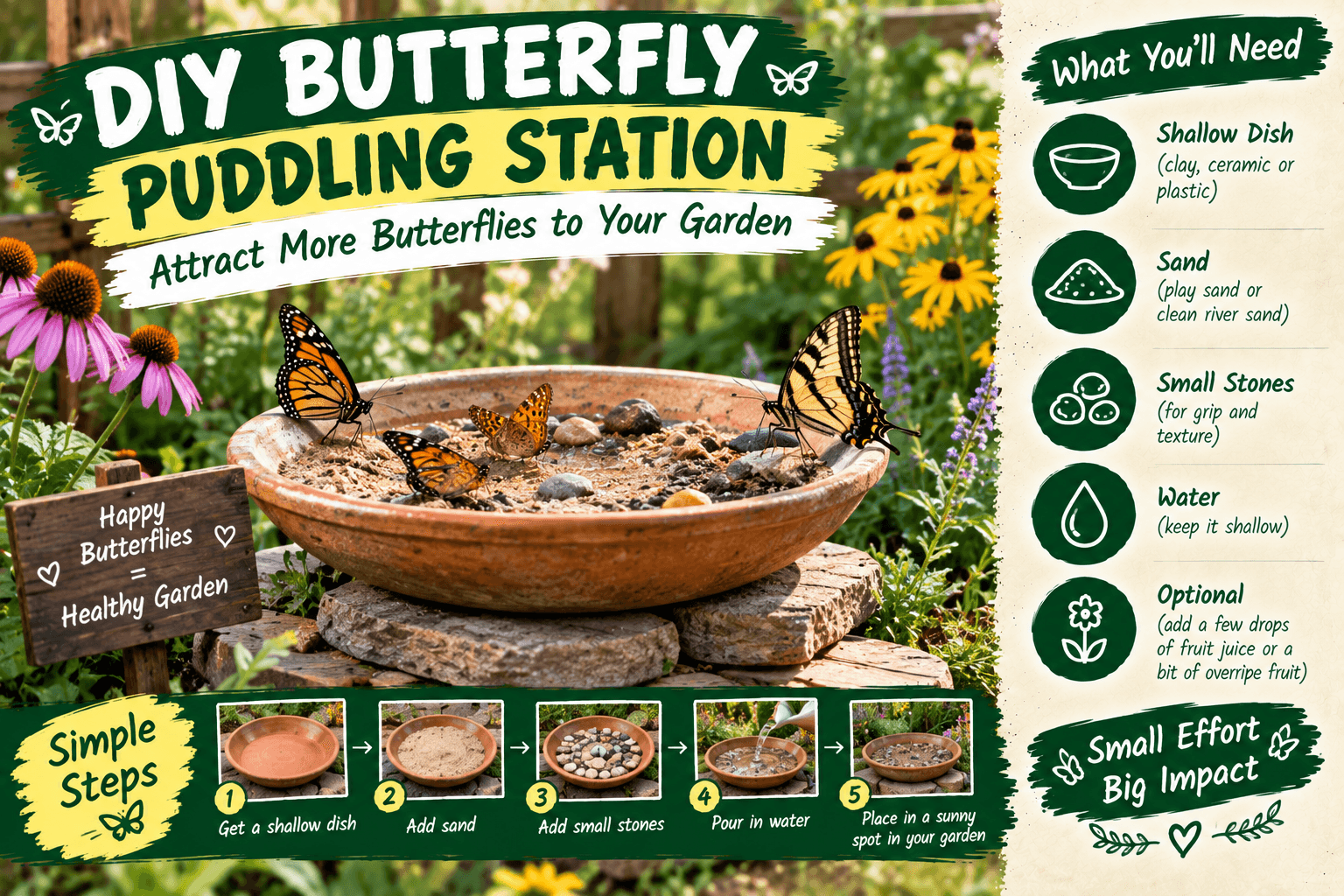
Here’s what I use:
- A shallow plant saucer, dish, or old container
- Clean sand, soil, or a mixture of both
- A few small flat stones
- Water
- Some small pebbles or gravel
- A sunny location in the garden
You don’t need to buy a special butterfly puddler.
In fact, I’d rather reuse something I already have. That fits my homesteading style better anyway.
How I Built My DIY Butterfly Puddling Station
Step 1: Find a shallow container
Start with something shallow.
An old plant saucer works great. You could also use a shallow ceramic dish, terracotta tray, or another garden-safe container.
I wouldn’t use anything that previously held chemicals, paint, pesticides, or other stuff you wouldn’t want around your garden.
Butterflies are small. They don’t need a swimming pool.
Step 2: Add sand and soil
Put a layer of sand or garden soil in the bottom.
I like having some texture in the station instead of making it just a dish of water.
The idea is to create a damp surface where butterflies can land and feed on moisture and minerals.
Don’t fill the container right to the top.
Step 3: Add a few small stones
This is a little thing, but I like doing it.
Add several stones or pebbles so there are places for butterflies to land.
Flat stones work especially well because they give them a dry surface above the wet soil.
My simple rule: Give butterflies somewhere to land without making them stand in deep water. A puddling station should be shallow and easy for insects to use.
Step 4: Add water slowly
Now add some water.
You want the soil or sand to be damp, not completely flooded.
This is where I made my first mistake.
I poured in way too much water the first time. I was basically making a tiny pond. It looked nice for about five minutes, then I realized I had made something completely different from what I wanted.
Trust me, you don’t need much water.
Keep the material moist and check it during hot weather because it can dry out quickly.
Where Should You Put a Butterfly Puddling Station?
Location matters more than people think.
I like placing mine somewhere that gets sunlight but is close enough to flowers and plants that butterflies already visit.
You don’t want to hide the station under a thick bush where nobody can see it.
At the same time, I don’t put it right in the middle of a busy walkway.
That would be a pretty dumb place.
A quiet corner of your backyard, near a flower bed or vegetable garden, can work very well.
Should a Butterfly Puddling Station Be in Full Sun?
A sunny location can help the damp area warm up, and butterflies often use warm sunny spots. But your exact garden conditions matter.
Watch the area during the day.
If the container becomes bone dry every few hours, move it somewhere that gets some protection during the hottest part of the afternoon.
I usually check mine when I’m doing the morning garden walk.
Feed the chickens. Check the tomatoes. Look at the compost. Check the butterfly station.
And yes, make coffee.
Coffee is very important.
What Should You Put in a Butterfly Puddling Station?
You can keep it simple.
I use soil or sand, water, stones, and sometimes a little natural organic material from the garden.
Some gardeners add minerals or other materials, but I prefer not to start adding random things unless I know exactly what they are and why they’re needed.
Your backyard already has plenty going on.
Keep the puddling station clean and natural.
Can You Use Compost?
I wouldn’t dump a bunch of fresh compost into the dish.
My compost pile is full of useful stuff, but a butterfly puddling station is not a compost bin.
If you want to use garden soil, use clean soil without fertilizer pellets, pesticides, herbicides, or other garden chemicals.
One important thing: Don’t add pesticides, insecticides, herbicides, fertilizer, salt, or household chemicals to a butterfly puddling station. The goal is to create a simple natural water and mineral source, not a chemical experiment.
How Often Should You Add Water?
There isn’t one perfect schedule.
It depends on your weather.
During a hot summer week, I might check the station every morning. If the soil feels dry, I add a little water.
After rain, I may not need to touch it at all.
This is one of those garden jobs where your finger is a better tool than a calendar.
Touch the soil.
If it’s damp, leave it alone.
If it’s dry, add some water.
What Plants Should Be Near Your Butterfly Station?
Here’s where you can make the whole thing better.
Put nectar-producing flowers nearby so butterflies have a reason to stay in the area.
Depending on your climate, you might grow plants such as:
- Native wildflowers
- Milkweed species where appropriate
- Zinnias
- Sunflowers
- Native asters
- Bee balm
- Butterfly bush where suitable
- Other locally native flowering plants
I’m a big fan of using native plants when they make sense for the garden. They can support local insects and usually fit your climate better than plants that look pretty but struggle all summer.
My Biggest Butterfly Garden Mistake
I used to think that if I planted flowers, butterflies would automatically show up.
Not always.
One year I bought several pretty flowers because they looked good at the garden center. They bloomed beautifully, but the butterfly activity wasn’t anything special.
Then I started paying attention to what insects were actually visiting my yard.
That changed the way I garden.
Now I try to have different types of plants blooming at different times instead of putting all my attention on one big burst of flowers.
A butterfly puddling station is only one small piece of the puzzle.
Do You Need a Big Backyard?
Nope.
This is probably one of my favorite things about this project.
You can make a tiny puddling station in a small urban backyard, patio, or other suitable outdoor growing space.
You could even combine it with container gardening.
Put some flowering plants in pots, add a small puddling dish nearby, and you’ve created a little pollinator corner without needing acres of land.
That’s exactly the kind of thing I like about urban homesteading.
You work with what you’ve got.
How I Keep Chickens Away From It
If you have chickens, this part is for you.
My chickens see a shallow dish and immediately assume I put it there for them.
They’ll scratch around it, kick dirt into it, and sometimes knock it over.
So I place the puddling station where chickens can’t easily reach it, while still keeping it accessible to butterflies.
A small section behind a low garden border can work.
You don’t need a complicated fence. Just enough separation to stop your bigger backyard animals from turning it into a dust bath.
Do Butterfly Puddling Stations Attract Mosquitoes?
A very small shallow container that dries frequently is different from maintaining a large body of standing water, but any container that holds water can potentially become a place where mosquitoes breed if water remains stagnant long enough.
That’s another reason I keep mine shallow and monitor it.
Don’t let it become a neglected bucket full of old water.
If you notice persistent standing water, refresh the material, adjust the amount of water, or rethink the setup.
Three Simple Tips That Made Mine Better
1. Keep it shallow
Butterflies don’t need deep water. A damp surface is what you’re after.
2. Put flowers nearby
A puddling station works better as part of a butterfly-friendly garden rather than sitting alone in an empty yard.
3. Don’t overcomplicate it
You don’t need a fancy store-bought setup. A shallow container, soil or sand, stones, and water can be enough to get started.
DIY Butterfly Puddling Station FAQ
What is the purpose of a butterfly puddling station?
It provides a damp area where butterflies can gather and take in moisture and dissolved minerals. It can be a simple addition to a pollinator-friendly backyard garden.
What can I use for a butterfly puddling station?
A shallow plant saucer, terracotta dish, or similar garden-safe container can work. Add sand or soil, a few stones, and enough water to keep the material damp.
Where should I put a butterfly puddling station?
Try a warm, quiet area near flowering plants. Keep it somewhere you can easily check and refill, but away from heavy foot traffic and animals that might knock it over.
Can I make one in a small backyard?
Absolutely. You don’t need much room. A small container near flowers can work in an urban backyard, patio, or other compact garden space.
A Little Backyard Project That’s Actually Worth Doing
I like projects that don’t take a whole weekend and don’t require a trip to the hardware store.
This is one of them.
A DIY butterfly puddling station costs very little, takes only a short time to set up, and gives you another reason to slow down and pay attention to what’s happening in your garden.
And that’s something I’ve learned after more than 10 years of growing food and working on little homesteading projects. The garden isn’t just tomatoes and cucumbers. It’s the birds, butterflies, bees, worms, compost, flowers, soil, and all the little things happening when you aren’t looking.
Got a weird butterfly question? Leave a comment and tell me what you’re seeing in your backyard. I actually like these kinds of questions. And if you build your own puddling station, tell me what you used. I’m always looking for another simple garden idea to try.
So if you have a spare plant saucer and a sunny corner, give a DIY butterfly puddling station a try. Keep it simple, keep it clean, add some butterfly-friendly flowers nearby, and then sit back for a while. Sometimes the best part of homesteading is just watching what shows up.