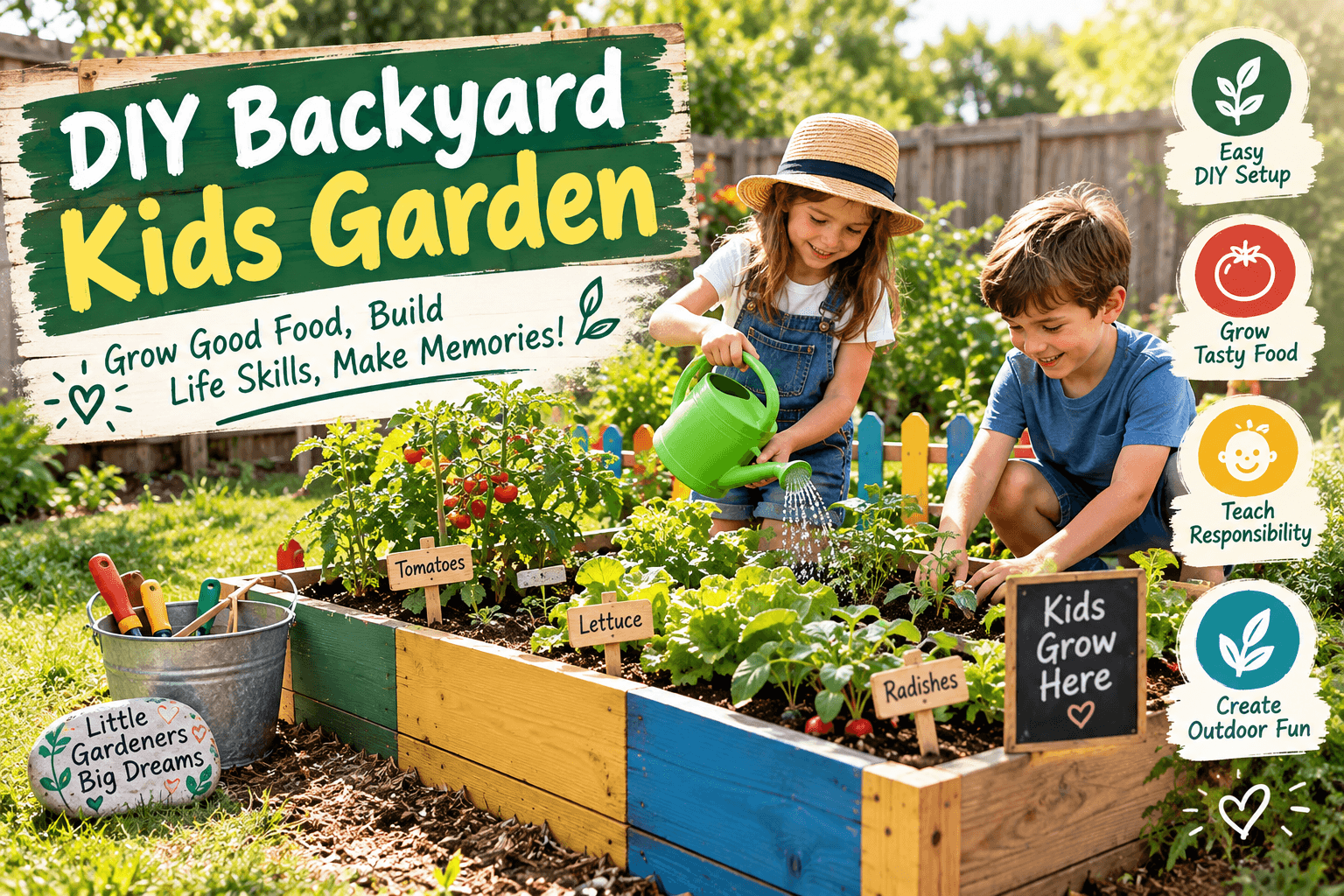
The first time I tried making a DIY Backyard Kids Garden, I thought the kids would be excited about planting vegetables.
I was wrong.
They were excited about digging holes.
Then they wanted to find worms.
Then one of them wanted to plant a rock because, apparently, the rock “looked like a potato.”
You’re gonna laugh, but that little garden taught me something important. Kids don’t really care about having a perfect vegetable garden. They want something they can touch, mess with, and watch change.
I’ve been growing food and messing around with backyard homesteading for more than 10 years, and getting kids involved has probably been one of the most fun parts. It also made me change the way I garden.
I stopped worrying so much about straight rows.
I started planting things that grow fast.
And I learned that letting a kid pull one carrot too early isn’t the end of the world.
Actually, it’s part of the fun.
If you’re thinking about building a DIY Backyard Kids Garden, lemme show you what worked for us, what didn’t, and how you can make a small garden that kids will actually want to visit.
Why Build a DIY Backyard Kids Garden?
Kids learn differently when they can get their hands dirty.
You can tell them that a seed needs water, sunlight, and good soil. They’ll probably nod and then forget about it five minutes later.
But let them plant a seed themselves?
Now they’re checking it every morning.
I’ve seen kids go from “I don’t like vegetables” to eating peas straight from the garden because they grew them.
That’s the magic.
A kids garden doesn’t need to produce hundreds of pounds of food. The real goal is getting them curious about where food comes from.
And if you get a few tomatoes, lettuce leaves, or carrots out of it too, that’s a nice bonus.
Start Small. Really Small.
This is one mistake I made.
I built a garden area that was way too big.
My thinking was simple: more space means more vegetables.
Sounds smart, right?
Not when you’re trying to keep a child interested.
A huge garden means more weeds, more watering, more work, and more chances for everyone to get bored.
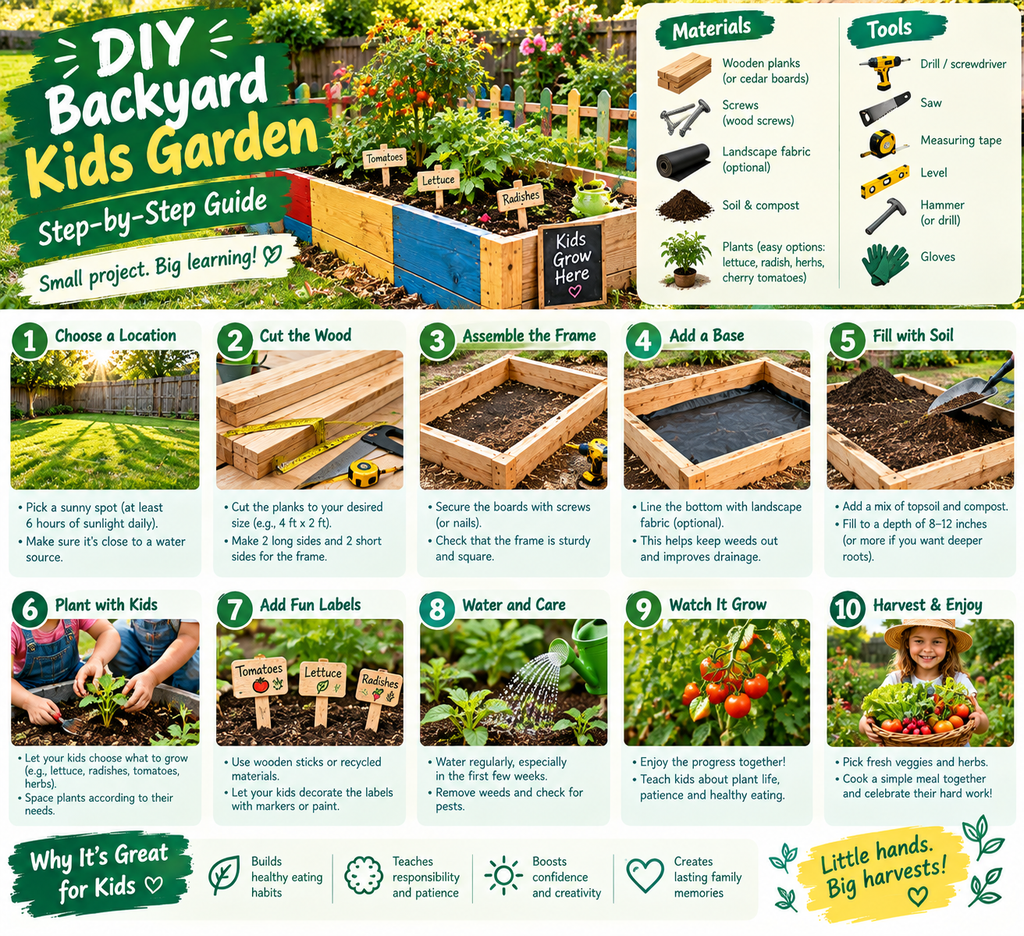
For a DIY Backyard Kids Garden, I’d start with something small.
A 3-by-3-foot or 4-by-4-foot area is plenty for beginners.
You can even start with a couple of large containers.
The garden should feel manageable.
Kids should be able to reach everything without stepping on the soil or asking an adult for help every two minutes.
Pick Vegetables Kids Can Actually See Growing
I don’t start a kids garden with vegetables that take forever.
Waiting months for something to happen isn’t easy for adults, never mind kids.
Here’s some of what I’ve had good luck with:
- Radishes
- Lettuce
- Peas
- Green beans
- Cherry tomatoes
- Carrots
- Cucumbers
- Sunflowers
- Strawberries
- Herbs
Radishes are especially fun because they can develop fairly quickly.
Cherry tomatoes are another winner.
Kids love picking them.
I’ve caught people eating tomatoes before they even made it back into the house. I won’t name names.
And honestly, that’s exactly what I want.
Let Kids Choose Some of the Plants
This sounds simple, but it makes a huge difference.
Don’t decide every single plant for them.
Take them to a garden center or let them look through seed packets and say, “Pick three things you want to grow.”
You might end up with something strange.
One year, a kid wanted purple carrots.
Another wanted giant sunflowers.
Someone else wanted pumpkins.
Fine.
Plant them.
The garden belongs to them too.
Even if the combination makes absolutely no sense from a traditional vegetable-garden perspective.
That’s not the point.
Make the Garden Easy to Reach
When I designed my first kid-friendly garden area, I didn’t think enough about height.
I could reach everything easily.
The kids couldn’t.
That meant stepping over the garden bed, which eventually meant somebody stepped directly on a tiny pepper plant.
Yep.
That one hurt.
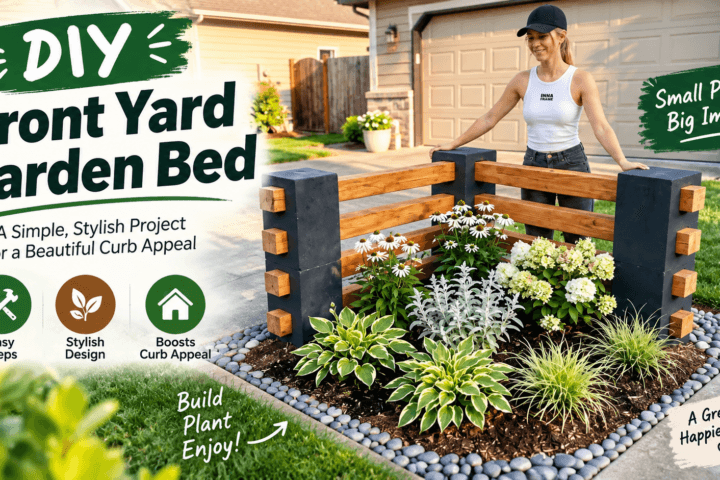
For a DIY Backyard Kids Garden, keep the beds low and accessible.
Raised beds can work really well, but don’t make them so tall that small children can’t comfortably reach the middle.
Containers are also great.
A few large pots can create a little garden without needing a permanent garden bed.
This is especially useful for an urban backyard, patio, or rental property.
Give Them Their Own Tools
You don’t need a giant collection of expensive children’s gardening equipment.
A small hand trowel, watering can, gloves, and maybe a little bucket are enough.
I also like giving kids their own place to keep their tools.
It gives them a little responsibility.
Just make sure tools are age-appropriate and supervised when necessary.
And don’t expect the tools to stay clean.
They’re going to be covered in dirt.
That’s the whole point.
Let Them Dig
This might be the most important tip.
Let kids dig.
Don’t immediately tell them they’re doing it wrong.
If they dig a giant hole next to your lettuce, you can move the activity somewhere else.
Give them a small section where they can dig for worms, look at roots, or investigate bugs.
I used to get annoyed when somebody disturbed the soil around my plants.
Then I realized something.
The garden was teaching them.
A little messy soil wasn’t worth turning gardening into a chore.
Add Flowers to the Vegetable Garden
Don’t make the whole garden vegetables.
Kids usually notice flowers much faster.
Sunflowers are fantastic because they get big and dramatic.
Marigolds are another easy addition.
You can also add flowers that attract pollinators and make the garden look more alive.
I like mixing flowers and vegetables together.
It gives the garden that messy little homestead feeling instead of looking like a perfectly organized farm.
And that’s more my style anyway.
Create a “Snack Garden”
This is one of my favorite ideas.
Put plants in the garden that kids can walk over and pick.
Think cherry tomatoes, strawberries, peas, herbs, and certain salad greens.
The idea is simple.
Grow food that doesn’t need to be cooked before eating.
One afternoon, I watched a kid walk through the garden picking peas, then tomatoes, then a strawberry.
Not one vegetable made it into the kitchen.
Did I complain?
Nope.
I called it a successful harvest.
Don’t Worry About Perfect Rows
This is where I really changed my gardening style.
When you’re growing vegetables for yourself, straight rows can be useful.
But with kids?
Let things get a little wild.
Put flowers beside vegetables.
Let cucumbers climb a small trellis.
Make a little path through the garden.
Put a few stepping stones around the outside.
Give the kids permission to make it their own.
A garden doesn’t have to look like the picture on a seed packet.
Build a Simple DIY Garden Sign
This is an easy weekend project.
Grab a scrap piece of untreated wood or another suitable garden-safe material.
Let the kids paint their garden name on it.
Maybe it’s “Jack’s Garden.”
Maybe it’s “The Crazy Vegetable Farm.”
Maybe it’s something that makes absolutely no sense.
Perfect.
Put the sign at the entrance.
Now the garden has an identity.
I’ve found that little things like this make kids feel like they actually own the project.
Make Watering Their Job
Watering is probably one of the easiest garden jobs for kids.
But there’s a catch.
Kids love water.
Your plants may not be the only things getting watered.
I learned this one when I came around the corner and found somebody watering the garden, the sidewalk, their shoes, and apparently a plastic dinosaur.
So give them a small watering can and show them how to water the soil rather than blasting the leaves.
For young kids, an adult should still keep an eye on the job.
Too much water can be just as annoying as too little.
Compost Can Become Part of the Garden Lesson
If you already compost at home, this is a great way to connect the garden to the rest of your homestead.
Kids can learn that vegetable scraps don’t always need to become trash.
You can show them how food scraps, leaves, grass clippings, and other suitable organic materials can become compost.
Then that compost can help feed the garden soil.
It’s a simple little cycle.
Kitchen → compost → garden → food → kitchen.
That’s basically homesteading in one sentence.
If you have chickens, you can also teach kids about animal manure and composting, but always explain that fresh manure isn’t something to casually put around edible crops. Composting and proper handling matter.
What Didn’t Work in My Kids Garden
I’m not going to pretend everything worked.
One year I planted a bunch of carrots because I thought they’d be easy.
The kids pulled them all up early.
Tiny little carrots.
They looked ridiculous.
But everybody ate them.
So technically, it was a harvest.
Another time, I planted something that took way too long to mature.
Nobody cared after the first few weeks.
That taught me to mix quick-growing crops with slower ones.
You want some wins along the way.
Don’t make children wait three months for their first exciting garden moment.
A Simple Weekly Garden Routine
You don’t need to turn this into homework.
That’s another mistake.
Keep it casual.
Here’s what I’d do once or twice a week:
Check the plants.
Look for new leaves, flowers, bugs, and anything that looks sick.
Water if needed.
Don’t water automatically just because it’s Saturday.
Check the soil first.
Pull a few weeds.
Make it a little game.
Who can find the biggest weed?
Look for something ready to harvest.
Even if it’s only one tomato.
Taste something.
This is the fun part.
A garden should be experienced, not just looked at.
What If You Don’t Have Much Backyard Space?
No problem.
You don’t need a big backyard.
A DIY Backyard Kids Garden can be made with containers, raised beds, or even a small corner of an existing garden.
A few five-gallon containers can grow tomatoes, peppers, herbs, or other suitable plants.
You can also build a small vertical garden for cucumbers or beans.
If you’re living in an urban area, check local rules if you’re planning permanent raised beds, structures, fencing, or other additions.
Start with what you have.
Don’t wait until you have the perfect backyard.
I certainly didn’t.
Frequently Asked Questions
What are the easiest vegetables for a kids garden?
I’d start with things that are fun to touch and reasonably quick to grow, such as radishes, peas, lettuce, beans, cherry tomatoes, and herbs.
Sunflowers and strawberries are also fun additions.
How big should a DIY Backyard Kids Garden be?
Start small.
Around 3-by-3 feet or 4-by-4 feet is enough for a first garden. Containers work too, especially when space is limited.
How do I keep kids interested in gardening?
Let them choose some plants, give them simple jobs, and let them harvest things themselves.
Don’t make every activity a lesson.
Sometimes just digging in the dirt is enough.
The Best Part Isn’t the Vegetables
After all these years, I’ve learned that the best harvest from a DIY Backyard Kids Garden isn’t always sitting in a basket.
Sometimes it’s a kid who suddenly understands that a carrot comes from the dirt.
Sometimes it’s the excitement of seeing the first tomato turn red.
Sometimes it’s finding a worm and carrying it around like you’ve discovered a new species.
And sometimes it’s eating a vegetable you grew yourself and realizing it tastes completely different when you were part of growing it.
That’s what I love about homesteading.
You don’t need a huge farm, expensive equipment, solar panels, chickens, or acres of land to start learning these things.
Start with a small patch of soil.
Plant a few seeds.
Let the kids get dirty.
Let them make mistakes.
Heck, let them plant the occasional rock if they really want to.
My DIY Backyard Kids Garden has never been perfect, and I’m glad it isn’t. The crooked plants, muddy shoes, missing carrots, and half-eaten tomatoes are all part of the story.
If you’re thinking about starting one, just start.
Keep it small, make it fun, and don’t worry about doing everything right.
And if something goes wrong, welcome to gardening. Trust me, I’ve got plenty of stories about that.
Got a weird kids-garden question? Leave a comment. I actually like hearing about other people’s garden disasters.