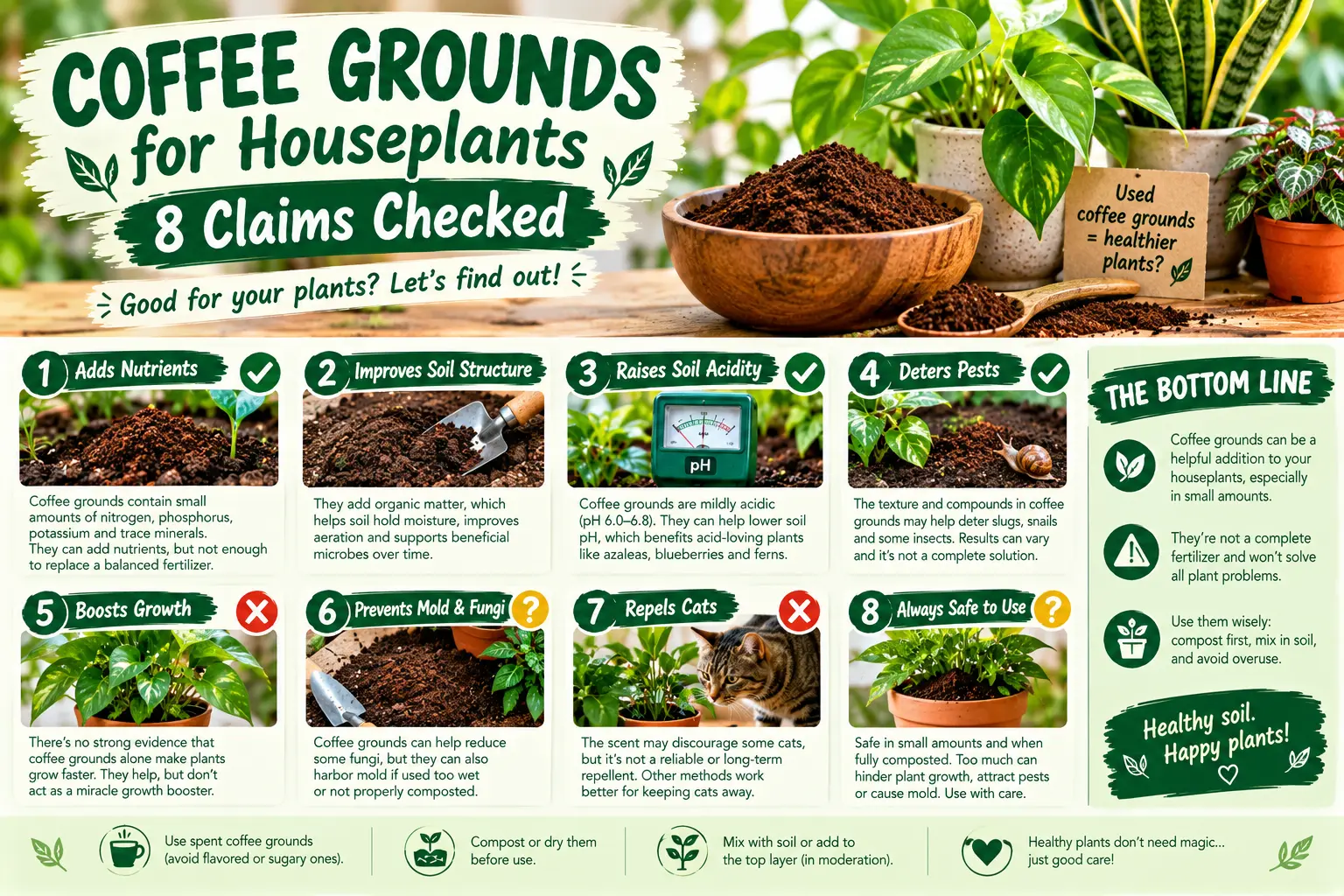
Coffee grounds are not a special fertilizer that certain houseplants automatically “love.” Used grounds contain organic matter and some nutrients, but adding them directly to indoor pots can create a dense surface layer, interfere with water movement, and add more material than a small container needs. For most houseplants, the safer choice is a suitable potting mix and a fertilizer made for the plant.
Quick answer
- Do not pour a thick layer of used coffee grounds onto houseplant soil.
- Used grounds are not a reliable way to make potting mix more acidic.
- Coffee grounds are not a complete houseplant fertilizer.
- Snake plants, aloe, and other plants that need excellent drainage are especially poor candidates for a damp layer of grounds.
- A simple use for spent grounds is adding them in moderation to a balanced compost pile.

Are Coffee Grounds Good for Houseplants?
Sometimes useful material gets turned into an overly simple gardening rule.
Coffee grounds are a good example.
Used grounds contain organic matter, nitrogen, and smaller amounts of other nutrients. That makes them useful as one ingredient in compost.
But a houseplant pot is not a compost pile.
Indoor containers hold a relatively small amount of growing mix. Roots depend on that mix staying airy enough for water and oxygen to move through it. Repeatedly spreading fine coffee grounds over the surface can work against that goal.
Illinois Extension warns that a thick layer of used grounds can reduce water infiltration and form a water-repellent layer. Oregon State University Extension also cautions that coffee grounds can be overused and that excess uncomposted grounds may slow plant growth.
Bottom line: There is a big difference between “coffee grounds contain nutrients” and “this houseplant loves coffee grounds.” The first statement is reasonable. The second usually needs much stronger evidence than a Pinterest list provides.
8 “Coffee-Loving” Houseplants From the Viral List
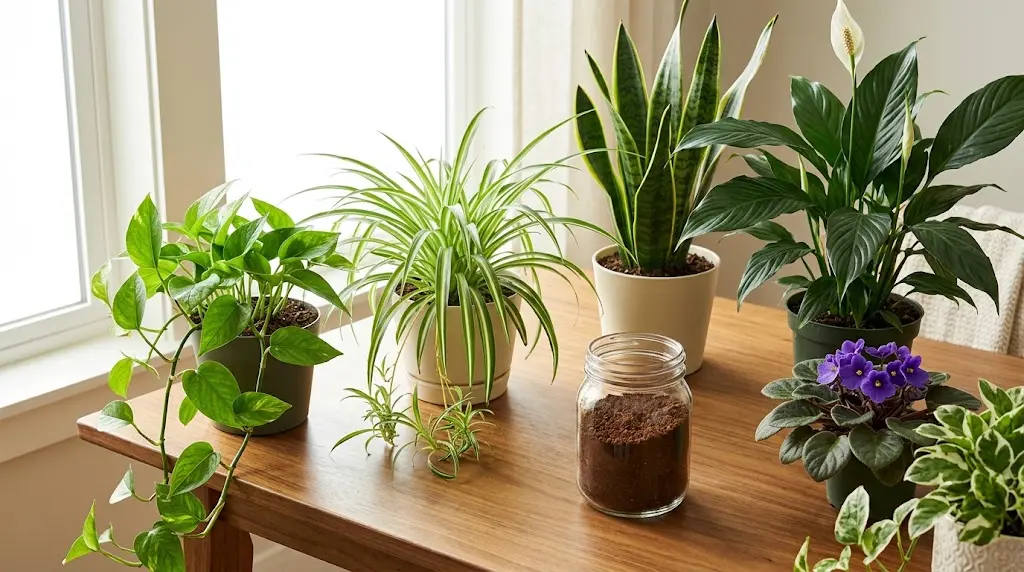
The image lists eight popular houseplants. Here is a more useful way to look at each one.
| Houseplant | Direct coffee grounds? | Better approach |
|---|---|---|
| Spider plant | Not needed | Use normal well-drained houseplant mix and appropriate fertilizer |
| Snake plant | Skip them | Prioritize excellent drainage and avoid keeping the mix constantly wet |
| Pothos | Not needed | Use an airy mix and regular houseplant fertilizer when needed |
| Peace lily | Not needed | Manage water, drainage, light, and a balanced feeding routine |
| Philodendron | Not needed | Use a suitable loose potting mix and normal houseplant feeding |
| Aloe vera | Skip them | Use a fast-draining succulent mix and avoid excess moisture |
| African violet | Skip direct grounds | Use an airy African violet mix and mild formulated fertilizer |
| Boston fern | No special need | Manage moisture, humidity, drainage, and normal feeding instead |
Spider Plant
Spider plants are often included in coffee-ground lists because they are vigorous foliage plants.
That does not mean coffee grounds are required or uniquely helpful. If the plant is growing well in a suitable potting mix, there is little reason to keep adding kitchen waste to the container.
If growth is weak, check light, watering, root crowding, and normal fertilizer needs before assuming the plant needs coffee.
Snake Plant
Snake plant is one of the clearest reasons not to trust a generic list.
Penn State Extension describes snake plant as a succulent houseplant that needs well-drained soil and should be watered only after the soil dries. Overwatering is one of its most common problems.
A fine, damp layer of coffee grounds on top of the pot does not help you maintain those conditions.
If your snake plant needs feeding during active growth, use an appropriate fertilizer at the recommended rate rather than treating coffee waste as a substitute.
Pothos
Pothos is another plant frequently described online as a coffee lover.
Clemson Extension instead recommends an airy, well-draining potting mix and a regular houseplant fertilizer when fertility is low. Soil should be allowed to dry between waterings.
Those basics matter far more than adding coffee grounds.
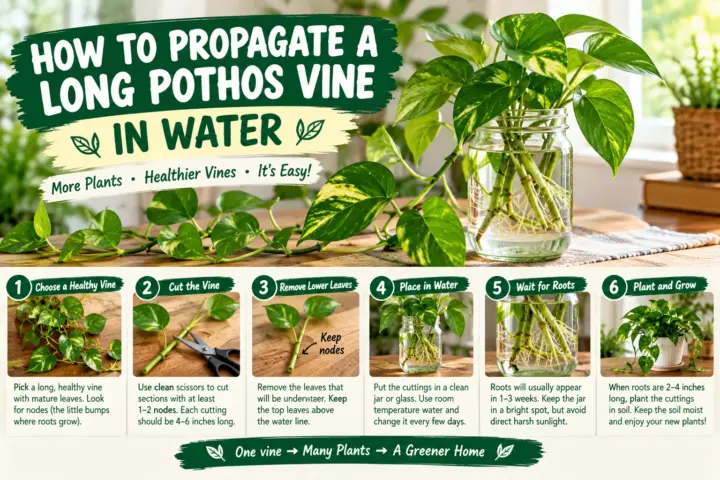
If you already grow pothos, FarmSolo’s guide to propagating a long pothos vine explains how the nodes and roots work when you want to make more plants.
Peace Lily
Peace lilies are commonly grouped with “acid-loving” plants in online coffee-ground advice.
That reasoning is weak because used coffee grounds are not a dependable tool for lowering soil pH. If a peace lily is struggling, watering, drainage, light, pests, root condition, and normal nutrition are more useful things to investigate first.
Philodendron
Philodendrons can grow quickly when conditions are good, but vigorous foliage does not mean they need coffee grounds.
A container plant still benefits most from the basics: suitable light, an airy root zone, correct watering, and predictable nutrition.
There is no need to create a special coffee-ground layer on the pot just because the plant appears on a social media graphic.
Aloe Vera
Aloe is a succulent. Its roots are better suited to a fast-draining growing mix than to a surface layer of wet organic kitchen waste.
The goal with aloe is not to make the pot retain extra moisture. Good drainage and careful watering are more important.
This makes aloe a particularly poor plant to use for experimenting with repeated applications of wet coffee grounds.
African Violet
African violets have fine roots and specific potting needs.
University of Minnesota Extension recommends a well-drained, soilless mix around pH 6.2 to 6.5 and notes that overwatering and poor drainage can lead to root rot.
For nutrition, it recommends mild fertilizer, including products formulated specifically for African violets.
That is much more predictable than adding an unknown quantity of used coffee grounds to a small pot.
Boston Fern
Ferns are another group frequently described online as plants that “love” coffee.
A Boston fern may appreciate consistent moisture and appropriate feeding, but that does not prove coffee grounds are the right amendment.
The safer approach is to manage the plant’s actual water, humidity, potting mix, and fertilizer needs rather than adding grounds because coffee contains nitrogen.
Do Used Coffee Grounds Make Soil More Acidic?
Not reliably.
This is one of the most persistent coffee-ground myths.
Oregon State University Extension explains that brewed coffee grounds are generally close to neutral and that any change they produce in soil pH is temporary. Penn State Extension similarly warns against using coffee grounds as a way to acidify soil.
That means the phrase “acid-loving plant” is not enough reason to add coffee grounds to a pot.
If a plant truly needs a particular pH range, use an appropriate potting mix and fertilizer designed for that plant rather than trying to adjust the container with leftover coffee.
Are Coffee Grounds a Fertilizer?
They contain nutrients, but that is not the same thing as being a complete fertilizer.
Oregon State University Extension reports that spent coffee grounds contain nitrogen and small amounts of several other nutrients, but also makes clear that they are not a major source of complete plant nutrition.
Most of the nitrogen in organic material also has to be processed by microorganisms before plants can use it.
With a commercial houseplant fertilizer, the label tells you what nutrients are present and how much to apply. A scoop of kitchen coffee grounds gives you far less control.
A useful rule: Do not diagnose every pale or yellow houseplant as “needing fertilizer.” Watering problems, poor drainage, low light, damaged roots, pests, and root crowding can produce similar symptoms.
FarmSolo’s plant leaf problem guide explains why it is better to inspect the whole plant before adding fertilizer.
Why Direct Coffee Grounds Can Cause Problems in Pots
The fine particles can form a dense layer
Used grounds are made of very fine particles. When a thick layer dries or compacts on top of potting mix, water may not move through the surface evenly.
Small pots give you little room for error
A garden bed contains a large volume of soil and active organisms. An indoor pot is much smaller.
Repeatedly adding kitchen scraps changes a much larger percentage of the root environment in a six-inch pot than it does in a garden bed.
They can encourage an overly wet surface
Keeping extra organic material damp on top of an indoor pot can create conditions you may not want, especially when airflow is limited.
This matters even more for plants such as snake plant and aloe that should not remain constantly wet.
More is not better
Oregon State University Extension specifically warns that excessive amounts of coffee grounds can harm plant growth.
That is enough reason to avoid turning a useful compost ingredient into a routine topping for every pot in the house.
The Better Way to Reuse Coffee Grounds
If you want to keep coffee grounds out of the trash, composting is a much better starting point.
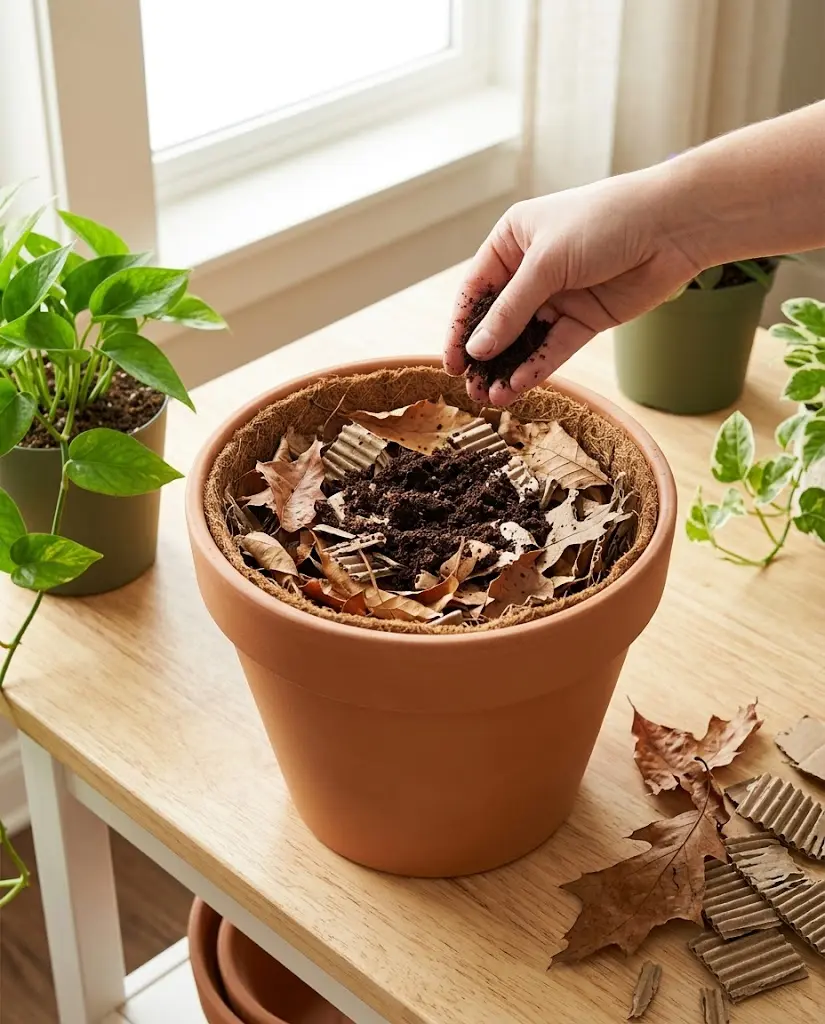
Coffee grounds count as a nitrogen-rich or “green” compost ingredient. Combine them with carbon-rich materials such as dry leaves or shredded plain cardboard instead of building a pile almost entirely from coffee.
Oregon State University Extension recommends keeping coffee grounds to no more than about 20 percent of a compost pile by volume.
Finished compost is very different from dumping fresh kitchen material directly into a houseplant container. During composting, microorganisms break down and stabilize the organic material.
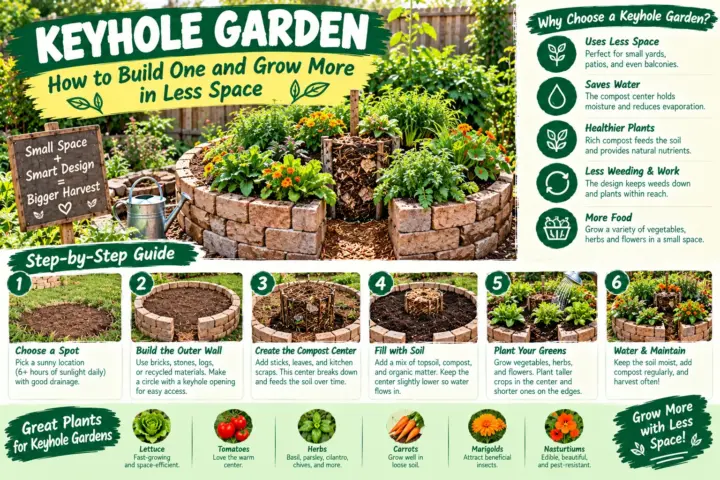
If you want to start composting instead, FarmSolo’s beginner composting guide explains how to balance wet kitchen scraps with dry materials.
What About Coffee-Ground “Tea”?
Soaking coffee grounds in water and pouring the liquid into a houseplant pot is commonly recommended online.
The problem is consistency.
You do not know exactly how much nutrition the liquid contains, how much caffeine remains, or how concentrated one homemade batch is compared with the next.
For routine houseplant feeding, a labeled fertilizer used according to its instructions gives you much better control.
What About Leftover Brewed Coffee?
Leftover coffee is not a necessary houseplant treatment either.
Coffee made with milk, cream, sugar, flavor syrups, or sweeteners should not be poured into plant pots.
Even plain coffee gives you less control over concentration and pH than using normal water and a measured houseplant fertilizer.
If you have leftover grounds, sending them to the compost pile is simpler and easier to manage.
Common Coffee Ground Mistakes With Houseplants
- Covering the soil with a thick layer. Fine grounds can interfere with water movement through the surface.
- Assuming coffee makes the pot acidic. Used grounds are not a reliable pH adjustment.
- Treating coffee grounds as complete fertilizer. Plants need a balanced supply of nutrients.
- Adding grounds to a struggling plant without diagnosing the problem. Yellow leaves do not automatically mean nutrient deficiency.
- Using the same treatment on every houseplant. Aloe and African violets do not have the same root-zone requirements.
- Adding grounds repeatedly. Organic material can accumulate faster than it breaks down inside a small container.
- Believing a viral plant list without checking the source. A plant being tropical or liking slightly acidic conditions does not prove that coffee grounds are beneficial.
FarmSolo’s guide to DIY fertilizer mistakes covers the same problem with other popular kitchen-scrap fertilizers.
Coffee Grounds for Houseplants FAQ
Which houseplants actually like coffee grounds?
There is not a reliable science-based list of common houseplants that need direct applications of coffee grounds. Plants such as pothos, peace lily, philodendron, spider plant, and ferns are frequently named online, but that does not mean grounds are necessary or better than normal plant care and a suitable fertilizer.
Can I put coffee grounds directly on potting soil?
It is better not to make this a routine practice. A layer of fine grounds can interfere with water movement and creates an unnecessary variable in the small root zone of an indoor pot.
Do pothos like coffee grounds?
Pothos does not need coffee grounds. Clemson Extension recommends an airy, well-draining potting mix and normal houseplant fertilizer when needed.
Are coffee grounds good for snake plants?
Direct coffee grounds are unnecessary. Snake plants need excellent drainage and can be damaged by consistently wet conditions, so keeping the root zone airy and allowing it to dry is more important.
Are coffee grounds good for African violets?
African violets are better served by a well-draining soilless mix and a mild fertilizer designed for their needs. University of Minnesota Extension specifically recommends formulated African violet fertilizers.
Do coffee grounds make houseplant soil acidic?
Do not rely on them for that purpose. Used coffee grounds are generally much less acidic than people assume, and extension sources do not recommend them as a dependable way to lower soil pH.
What is the safest way to reuse coffee grounds?
Add moderate amounts to a balanced compost pile with other green and brown materials. Once the material has fully composted, use the finished compost where it is appropriate instead of treating raw coffee grounds as instant fertilizer.
Your Houseplants Do Not Need Your Morning Coffee
Used coffee grounds are not useless. They are organic material, they contain nutrients, and they can be a useful ingredient in compost.
But that is different from saying that spider plants, pothos, peace lilies, philodendrons, African violets, aloe, snake plants, or Boston ferns “love” coffee grounds.
For indoor plants, keep the system simple. Use a potting mix that matches the plant, provide the right light and water, keep drainage working, and use a predictable fertilizer when the plant actually needs nutrients.
Then send your used coffee grounds somewhere they make more sense: the compost pile.