Keyhole Garden: How I Built One and Why I Wish I Had Started Sooner
The first time I saw a Keyhole Garden, I honestly thought somebody had built a fancy flower bed that looked like a giant donut.
Then I understood what it was actually for.
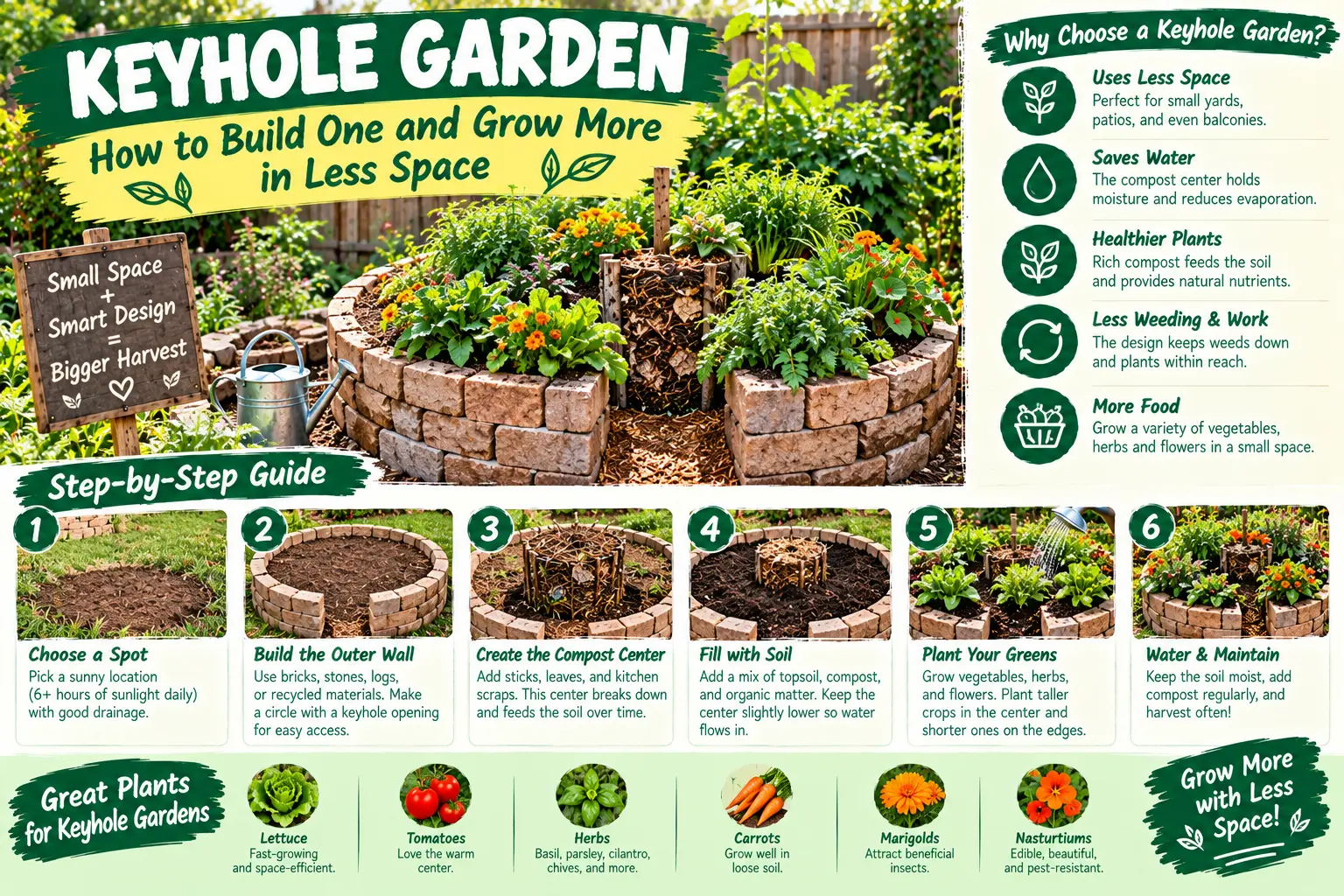
A keyhole garden is a raised, circular garden with a small opening or pathway leading into the middle. Right in the center, there’s usually a compost basket or composting area. The whole idea is to grow vegetables while making good use of water, kitchen scraps, compost, and a small amount of space.
That got my attention pretty fast.
I’ve been messing around with backyard gardening and homesteading for more than ten years, and one thing I’ve learned is that the best garden ideas aren’t always the fancy ones. Sometimes the smartest setup is the one that saves your back, uses less water, and gives you food without needing a huge piece of land.
So I gave a Keyhole Garden a try.
And, of course, I messed it up the first time.
So What Exactly Is a Keyhole Garden?
A Keyhole Garden is basically a circular raised garden bed designed so you can reach most of the planting area without walking inside the garden.
Picture a round garden with a little wedge cut into one side. That wedge is your walking space, and it gives the garden its keyhole shape.
In the middle, you can have a compost basket where you add suitable kitchen scraps and other compostable material. As the material breaks down, nutrients can become available to the surrounding garden soil.
It’s a pretty clever little system.
And for somebody like me who doesn’t particularly enjoy bending over a garden bed for two hours straight, the raised design is a big bonus.
Why Did I Decide to Build a Keyhole Garden?
I’ll tell you the honest reason.
I wanted more growing space without adding another huge garden bed.
My backyard already had vegetables, herbs, a compost pile, chickens and all the other little projects that seem to multiply once you get into homesteading.
You start with one tomato plant.
Then suddenly you’re building a trellis.
Then a compost bin.
Then you’re standing in the yard at 7 AM wondering why you have six different kinds of tomatoes.
That’s how it goes.
The Keyhole Garden gave me a way to combine several useful ideas in one compact space.
My First Keyhole Garden Mistake
Here’s where you’re gonna laugh.
I made my first garden too small.
I thought, “It’s a small garden, so I’ll save materials.”
That sounded smart until the plants started growing.
Once the tomatoes, herbs and greens filled in, reaching the center became awkward. I had created a garden that was supposed to be easy to reach… and then made it hard to reach.
Trust me, I learned the hard way.
If you’re building one, don’t make the growing area so wide that you can’t comfortably reach the middle from the outside or from the keyhole opening.
You want the garden to be easy to work in. That’s the whole point.
How I Built My Keyhole Garden
You don’t need fancy materials.
Mine was built with basic materials I already had around the property. Depending on what you have available, you can use stones, bricks, untreated wood, blocks or other suitable materials for the outer wall.
Here’s roughly how I approached it.
1. Pick a Sunny Location
Don’t start building before you look at the sun.
I know, boring advice. But I’ve made this mistake before with other gardens.
Watch the area during the day and figure out how much direct sunlight it gets.
Most vegetables need plenty of sunlight, although some leafy greens and herbs can tolerate less.
Also think about water. You don’t want to build the garden in a spot where every trip with the watering can becomes a workout.
2. Mark Out a Circle
Use a stick, string and something to mark the ground.
Make a circle large enough for the garden but not so large that you can’t reach the center.
Then mark the little pathway that leads toward the center.
That’s your keyhole.
It doesn’t have to look perfect. Mine certainly didn’t.
3. Build the Outer Wall
Stack your chosen materials around the circle to create a raised bed.
If you’re using wood, make sure it’s appropriate for garden use and avoid questionable treated materials.
Stone and brick can also work nicely, and they give the garden a more natural backyard homestead look.
Don’t make the wall ridiculously tall on your first attempt. You want enough height to make gardening easier, but you also need a stable structure.
What Goes Inside a Keyhole Garden?
This is the part I really like.
A Keyhole Garden isn’t just a pile of soil inside a circle.
You can build up layers of organic material, compost and growing medium depending on the design you’re using.
My basic approach is simple: good soil, plenty of finished compost and organic material that will help the garden hold moisture.
In the center, I use a compost basket or cage where suitable compost material can be added.
Think kitchen scraps, plant material and other compostable materials that are appropriate for your compost system.
Don’t throw meat, oily leftovers or random garbage into it just because it’s in the middle of the garden. You’ll end up with smells, pests and a very unhappy gardener.
The Compost Basket Is the Heart of the Garden
This is probably my favorite part of the whole idea.
The center compost basket gives you a place to recycle some of your kitchen and garden waste while keeping it close to the plants.
As organic material breaks down, moisture and nutrients can move into the surrounding soil.
But here’s something important.
Don’t expect the compost basket to magically feed your entire garden overnight.
It still needs the right balance of materials, moisture and airflow.
I used to think compost was basically “throw stuff in a pile and forget about it.”
Yeah… that gave me some pretty questionable smells.
Now I pay more attention to balancing dry materials like leaves with suitable green materials and keeping the pile from becoming completely soaked.
What Vegetables Grow Well in a Keyhole Garden?
This is where you can have some fun.
I like using a mixture of vegetables and herbs rather than planting one giant crop.
Some good options can include:
- Lettuce
- Spinach
- Kale
- Radishes
- Carrots
- Green onions
- Beets
- Herbs
- Peppers
- Compact tomato varieties
You can also experiment with flowers that attract pollinators, as long as the plants are suitable for your growing conditions.
I especially like mixing flowers and herbs around vegetable areas. It makes the garden look less like a vegetable factory and more like a little living backyard ecosystem.
Can a Keyhole Garden Save Water?
It can help you use water efficiently, especially when you build the garden with good soil and organic matter that holds moisture.
But don’t believe anybody who tells you that you will never need to water it.
Plants still need water.
During hot weather, I check the soil instead of blindly following a watering schedule.
If the surface looks dry, I push my finger into the soil and check what’s happening below.
Mulch can also help reduce evaporation.
A decent layer of organic mulch around plants can make a noticeable difference during hot summer days.
Why I Like Keyhole Gardens for Small Backyards
If you’re doing urban homesteading, this is where the Keyhole Garden really starts making sense.
You don’t need acres.
You don’t even need a giant backyard.
A well-planned circular garden can give you a surprising amount of growing space while keeping the footprint fairly compact.
And because you don’t need to walk into the middle of it, you’re not compacting the soil every time you harvest something.
That’s a small thing, but it matters.
Can You Build One Cheaply?
Absolutely.
One of the best things about homesteading is learning to look at materials differently.
Before buying everything new, look around.
Do you have clean stones from another landscaping project?
Old bricks?
Untreated scrap wood that’s actually suitable for a garden?
Wire mesh for a compost basket?
You may already have half the materials.
Just don’t use materials that could contain harmful chemicals or contaminants around food crops.
What I Would Do Differently Next Time
If I built another Keyhole Garden tomorrow, I’d make three changes.
First, I’d plan the width more carefully. Reaching the center should be easy.
Second, I’d spend more time improving the soil before planting. Good soil saves you headaches later.
Third, I’d install a simple watering system if the garden were far from my water source.
Nothing kills enthusiasm faster than carrying five watering cans across the backyard every morning.
Well, maybe weeds do.
But it’s close.
Common Keyhole Garden Problems
The garden gets too dry
Add organic matter and mulch, and pay attention to the soil beneath the surface. Container-style raised gardens can dry faster than you expect during hot weather.
The compost basket smells bad
You probably have a moisture or material balance problem. Add dry carbon-rich material such as dry leaves or other appropriate compost materials and improve airflow.
Plants aren’t growing well
Don’t automatically blame the Keyhole Garden design. Check sunlight, watering, soil quality, pests and planting time first.
It attracts pests
Any garden can attract pests. Keep the area clean, don’t leave rotting food around, and use appropriate organic pest-management methods for your situation.
Keyhole Garden FAQ
Is a Keyhole Garden good for beginners?
Yes, especially if you start small. The design is simple enough to understand, and you can build it using inexpensive materials. Just don’t overcomplicate the first one.
How big should a Keyhole Garden be?
There isn’t one magic size that works for every backyard. The important thing is that you can comfortably reach the planting areas. If you can’t reach the middle, you’ve made it too wide.
Can I build a Keyhole Garden in an urban backyard?
Absolutely. That’s one of the reasons I like it. A Keyhole Garden can fit nicely into a small backyard, especially when you want to grow vegetables without building several long raised beds.
Would I Build Another One?
Yep.
And that’s probably the easiest way I can explain how I feel about this garden design.
It isn’t perfect. No garden is.
You still have weeds. You still have pests. You still have to water plants when the weather gets crazy hot. And sometimes something you plant just refuses to grow because apparently it has decided to personally insult you.
But a Keyhole Garden gives you a smart way to combine vegetables, compost, soil building and efficient use of space in one backyard garden.
For an urban homestead or a small backyard, that’s pretty darn useful.
Start small. Use materials you already have when you can. Build good soil. Keep the center compost basket working properly, and don’t make the garden so big that you can’t reach it.
And if your first attempt looks a little crooked?
Don’t worry about it.
Mine did too.
That’s the beauty of homesteading. You’re not building a showroom. You’re building something that feeds you and makes your little piece of land work harder.
Got a weird Keyhole Garden question? Leave a comment. I actually like hearing about other people’s garden experiments because, trust me, I’ve made enough mistakes to recognize a few of them.