What Your Plant Leaves Are Telling You. The first time I really started paying attention to plant leaves, I felt like my garden was trying to talk to me.
Yellow leaves. Brown edges. Curling leaves. Pale new growth.
I thought, “Great. Something is wrong.”
But after years of growing vegetables in my backyard, I’ve learned that leaves can actually give you some pretty good clues about what’s happening underneath.
The trick is figuring out what they’re saying.
A yellow leaf doesn’t always mean your plant needs fertilizer. Brown edges don’t always mean it’s thirsty. And throwing a handful of random stuff into the soil because you saw it online can sometimes make the problem worse.
Trust me, I learned that one the hard way.
So let’s look at what your plant leaves are telling you, the seven problems I see most often, and what I actually do when something in the garden starts looking unhappy.
1. Yellow Leaves Can Mean Several Different Things
Yellow leaves are probably the most common problem I see in vegetable gardens.
And here’s the frustrating part: there isn’t one single reason.
Yellowing can come from:
- Too much water
- Poor drainage
- Not enough nutrients
- Lack of light
- Natural aging of older leaves
- Root problems
- Temperature stress
- Sometimes pests or disease
So don’t see a yellow leaf and immediately reach for fertilizer.
I’ve done that.
I had a tomato plant with yellowing leaves and thought it needed more food. I added fertilizer.
A few days later, it looked worse.
The actual problem was that the soil was staying too wet.
What I Do First
I stick my finger into the soil.
If it’s wet several inches down, I don’t add more water.
If it’s bone dry, watering may be part of the solution.
I also look at which leaves are turning yellow.
If it’s mostly older leaves near the bottom while the new growth looks healthy, that can be very different from a plant where the newest leaves are turning pale.
That’s why I like looking at the whole plant instead of one leaf.
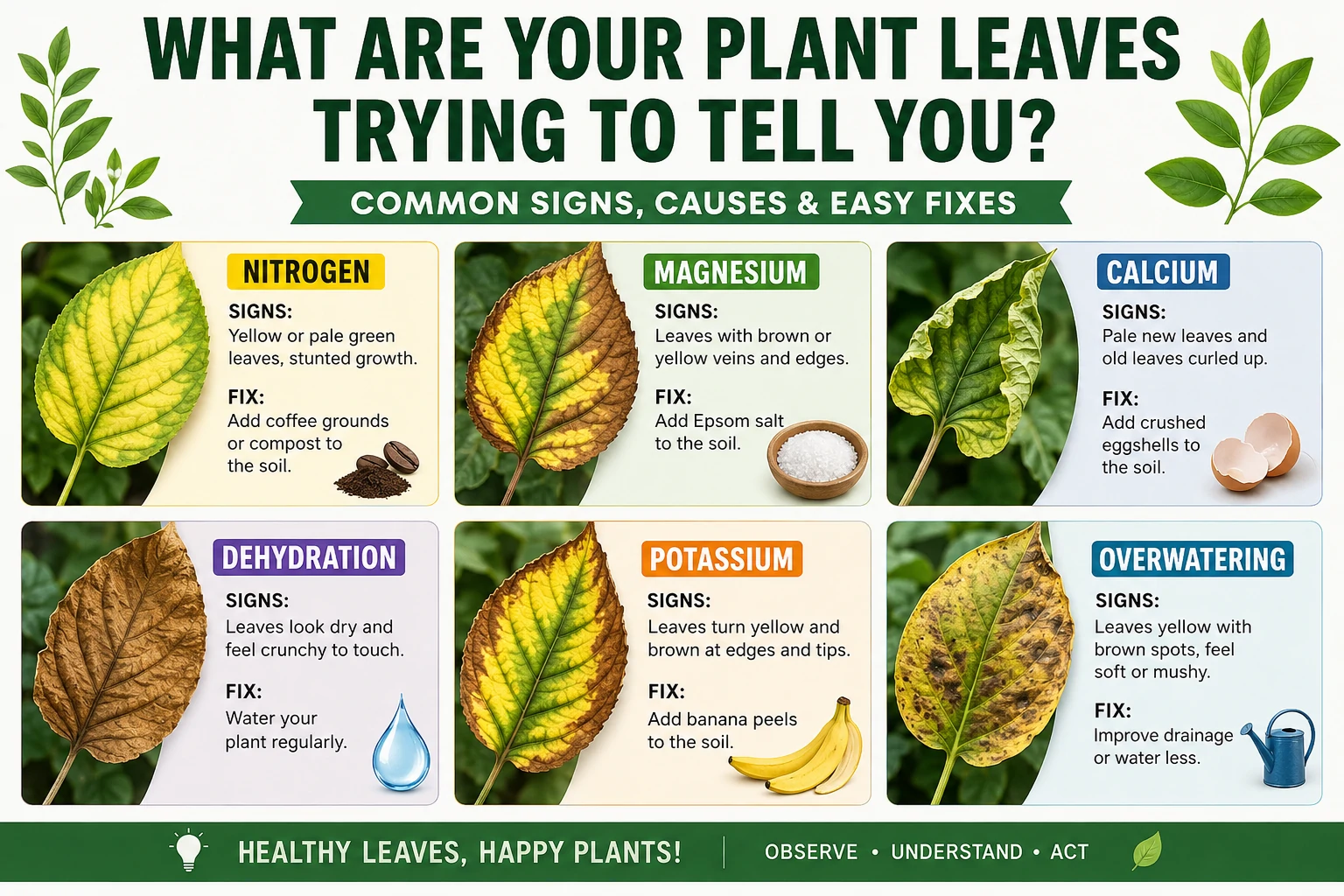
2. Yellow Leaves With Green Veins
This one gets gardeners scratching their heads.
Sometimes the leaf tissue turns yellow while the veins stay green.
This pattern can be associated with nutrient problems, but it can also come from other issues depending on the plant and growing conditions.
Magnesium deficiency is one possibility, especially on older leaves.
But don’t automatically dump Epsom salt onto your garden.
I know that’s popular advice.
I’ve used Epsom salt before, too.
The problem is that adding magnesium when your soil already has enough magnesium isn’t necessarily going to help, and excessive soil amendments can create other nutrient problems.
If you suspect a nutrient deficiency, a soil test is a much better starting point.
What I Look For
I ask myself:
Is the problem happening on old leaves or new leaves?
Are the veins staying green?
Is the whole plant affected?
Has anything changed recently?
Maybe I moved the container.
Maybe we’ve had a week of heavy rain.
Maybe I haven’t fertilized a hungry container plant in a while.
The pattern matters.
3. Brown, Crispy Leaf Edges Usually Mean Stress
When the edges of leaves turn brown and crispy, I start thinking about moisture and environmental stress.
Sometimes the plant simply isn’t getting enough water.
But there are other possibilities.
Brown edges can also happen because of:
- Hot weather
- Wind
- Root problems
- Salt buildup in containers
- Excess fertilizer
- Very dry air
- Inconsistent watering
This is especially common with container gardening.
A pot can dry out much faster than a garden bed.
I’ve gone outside in the morning thinking everything was fine, only to come home later and find my container plants looking like they were ready for retirement.
My Simple Fix
First, I check the soil.
If it’s dry, I water thoroughly.
I don’t just sprinkle the surface.
I want the moisture to reach the root zone.
Then I try to keep the moisture more consistent instead of allowing the plant to go from completely dry to soaking wet over and over.
Mulch can also help in garden beds.
For containers, moving the pot away from intense afternoon heat can sometimes make a surprising difference.
4. Leaves That Look Dry and Crunchy
This one seems obvious.
The plant needs water, right?
Usually, maybe.
But here’s where things get interesting.
Sometimes a plant looks thirsty even though the soil is wet.
That can happen when the roots are damaged or the soil stays waterlogged.
The roots need oxygen as well as water.
If they’re sitting in soggy soil all the time, they can struggle to function properly.
So before watering a wilted or crispy plant, I check the soil.
I’ve killed plants by trying to save them.
Yep.
The plant looked thirsty, so I watered it.
Then I watered it again.
Then again.
The soil was already wet, and I was basically making the root problem worse.
What I’d Do Now
Stick your finger into the soil.
If it’s dry, water.
If it’s wet, don’t automatically add more.
Check drainage.
Look for clogged container holes.
Look at the roots if the plant is in a pot and the problem continues.
Sometimes the solution isn’t more water.
It’s better drainage.
5. Brown Leaf Tips Can Come From Too Much Fertilizer
This is one I wish I had learned earlier.
More fertilizer does not always mean more growth.
In fact, too much fertilizer can damage plants.
If you’ve been feeding a container plant heavily and suddenly notice brown leaf tips or edges, I’d stop adding fertilizer for a moment and look at what’s going on.
Salt buildup from fertilizers can accumulate in container soil.
That’s one reason I don’t like constantly feeding plants just because they aren’t growing as quickly as I’d like.
My Rule With Fertilizer
Start with healthy soil.
Use compost when appropriate.
If fertilizer is needed, follow the product instructions.
Don’t double the amount because you think your tomato plant looks hungry.
Plants aren’t teenagers at an all-you-can-eat buffet.
More isn’t automatically better.
6. Curling Leaves Can Be a Warning
Curling leaves can mean different things depending on the plant.
Sometimes it’s environmental stress.
Sometimes it’s pests.
Sometimes it’s disease.
And sometimes plants curl their leaves because they’re trying to reduce water loss during heat or drought.
This is why I don’t like diagnosing a plant from one symptom.
I’ll look underneath the leaves.
That’s where the little troublemakers like to hide.
Check for:
- Aphids
- Whiteflies
- Spider mites
- Caterpillars
- Sticky residue
- Tiny insects
- Webbing
- Discoloration
I’ve found aphids hiding on new growth more times than I care to admit.
You can have a plant that looks perfectly healthy from five feet away.
Walk closer and suddenly you discover an entire insect apartment complex underneath the leaves.
7. Pale New Leaves Can Point to a Different Problem
This is another reason I pay attention to where the symptoms appear.
If the newest leaves are pale or yellow while the older leaves remain green, the cause can be different from a plant where older leaves are yellowing first.
Nutrient availability, soil pH, root problems, and environmental stress can all affect new growth.
Sometimes the plant has nutrients in the soil but can’t access them properly.
That’s why blindly adding fertilizer isn’t always the answer.
A soil test can tell you much more than guessing.
And if you’re growing in containers, remember that the potting mix you’re using matters too.
Before You Add Anything, Do This
Here’s my little routine when a plant starts looking strange.
I walk around it.
Seriously.
Don’t just stare at the bad leaf.
Look at the entire plant.
Then I check:
1. The soil
Is it dry, moist, or soaked?
2. The newest growth
Does it look healthy?
3. The oldest leaves
Are they changing first?
4. The underside of leaves
Any insects?
5. The stems
Any damage, discoloration, or soft spots?
6. The sunlight
Has something started shading the plant?
7. Recent weather
Was it extremely hot, cold, windy, or rainy?
That little inspection can tell you a lot.
Don’t Trust Every DIY Fertilizer Tip You See
This is something I really want to mention because I see it everywhere.
Coffee grounds.
Banana peels.
Eggshells.
Epsom salt.
Rice water.
Cooking water.
All of these things can be useful in certain situations, but they’re not magic plant medicine.
For example, putting fresh banana peels directly into soil isn’t the same as giving your plant a balanced fertilizer.
Eggshells break down slowly and aren’t an instant calcium treatment.
Used coffee grounds shouldn’t be dumped into a thick layer around plants.
And salty cooking water?
Keep that away from your garden.
I learned to stop thinking of the garden as a place where every kitchen scrap automatically becomes fertilizer.
Sometimes the compost pile is the better destination.
What About Nitrogen Deficiency?
Nitrogen deficiency can cause older leaves to become pale or yellow, and plants may show reduced growth.
If a soil test confirms low nitrogen, then adding an appropriate nitrogen source can help.
Compost can contribute nutrients, although its nutrient content varies.
Organic fertilizers can also provide nitrogen.
But I don’t recommend diagnosing nitrogen deficiency just because a leaf turned yellow.
That’s too simple.
If you’ve got a tomato plant with yellow leaves, check the watering, drainage, light, root health, and overall plant condition first.
Then consider nutrients.
What About Calcium Problems?
Calcium gets blamed for quite a few garden problems.
But adding crushed eggshells isn’t a quick fix.
Eggshells release calcium slowly as they break down.
If you’re dealing with a confirmed calcium-related problem, you need to understand the soil and the particular crop before deciding what amendment is appropriate.
For me, the lesson is simple:
Don’t treat symptoms blindly.
Figure out what’s actually happening first.
Leaves Can Also Tell You When a Plant Is Just Getting Old
This is something beginners sometimes worry about too much.
Not every yellow leaf means disaster.
Older leaves naturally age.
If the bottom leaves on an otherwise healthy plant slowly yellow and the new growth looks strong, I don’t immediately panic.
I remove badly damaged leaves if needed and keep watching the plant.
The overall health matters more than one ugly leaf.
My garden isn’t a beauty contest.
If the plant is producing tomatoes, cucumbers, peppers, or whatever I planted, I’m happy.
My Biggest Mistakes With Plant Leaves
I’ve made plenty of them.
I Overwatered
I thought more water meant more growth.
It doesn’t.
I Overfertilized
I saw yellow leaves and grabbed fertilizer before checking anything else.
Bad move.
I Ignored the Underside of Leaves
Big mistake.
That’s where pests often hide.
I Diagnosed Too Quickly
One yellow leaf doesn’t tell you the whole story.
I Used Too Many Homemade Remedies
I’ve tried plenty of garden tricks over the years.
Some were useful.
Some did nothing.
Some created more work.
Now I prefer simple methods and actual observation.
A Simple Plant Leaf Checklist
When you notice something strange, don’t panic.
Grab your coffee and take five minutes.
Look at:
- Leaf color: yellow, pale, brown, spotted?
- Leaf location: old leaves or new leaves?
- Leaf texture: soft, dry, crispy, curled?
- Soil: dry, moist, or waterlogged?
- Pests: check underneath the leaves.
- Sunlight: enough light?
- Weather: recent heat, cold, wind, or heavy rain?
- Fertilizer: have you recently added too much?
- Roots: if the problem continues, inspect them.
You’d be surprised how often the answer becomes obvious once you slow down.
FAQ: What Your Plant Leaves Are Telling You
Why are my plant leaves turning yellow?
Yellow leaves can be caused by several things, including watering problems, nutrient deficiencies, poor drainage, low light, natural aging, pests, or disease. Check the soil and look at whether the old or new leaves are affected before adding fertilizer.
Should I use Epsom salt when leaves turn yellow?
Not automatically. Epsom salt supplies magnesium and sulfur, but adding it without knowing whether your soil actually needs magnesium isn’t a good habit. A soil test is a better way to determine what’s missing.
Why are my plant leaves turning brown around the edges?
Brown edges can be caused by drought, heat, inconsistent watering, root problems, fertilizer or salt buildup, and other stresses. Check the soil moisture first and consider recent weather and feeding.
Should I cut off damaged leaves?
If a leaf is badly damaged, diseased, or mostly dead, removing it can make sense. But don’t cut leaves simply because they have one small yellow or brown spot. First figure out why the damage is happening.
Final Thoughts
After all these years of gardening, I’ve stopped looking at ugly leaves as bad news.
They’re information.
A yellow leaf might be telling you the soil is too wet.
A crispy edge might be saying the plant is struggling with heat or inconsistent watering.
Curling leaves might mean pests are hiding underneath.
And sometimes a yellow leaf is just an old leaf that’s finished doing its job.
The important thing is to slow down before reaching for fertilizer, Epsom salt, coffee grounds, or some homemade garden recipe.
Look at the whole plant.
Check the soil.
Look under the leaves.
Think about what changed recently.
That’s how I approach what your plant leaves are telling you now.
I’ve killed enough plants over the years by trying to fix things too quickly.
Don’t make the same mistake I did.
Sometimes the best garden tool isn’t fertilizer or some fancy gadget.
It’s five minutes of actually paying attention.