FARMSOLO • URBAN HOMESTEADING
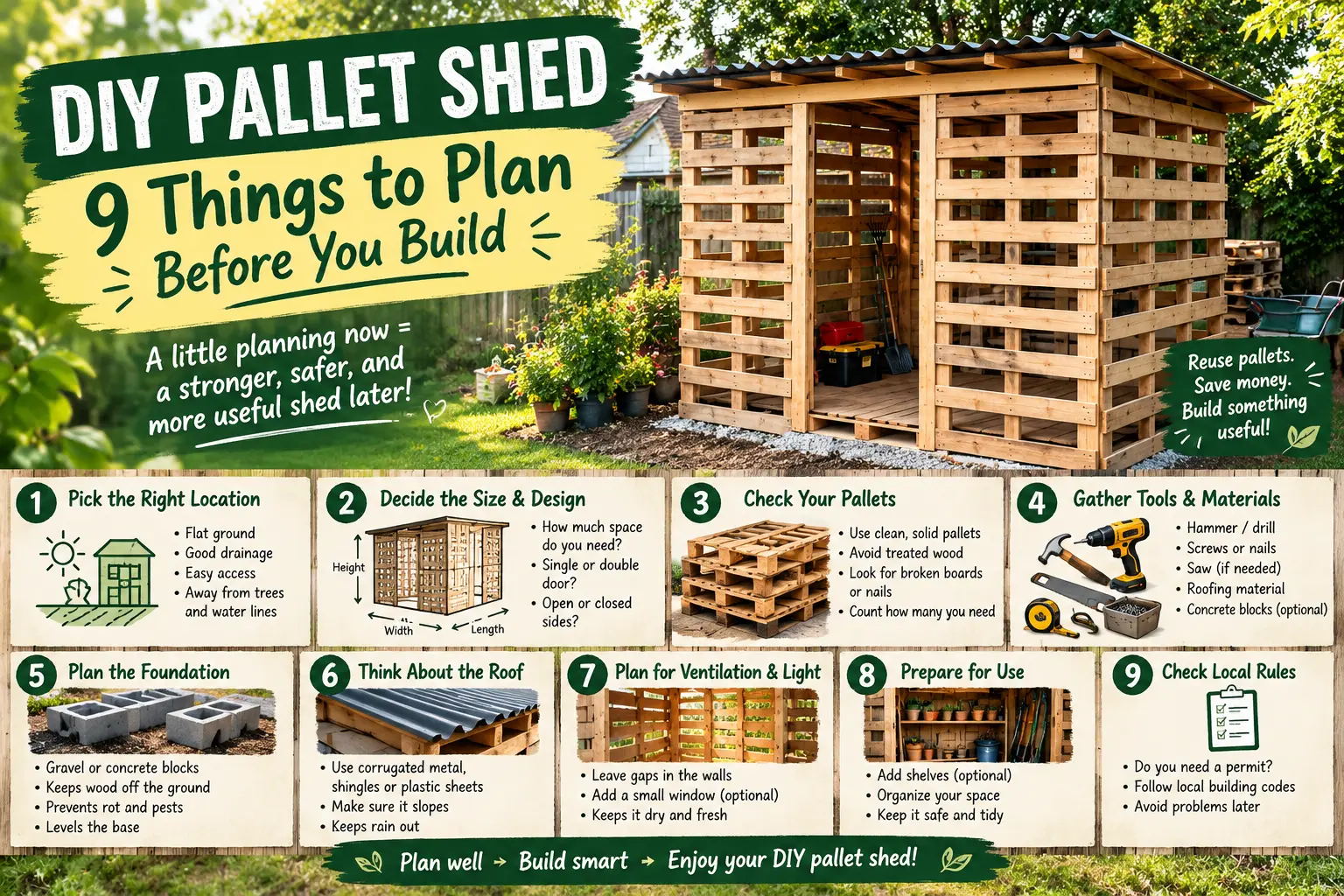
A DIY pallet shed looks like one of the cheapest ways to add backyard storage. Stand a few pallets upright, attach them together, put a roof on top, and you have a shed—at least that is how many Pinterest projects make it look.
The basic idea can be useful, but a shed is different from a pallet planter or garden decoration. It has to stand through wind and rain, keep tools dry, resist rot, support a roof, and remain stable when people walk inside.
Pallet selection • dry base • framing • wall bracing • roofing • ventilation • weather protection • safe storage
Before you copy the photo: Pallets were made to move cargo, not automatically to act as structural shed walls. A permanent shed may need conventional framing, structural sheathing, rated connectors, appropriate foundations, and approval under local building rules. Treat pallet wood as reclaimed material—not as a complete structural design.
Quick Answer
A practical DIY pallet shed starts with clean, legally obtained pallets in good condition, a dry and stable base, and a structural plan that does not depend on random pallet boards carrying loads they were never designed to support.
Keep reclaimed wood away from wet soil, brace the walls against sideways movement, frame the door opening properly, use a roof system suited to local wind and snow conditions, and plan ventilation so damp tools and garden equipment do not sit inside a sealed wooden box.
What the Pinterest Pallet Shed Gets Right
There are several good ideas hidden inside the simple photo.
- The shed has a simple rectangular footprint.
- The roof extends beyond the walls to help move rain away from the wood.
- The floor appears raised above the surrounding ground.
- The pallet openings naturally provide some airflow.
- The wide doorway makes garden equipment easier to move.
- The project reuses material that might otherwise be discarded.
The missing part is structure. From one photo we cannot see the foundation, anchors, wall bracing, roof framing, connectors, hidden rot, or how the building resists wind. Those details matter more than the rustic appearance.
9 Things to Plan Before Building a DIY Pallet Shed
01 • PALLET SAFETY
Know Where the Pallets Came From
Free pallet wood is only a bargain when you know what you are bringing into the yard.
Inspect every pallet before using it. Skip pallets with oil stains, chemical smells, heavy mold, obvious contamination, major rot, crushed blocks, badly split boards, or large numbers of loose and rusty nails.
Also make sure you have permission to take the pallet. Painted rental pallets may still belong to a pallet company even when they are sitting outside a business.
Best rule: if the pallet’s history looks questionable, leave it out of the project.
02 • READ THE STAMP
HT Is Not the Same as “Construction Grade”
International shipping pallets may have an IPPC mark that includes a treatment code.
- HT means the wood received an approved heat treatment.
- MB means methyl bromide fumigation and is a pallet I would not reuse for a home project.
One important detail is often missed online: an HT mark is about phytosanitary treatment for wood packaging. It does not tell you that every board has been structurally graded for use as a wall stud, roof rafter, beam, or other building component.
Use the treatment stamp to screen the pallet. Do not use it as a structural engineering stamp.
03 • FOUNDATION
Keep the Pallet Walls Away From Wet Soil
The fastest way to shorten the life of reclaimed wood is to let it remain wet.
Choose a well-drained site rather than the low part of the yard where rainwater collects. The shed should sit on an appropriate base that keeps wood away from soil and provides stable support.
The right footing or foundation depends on shed size, local soil, frost conditions, wind, local rules, and whether the building will be temporary or permanent.
Do not treat a few loose bricks or scrap boards under the corners as a universal foundation plan.
04 • WALL STRUCTURE
Do Not Assume Stacked Pallets Are Automatically Stable Walls
A pallet can feel very stiff when it is lying flat with cargo on top. That does not automatically mean several pallets attached vertically form a safe building wall.
A shed has to resist more than its own weight. Wind pushes sideways on the walls and roof. The roof transfers loads down into the walls. Door openings remove part of the wall that might otherwise help resist movement.
For a more permanent shed, the safer approach is often to create a proper structural frame and use selected pallet boards as cladding, infill, shelving, or other noncritical components rather than asking unknown pallet pieces to perform every structural job.
05 • BRACING
Plan for Sideways Movement
This is one of the biggest details missing from pallet-shed photos.
A rectangular wall made from horizontal and vertical boards can still rack sideways like a loose picture frame unless the building has an appropriate lateral-resistance system.
Conventional wood buildings commonly use structural panel sheathing, designed bracing, proper connections, or other approved systems to transfer loads through the building.
A few screws between neighboring pallets are not automatically a complete wind-bracing system.
06 • DOOR OPENING
Build the Door Around What You Need to Store
A shed doorway can look large until you try to push a wheelbarrow, mower, garden cart, or bulky storage bin through it.
Measure your largest item before deciding where the door goes.
Also remember that a wide opening interrupts the wall. The frame around that opening needs to support whatever loads the design places above it and keep the doorway square enough for the door to continue opening and closing.
Plan the door first—not after the pallet walls are already standing.
07 • ROOF
Treat the Roof as Its Own Structural System
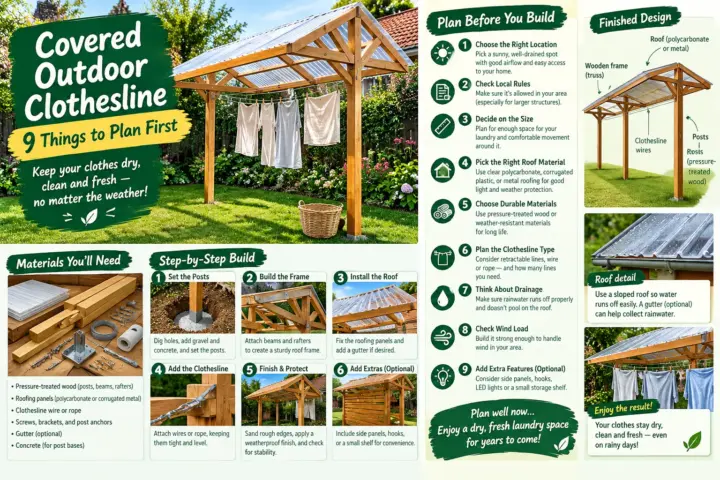
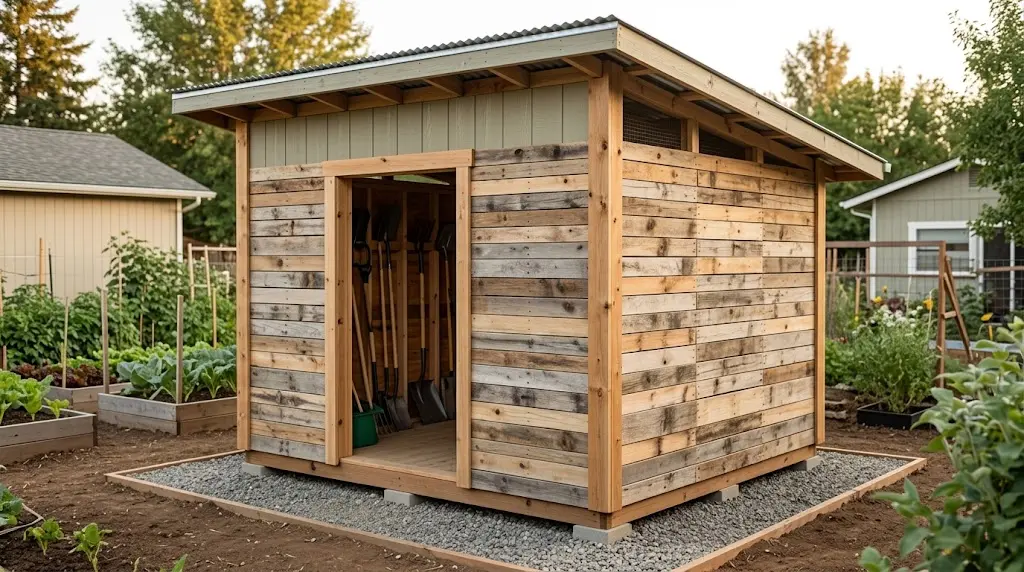
The corrugated roof in the photo is simple and inexpensive-looking, but the visible panel is only the weather surface.
Under it, a real roof still needs support members, connections, suitable spacing, slope, fastening, edge details, and enough resistance to local wind and—where relevant—snow.
Follow the roofing manufacturer’s installation requirements for panel support, minimum slope, fasteners, overlaps, and flashing.
Give the roof enough overhang to help shed water away from the pallet walls, but remember that larger overhangs also catch more wind and need proper structural support.
08 • WATER & AIR
Keep Rain Out Without Trapping Moisture Inside
Open pallet walls provide plenty of ventilation—but not much protection from wind-driven rain.
Closing every opening solves one problem and can create another if the shed no longer dries after wet tools, boots, soil, or equipment are brought inside.
If you add exterior cladding, a weather-resistive layer, or interior panels, design the wall assembly so water drains outward and air can move where the materials require it.
Simple high and low vents can also help a garden shed release heat and moisture without leaving the entire wall open.
09 • REAL USE
Decide What the Shed Will Store Before You Build It
A small pallet shed can work very differently depending on what goes inside.
| If you store… | Plan for… |
|---|---|
| Hand tools | Wall hooks, dry storage and secure doors |
| Wheelbarrow or mower | Wide door and strong floor |
| Potting supplies | Shelves and easy-to-clean surfaces |
| Seed trays | Dry shelves and protection from rodents |
| Fuel or chemicals | Follow product storage rules; do not treat an improvised pallet shed as automatically suitable |
| Power tools | Better moisture control and security |
The storage plan affects the floor, door, shelves, ventilation, weatherproofing and security. Building the shell first and figuring out the purpose later often creates wasted space.
Pallets I Would Avoid
- Pallets marked MB.
- Pallets with unknown chemical or oil stains.
- Pallets with strong chemical odors.
- Wood with visible decay or serious insect damage.
- Boards with deep splits where you need reliable fastening.
- Heavily moldy pallets.
- Pallets with many loose or protruding nails.
- Painted rental pallets that may still belong to a pooling company.
- Pallets taken without permission.
Can You Use Pallets as the Actual Shed Frame?
For a temporary lightweight project, people sometimes connect intact pallets into wall sections.
The problem is that pallet lumber varies enormously. Species, board thickness, defects, repairs, fasteners, previous damage, and pallet design can all differ from one unit to another.
Pallet lumber grades are not the same system used for construction lumber. Building standards for conventional wood framing depend on known structural materials, connections, wall systems, roof systems, and design loads.
For a permanent shed, one sensible approach is to let properly designed framing carry the building loads and use suitable reclaimed pallet wood where its variable strength is less critical.
Where Pallet Wood Can Work Well
Good Uses
- Exterior decorative cladding
- Interior tool racks
- Simple shelves
- Potting benches
- Nonstructural partitions
- Garden storage bins
Be More Careful With
- Roof rafters
- Headers
- Load-bearing posts
- Floor joists
- Primary wind bracing
- Critical structural connections
Do You Need to Take Pallets Apart?
Sometimes leaving a pallet intact is easier than trying to recover every individual board.
Pallet nails are designed to hold well, which also makes them difficult to remove. Prying boards aggressively can split the wood or suddenly release a board under tension.
Wear eye protection, sturdy gloves, footwear, and appropriate protection when sawing or sanding. Check carefully for hidden nails before cutting.
Never kick or jump on a pallet to break it apart.
Already working with pallets? FarmSolo’s DIY Pallet Garden Planter explains more about choosing reclaimed pallets for a smaller garden project.
Common DIY Pallet Shed Mistakes
- Building directly on soil. Constant dampness can shorten the life of the wood.
- Using every free pallet you find. Condition and history matter.
- Assuming HT means structurally rated. It does not.
- Using MB-marked pallets. Avoid them.
- Making pallet walls carry a roof without a real structural plan.
- Forgetting lateral bracing. Walls must resist sideways loads.
- Attaching corrugated panels to weak or irregular roof supports.
- Closing all the wall gaps without planning ventilation.
- Building a narrow door before measuring the mower or wheelbarrow.
- Ignoring local shed rules. Size, location, setbacks, foundations and permits can be regulated.
Pallet Shed vs. Regular Framed Shed
| Feature | Pallet-based project | Conventional framed shed |
|---|---|---|
| Material cost | Can be lower if suitable pallets are legally available | Usually higher |
| Material consistency | Highly variable | Much easier to specify |
| Wall layout | Limited by pallet sizes | Designed around the building |
| Structural design | Requires special care | Established framing methods are available |
| Rustic appearance | Natural advantage | Can be added with cladding |
| Time | May involve sorting, cleaning and repairing many pallets | More predictable material preparation |
| Best approach | Reuse selected material where appropriate | Use known structural components for critical loads |
Could You Turn It Into More Than a Tool Shed?
Once the structure is dry, stable and weather-resistant, a small shed can do more than hold a rake and shovel.
- Potting shed
- Seed-starting storage
- Garden-tool room
- Compost-tool storage
- Small workshop
- Seasonal garden storage
Turning it into an occupied garden room is a bigger step because comfort, windows, insulation, electricity, heating, moisture control, structural loads and local regulations become more important.
If you want a shed designed as a comfortable garden retreat instead of storage, see FarmSolo’s Garden Shed Reading Nook guide.
DIY Pallet Shed FAQ
Can you really build a shed from pallets?
Pallet wood can be reused in a shed, but pallets vary greatly in condition, construction and strength. A permanent building still needs a structural system appropriate for its roof, walls, foundation, wind and other local loads.
What does HT mean on a pallet?
HT indicates an approved heat treatment under the international wood-packaging standard. It relates to pest treatment of the packaging material; it does not mean the pallet lumber has been structurally graded for building construction.
Should I use an MB pallet?
No. MB identifies methyl bromide treatment. Pallets carrying that treatment code should not be reused for home projects.
Do I need to seal pallet wood outside?
Exterior wood lasts longer when the overall design manages rain and ground moisture. A suitable exterior finish can add protection, but it cannot compensate for a leaking roof, wood sitting in wet soil, trapped moisture or rotten boards.
Can a pallet shed sit directly on grass?
That is usually a poor long-term setup because moisture from soil and vegetation can keep the bottom wood damp. Use an appropriate stable base that provides drainage and keeps vulnerable wood away from persistent ground moisture.
What is the best roof for a pallet shed?
There is no universal best roof. Corrugated metal or other lightweight roof panels can work on a properly designed roof structure, but follow the product’s requirements for support, slope, fastening, flashing and local wind or snow conditions.
Do I need a permit for a pallet shed?
Rules depend on location, building size, height, foundation type, setbacks, electrical work and how the shed will be used. Check the requirements that apply where the shed will be built before starting permanent work.
Sources & Safety References
- Penn State Extension — Be Safe Around Wooden Pallets
- International Plant Protection Convention — Regulation of Wood Packaging Material / ISPM 15
- American Wood Council — 2024 Wood Frame Construction Manual
- American Wood Council — Structural Wall Sheathing
THE FARMSOLO TAKEAWAY
Reuse the Wood Without Guessing About the Structure
The appeal of a DIY pallet shed is easy to understand. The wood may be inexpensive, the rustic look fits a garden, and reusing materials can keep useful lumber out of the waste stream.
Just separate two ideas that Pinterest often mixes together: reclaimed wood can be useful, but reclaimed pallets are not automatically a complete building system.
Choose the pallets carefully, keep the wood dry, give the shed a real structural plan, and use reclaimed material where it makes sense. That gives you a backyard shed built for more than one good photo.