FARMSOLO • URBAN HOMESTEADING
A well-organized garage can become one of the most useful spaces on a small homestead. Instead of leaning shovels against the wall and searching through boxes every time you need pruners, you can give garden tools, repair supplies, seasonal gear and everyday equipment a clear home.
Best for: garden tools • homestead workshops • small garages • potting supplies • seasonal storage • DIY projects
Store Up, Not Out
Walls and vertical racks can hold many everyday garden tools while keeping valuable floor space open.
Keep a Clear Work Zone
A workbench is much more useful when tools have permanent storage instead of living on top of it.
Quick Answer
The easiest way to organize garden tools in a garage is to divide the space into zones. Hang long-handled tools vertically, use a pegboard for frequently used hand tools, place labeled bins under shelves, keep heavy items low, store seeds and dry supplies off the floor, and keep pesticides, fuels and other hazardous products in their own safe storage areas instead of mixing them with everyday garden supplies.
Why a Garden Garage Works So Well
Garden storage tends to spread everywhere.
Pruners end up on a patio table. Seed packets disappear into kitchen drawers. A rake gets leaned against a fence. Gloves somehow turn up everywhere except where you need them.
A garage workshop solves much of that problem because it gives your outdoor work a central base.
You can sharpen pruners, repair a raised bed, organize irrigation parts, pot up seedlings, charge cordless tools and store the equipment you use throughout the growing season.
FarmSolo Reality Check: The Pinterest garage looks organized, but I would change one important detail. Garden chemicals and pesticides should not sit openly above a general workbench. Give hazardous products their own secure storage area and keep them separated from food, animal feed and everyday household supplies.
12 Garage Garden Tool Storage Ideas
01 • CREATE ZONES
Give Every Type of Tool a Home
Do not begin by buying storage bins. Begin by deciding what belongs together.
One wall might hold long-handled garden tools. Another can become the hand-tool and repair zone. Put planting supplies together, irrigation fittings together and seasonal equipment together.
When related items live together, putting something away becomes almost automatic.
02 • LONG TOOLS
Get Rakes and Shovels Off the Floor
Rakes, hoes, forks and shovels use surprisingly little space when they are stored vertically.
Use a wall-mounted tool rack, heavy-duty hooks or a purpose-built vertical organizer. Position rake heads and sharp edges where they are unlikely to catch clothing or hit someone walking past.
Keep the tools you use most at the easiest height to reach.
03 • PEGBOARD
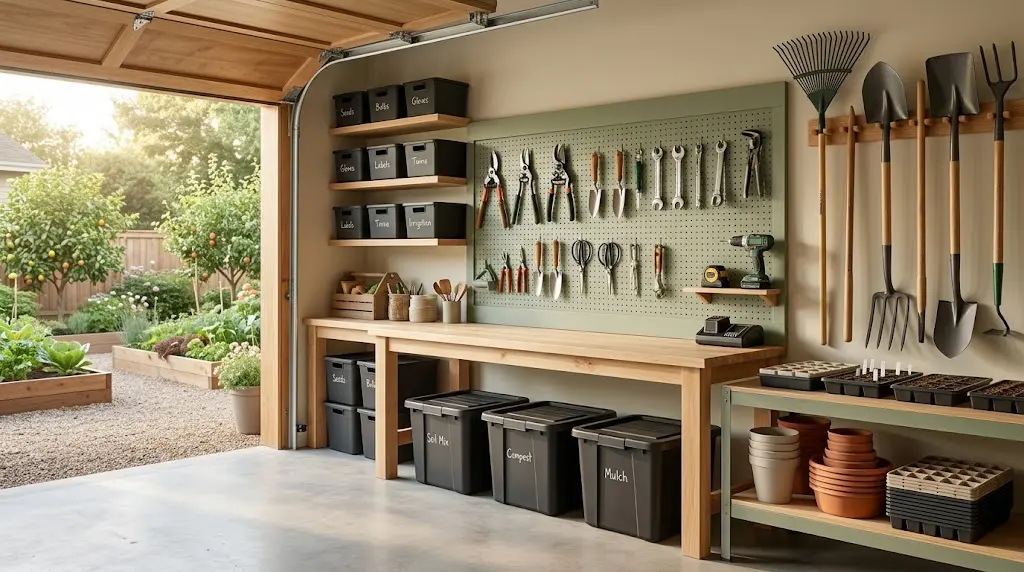
Use a Pegboard for Everyday Hand Tools
The pegboard is one of the best parts of the Pinterest setup.
Pruners, scissors, screwdrivers, small saws, measuring tapes, wrenches and hand trowels can stay visible instead of disappearing into drawers.
Mount the board securely and use hooks or holders rated for the weight of the tools. Heavy power tools are often better supported by shelves or stronger dedicated mounts.
04 • WORKBENCH
Protect Your Work Surface From Storage Creep
A big workbench becomes useless surprisingly quickly when every loose object lands on it.
Treat the center of the bench as active working space. Put permanent storage above, below and beside it instead of directly on it.
A clear workbench is useful for potting seedlings, cleaning tools, repairing irrigation lines, sharpening blades and building small homestead projects.
05 • LABELED BINS
Give Small Supplies Simple Categories
Bins work especially well for things that are useful but awkward to hang.
- Drip irrigation fittings
- Plant ties and clips
- Gloves
- Seed-starting supplies
- Hose fittings
- Small hand tools
- Seasonal decorations
- Repair parts
Labels save more time than complicated storage systems. Keep the categories broad enough that putting items away remains easy.
06 • HEAVY STORAGE
Keep the Heavy Stuff Low
Large containers, heavy power tools and bulky supplies usually belong on lower shelves.
This makes them easier to lift and reduces the chance of a heavy object falling from above.
Use upper shelves for lightweight items that are used less often.
07 • SEEDS & DRY SUPPLIES
Keep Moisture-Sensitive Supplies Off the Floor
Garage floors can become damp from rain, snow, washing or simple condensation.
Store dry supplies on shelves rather than directly on concrete. Seed packets should be kept in suitable dry storage according to their needs, while bags of fertilizer and similar products should stay dry and intact.
If rodents are a problem, choose secure containers for items they may damage.
08 • PESTICIDES
Do Not Treat Garden Chemicals Like Ordinary Supplies
This is one place where safety matters more than making the garage look symmetrical.
Keep pesticides in their original labeled containers and follow the storage directions on each product label. Store them where children and pets cannot reach them, preferably in secure storage appropriate for the product.
Do not store pesticides together with food, animal feed or medical supplies.
Important: Never pour pesticides, herbicides, fuels or other hazardous products into beverage bottles, unlabeled jars or decorative containers just to make the storage area look uniform. The original label contains important use, hazard and first-aid information.
09 • FUELS
Keep Fuel Away From the Workbench and Ignition Sources
Gasoline and other liquid fuels need more thought than a convenient open shelf.
Use approved fuel containers and follow the product and local storage requirements. Keep portable fuel containers tightly closed in an appropriate cool, well-ventilated location and away from flames, heaters, pilot lights and other ignition sources.
A visually convenient shelf is not automatically a safe fuel-storage location.
10 • TOOL CARE
Clean Tools Before Hanging Them Up
Storage works better when dirty garden tools do not carry half the garden indoors with them.
Remove soil and plant debris before putting tools away. Let tools dry completely before long-term storage.
Clean tools also reduce the chance of moving plant disease from one part of the garden to another. Pruning tools used on diseased plants may need proper cleaning and disinfection before they are used elsewhere.
11 • SEASONAL STORAGE
Put Rarely Used Gear Higher or Farther Back
Not every tool needs prime wall space.
Tomato cages, frost covers, extra irrigation parts and other seasonal supplies can move to higher shelves or clearly labeled bins when they are not needed.
Use the easiest-to-reach space for tools you grab every week.
12 • KEEP THE PATH CLEAR
Do Not Organize Yourself Into a Narrow Walkway
It is easy to become so excited about shelves that you slowly fill every open wall and aisle.
Leave comfortable access between the door, workbench, storage areas and anything else you regularly use.
Nothing should require climbing over a mower, fertilizer bag or pile of pots just to reach a shovel.
A Simple Garage Storage Layout
Garage door → long-handled tool rack → open workbench → pegboard → everyday bins → seasonal shelves → secure chemical storage separated from the general work zone.
The exact order is less important than keeping the items you use most close to the door and workbench while keeping hazardous products separated and secured.
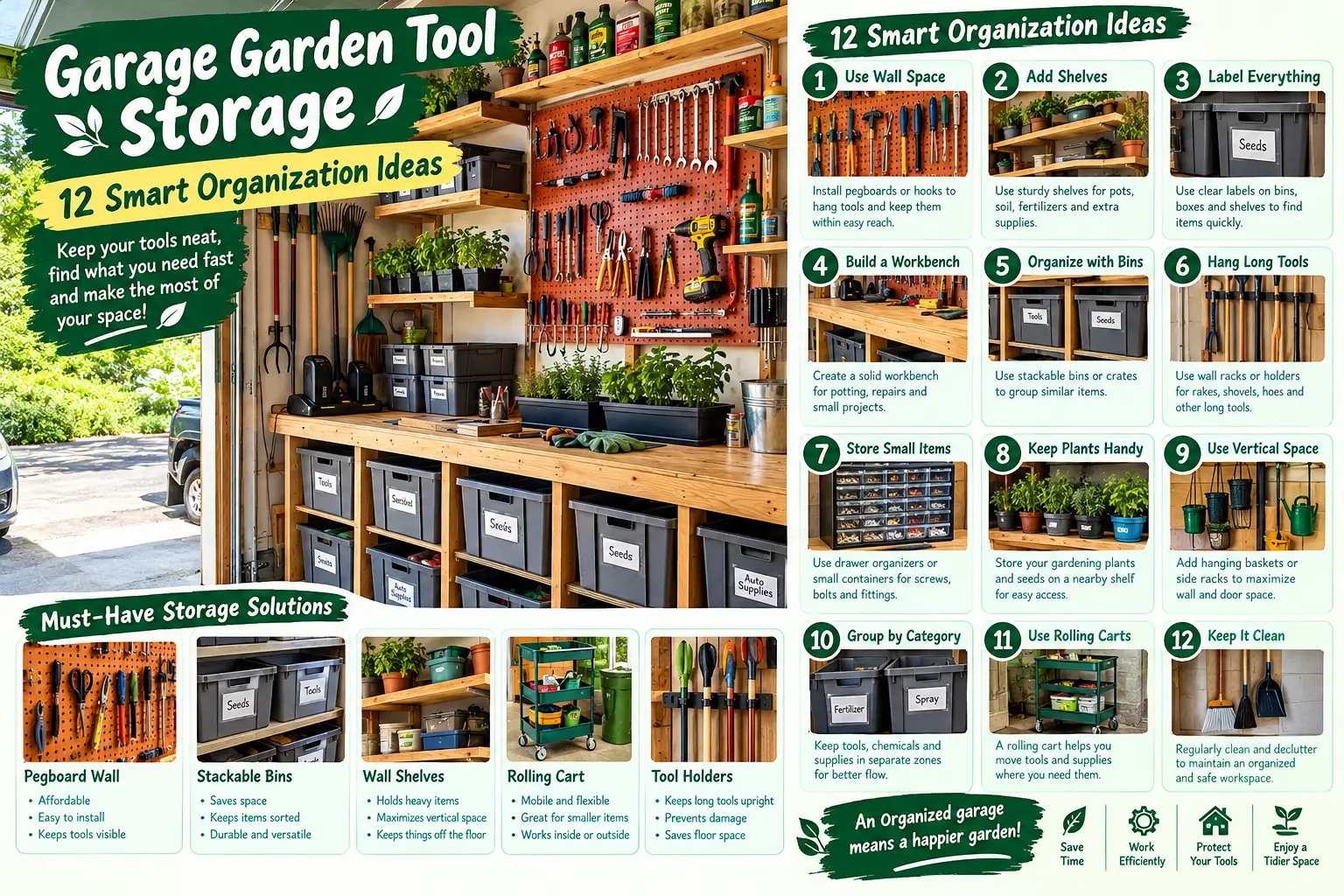
What I Would Change From the Pinterest Garage
| Idea in the photo | FarmSolo take |
|---|---|
| Pegboard tool wall | Excellent for frequently used hand tools. |
| Long tools stored vertically | Good use of narrow wall space. |
| Labeled bins | One of the easiest systems to maintain long-term. |
| Large workbench | Excellent, as long as the surface stays mostly clear. |
| Heavy bins below the bench | Practical and easier to lift than overhead storage. |
| Chemical bottles on an open upper shelf | I would move hazardous products into appropriate secure storage. |
| Edible herbs beside workshop chemicals | I would keep food-growing plants in a separate clean growing area. |
| Everything packed tightly together | Leave enough empty space to clean, repair and safely reach each zone. |
Should You Grow Herbs in the Garage?
The plants make the Pinterest setup look beautiful, but I would not mix an edible herb-growing station with an area used for fuels, pesticides, automotive products, paints or other workshop chemicals.
If you want to grow herbs indoors, give them a clean dedicated growing area with suitable light, temperature and airflow.
A garage shelf can still hold empty pots, trays, clean containers and planting supplies without needing to double as an edible growing station.
How to Store Garden Tools for Winter
End-of-season organization is the perfect time to reset the entire workspace.
Remove soil and plant debris from garden tools, inspect handles and fasteners, sharpen tools that need it, and let everything dry before storage.
Metal surfaces can be cared for appropriately to reduce rust during storage. Drain water from hoses before coiling them, and move supplies that can be damaged by freezing or moisture to storage that meets their label or manufacturer instructions.
Common Garage Garden Storage Mistakes
- Buying containers before sorting anything. Decide what you need to store first.
- Leaving rakes and shovels leaning in corners. A wall rack uses the space better.
- Turning the workbench into permanent storage. Protect the surface as working space.
- Putting heavy bins overhead. Keep heavier supplies lower.
- Storing damp tools. Clean and dry them before long-term storage.
- Keeping pesticides on open general-purpose shelves. Follow the label and store hazardous products securely.
- Using food or drink containers for chemicals. Keep products in their original labeled containers.
- Storing fuel wherever there is an empty shelf. Fuel requires appropriate storage away from ignition sources.
- Keeping every tool because you might use it someday. Broken and duplicate equipment can quietly consume half the garage.
- Filling every inch. Good organization includes empty working and walking space.
FarmSolo tip: A workshop does not need every tool in the hardware store. Start with the tools you actually use for your garden, repairs and homestead projects, then add equipment when a real job requires it.
Garage Garden Tool Storage FAQ
What is the best way to store garden tools in a garage?
Use vertical wall storage for long-handled tools, a pegboard or small-tool organizer for hand tools, shelves for supplies and labeled bins for loose parts. Keep the workbench itself mostly clear.
Is pegboard strong enough for garden tools?
Pegboard works well for many lightweight and medium hand tools when it is securely mounted and used with appropriate hardware. Large or very heavy tools may need stronger shelves, racks or dedicated wall mounts.
Should I clean garden tools before storing them?
Yes. Remove soil and plant debris and let tools dry before long-term storage. Cleaning is especially important before moving pruning tools from diseased plants to healthy plants.
Where should garden pesticides be stored?
Follow the product label. Keep pesticides in their original labeled containers, out of reach of children and pets, and away from food, animal feed and medical supplies. Secure storage is preferable.
Can seed bags and fertilizer sit on a garage floor?
Keeping moisture-sensitive supplies on shelves is usually better than leaving them directly on a garage floor where water or dampness may reach them. Follow fertilizer label storage instructions as well.
How do I organize a very small garage?
Prioritize wall space. Hang long tools vertically, place hand tools on pegboard, use shelves above the workbench and use the lower space for labeled bins. Avoid filling the floor with freestanding storage unless it has a specific purpose.
Build a Garage That Makes Garden Work Easier
The best garage garden storage system is not the one with the most shelves or matching bins.
It is the one that lets you walk in, grab the tool you need, finish the job and put everything back without searching through piles.
Start with clear zones, use the walls well, protect the workbench and separate hazardous products from everyday garden storage. The space will feel larger even before you add another shelf.