FARMSOLO • BACKYARD CHICKENS
A good chick brooder does not need to look complicated. Baby chicks mainly need a clean, dry, draft-protected space with reliable warmth, fresh air, enough room to move away from the heat, clean water and a balanced chick starter feed.
Focus on: safe heat • dry bedding • ventilation • enough floor space • clean water • chick starter • predator protection
Starting Temperature
Start around 90–95°F at chick level during the first week, then reduce supplemental heat gradually as the chicks grow.
Planning Space
A useful small-flock planning figure is about ½ square foot per chick during the early brooding period, increasing as the birds grow.
Quick Answer
A DIY chick brooder can be a sturdy box, pen or circular enclosure. Make it large enough for the chicks to move freely between a warm zone and a cooler zone. Use dry absorbent bedding, constant clean water, chick starter feed and a secure cover where pets or predators are a risk. Monitor temperature at chick level and watch the chicks themselves: comfortable chicks spread throughout the brooder, cold chicks huddle together, and overheated chicks move away from the heat source.
What Is a Chick Brooder?
A brooder is the protected environment used to raise young chicks before they can comfortably handle normal outdoor temperatures and move into their later housing.
The brooder replaces some of the warmth and protection that a mother hen would normally provide.
It should provide warmth without overheating, protection without eliminating ventilation, and enough room for every chick to reach feed and water.
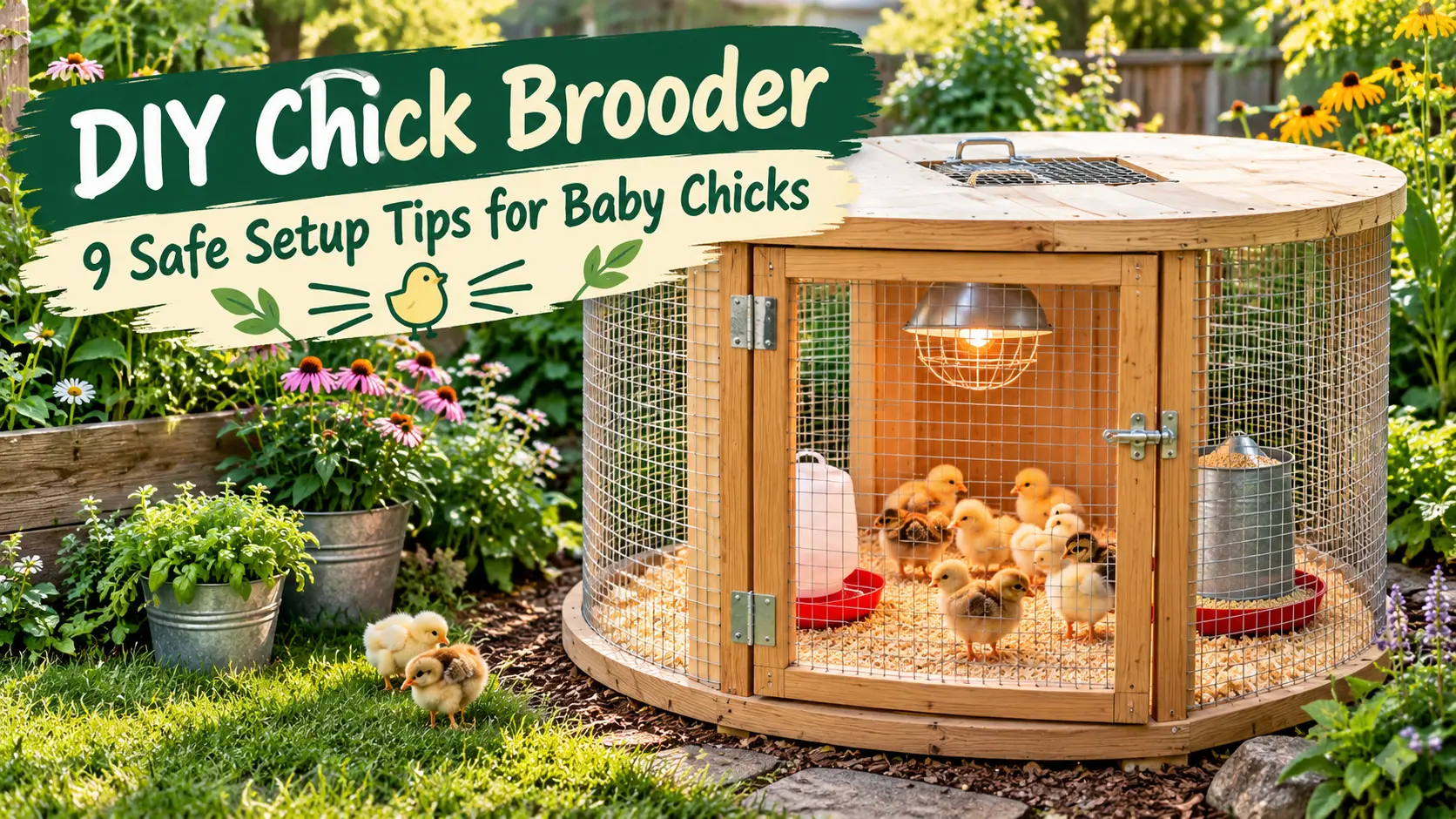
FarmSolo Reality Check: The round Pinterest brooder has a useful shape, but the photo does not tell us the heater’s safety clearance, electrical rating, ventilation rate, actual floor area or predator resistance. Copy the concept—not every construction detail visible in the image.
Why a Round Chick Brooder Can Work Well
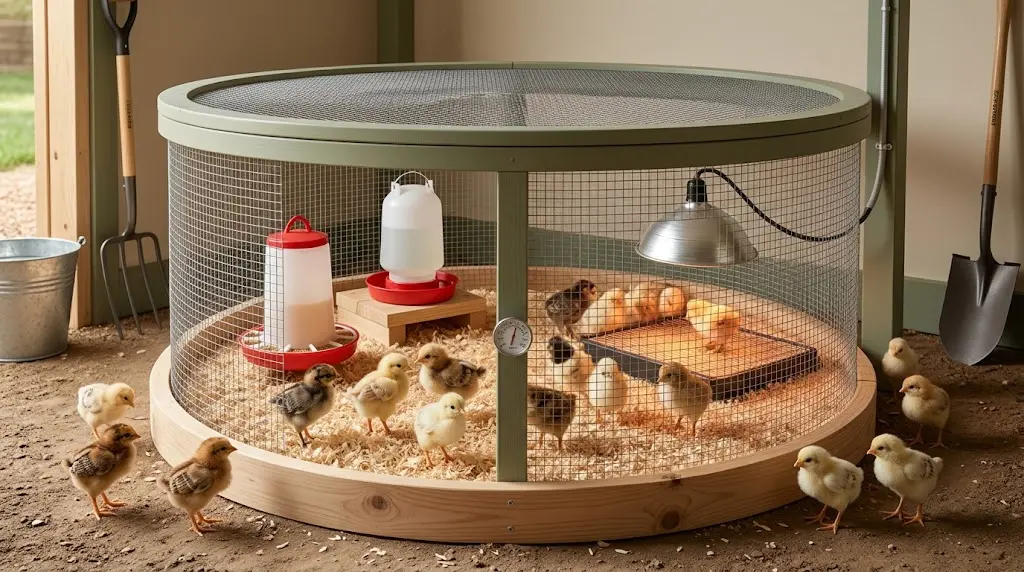
The circular design shown in the inspiration image has one practical advantage: there are no square corners where frightened chicks can pile tightly together.
Brooder guards are often made as circles for this reason. They also help keep very young chicks within a manageable distance of heat, feed and water.
A circle is not mandatory. A rectangular brooder can also work well when it provides adequate space and does not encourage chicks to crowd into dangerous corners.
9 Tips for a Safer DIY Chick Brooder
01 • PLAN THE SPACE
Make the Brooder Big Enough for Growing Chicks
Baby chicks grow surprisingly quickly, so do not size the brooder only for their first day.
University Extension guidance varies somewhat by age and management system. A practical small-flock planning figure is about ½ square foot of floor area per chick during the early brooding period, with more space added as the birds grow.
Crowding makes it harder to keep bedding dry and can restrict access to feed, water and cooler areas.
02 • CREATE TWO TEMPERATURE ZONES
Let Chicks Move Away From the Heat
Do not try to make every inch of the brooder equally hot.
Young chicks need access to warmth, but they also need somewhere cooler to go when they have had enough.
A properly sized brooder allows chicks to move toward or away from the warm zone according to their comfort.
03 • MANAGE HEAT SAFELY
Treat Every Heat Source as a Fire-Safety Issue
This is the main detail I would change or inspect carefully in the Pinterest design.
The brooder appears to place a heat source underneath or very close to a wooden top. Wood, bedding, dust and poultry equipment can all become part of a fire hazard if a heater is installed incorrectly.
Use heating equipment approved for poultry or livestock environments and follow the manufacturer’s clearance and installation requirements.
If you use a heat lamp, secure it independently with a chain or cable rather than relying on the electrical cord or a simple clamp. Keep it safely separated from bedding, wood and other combustible materials.
04 • WATCH THE CHICKS
Use Their Behavior as a Temperature Check
A thermometer is useful, but chick behavior gives you important information too.
- Comfortable: chicks are spread reasonably evenly around the brooder.
- Too cold: chicks crowd tightly near the heat.
- Too hot: chicks move as far away from the heat as possible.
- Draft problem: chicks may collect together on one side away from the draft.
For the first week, Extension recommendations commonly start around 90–95°F at chick level and then reduce supplemental heat about 5°F per week as the birds grow and conditions allow.
05 • KEEP THE FLOOR DRY
Use Clean Absorbent Bedding
The Pinterest design appears to use wood shavings, which can be a practical brooder bedding when the material is appropriate and kept dry.
Clean pine shavings are commonly recommended for floor-brooded chicks. Avoid slick newspaper or other smooth surfaces that do not give young feet enough grip.
Remove wet or caked bedding promptly, especially around the waterer. As chicks grow, their water use and manure production increase quickly.
06 • PROVIDE FRESH AIR
Warm Does Not Mean Sealed
A brooder needs protection from cold drafts, but it also needs ventilation.
Fresh air helps remove moisture and keeps the bedding and environment healthier.
That is another reason I would not copy a mostly solid wooden brooder top unless the design provides generous, protected ventilation and the heater manufacturer allows that installation.
07 • FEED & WATER
Keep Both Available Without Creating Wet Bedding
Chicks need continuous access to suitable chick feed and clean drinking water.
Use equipment sized for young chicks so they can reach food and water without climbing into deep containers.
A small raised platform underneath the waterer can help reduce wet litter as the chicks grow. Check water several times a day because bedding and feed can quickly end up inside chick waterers.
08 • SECURE THE BROODER
Protect Chicks From Pets, Rodents and Wildlife
Wire mesh around the Pinterest brooder is a useful idea, but mesh size, fasteners and door latches matter.
Young chicks should be protected from cats, dogs, rodents and wild animals. Use a secure cover or enclosure where needed, and make sure there are no gaps large enough for a chick to escape through.
If the brooder is in a garage, barn or other outbuilding, remember that rodents may be attracted to chick feed even when larger predators are not present.
09 • PREPARE BEFORE ARRIVAL
Test the Brooder Before the Chicks Arrive
Do not wait until a box of chicks is sitting in front of you before testing the heater.
Clean and prepare the brooder, add bedding, set up feed and water equipment, then run the heat source in advance.
Check temperatures at chick height and make sure the brooder has both a warm area and comfortable space farther from the heat.
How Much Space Does a Chick Brooder Need?
Space requirements increase rapidly as chicks grow.
| Age | Useful planning space | What changes |
|---|---|---|
| First weeks | About ½ sq. ft. per chick is a practical small-flock target | Strong heat requirement and easy feed/water access |
| 4–8 weeks | Plan around 1 sq. ft. per bird | More litter, feed, water and movement space needed |
| Older birds | Move toward appropriate grow-out or coop space | The brooder should no longer be their permanent housing |
These are planning figures rather than a reason to pack the maximum possible number of chicks into an enclosure. Breed size, feeder space, waterer space, temperature and ventilation also affect how well the brooder functions.
How to Calculate Space in a Round Brooder
For a circular brooder like the Pinterest example, first measure the inside diameter.
Circle area = 3.14 × radius × radius
For example, a 4-foot-diameter circle has a 2-foot radius and about 12.6 square feet of floor area.
At ½ square foot per chick, that floor area would mathematically equal about 25 chicks during the early period. Conveniently, Penn State also describes a roughly 4-foot-diameter chick ring as a starting size for about 25 chicks.
Remember that feeders, waterers and heating equipment also occupy usable space, so do not treat the calculation as a reason to overcrowd the enclosure.
Chick Brooder Temperature by Week
| Age | Approximate warm-zone target |
|---|---|
| Week 1 | 90–95°F |
| Week 2 | About 85–90°F |
| Week 3 | About 80–85°F |
| Week 4 | About 75–80°F |
| Later weeks | Continue reducing heat as feathering and ambient conditions allow |
Use the table as a starting point, not as a substitute for watching the birds. Chicks that are evenly distributed and active usually indicate a more comfortable setup than chicks constantly huddling or escaping the heat.
Heat Plate vs. Heat Lamp
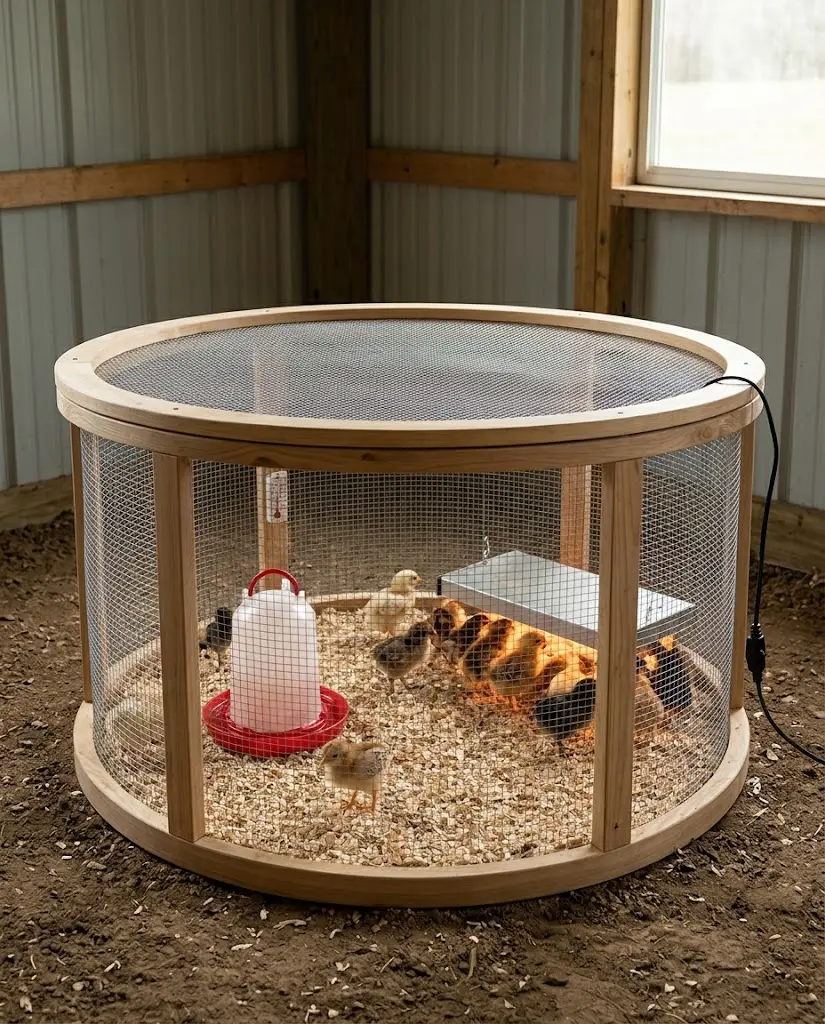
There is more than one way to provide supplemental warmth.
| Option | Important considerations |
|---|---|
| Brooder plate or approved radiant heater | Use equipment specifically approved for poultry or livestock and follow the manufacturer’s height, clearance and electrical instructions. |
| Infrared heat lamp | Requires careful fire prevention, appropriate socket, secure independent suspension and safe clearance from combustible materials. |
| Other electric brooder | Follow the manufacturer’s operating range, placement and electrical-safety requirements. |
Whatever system you choose, provide a cooler area and monitor chick behavior instead of trying to heat the entire enclosure to one temperature.
Electrical safety: Keep electrical connections protected from water, curious animals and damaged cords. Do not improvise heater wiring, sockets or extension-cord connections. Follow the equipment manufacturer’s instructions and local electrical requirements.
What Bedding Is Best for Baby Chicks?
The bedding needs to absorb moisture, provide traction and stay reasonably clean.
- Pine shavings: commonly used and absorbent.
- Other poultry-safe absorbent litter: may also work when clean, dry and low in dust.
- Wet bedding: remove it promptly instead of simply covering it repeatedly.
- Slick newspaper: avoid as the main walking surface because it provides poor traction.
Can You Keep a Chick Brooder Outdoors?
The garden setting in the Pinterest image is attractive, but an exposed backyard is not automatically a suitable brooder location.
Very young chicks need protection from rain, wind, large temperature swings, direct hot sun, predators and damp bedding.
A sheltered building or properly designed brooding space is generally much easier to manage than a decorative brooder sitting unprotected in the yard.
Planning your flock? See FarmSolo’s How Many Hens for Eggs? before deciding how many chicks to buy. When the birds are older, the Chicken Run Garden Ideas guide can help you plan their outdoor space.
Common Chick Brooder Mistakes
- Making the brooder too small. Chicks need more space every week.
- Heating the entire enclosure. Always provide room to move away from the warm zone.
- Trusting only the thermometer. Watch chick behavior too.
- Using an unsecured heat lamp. Heat equipment must be installed for fire safety.
- Putting a heater too close to wood or bedding. Follow manufacturer clearances.
- Closing every ventilation opening to keep chicks warm. They still need fresh air.
- Allowing water spills to soak the litter. Remove wet material quickly.
- Using a slippery floor. Young chicks need good traction.
- Not providing enough feeder or waterer access. Every chick needs a reasonable opportunity to eat and drink.
- Leaving an outdoor brooder exposed to weather. Young chicks require a protected environment.
- Waiting until chicks arrive to test the heater. Prepare and warm the brooder beforehand.
Chick Brooder FAQ
What temperature should a chick brooder be?
Start around 90–95°F at chick level during the first week. Reduce supplemental heat roughly 5°F each week as chicks feather out and ambient conditions allow. Chick behavior should also guide adjustments.
How much room does each baby chick need?
A useful small-flock planning figure is about ½ square foot per chick during the early brooding period, increasing to around 1 square foot as chicks reach roughly 4–8 weeks. Requirements vary with bird size and management.
How can I tell if chicks are too cold?
Cold chicks tend to huddle tightly near the heat source. Comfortable chicks are more evenly distributed, while overheated chicks tend to move away from the heat.
Does a brooder need a lid?
A secure ventilated cover can be useful where chicks may escape or where pets, rodents or other animals could enter. Do not use a solid lid that traps excessive heat and moisture around the birds or heating equipment.
Can I use pine shavings for baby chicks?
Clean pine shavings are commonly recommended as absorbent brooder litter. Keep them dry and remove wet or heavily soiled bedding as needed.
When can chicks leave the brooder?
There is no single date that works in every climate. Supplemental heat is gradually reduced as chicks feather out, and the move to later housing depends on their age, feathering, outdoor temperature, breed and the protection provided by the coop or grow-out area.
Build for the Chicks, Not Just for the Photo
The Pinterest brooder is attractive and its circular shape has real practical value.
But the best brooder is not the one that looks most polished. It is the one that gives chicks reliable warmth, room to escape the heat, dry bedding, fresh air, clean water, balanced feed and protection from fire, weather and predators.
Keep the design simple enough that you can inspect, clean and adjust it every day. Baby chicks change quickly, and the brooder needs to change with them.