FARMSOLO • BACKYARD LANDSCAPING
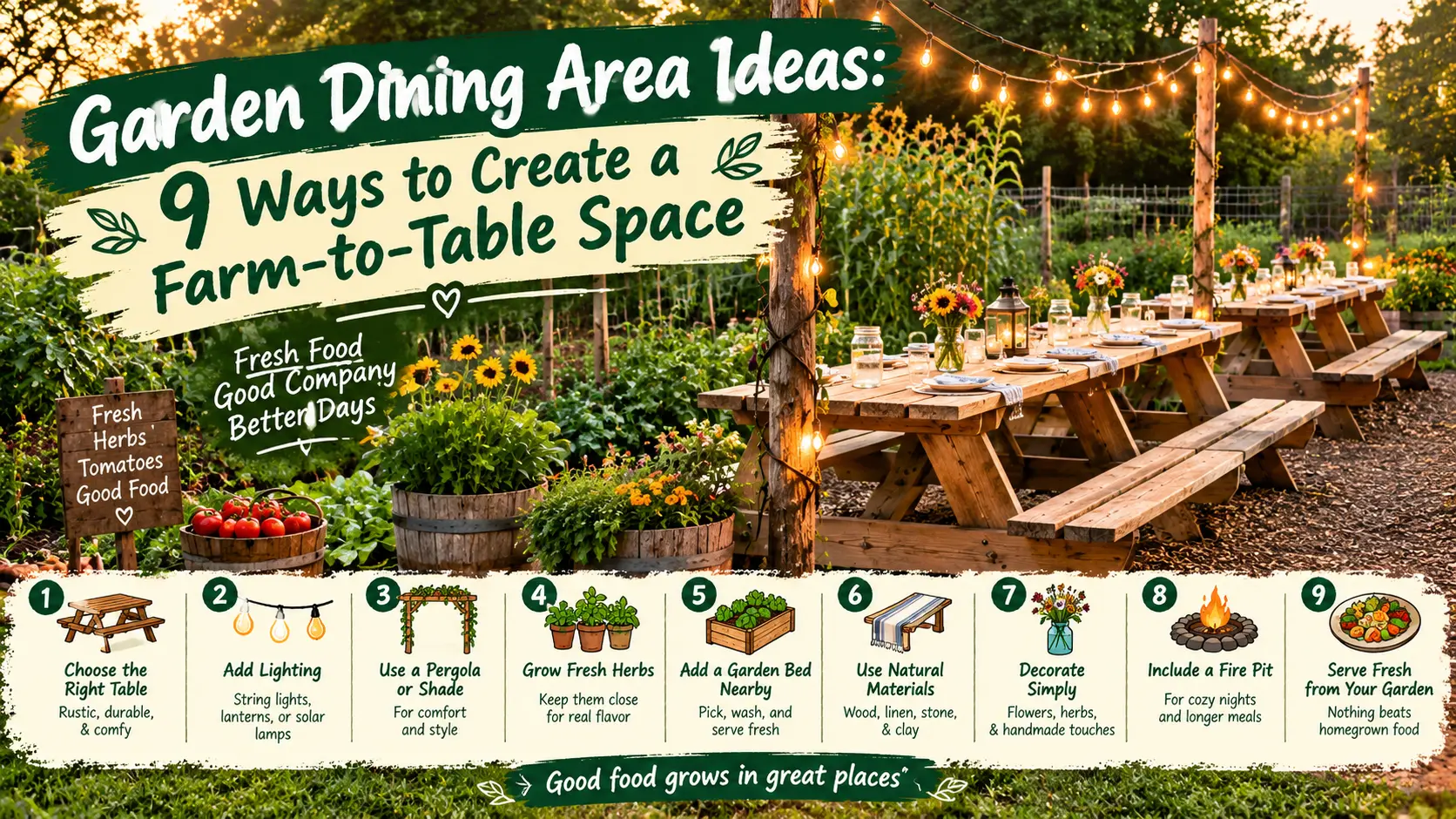
A garden dining area can turn a productive backyard into a place where people actually want to stay. A simple picnic table beside tomatoes, herbs, flowers and vegetables can feel more inviting than a formal patio—especially when paths, shade, lighting and garden access are planned together.
Best for: vegetable gardens • homesteads • rustic backyards • farm-to-table meals • picnic tables • evening gatherings
Best Design Choice
Place the table beside the productive garden rather than blocking the main growing beds or harvest paths.
Easy Upgrade
A stable picnic table, a dry walking surface and warm outdoor lighting can create most of the atmosphere without building a full patio.
Quick Answer
The easiest garden dining area starts with a flat, well-drained space beside the vegetable garden. Add a sturdy outdoor table, enough room to walk around it, a mulch or gravel surface that stays usable after rain, optional shade for hot afternoons, and exterior-rated lighting for evening meals. Keep the dining space close enough to enjoy the garden without blocking irrigation, harvest access or sunlight to nearby crops.
Why Put a Dining Area Inside the Garden?
Most vegetable gardens are designed around growing, watering and harvesting. Seating is often added somewhere else.
The Pinterest idea flips that around. The dining table becomes part of the garden instead of being separated from it.
That works especially well in a homestead garden because the plants become part of the atmosphere. Corn, sunflowers, herbs, flowers and vegetable rows form the backdrop, while harvested food can move only a short distance from the garden to the table.
FarmSolo reality check: The inspiration photo is beautiful, but do not copy the layout before checking sun, irrigation lines, muddy areas, table stability, electrical access and the width needed for people to move comfortably through the garden.
9 Garden Dining Area Ideas That Work in a Real Backyard
01 • LOCATION FIRST
Choose the Dining Spot Before Buying the Table
Start by watching how you already move through the garden.
- Where do you carry tools and harvest baskets?
- Which paths are used most often?
- Where does water collect after rain?
- Which area receives harsh afternoon sun?
- Where do irrigation hoses or sprinklers run?
The dining area should feel connected to the garden without becoming an obstacle every time you need to harvest tomatoes or move a wheelbarrow.
02 • KEEP THE GARDEN PRODUCTIVE
Do Not Sacrifice Your Best Growing Space
A sunny, fertile vegetable bed is usually too valuable to cover with picnic tables.
Instead, look for a garden edge, extra-wide central path, unused corner or transition area between beds.
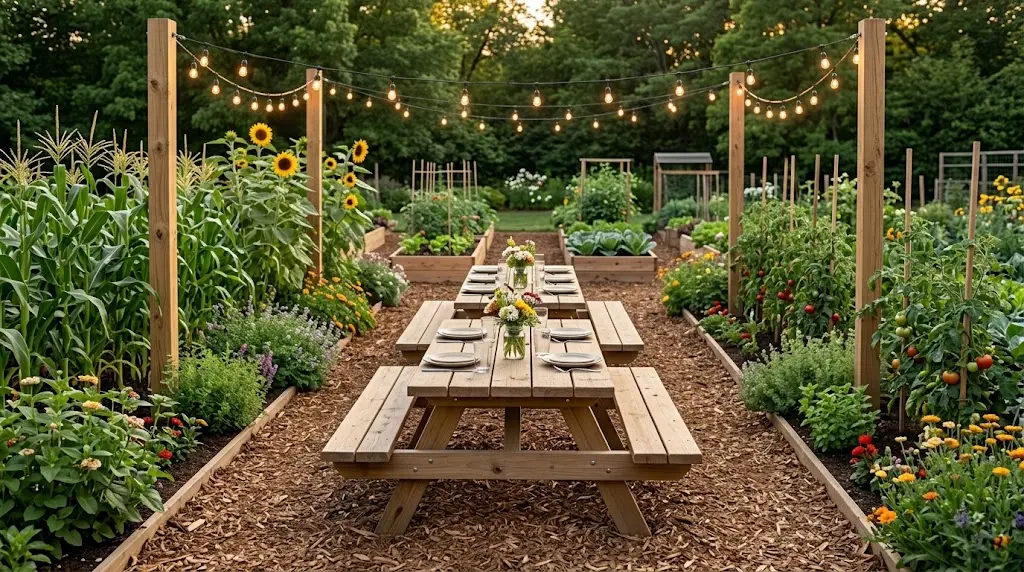
The setup in the inspiration image works because tall crops remain beside the dining zone rather than directly underneath it.
03 • BUILD A DRY FLOOR
Use a Surface That Still Works After Rain
The Pinterest area uses a thick organic path surface that appears similar to wood chips.
Wood chips can fit a garden beautifully and help separate the dining zone from cultivated soil. Gravel can also work where a firmer, longer-lasting surface is preferred.
Whatever you choose, start with drainage. A decorative layer placed over a naturally soggy low spot will not magically create a dry seating area.
Keep the walking surface reasonably level and watch for loose material around bench legs where people stand up and sit down.
04 • CHOOSE SIMPLE FURNITURE
Picnic Tables Fit a Productive Garden Surprisingly Well
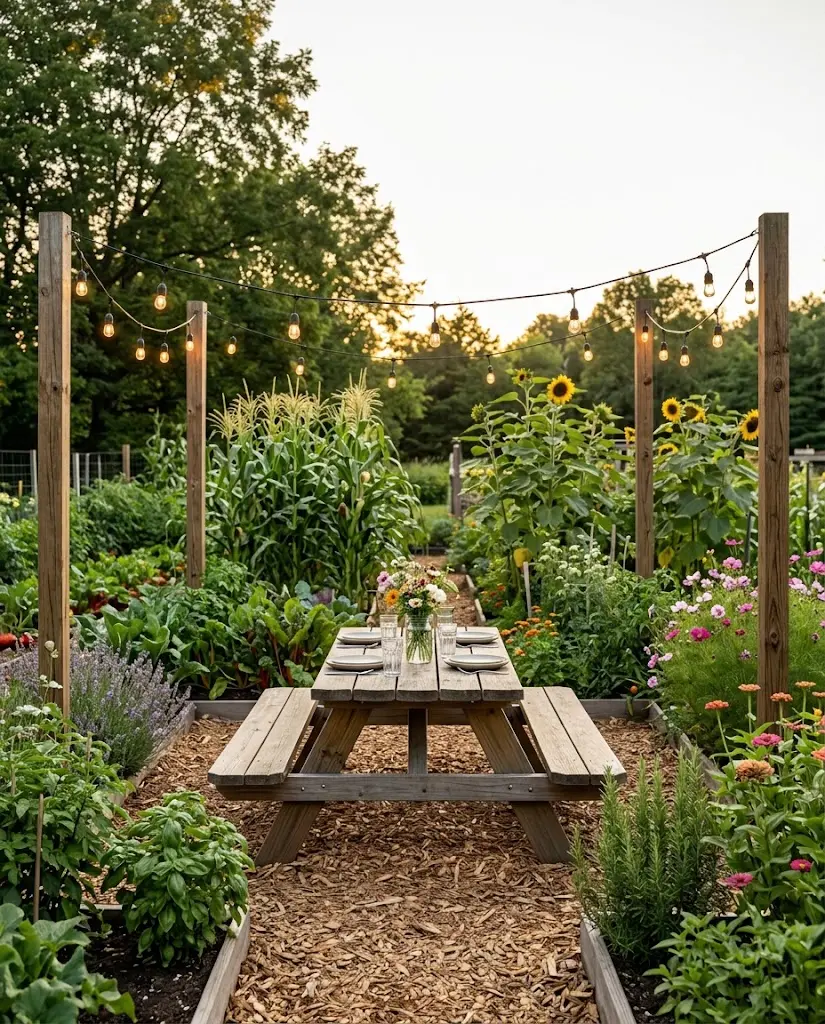
A picnic table is practical because the table and benches are one compact unit.
That makes it easier to keep narrow garden paths open than using a large table surrounded by individual chairs.
Choose exterior-suitable furniture and keep wood off persistently wet soil. Inspect outdoor wood regularly for loose boards, splinters, decay and unstable legs.
05 • LEAVE ROOM TO MOVE
Keep Harvest Paths Open Around the Table
The dining table is not the only thing that needs space.
People need room to sit down, stand up and walk behind someone already seated. Gardeners still need access with baskets, hoses and tools.
Leave the busiest garden route completely open rather than forcing every visitor through a narrow gap between a bench and a crop bed.
06 • PLAN FOR SHADE
A Beautiful Table Is Not Useful if Nobody Wants to Sit There
Full sun may be excellent for tomatoes but uncomfortable for people eating lunch.
If the garden dining area will be used during the day, consider natural tree shade, a properly installed shade sail, an umbrella or a pergola positioned so it does not unnecessarily shade the main vegetable beds.
Watch the sun before building permanent structures. The shadow cast by a pergola in midsummer can be very different from the shadow you see in early spring.
07 • EVENING ATMOSPHERE
Use String Lights Safely
The string lights are probably the detail that gives the inspiration image most of its evening charm.
Use lighting specifically listed or certified for outdoor use. Inspect the cord, sockets and plugs before installation and replace damaged sets rather than repairing frayed outdoor wiring with improvised tape.
Plug outdoor lighting into GFCI-protected power and use only extension cords rated for outdoor use when an extension cord is required.
Keep connections away from irrigation water and areas where they can sit in puddles. Mount the lights high enough that guests do not walk into cords or bulbs.
08 • KEEP WATER & FOOD SEPARATE
Do Not Aim Irrigation at the Dining Table
A dining area changes how the surrounding irrigation should be planned.
Sprinklers that repeatedly spray benches, electrical connections or the dining surface can make the space frustrating to use.
Where practical, drip irrigation or carefully directed watering can make a garden dining zone easier to manage than broad overhead watering.
09 • DESIGN FOR REAL LIFE
Make the Area Easy to Clean and Reset
A garden dining area will collect leaves, pollen, dust, dropped food and occasional bird mess.
Choose furniture and surfaces you can clean without turning every meal into a maintenance project.
Store cushions and table linens somewhere dry. Remove food after meals instead of leaving scraps that may attract rodents or wildlife into the growing area.
What the Pinterest Garden Dining Area Gets Right
| Idea in the photo | FarmSolo take |
|---|---|
| Long picnic tables | Excellent for groups and efficient seating, as long as paths remain open. |
| Vegetables surrounding the table | Beautiful farm-to-table feeling without needing expensive landscaping. |
| Wood-chip ground | Natural-looking and practical when installed over a reasonably drained area. |
| Rustic wood posts | Fit the homestead style, but posts still need stable installation. |
| String lights | Great atmosphere. Use outdoor-rated products and GFCI-protected power. |
| Sunflowers and corn nearby | Create height and enclosure, but consider how tall crops affect sunlight and airflow. |
| No formal patio | A major strength. A garden gathering space does not automatically require concrete or pavers. |
How Big Should a Garden Dining Area Be?
Start with the furniture instead of choosing an arbitrary patio size.
Measure the table and benches or chairs, then allow additional circulation space where people need to enter, sit, stand and pass behind other guests.
A compact four-person table needs much less room than two long picnic tables like those in the inspiration photo.
Mark the proposed area temporarily with stakes or garden hoses before building anything. Walk through it with the benches pulled into their normal positions.
What Should You Plant Around an Outdoor Dining Area?
The best planting depends on whether the area is meant to feel ornamental, productive or somewhere between the two.
Edible
Herbs, tomatoes, peppers, leafy greens, berries and compact vegetables can keep the farm-to-table feeling strong.
Atmosphere
Sunflowers, ornamental grasses and flowers can soften the edge of the dining space and add seasonal color.
Avoid letting thorny plants, aggressive vines or branches narrow the path around seating areas. Also remember that bees and other pollinators may be active around flowering plants, which is beneficial for the garden but worth considering when placing flowers directly against benches.
Planning the productive part first? See FarmSolo’s Vegetable Garden Guide and Raised Bed Garden Layout Ideas before placing permanent seating where it could affect beds, paths or sunlight.
String Light Safety in a Garden Dining Area
Outdoor string lights should be treated as electrical equipment, not just garden decoration.
- Use lights certified or listed for outdoor use.
- Check for cracked sockets, exposed conductors or damaged cords.
- Use outdoor-rated extension cords when needed.
- Use GFCI-protected outdoor power.
- Follow the manufacturer’s limit for connecting multiple strings.
- Keep plugs and electrical connections away from standing water.
- Do not use staples or fasteners that can damage electrical wiring.
- Replace damaged lighting instead of improvising repairs.
Electrical note: If the garden does not already have suitable outdoor electrical service, do not improvise permanent wiring through the vegetable beds. Permanent electrical work should follow local requirements and be installed appropriately for outdoor conditions.
Common Garden Dining Area Mistakes
- Putting the table in the best growing area. Protect productive full-sun soil when another location can work.
- Blocking garden paths. Leave room for people, harvest baskets and tools.
- Ignoring drainage. A table surrounded by mud will not get much use.
- Placing seating directly in sprinkler range. Adjust irrigation before the first dinner.
- Building shade without checking the crop shadow. A pergola can affect nearby vegetables for many hours.
- Using indoor string lights outside. Use outdoor-rated electrical products.
- Running extension cords across walking paths. Plan power before decorating.
- Overdecorating. Keep enough open space for gardening and maintenance.
- Leaving food outdoors overnight. Clean the table and remove scraps that may attract wildlife.
Garden Dining Area FAQ
Can I put a dining table inside a vegetable garden?
Yes. Place it where it does not block growing beds, irrigation or important harvest paths. A garden edge or enlarged central path often works better than sacrificing prime vegetable-growing soil.
What is the cheapest surface for a garden dining area?
Wood chips can be an inexpensive natural-looking option where drainage is already good. Gravel may cost more initially but can provide a firmer long-term walking surface. Local material prices and maintenance needs vary.
Are string lights safe over an outdoor dining table?
They can be when the lights are rated for outdoor use, installed according to their instructions and powered from GFCI-protected outdoor electrical service. Keep damaged cords and unsafe improvised connections out of the garden.
Should a garden dining area have shade?
Shade is useful when you plan to use the space during hot daytime hours. Position umbrellas, trees, sails or pergolas carefully so their shadows do not unnecessarily reduce sunlight for productive crops.
What table works best in a vegetable garden?
A sturdy outdoor picnic table is one of the simplest choices because its attached benches save space and reduce the number of loose chairs around garden paths. Any exterior table can work if it is stable and suited to the weather.
How can I make a garden dining space feel cozy?
Use plants as the backdrop, keep the materials simple, add warm outdoor lighting, and let the garden itself provide most of the decoration. You do not need a large patio or expensive outdoor furniture to create a welcoming space.
THE FARMSOLO TAKEAWAY
Let the Garden Be the Decoration
The strongest part of this Pinterest idea is not the picnic table or the string lights. It is the setting.
Instead of building a formal entertaining area and then decorating it with plants, the dining space sits inside a productive garden that already changes with the seasons.
Keep the paths practical, protect the growing space, use safe outdoor lighting and choose furniture that can handle real garden life. The vegetables, herbs, flowers and evening light can do the rest.