FARMSOLO • BACKYARD FARMING
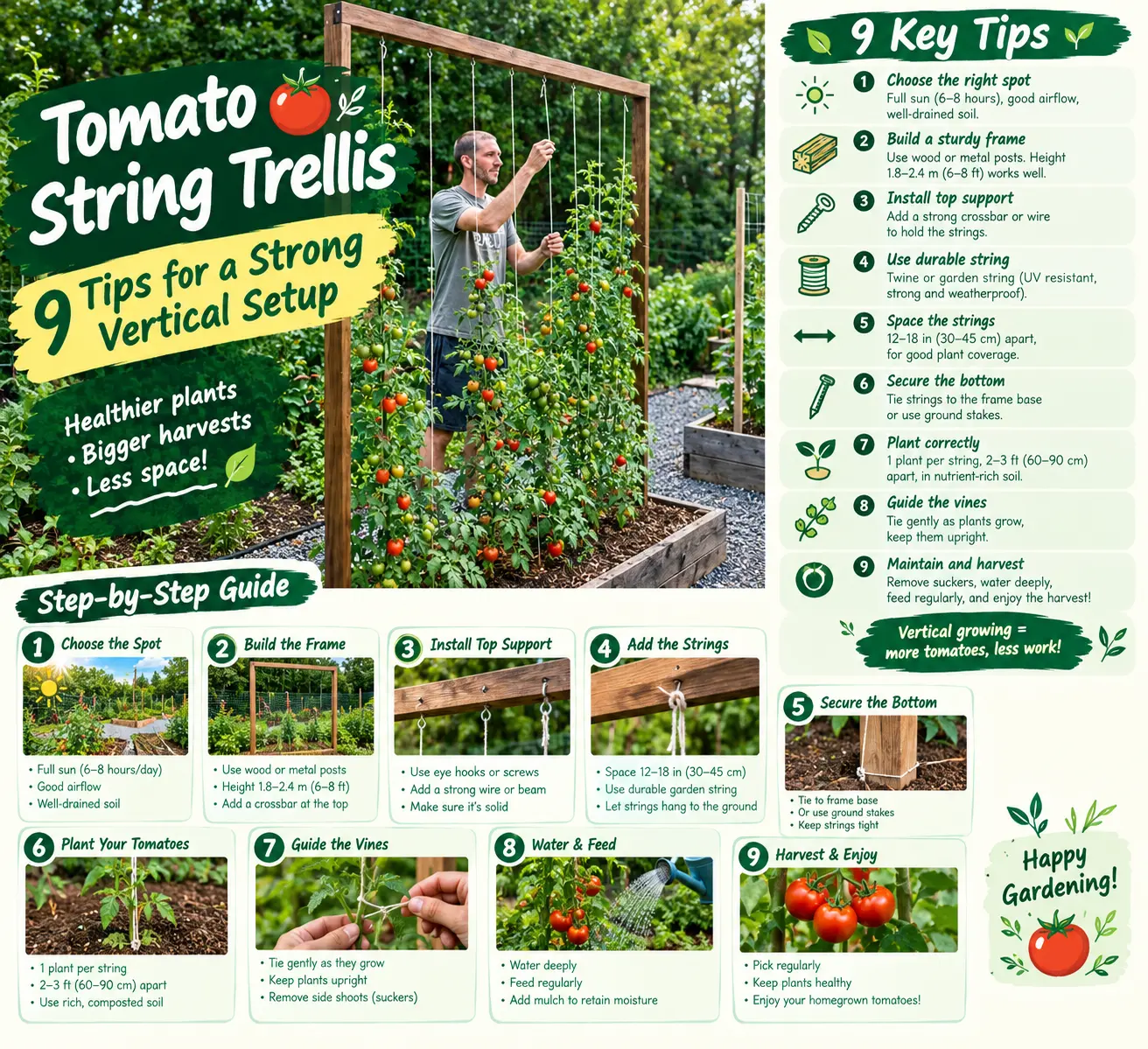
A tomato string trellis is one of the cleanest ways to support tall indeterminate tomatoes in a raised bed. Instead of surrounding each plant with a bulky cage, a strong overhead frame holds vertical strings that guide the main tomato stems upward as they grow.
Best for: indeterminate tomatoes • raised beds • small gardens • vertical growing • easier harvesting • improved airflow
Best Tomato Type
Tall indeterminate tomatoes are the best match because they continue growing upward through the season.
Main Requirement
The overhead frame must stay rigid when mature plants, fruit, wind and wet foliage add weight.
Quick Answer
Build a sturdy overhead frame above the tomato bed, hang one strong garden string for each plant, and train one or two main stems upward using loose wraps or tomato clips. Install the structure while plants are still young, keep strings separated enough for airflow, and prune indeterminate tomatoes as needed so the trellis does not become an overcrowded wall of foliage.
What Is a Tomato String Trellis?
A tomato string trellis uses an overhead support with vertical cords hanging down toward individual tomato plants.
Instead of pushing branches through a cage, you guide the main tomato stem upward along the string.
This keeps much of the plant off the soil, opens space between plants and makes ripe tomatoes easier to see and harvest.
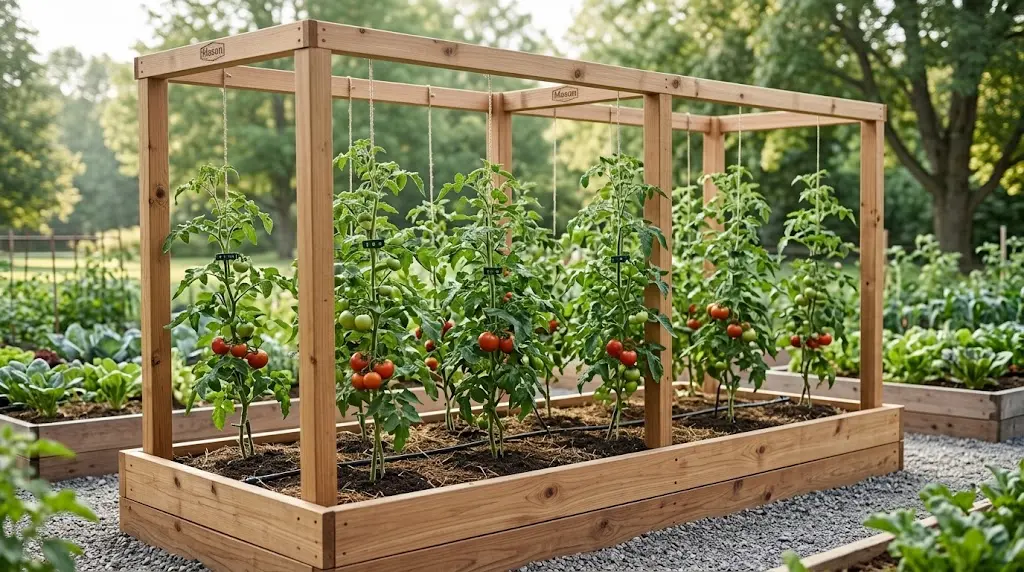
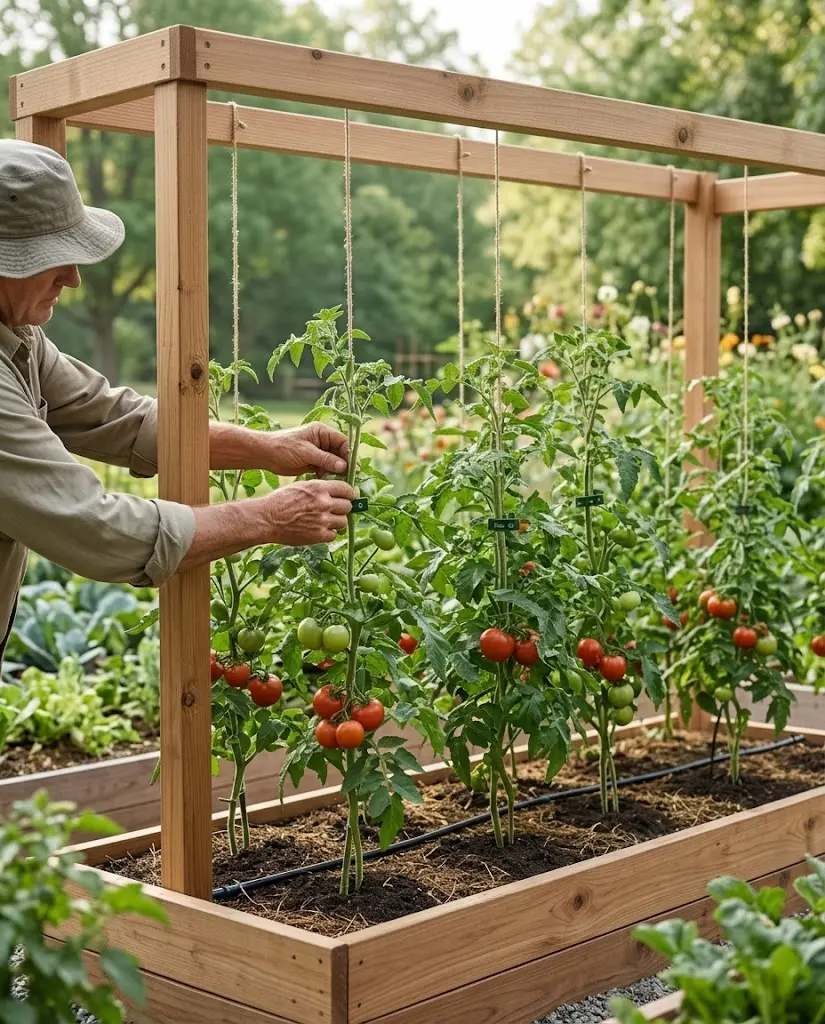
What the Pinterest image shows: The frame-and-string concept is useful, but the photo does not tell us how deeply the posts are anchored, how the crossbar is braced, what type of twine is being used, or how heavy the plants will become later in the season. Those construction details matter.
Indeterminate vs. Determinate Tomatoes
| Tomato type | Growth habit | String trellis? |
|---|---|---|
| Indeterminate | Continues growing and producing through the season | Excellent choice |
| Determinate | Grows to a more limited size and sets much of its crop in a shorter period | Usually easier with a sturdy cage or other broad support |
| Dwarf / compact | Shorter and more compact | Often does not need a tall overhead system |
University of Minnesota notes that indeterminate tomatoes continue growing through the season and need support, while many determinate varieties stay much shorter. That makes a tall vertical string system especially useful for indeterminate plants.
9 Tips for a Strong Tomato String Trellis
01 • BUILD EARLY
Install the Trellis Before the Tomatoes Get Big
Do not wait until plants are falling across the raised bed.
Install the frame at planting time or while the transplants are still small. Early installation reduces the chance of damaging roots and makes it easier to train stems from the beginning.
02 • BUILD TALL
Give Indeterminate Tomatoes Room to Climb
Indeterminate tomatoes can easily outgrow short supports.
Penn State describes tomato trellises as strong inverted U-shaped structures roughly 6 to 8 feet tall. Your exact height should match the tomato variety, bed location and how safely you can reach the top.
03 • STRENGTHEN THE FRAME
Design for Mature Plants, Not Seedlings
The frame in spring may hold almost no weight. By midsummer, every string may be carrying a tall plant loaded with leaves and tomatoes.
Use sturdy posts, a rigid upper crossbar and corrosion-resistant exterior fasteners. Anchor the structure so wind does not rack or overturn it.
Long frames may need additional posts or bracing rather than relying on two thin uprights at the ends.
04 • SPACE THE STRINGS
Do Not Turn the Bed Into a Wall of Leaves
Each string normally supports one plant or one trained leader.
Penn State describes cords around 18 inches apart on a vertical tomato trellis, while home-garden plant spacing varies with the variety and pruning system.
Do not squeeze plants together simply because more strings fit across the crossbar. Tomatoes still need light, airflow and room to harvest.
05 • USE GOOD STRING
Choose Strong Garden Twine
The string needs to survive sun, moisture, plant movement and the increasing weight of the crop.
Use strong tomato twine or another material intended for plant support. Thin household string can stretch, cut into stems or fail before the end of the season.
06 • DO NOT STRANGLE THE STEM
Use Loose Training or Tomato Clips
Do not tie a tight knot around the tomato stem.
Tomato stems become much thicker as they grow. A tight loop that looks harmless in June can constrict the stem later.
Anchor the vertical cord independently, then gently wind the growing leader around it or attach the plant with reusable tomato clips that leave room for stem expansion.
07 • PRUNE WITH A PLAN
Train One or Two Main Leaders
A vertical string system works best when an indeterminate tomato is trained to a manageable number of stems.
Illinois Extension notes that tomatoes grown on vertical strings are often maintained as one or two stems, with suckers removed during the season.
Heavy pruning can change the crop: fewer stems can improve access and fruit size, but aggressive pruning can also reduce total fruit production. Do not remove foliage without a reason.
08 • KEEP FOLIAGE DRY
Water the Soil, Not the Trellis
One advantage of an open vertical tomato canopy is improved airflow around leaves.
Keep that advantage by watering near the soil rather than repeatedly soaking the leaves. Drip irrigation, a soaker hose or careful watering at the base can help keep foliage drier.
University of Minnesota notes that staking and trellising improves air circulation and helps leaves dry more quickly, which can reduce conditions favorable to leaf diseases.
09 • CHECK IT WEEKLY
Keep Training New Growth
A string trellis is not a build-it-and-forget-it system.
Check growing tips regularly, guide new growth onto the string, remove unwanted suckers if you are using a single- or double-leader system, and inspect clips and twine before branches become heavy.
It is much easier to guide six inches of new growth today than rescue three feet of tangled tomato stems next month.
A Simple Raised-Bed String Trellis Layout
The Pinterest design uses a rectangular wooden frame positioned directly over one side of a raised bed.
That layout can work well because the posts remain at the edges rather than occupying valuable growing space in the center of the bed.
- Strong vertical post at each end
- Rigid upper crossbar
- Additional bracing or supports on longer spans
- One vertical cord per trained plant leader
- Enough plant spacing for airflow and harvesting
- Clear access from the path side of the raised bed
- Watering line at soil level
Planning a full raised-bed garden? See FarmSolo’s Raised Bed Garden Layout Ideas before placing permanent trellises. Tall structures can affect shade, paths and access once the plants fill in.
Should the String Be Tied to the Tomato Stem?
Avoid tying a permanent tight knot directly around the base of the plant.
Tomato stems expand considerably. A cord that cannot move may eventually damage the stem.
A better approach is to anchor the string independently near the plant, then use clips or gentle training to connect the tomato to the vertical line.
Tomato String Trellis vs. Cage
| Feature | String trellis | Tomato cage |
|---|---|---|
| Best fit | Indeterminate tomatoes | Determinate or less-pruned plants |
| Maintenance | Requires regular training and pruning | Lower ongoing training |
| Airflow | Very good when properly spaced | Can become dense |
| Harvest access | Fruit stays visible and accessible | Fruit may be inside cage |
| Initial build | Needs a strong overhead frame | Individual cage per plant |
| Raised-bed space | Very efficient | Large cages can occupy more bed area |
Should You Prune Every Tomato Sucker?
Not necessarily.
The amount of pruning should match the support system and tomato type.
A single-string trellis commonly uses one or two main leaders, which means more suckers are removed than on a caged tomato.
However, Illinois Extension notes that heavily pruned plants may produce larger individual fruit but a smaller total quantity. Enough healthy foliage should remain to photosynthesize and shade developing fruit.
Using the soil under your tomatoes too? See FarmSolo’s Plants to Grow Under Tomatoes. Avoid packing companion plants directly against the tomato stems or creating dense foliage that blocks watering and airflow.
Where Should the Trellis Go in a Raised Bed?
Think about the shade the mature tomato wall will create, not just the empty frame you see at planting time.
In many Northern Hemisphere gardens, placing tall crops toward the north side of lower-growing crops can reduce unwanted shading. But buildings, trees, slope and your actual sun path still matter.
Also keep the trellis where you can comfortably reach both the plants and strings from a path. Do not build a beautiful frame that forces you to step into the soil every time a tomato needs training.
Common Tomato String Trellis Mistakes
- Building the frame after tomatoes are large. Install support early.
- Using weak top lumber. Mature fruiting plants create much more load than seedlings.
- Leaving tall posts unbraced. Wind can rack a long frame.
- Using weak household string. Choose durable plant-support twine.
- Tying string tightly around the stem. Leave room for growth or use clips.
- Planting every string position. Good spacing matters more than maximum plant count.
- Using a single-leader system without pruning. Multiple uncontrolled suckers can quickly overwhelm each cord.
- Overpruning. Tomatoes still need healthy foliage.
- Letting growth pile at the top. Plan how you will manage plants that reach the crossbar.
- Watering foliage constantly. Keep water focused near the root zone when possible.
Tomato String Trellis FAQ
How tall should a tomato string trellis be?
For tall indeterminate tomatoes, a structure around 6 to 8 feet tall is common. Choose a safe height that matches your variety and allows you to reach the upper part of the plant.
What kind of tomatoes work best on strings?
Indeterminate tomatoes are the best fit because they continue producing vertical growth throughout the season. Determinate tomatoes usually work well with cages or broader support systems.
How many tomato stems should I grow per string?
A vertical string system is commonly managed with one main leader per string. Some gardeners keep two leaders, but each extra leader increases foliage and weight and may need its own support.
Can tomatoes climb string by themselves?
No. Tomatoes do not have tendrils like peas. You need to gently train the stem around the cord or attach it with suitable clips or loose ties as it grows.
Does trellising help prevent tomato disease?
Trellising can improve airflow, keep foliage and fruit off the soil, and help leaves dry faster. Those conditions can reduce some disease pressure, but a trellis does not make tomatoes disease-proof.
Can I attach the trellis directly to my raised bed?
You can, but the bed wall and fasteners must be strong enough for the leverage created by tall fruiting plants and wind. Do not assume thin raised-bed boards can safely support a large trellis without additional posts or reinforcement.
Build the Support for August, Not April
The Pinterest frame looks simple because the idea is simple. The challenge comes later, when every cord is holding a large tomato plant covered with fruit.
Use a strong frame, leave enough space between plants, train stems while they are young and keep up with pruning throughout the season.
A good tomato trellis should make the garden easier to manage—not turn plant support into another problem.