
FARMSOLO • HOMESTEAD KITCHEN
Clove water has become a popular wellness drink online, but many of the benefits attached to it are much stronger than the evidence. Cloves contain interesting plant compounds, especially eugenol, but that does not mean a homemade glass of clove-infused water can detox the body, melt fat, treat joint pain, prevent illness, or replace medical care.
Clove water • evidence check • realistic benefits • safety • no detox promises
Quick Answer
Cloves contain eugenol and other plant compounds with antioxidant, antimicrobial and anti-inflammatory activity in laboratory research. However, research specifically showing that homemade clove water provides major health benefits in people is limited.
Small human studies involving clove extracts have produced interesting results, including preliminary findings related to blood glucose. But concentrated extracts are not the same thing as soaking a spoonful of whole cloves in a glass of water overnight.
If you enjoy the taste, clove-infused water can simply be treated as a spiced beverage—not as medicine.
Important distinction: Whole cloves used in food or a lightly flavored drink are not the same as concentrated clove essential oil. Never substitute clove oil for whole cloves in a drink. Concentrated eugenol can be harmful when swallowed in excessive amounts.
What Is Clove Water?
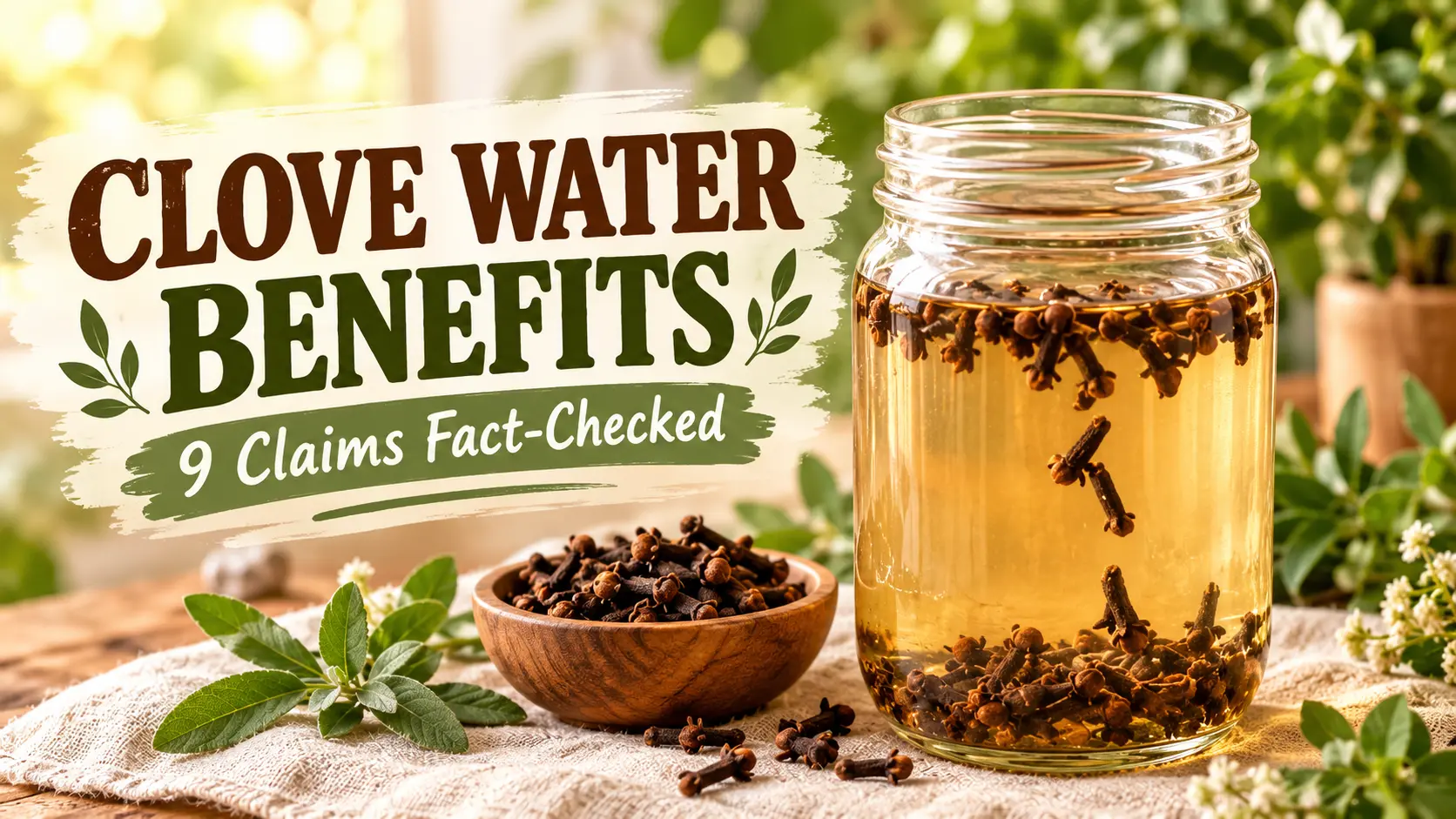
Clove water is usually made by soaking whole dried cloves in water or steeping them like a mild herbal tea.
Cloves are the dried flower buds of Syzygium aromaticum. They are commonly used as a spice in cooking, baking, tea, mulled drinks and seasoning blends.
Their strong aroma comes largely from eugenol, a naturally occurring compound that researchers have studied for several biological effects.
That research is the source of many online clove-water claims. The problem is that laboratory studies of isolated eugenol, animal studies, concentrated extracts and a homemade infused drink are not interchangeable.
Clove Water Benefits: 9 Popular Claims Checked
| Claim | What the evidence says |
|---|---|
| Boosts immunity | Not established for clove water |
| Aids digestion | Traditional claim; convincing human evidence is limited |
| Helps weight loss | Not established |
| Relieves cough | Not proven as a treatment |
| Improves oral health | Some clove/eugenol dental research exists, but drinking clove water is different |
| Reduces inflammation | Promising laboratory research; clinical benefit from clove water is uncertain |
| Regulates blood sugar | Preliminary research exists, but evidence is too limited for a treatment claim |
| Detoxifies the body | No good evidence |
| Relieves joint pain | Not established for drinking clove water |
CLAIM 01
Does Clove Water Boost Immunity?
Verdict: This claim goes beyond the evidence.
Cloves contain compounds with antioxidant and antimicrobial activity in laboratory studies. That is interesting, but it does not prove that drinking clove water makes a person’s immune system stronger or prevents infection.
A food can contain biologically active compounds without becoming an immune-boosting medicine.
CLAIM 02
Does Clove Water Help Digestion?
Verdict: Traditional use does not equal proven treatment.
Clove and eugenol have a long history of use for digestive complaints. However, reliable clinical evidence showing that homemade clove water treats indigestion, bloating, nausea or other gastrointestinal problems is lacking.
If someone simply enjoys a warm clove-flavored drink after a meal, that is different from claiming it treats a digestive condition.
CLAIM 03 • NOT PROVEN
Does Clove Water Cause Weight Loss?
No convincing evidence shows that clove water causes meaningful weight loss.
Research into individual clove compounds and metabolism should not be turned into a promise that drinking a glass of clove water on an empty stomach burns fat.
No special timing—morning, bedtime or empty stomach—has been established as a reliable clove-water weight-loss method.
CLAIM 04
Does It Help a Cough or Sore Throat?
Verdict: Do not treat clove water as a proven cough remedy.
Clove preparations have traditionally been used for respiratory complaints, but strong clinical evidence demonstrating that clove water treats cough, sore throat or respiratory disease is not available.
A warm drink may feel soothing to some people. Feeling soothing is not the same as treating the cause of a cough.

CLAIM 05 • SOME RELATED EVIDENCE
What About Oral Health?
This claim needs an important distinction.
Eugenol has a long history in dentistry, and clove-containing preparations have been researched for dental and oral uses.
But clinical evidence involving dental eugenol preparations or specially formulated mouth rinses does not prove that drinking homemade clove water improves oral health.
Do not put concentrated clove essential oil directly onto gums or oral tissue unless a suitable product is being used according to its directions. Concentrated products can irritate or damage tissue.
CLAIM 06 • PROMISING RESEARCH
Can Cloves Reduce Inflammation?
Eugenol and clove essential oil have shown anti-inflammatory activity in laboratory and animal research.
That makes clove compounds scientifically interesting. It still does not establish a specific anti-inflammatory benefit from a glass of homemade clove water.
The preparation, concentration and amount reaching the body matter when translating laboratory research into a real human effect.
CLAIM 07 • PRELIMINARY
Does Clove Water Lower Blood Sugar?
This is one of the more interesting clove research areas, but the Pinterest claim is still too strong.
A small human pilot study tested a standardized water-soluble clove extract and reported changes in blood glucose. Other limited studies have also explored cloves in people with blood-sugar concerns.
However, a standardized extract used in a study is not the same as homemade clove water, and the available human research is too limited to use clove water as a diabetes treatment.
Anyone taking medication to lower blood glucose should be particularly cautious about adding concentrated herbal products without discussing them with a healthcare professional.
CLAIM 08 • MYTH
Does Clove Water Detox the Body?
No evidence shows that clove water removes undefined “toxins” from the body.
The word detox is often used online without identifying the toxin, how much is present, how the drink removes it, or how that removal was measured.
A clove-flavored drink can contribute fluid like other drinks, but hydration should not be rebranded as a special detox effect.
CLAIM 09 • NOT ESTABLISHED
Does Clove Water Relieve Joint Pain?
Research on eugenol and inflammatory pathways has encouraged interest in clove compounds.
But research involving cells, animals or concentrated clove compounds does not establish homemade clove water as a treatment for arthritis or joint pain.
Persistent or unexplained joint pain deserves an appropriate diagnosis rather than relying on a spice drink to mask the problem.
What About Skin and Hair Benefits?
The viral graphic also says clove water is “good for skin and hair.” That phrase is too vague to evaluate scientifically.
There is no good evidence that drinking homemade clove water causes hair to grow faster, clears skin, prevents hair loss or treats a skin condition.
Claims about antioxidant compounds in cloves should not automatically be converted into cosmetic promises.
Is There a Best Time to Drink Clove Water?
The Pinterest graphic recommends drinking clove water on an empty stomach or shortly before bed.
There is no established scientific reason that these times make homemade clove water more effective.
If you enjoy clove-infused water as a beverage and tolerate it well, timing can simply depend on preference rather than a special wellness schedule.
FOR FLAVOR, NOT TREATMENT
A Simple Clove-Infused Drink
If you simply enjoy the warm, spicy flavor of cloves, you can make a mild infusion rather than trying to copy a medicinal-looking social media recipe.
- Add a few whole culinary cloves to a mug.
- Pour in hot water.
- Let the cloves steep until the flavor is as strong as you like.
- Strain the drink before serving.
- Drink it as a flavored beverage rather than as a treatment for disease.
Do not add clove essential oil to homemade drinking water as a substitute for whole culinary cloves.
Clove Water Safety: Who Should Be Careful?
Cloves used in ordinary food amounts are very different from taking concentrated clove products or essential oil.
- Blood-thinning medicines: Eugenol can affect platelet activity, so concentrated clove products may be a concern alongside anticoagulant or antiplatelet medicines.
- Bleeding disorders: High or medicinal amounts may not be appropriate.
- Upcoming surgery: Herbal products that may affect clotting deserve extra caution.
- Pregnancy or breastfeeding: Food amounts are different from medicinal use; safety data for larger medicinal amounts are limited.
- Blood-sugar medication: Preliminary research on clove extracts and glucose makes it sensible to discuss concentrated use with a healthcare professional.
- Children: Keep clove essential oil away from children. Swallowing concentrated eugenol can cause serious poisoning.
This does not mean ordinary culinary use of cloves is dangerous for most people. It means that “natural” should not be interpreted as “unlimited amounts are harmless.”
Clove Water vs. Clove Oil vs. Clove Extract
| Product | What it is | Why the difference matters |
|---|---|---|
| Clove water | Whole cloves infused in water | Usually much less concentrated and poorly studied as a health treatment |
| Whole cloves | Dried culinary flower buds | Commonly used as a food spice |
| Clove extract | A standardized or concentrated preparation | Some research uses measured extracts that cannot be compared directly with homemade water |
| Clove essential oil | Highly concentrated volatile oil rich in eugenol | Not interchangeable with clove water and can be harmful if misused or swallowed in excessive amounts |
What the Viral Clove Water Graphic Gets Wrong
- It presents preliminary research as established health benefits.
- It treats clove water and concentrated clove extracts as if they were identical.
- It promises weight loss without good clinical evidence.
- It uses the vague term “detoxifies” without identifying a toxin or evidence of removal.
- It suggests blood-sugar regulation without explaining the limited human evidence.
- It gives a medicinal-looking dose despite the lack of an established clove-water treatment dose.
- It claims a special benefit from drinking on an empty stomach without good evidence.
- It combines dental, respiratory, metabolic, inflammatory and cosmetic claims into one drink.
- It leaves out medication interactions and safety concerns.
Clove Water FAQ
What are the proven clove water benefits?
Research specifically on homemade clove water is limited. Cloves contain biologically active compounds such as eugenol, but laboratory or extract research should not automatically be treated as proof that clove water prevents or treats disease.
Does clove water detox your body?
No convincing evidence shows that clove water removes toxins from the body. “Detox” claims should identify a specific toxin and demonstrate that the intervention increases its removal.
Can I drink clove water every day?
There is no well-established medicinal clove-water dose or schedule. Using cloves as a normal culinary ingredient is different from consuming large or concentrated amounts every day. People taking medications or managing health conditions should be cautious with repeated medicinal-style use.
Does clove water help with weight loss?
There is no convincing clinical evidence that homemade clove water causes meaningful weight loss. Research into individual clove compounds does not prove that drinking clove water burns fat.
Does clove water lower blood sugar?
There is preliminary human research involving clove extracts and glucose, but the evidence is limited and does not establish homemade clove water as a diabetes treatment. It should not replace medication, monitoring or medical advice.
Is clove oil the same as clove water?
No. Clove essential oil is highly concentrated and rich in eugenol. It should not be treated as an interchangeable substitute for whole cloves soaked in water.
Is clove water better on an empty stomach?
There is no established evidence that drinking homemade clove water on an empty stomach gives it special health benefits.
THE FARMSOLO TAKEAWAY
Cloves Are Interesting. Clove Water Is Not a Miracle Drink.
There is real science behind some of the compounds found in cloves. Eugenol has been studied for antioxidant, inflammatory, antimicrobial, dental, metabolic and platelet effects.
The important step is not turning that research into claims the studies never tested.
Enjoy cloves as a flavorful spice or a mild infused drink if you like them. Just do not expect one glass to detox your body, cause weight loss, cure joint pain, strengthen immunity or replace treatment for a medical condition.