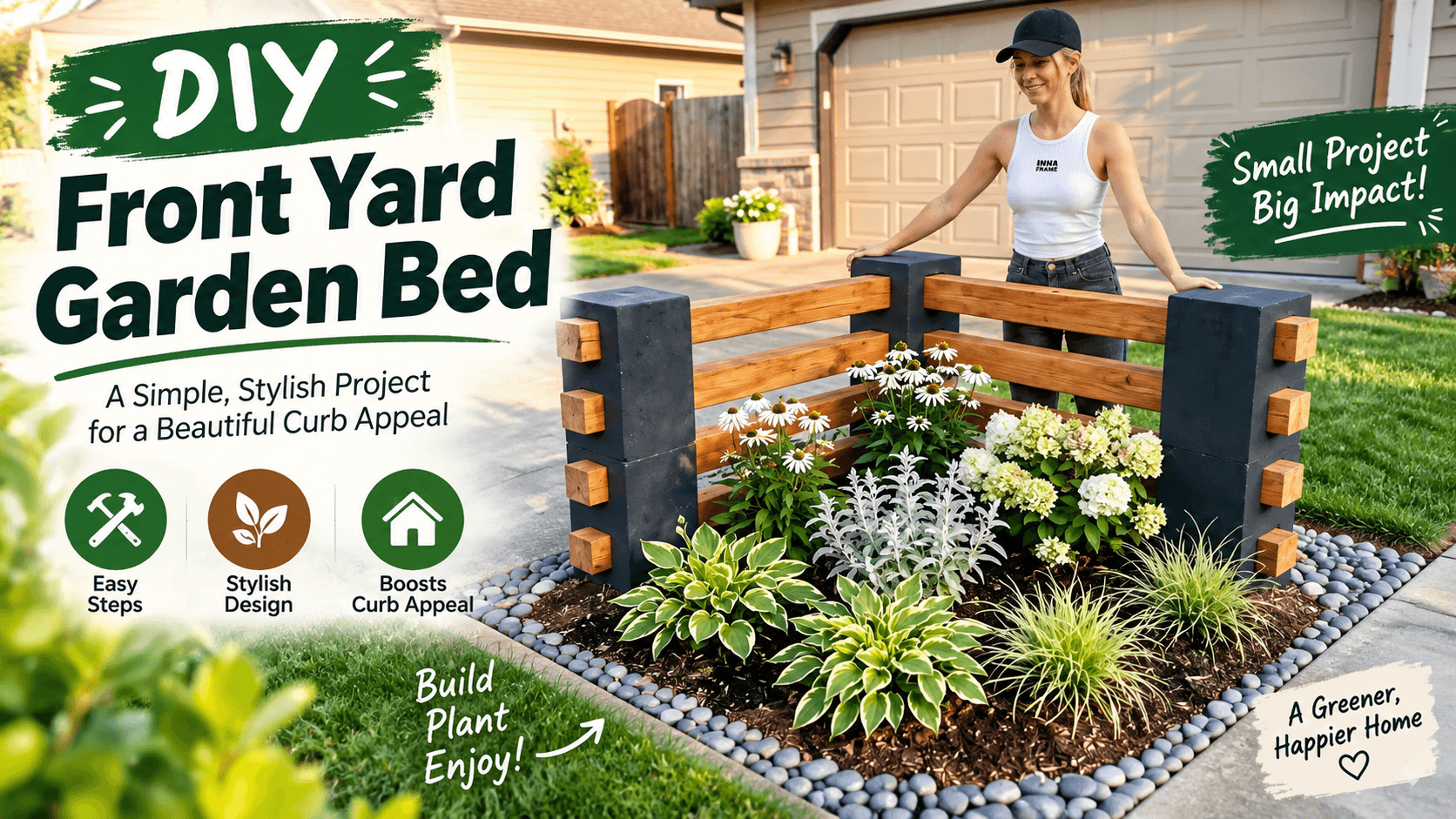
When I first started thinking about a DIY Front Yard Garden Bed, I wasn’t trying to make my front yard look fancy. I just wanted more growing space.
My backyard was already packed with tomatoes, cucumbers, peppers, herbs, chickens, compost bins, and all the other stuff that somehow keeps multiplying when you get into homesteading.
Then I looked at my front yard.
There was this big patch of grass doing absolutely nothing except needing mowing.
I remember standing there with my coffee thinking, “Well… that’s a lot of sunlight going to waste.”
So I built a garden bed.
And, of course, I made a few dumb mistakes along the way.
The first bed was too small. Then I put one in a spot that didn’t drain well. I also planted way too many things together because, apparently, I thought vegetables wouldn’t need personal space.
They do.
After more than a few seasons of experimenting, I’ve learned that a DIY Front Yard Garden Bed can be one of the easiest ways to grow vegetables, herbs, flowers, and even some small fruit plants while making better use of the space you already have.
Here’s what I’d do if I were starting again.
Why Build a Garden Bed in the Front Yard?
The biggest reason is simple: space.
If you have a small backyard, an urban homestead, or basically no backyard at all, the front yard can give you another place to grow food.
And you don’t necessarily need a huge area.
One decent-sized garden bed can grow more than you’d expect.
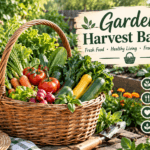
I’ve grown things like:
- Lettuce
- Herbs
- Peppers
- Bush beans
- Kale
- Chard
- Radishes
- Carrots
- Flowers for pollinators
I especially like putting herbs in front yard beds because I walk past them all the time.
Basil, thyme, oregano, parsley and chives are easy to grab when I’m cooking.
That’s one of the best parts of growing food near the house.
You actually use it.
A garden 100 feet away sounds close until you’re carrying a basket, a knife, and a handful of tomatoes.
Before You Build Your DIY Front Yard Garden Bed, Look Around
This is where I want you to slow down.
Don’t grab a shovel yet.
I made that mistake.
Look at your front yard during different times of the day and figure out where the sunlight actually goes.
A spot that looks sunny at 9 AM might be shaded by your house or a tree by afternoon.
Most vegetables need several hours of direct sunlight, although leafy greens and some herbs can handle less.
I usually watch the area for a full day if I’m unsure.
Also look at:
- Where rainwater collects
- Where water runs after a storm
- Nearby tree roots
- Where you walk regularly
- Where the garden hose reaches
- How close the bed is to the driveway
- Whether your neighborhood has landscaping rules
And here’s another thing people forget.
Check underground utilities before digging.
Seriously.
Don’t assume that because you’re only digging a shallow bed you’re automatically safe.
How Big Should a Front Yard Garden Bed Be?
My first garden bed was too small.
I thought a small bed would be easier.
Technically, yes.
But it wasn’t very useful.
You want enough space to grow something worthwhile without turning your front yard into a giant farm.
For a beginner, I like a bed around 3 to 4 feet wide.
The length depends on your space.
The reason I like beds around this width is that I can usually reach the middle from either side without stepping into the soil.
And please don’t make your garden bed so wide that you have to climb inside it.
I did that once.
Then I stepped on the soil.
Then I remembered all the things I had told other people about not compacting garden soil.
Yeah.
I wasn’t proud of myself.
Should You Use Wood for a DIY Garden Bed?
You can.
Wood is probably the most common choice for a raised garden bed because it’s easy to work with and looks nice.
But you don’t have to build a raised box.
A front yard garden bed can also simply be a section of ground where you’ve removed the grass, improved the soil, and created defined edges.
For raised beds, use untreated materials that are appropriate for garden use.
I like simple construction.
Four boards, screws, a level, and some patience can get you surprisingly far.
You don’t need to build a backyard palace for lettuce.
If you use reclaimed wood, inspect it carefully and avoid materials that may have been treated with unknown chemicals.
This is your food garden.
I’d rather spend a little extra time finding suitable material than wonder what I’m growing into my carrots.
My Easy DIY Front Yard Garden Bed Method
Here’s the basic method I use.
1. Mark the area
Use string, a garden hose, or even cardboard to lay out the shape.
A garden hose is actually great for this because you can move it around until the shape looks right.
And don’t make everything perfectly square just because Pinterest says you should.
A curved bed can look really nice in a front yard.
2. Remove the grass
If you’re creating an in-ground bed, remove the grass and weeds from the area.
You don’t necessarily have to dig down several inches.
The goal is to get rid of competing grass and establish a good growing area.
If you hate digging, you can also use a sheet-mulching approach with cardboard and organic materials, allowing time for the vegetation underneath to break down.
Just make sure the cardboard is appropriate and doesn’t contain unwanted coatings or materials.
3. Improve the soil
This is where compost comes in.
I add finished compost and work with the soil I already have rather than trying to replace the entire yard.
If your soil is very poor, you may need more amendments or imported garden soil.
But don’t automatically assume expensive soil is required.
Your garden is a system.
Build it slowly.
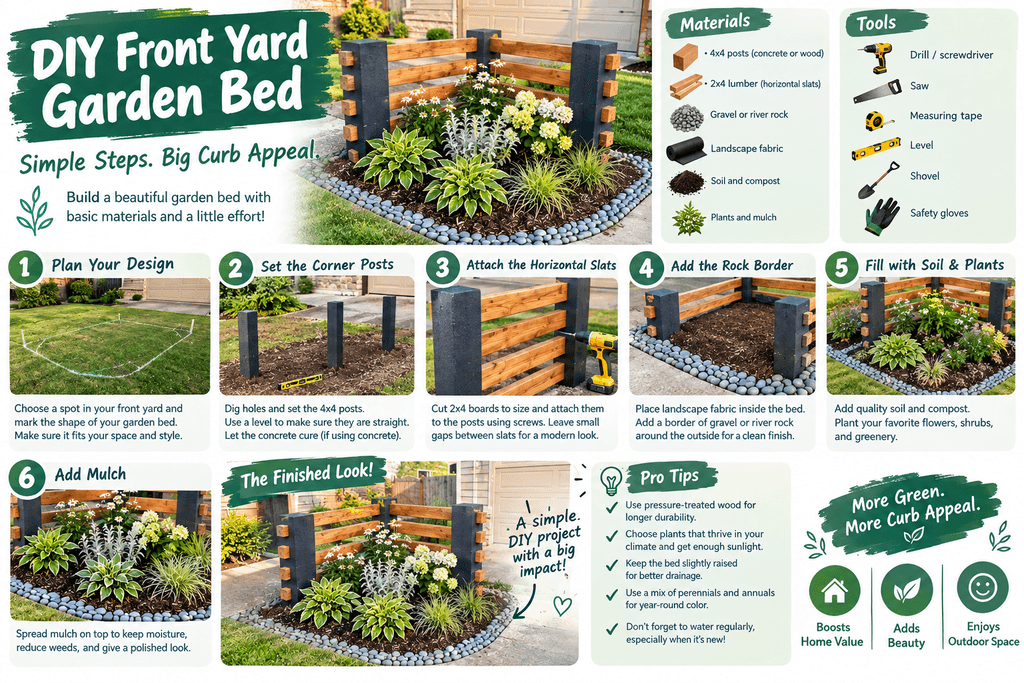
4. Add your border
If you’re making a raised bed, install your frame after you’ve planned the dimensions.
Make sure it’s reasonably level.
It doesn’t have to be perfect.
Trust me, nobody is bringing a level to inspect your lettuce.
5. Water thoroughly
Once everything is planted, give the bed a good watering.
Then watch it.
Don’t immediately decide you need an automatic irrigation system with seventeen timers.
I have done things like that.
Sometimes a garden hose and a little observation work just fine.
What Should You Grow in a Front Yard Garden?
This depends heavily on your sunlight and local climate.
But if you’re new to front yard gardening, I’d start with things you actually eat.
That sounds obvious.
It isn’t.
I’ve planted vegetables because they looked interesting, then realized I didn’t really like eating them.
That’s wasted garden space.
For a sunny front yard bed, I’d consider:
Leafy greens: lettuce, kale, spinach, chard
Herbs: basil, thyme, oregano, parsley, chives
Root crops: radishes, carrots, beets
Compact vegetables: bush beans, peppers, dwarf tomatoes
Flowers: marigolds, zinnias, nasturtiums and other flowers suited to your climate
I also like mixing edible plants with flowers.
It makes the garden look intentional instead of like you accidentally forgot to mow.
Make the Garden Look Good From the Street
This matters more in a front yard than it does in a backyard.
Your neighbors have to look at it.
And let’s be honest, you have to look at it too.
A front yard garden can be productive and still look beautiful.
Use defined paths.
Keep taller plants toward the back if possible.
Use flowers around the edges.
Keep weeds under control.
Add mulch around plants.
You can even use decorative stones or simple edging to make the space look finished.
I don’t think every front yard needs to look like a magazine.
But there is a difference between a productive garden and a pile of plants fighting for survival.
I’ve had both.
What About Neighborhood Rules?
This is one thing I wouldn’t skip.
Some cities, homeowners associations, or neighborhoods have rules about front yard landscaping.
Rules can vary a lot.
Some places are perfectly fine with edible gardens.
Others may have restrictions about plant height, fencing, structures, or how much of the front yard can be changed.
Before building your DIY Front Yard Garden Bed, check your local rules.
It’ll take less time than rebuilding the whole thing because somebody complains.
And if you live in an area with an HOA, check their landscaping rules too.
I’m all for growing your own food.
I’m not so interested in having a neighborhood argument over a tomato plant.
Don’t Forget the Water
Here’s another mistake I made.
I built a beautiful garden bed and then realized my hose barely reached it.
Wonderful.
Now I had to carry watering cans back and forth.
A few trips are fine.
After about a week, I was suddenly very interested in rain.
Before building the bed, think about how you’re going to water it.
If you have access to a suitable outdoor water source, that’s easy.
You can also look at drip irrigation or other efficient watering systems.
If you’re considering rainwater collection, remember that collected rainwater isn’t automatically safe for drinking. Use it according to local rules and the intended purpose.
For a vegetable garden, keep your water source clean and appropriate for irrigation.
Can You Use a Front Yard Garden for Permaculture?
Absolutely.
You don’t need 5 acres to use some permaculture ideas.
This is where I really started enjoying front yard gardening.
Instead of thinking about one garden bed as a box full of vegetables, think about how everything connects.
Maybe you have herbs near the kitchen path.
Flowers near vegetables to support pollinators.
Compost used to improve the soil.
Mulch helping hold moisture.
A rain garden or suitable drainage area helping manage runoff.
Perennial plants placed where you don’t need to disturb the soil every year.
That’s a small system.
And small systems can teach you a lot.
My Favorite Front Yard Garden Bed Mistakes to Avoid
If I could go back and talk to myself before building my first one, I’d say this:
Don’t build before watching the sunlight.
I wasted a growing season because I guessed.
Don’t make the bed too wide.
If you can’t reach the middle, you’ll eventually step into it.
Don’t plant everything at once.
Leave yourself some breathing room.
Don’t forget water access.
Carrying watering cans gets old real fast.
Don’t ignore mature plant size.
That tiny tomato plant can become a monster.
Don’t skip mulch.
It can help conserve soil moisture and reduce weeds when used appropriately.
Don’t turn the project into a construction job.
You don’t need fancy materials to grow lettuce.
That’s probably my biggest lesson.
What I Would Plant in My Own Front Yard Bed
If I had one new 4-by-8-foot bed tomorrow, I’d keep it pretty simple.
I’d probably put herbs along one edge.
Then some lettuce and chard.
A few pepper plants.
Maybe bush beans.
I’d add flowers around parts of the outside.
And I’d leave some empty space.
Yes, empty space.
That’s something I didn’t understand when I started gardening.
Empty space gives you room to experiment.
You can add a fall crop.
Move something.
Try a new variety.
Or just sit there with your coffee.
That last one is important.
FAQ About DIY Front Yard Garden Beds
Is a front yard garden a good idea?
Yes, especially if your backyard is small or already full. A front yard garden can give you valuable growing space while making your landscape more useful.
Can I grow vegetables in a front yard raised bed?
Absolutely. Vegetables like lettuce, herbs, peppers, beans, radishes, carrots, chard and compact tomatoes can work well when the site has suitable sunlight and soil.
How deep should a DIY garden bed be?
Many vegetables can grow in relatively shallow soil, while deeper-rooted crops benefit from more depth. If you’re building a raised bed, around 8–12 inches can be a practical starting point for many common vegetables, with deeper beds useful for crops needing more root room.
Do front yard gardens look messy?
They can, but they don’t have to. Defined edges, mulch, paths, flowers and a little planning can make an edible garden look neat and intentional.
My Best Advice: Start Smaller Than You Think
If you’re thinking about building a DIY Front Yard Garden Bed, don’t start by ripping up your entire front lawn.
Start with one bed.
Grow a few things.
Watch the sunlight.
Pay attention to water.
Notice what pests show up.
See what your neighbors think.
Then expand.
That’s how I do almost everything on my homestead now.
I used to think being self-sufficient meant doing everything immediately.
Now I think it’s more about building systems you can actually maintain.
A small garden that you take care of every week is much better than a huge garden that becomes a jungle by July.
And there’s something pretty satisfying about walking out your front door and grabbing fresh herbs or vegetables for dinner.
That’s the real reason I like a DIY Front Yard Garden Bed.
It turns a piece of ordinary lawn into something useful.
You grow food. You help pollinators. You improve the soil. You learn a little more every season.
And if you mess something up?
Don’t worry.
I’ve probably already done it.
If you’re planning your own front yard garden bed and you’re stuck on the layout, plant choices, or soil, leave a comment and tell me what you’re working with. I’ll be happy to help you figure it out.