Vertical Strawberry Garden: My Favorite Way to Grow More Berries in Less Space
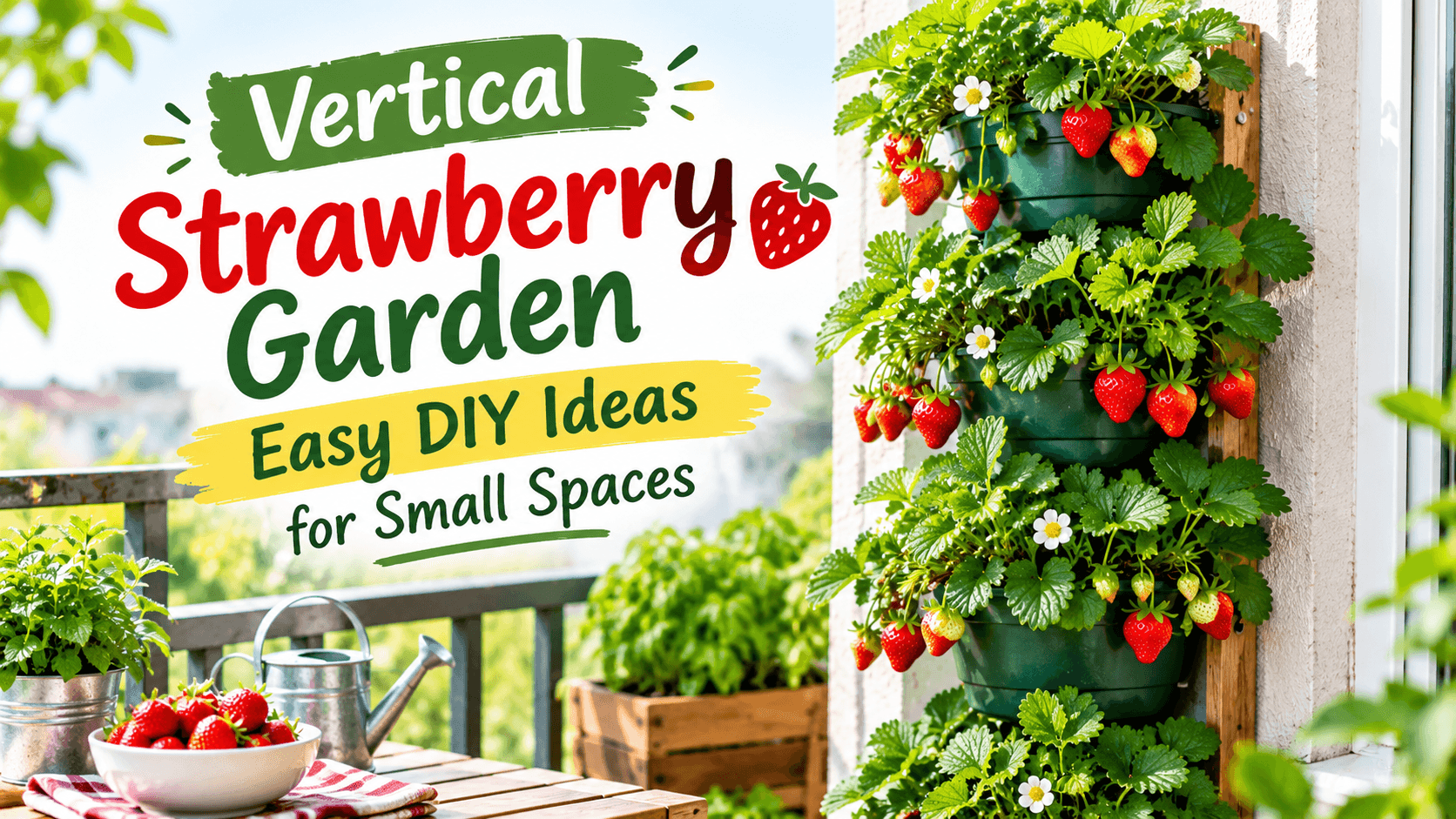
A vertical strawberry garden is one of those backyard ideas that looks a little fancy but is actually pretty simple. Instead of letting strawberry plants spread all over the ground, you grow them upward in containers, pockets, towers, hanging planters, or stacked beds. For small yards, patios and urban gardens, this can be a real space saver.
Strawberries are funny plants. You start with a couple little plants and before you know it, they’re sending runners everywhere like they’re trying to take over the whole garden.
I actually like that about them.
But when your garden space is small, letting strawberries spread across a big bed isn’t always practical. That’s where growing vertically makes sense.
You can put strawberries along a sunny wall, on a balcony, beside the garden shed, or even in a homemade planter made from materials you already have.
And there’s another nice thing about growing them off the ground: harvesting can be much easier.
Why I Like a Vertical Strawberry Garden
The biggest advantage is obvious — you use vertical space instead of only ground space.
A small backyard might not have room for a huge strawberry patch. But you may have a sunny fence, porch, balcony or wall that’s doing absolutely nothing.
Why not grow food there?
A vertical strawberry garden can also help keep the fruit away from some of the dirt and mud that comes with ground-level growing. You still need to watch for birds and insects, of course. Birds didn’t get the memo about your fancy vertical garden.
Another benefit is organization. Instead of searching through a jungle of leaves for ripe berries, you can often see the fruit much more easily.
How Much Sun Do Strawberries Need?
This is one of the first things I’d figure out.
Strawberries generally perform best with plenty of sunlight. The exact amount depends on your climate and variety, but a sunny location is a good starting point.
Watch your backyard for a full day before choosing the final spot.
And don’t just look at the morning sun.
A place can be bright at breakfast and completely shaded by a house or fence later in the afternoon.
If you’re growing on a balcony, move around the space and notice where the strongest light reaches. You might be surprised.
What Can You Use to Build a Vertical Strawberry Garden?
This is where things get fun.
You don’t have to buy an expensive garden tower.
Depending on your space, you can use:
- Stackable garden planters
- Hanging baskets
- Vertical planting pockets
- Wooden planter boxes
- Food-safe containers
- Purpose-built strawberry towers
- Repurposed materials that are clean and suitable for growing food
I’ve always liked projects where you can build the basic version first and improve it later.
Don’t spend $300 on a fancy strawberry tower if you’re not even sure you like growing strawberries vertically.
My Favorite Beginner Setup: Stacked Planters
If you’ve never tried vertical growing before, stacked containers are probably one of the easiest places to start.
You use several appropriately sized planters and arrange them so each level gets enough sunlight.
The important part is making sure water can drain properly.
Strawberries don’t want to sit in permanently soggy soil. If the container has no drainage holes, you’ve got a problem before you even plant the first strawberry.
And here’s something people sometimes forget: the top planter can drain into the planter below it. That’s not always bad, but you need to think about where all that water is going.
Don’t Make the Strawberry Tower Too Tall
This sounds obvious, but I’ve seen plenty of gardening projects where somebody gets excited and builds a tower so tall they need a ladder to harvest the berries.
What’s the point?
Keep it at a comfortable height.
You want to reach the plants easily for watering, pruning, checking flowers and picking ripe fruit.
A garden should make your life easier, not give you another reason to climb a ladder while holding a bowl of strawberries.
Choosing Soil for a Vertical Strawberry Garden
Container strawberries need a good growing medium that drains well while still holding enough moisture for the roots.
A quality container mix is usually easier than digging ordinary backyard soil and stuffing it into pots.
Garden soil can become heavy and compacted inside containers. That’s not what you want in a vertical system.
Before planting, make sure the mix is evenly moist but not soaking wet.
How I Would Plant a Vertical Strawberry Garden
Here’s the basic process:
- Choose the location. Find a spot with good sunlight and easy access to water.
- Prepare your containers. Make sure they have adequate drainage.
- Fill with quality potting mix. Don’t pack the soil down like concrete.
- Plant the strawberries. Keep the crown at the proper level rather than burying it deeply.
- Water thoroughly. Let excess water drain away.
- Watch the first few days. Container plants can dry out faster than plants in the ground.
That last point is a big one.
Vertical gardens can dry out surprisingly quickly, especially when they’re exposed to hot sun and wind.
You may need to water more frequently than you would a traditional garden bed.
Watering Is Where I See Beginners Get Into Trouble
Strawberries need consistent moisture, but there’s a difference between keeping soil moist and keeping it soaked.
Stick your finger into the growing medium and actually check it.
Don’t just look at the surface.
The top can look dry while the bottom of the container is still wet. Or the top can look perfectly fine while a small vertical pocket has already dried out.
That’s one reason I like containers that are easy to inspect.
If you have a large vertical tower, you may eventually decide that a simple drip irrigation system is worth the trouble.
What About Strawberry Runners?
Strawberry plants can produce runners, and this is where vertical gardening gets interesting.
Those runners can be allowed to develop new plants, depending on the type of strawberry you’re growing and what you’re trying to accomplish.
But don’t let every runner stay just because you feel bad cutting it.
Eventually the planter can become crowded.
When plants are packed too tightly, airflow can suffer and harvesting becomes a pain.
Sometimes you need to say, “Sorry little runner, you’re not staying.”
Keep the Fruit Off the Ground — But Still Watch the Birds
One nice thing about a vertical strawberry garden is that your fruit can sit higher than it would in a traditional bed.
That can make harvesting cleaner.
But birds can still find strawberries from halfway across the neighborhood.
Seriously. They seem to have some kind of strawberry radar.
If birds are eating more fruit than you are, a simple bird netting solution may help. Just make sure any netting is installed and maintained safely so wildlife and pets don’t become tangled in it.
Which Strawberries Should You Grow?
There are different types of strawberries, and the best choice depends on your climate, growing season and what kind of harvest you want.
Some varieties produce a main crop, while everbearing or day-neutral types can provide fruit over a longer period under suitable conditions.
If you’re buying plants locally, I’d start by asking a good local nursery which varieties perform well in your area.
That’s usually more useful than buying whatever variety happens to have the prettiest picture on the package.
My Three Biggest Vertical Strawberry Garden Tips
1. Don’t overcrowd the plants
More plants doesn’t always mean more strawberries. Give each plant enough room for healthy growth and airflow.
2. Put it somewhere you actually visit
This sounds silly, but it matters. If your strawberries are hidden behind the shed, you’ll forget about them.
Put them somewhere you walk past every day.
3. Make watering easy
If watering your tower requires dragging a hose around three corners of the house, you’re going to get tired of it.
Make the system convenient from day one.
Can You Grow Strawberries Vertically in a Small Apartment?
Yes, potentially.
You don’t need a giant backyard.
A sunny balcony or patio can work with suitable containers, as long as the building allows them and the structure can safely support the added weight of wet soil and containers.
That last part matters more than people think.
Wet soil is heavy.
Don’t put a huge tower of wet containers on a balcony without checking the building’s requirements and structural limitations.
What About Winter?
This depends heavily on your climate and the strawberry variety.
Container-grown plants have less insulation around their roots than plants growing in the ground, so cold weather can affect them more.
In colder climates, you may need to protect or relocate containers during winter. In warmer areas, the plants may continue growing much longer.
Don’t assume what works for somebody’s garden video in California will work exactly the same way in your backyard.
Vertical Strawberry Garden FAQ
Are vertical strawberry gardens worth it?
For small yards, patios and balconies, they can be a very practical way to use vertical space. They’re especially useful when traditional garden beds are limited.
How often should I water a vertical strawberry garden?
There’s no single schedule because weather, container size, soil mix and sunlight all change the answer. Check the growing medium regularly and water when the plants need it rather than following a rigid calendar.
Can strawberries grow in hanging baskets?
Yes. Hanging baskets can work well for strawberries when they have adequate drainage, suitable growing medium, enough sunlight and regular watering.
Don’t Overthink It
One thing I’ve noticed with gardening is that we sometimes make simple projects way too complicated.
You don’t need a $500 vertical garden system to grow strawberries.
You need healthy plants, good light, suitable soil, drainage and a watering routine you can actually keep up with.
Start with a few plants.
See what happens.
If you love it, add another planter next year. Maybe build a proper tower. Maybe run a small drip system. Maybe you’ll end up with strawberries climbing all over the place and wonder why you didn’t start sooner.
That’s how I like to approach a vertical strawberry garden. Keep it simple, make it fit your space, and build from there.
Thinking About Building One?
If you’ve got a sunny corner, balcony, fence or tiny backyard that isn’t being used, give vertical strawberries a try. Start small and see how it goes. And if you run into a weird problem, leave a comment and tell me what’s happening. Gardening has a funny way of teaching us something new every season.