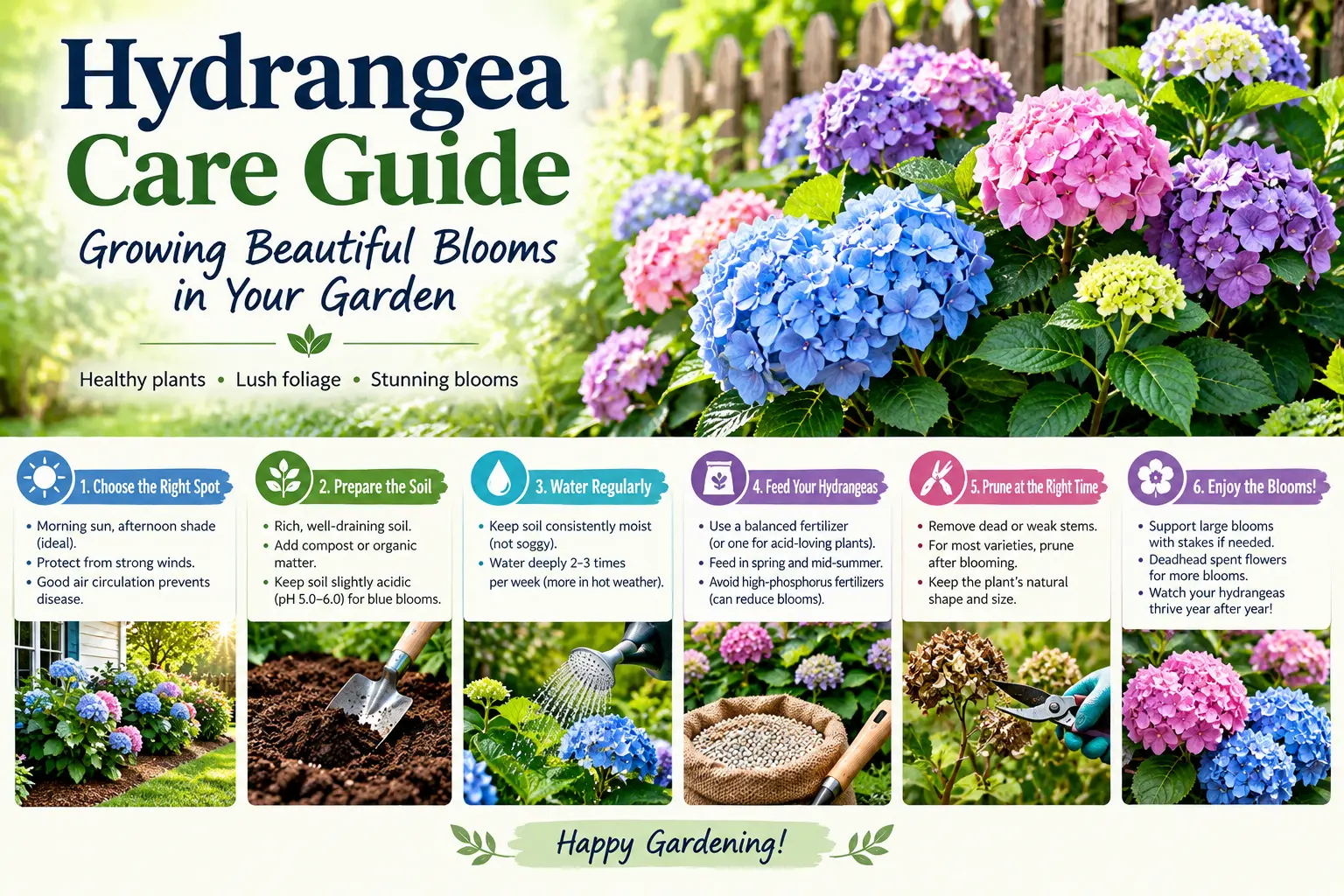
There is something special about a hydrangea covered in big, colorful flowers. Even a small backyard can feel like a peaceful garden when one of these shrubs is blooming. If you love gardening, homesteading, or making your outdoor space look beautiful without spending a fortune, hydrangeas are worth considering.
But let me tell you something: growing a healthy hydrangea isn’t always as simple as digging a hole and adding water. The wrong planting spot, too much afternoon sun, or a bad pruning cut can leave you wondering why your plant has plenty of leaves but hardly any flowers.
The good news is that once you understand what your hydrangea needs, caring for it becomes much easier. You don’t need a huge garden, expensive tools, or a professional gardener. A little planning goes a long way.
In this guide, we’ll look at choosing the right hydrangea, planting it, watering it, understanding flower colors, and avoiding common mistakes that can ruin your summer display.
What Is a Hydrangea, and Why Do Gardeners Love It?
Hydrangeas are flowering shrubs known for their large clusters of blooms. Depending on the variety, those flowers may be round like a ball, shaped like a cone, or arranged in flatter clusters with delicate-looking edges.
They are popular in backyard gardens because they can make a big visual impact without needing dozens of different plants.
Here are a few reasons gardeners love them:
- Beautiful flowers: Many varieties produce large blooms in white, pink, blue, purple, or greenish shades.
- Different sizes: Some hydrangeas work well in small gardens, while others grow into substantial shrubs.
- Versatile landscaping: They look lovely beside a porch, along a fence, near a woodland garden, or as part of a mixed flower border.
- Useful cut flowers: Fresh blooms can brighten a kitchen table, and many varieties can also be dried for decorations.
- Long-term value: Once established in a suitable location, many hydrangeas can flower year after year with proper care.
For a small urban homestead, I like the idea of choosing plants that do more than one job. A hydrangea can add color, soften the look of a fence, and make a plain corner of the backyard feel more inviting.
Just remember that hydrangeas are ornamental plants, not food crops. If your main goal is growing vegetables and preserving food, they can still fit beautifully around the edges of your garden.
Which Type of Hydrangea Should You Plant?
Before buying a hydrangea, check the plant label. This is one of the easiest ways to avoid disappointment because different types have different sunlight needs, mature sizes, and pruning requirements.
1. Bigleaf Hydrangea
Bigleaf hydrangeas are famous for their large, rounded flower clusters. Depending on the variety and soil conditions, their blooms may be blue, purple, or pink.
Many bigleaf varieties prefer morning sun and afternoon shade, particularly in hot climates.
One important detail: many traditional bigleaf hydrangeas flower on old wood, meaning growth produced during the previous season. If you cut those stems back too aggressively, you may remove next year’s flower buds.
Some newer varieties can flower on both old and new wood, so always check the specific variety.
2. Panicle Hydrangea
Panicle hydrangeas produce cone-shaped flower clusters. Their blooms often begin white or creamy green and may turn pink as the season progresses.
Many varieties tolerate more direct sunlight than bigleaf hydrangeas, provided they receive enough water. They can be a good choice for a sunnier backyard.
Some grow quite large, though, so check the mature height and width before planting one beside a walkway.
3. Smooth Hydrangea
Smooth hydrangeas are known for their rounded flower clusters, which are often white or pale green. Some cultivars have large, showy blooms.
They generally flower on new wood, meaning growth produced during the current growing season. That makes pruning different from the approach used for many bigleaf varieties.
4. Oakleaf Hydrangea
Oakleaf hydrangeas have distinctive leaves shaped somewhat like oak leaves. Their flowers are usually cone-shaped, and the foliage can develop attractive reddish or bronze colors in fall.
They are particularly useful when you want a shrub that offers something beyond summer flowers.
Before choosing any variety, check its mature size and hardiness for your location. A plant that thrives in one part of the United States may struggle in a hotter, colder, or drier region.
Where Should You Plant a Hydrangea?
Location is one of the biggest factors in successful hydrangea care.
Many hydrangeas prefer a spot with morning sunlight and afternoon shade. Others, particularly many panicle varieties, can handle more sun.
The challenge is that sunlight and temperature work together. A plant may tolerate several hours of sun in a mild climate but struggle when the same exposure comes with intense summer heat.
Before planting, spend a day noticing how sunlight moves across your yard.
Ask yourself three questions:
- Does the spot receive gentle morning sunlight?
- Does it get harsh afternoon sun during summer?
- Is there enough room for the shrub to reach its mature size?
Avoid squeezing a large hydrangea into a narrow space simply because it looks small at the garden center. Plants grow, and a crowded shrub can become harder to water, prune, and maintain.
For an urban garden, you might plant a suitable hydrangea beside a fence, near a shaded patio, or in a wide planting bed. Container growing is another option if you choose a variety that suits the pot and climate.
How to Plant a Hydrangea Step by Step
Planting doesn’t need to be complicated, but taking a little extra time now can save you trouble later.
Step 1: Choose a healthy plant.
Look for green, healthy foliage and stems without obvious signs of serious disease or pest damage. Check the label for the variety name and expected mature size.
Step 2: Prepare the soil.
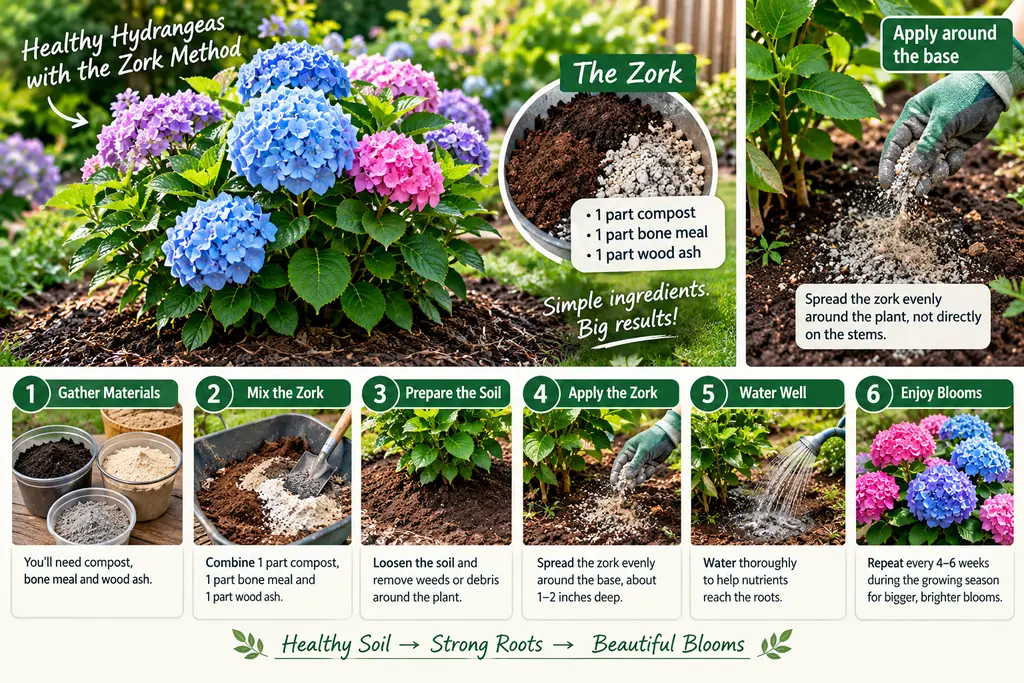
Hydrangeas generally prefer moist, well-drained soil rich in organic matter. If your soil is heavy clay, drains poorly, or dries out extremely quickly, you may need to improve the planting area before you begin.
Don’t assume that adding a small amount of compost to the planting hole will fix every soil problem. Preparing a wider area is often more useful.
Step 3: Dig a suitable hole.
Make the hole roughly as deep as the root ball and wider than it. Loosen the surrounding soil so new roots can spread outward.
Step 4: Position the plant correctly.
Remove the hydrangea carefully from its pot. Place it in the hole with the top of the root ball level with the surrounding soil. Avoid burying the stem base too deeply.
Step 5: Backfill and water.
Return the soil around the roots, gently firm it, and water thoroughly to settle the soil.
Step 6: Add mulch.
Apply a layer of organic mulch around the plant to help the soil retain moisture and reduce weeds. Keep the mulch a few inches away from the stems.
One final thing: give your new hydrangea time to settle in. Don’t keep digging around its roots to check whether it is growing. Regular observation and sensible watering are better than disturbing it every few days.
How Often Should You Water Hydrangeas?
Hydrangeas like consistent soil moisture, especially while establishing new roots and during hot weather. But they don’t want to sit in waterlogged soil either.
That is where people sometimes get confused. A wilted hydrangea may need water, but wilting can also happen when the plant is stressed by excessive heat or damaged roots.
Here is a simple approach:
- Check the soil before watering.
- If the upper soil is drying out, water deeply around the root zone.
- Water near the base rather than constantly wetting the leaves.
- During hot, dry weather, check more frequently.
- Reduce watering when rainfall keeps the soil adequately moist.
Newly planted hydrangeas generally need closer attention than established shrubs. Container-grown plants can also dry out faster than those planted in the ground.
Try watering early in the morning when practical. It gives the plant a chance to take up moisture before the hottest part of the day.
And don’t follow a rigid schedule without checking conditions. A plant may need water every day in a small pot during a heat wave, while another in the ground may be fine for several days after rain.
Can You Change Hydrangea Flowers From Pink to Blue?
This is probably one of the most interesting things about certain hydrangeas.
For some bigleaf and mountain hydrangea varieties, flower color is influenced by the availability of aluminum in the soil, which is strongly affected by soil pH.
In general, more acidic soil conditions can help certain varieties produce blue flowers, while less acidic conditions may produce pink flowers. Purple shades can appear between them.
However, not every hydrangea changes color this way. White-flowering varieties generally do not turn blue simply because you change the soil.
If you want to experiment with flower color, start by identifying your variety and testing the soil pH. Make changes gradually and follow product directions if you use a soil amendment.
Avoid adding random amounts of vinegar, aluminum products, or other household materials based on advice you saw online. They can create soil problems or damage plants when used incorrectly.
Honestly, a healthy hydrangea with pink flowers is just as lovely as a blue one. You don’t need to chase a particular color if the plant is already thriving.
Why Is My Hydrangea Not Blooming?
Few gardening problems are more frustrating than a healthy-looking shrub that refuses to flower.
If your hydrangea produces lots of leaves but no blooms, check these common causes.
Incorrect pruning: Some varieties form flower buds on old wood. Pruning them at the wrong time can remove those buds before they open.
Too much shade: A plant receiving too little light may grow foliage without producing many flowers. The ideal amount of sun depends on the variety and local climate.
Cold damage: Late spring freezes can damage flower buds on varieties that bloom on old wood.
Too much nitrogen: Excess nitrogen fertilizer can encourage leafy growth at the expense of flowering.
A young or newly transplanted plant: Some plants need time to establish their root systems before flowering well.
Start by identifying your hydrangea and reviewing its growing conditions. Don’t immediately reach for fertilizer. If the problem is pruning or cold damage, fertilizer won’t bring back buds that have already been lost.
How and When Should You Prune a Hydrangea?
This is where knowing your variety really matters.
Bigleaf and oakleaf hydrangeas commonly flower on old wood. These should generally be pruned carefully after flowering, if pruning is needed at all.
Panicle and smooth hydrangeas flower on new wood, so they can usually be pruned during late winter or early spring while dormant, before active growth begins.
The exact timing depends on your climate and the plant’s growth cycle.
For most garden hydrangeas, pruning should focus on removing dead or damaged stems, improving shape, and controlling size when necessary. You don’t need to cut every shrub down hard each year.
If you are unsure what kind you have, wait before making major cuts. Take a photograph of the flowers and leaves, check the plant label, or ask a local nursery to identify it.
A few minutes of research can prevent a whole season of missing flowers.
Growing Hydrangeas in Pots and Small Backyards
You don’t need acres of land to enjoy hydrangeas. A container can work well on a patio, balcony, or small backyard, provided the variety suits the available space.
Choose a pot with drainage holes and enough room for the root system. Use a good-quality potting mix rather than dense garden soil packed into a container.
Remember that pots dry out faster than garden beds. During hot weather, check the soil regularly, and make sure excess water can escape.
Container hydrangeas may also need protection during extreme winter conditions. The roots in a pot experience temperature changes differently from roots growing in the ground.
For small spaces, choose a compact variety and leave enough room for air circulation. You can combine your hydrangea with suitable companion plants, but avoid overcrowding the container.
In a permaculture-inspired backyard, ornamental shrubs can also help create distinct garden zones, soften boundaries, and make sitting areas feel more comfortable. Just keep hydrangeas separate from vegetable beds if you need to protect the space reserved for food production.
Common Hydrangea Care Mistakes to Avoid
If you want to keep things simple, start by avoiding these common mistakes:
- Planting a shade-loving variety in harsh afternoon sun.
- Watering constantly without checking soil moisture.
- Allowing the roots to sit in poorly drained soil.
- Pruning before identifying whether the plant blooms on old or new wood.
- Using fertilizer without a clear reason.
- Changing soil pH without testing it first.
- Choosing a plant that will outgrow the available space.
You don’t have to get everything perfect on the first try. Gardening is a process of observing, adjusting, and learning what works in your own yard.
Keep a few notes on when your hydrangea flowers, how much sun it receives, and when you prune it. Those little records can be surprisingly helpful the following season.
Frequently Asked Questions About Hydrangeas
Do hydrangeas prefer sun or shade?
It depends on the variety. Many bigleaf hydrangeas prefer morning sun and afternoon shade, while many panicle hydrangeas tolerate more direct sunlight. In hot climates, afternoon shade can help reduce heat stress.
What is the best month to plant a hydrangea?
Spring and fall are often good planting seasons because temperatures are milder. The best timing depends on your local climate. Avoid planting during extreme heat or when the ground is frozen.
Should I cut off dead hydrangea flowers?
You can remove faded flower heads if you prefer a tidier appearance. The best timing depends on the variety and your goals. With some old-wood hydrangeas, avoid cutting too far down the stem because you could remove developing buds for the next season.
Final Thoughts: Make Your Hydrangea Part of a Beautiful Backyard
A hydrangea can bring color, texture, and character to almost any suitable garden. Whether you’re working with a small urban yard, a backyard homestead, or a larger landscape, the secret is choosing the right variety and giving it the conditions it needs.
Pay attention to sunlight, keep the soil consistently moist without making it waterlogged, and learn whether your plant blooms on old or new wood before pruning. These simple habits can make a real difference.
You don’t need to be a perfect gardener to grow a beautiful hydrangea. Start with one healthy shrub, observe how it responds, and make small adjustments as you learn.
Have a question about your hydrangea, or are you struggling to get it to bloom? Leave a comment and tell me what variety you have and what your growing conditions are. Let’s make your backyard a little more beautiful, one plant at a time.