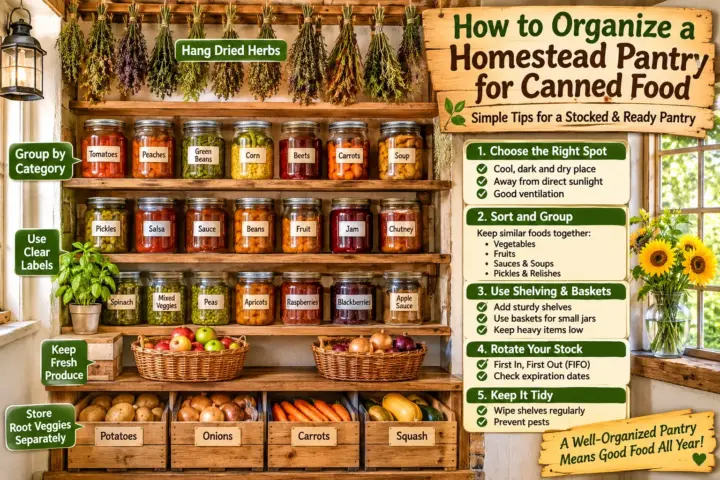

Homemade onion soup mix takes only a few minutes to make and gives you a convenient dry pantry seasoning for roasts, potatoes, dips, casseroles, soups, meatloaf, and slow-cooker meals.
The Pinterest recipe is based on a familiar combination of dried minced onion, beef bouillon, onion powder, celery seasoning, paprika, black pepper, parsley, and a small amount of sugar.
The basic idea works well, but there is one detail worth correcting: not every homemade onion soup mix uses the same number of tablespoons to replace one store-bought packet. The correct amount depends on how concentrated your recipe is.
For the large-batch recipe below, about 5 tablespoons is a practical packet-size portion. If you use another homemade recipe, follow that recipe’s own substitution amount because some versions are much more concentrated.
Homemade Onion Soup Mix Ingredients
This version makes a larger jar so you can keep several recipe portions ready in the pantry.
- 3/4 cup dried minced onion
- 1/3 cup beef bouillon powder or granules
- 4 teaspoons onion powder
- 1/4 teaspoon celery seed, lightly crushed
- 1/4 teaspoon black pepper
- 1/8 teaspoon paprika
- 1/4 teaspoon dried parsley flakes, optional
- 1/4 teaspoon granulated sugar, optional
This ingredient pattern closely matches an established do-it-yourself dry onion soup mix published through University of California Agriculture and Natural Resources.
How to Make It
- Make sure your bowl, spoon, measuring tools, and storage jar are completely dry.
- Lightly crush the celery seed so it distributes more evenly through the mix.
- Add the dried minced onion, bouillon, onion powder, celery seed, pepper, paprika, parsley, and optional sugar to a bowl.
- Stir thoroughly until the fine powders are evenly distributed through the dried onion.
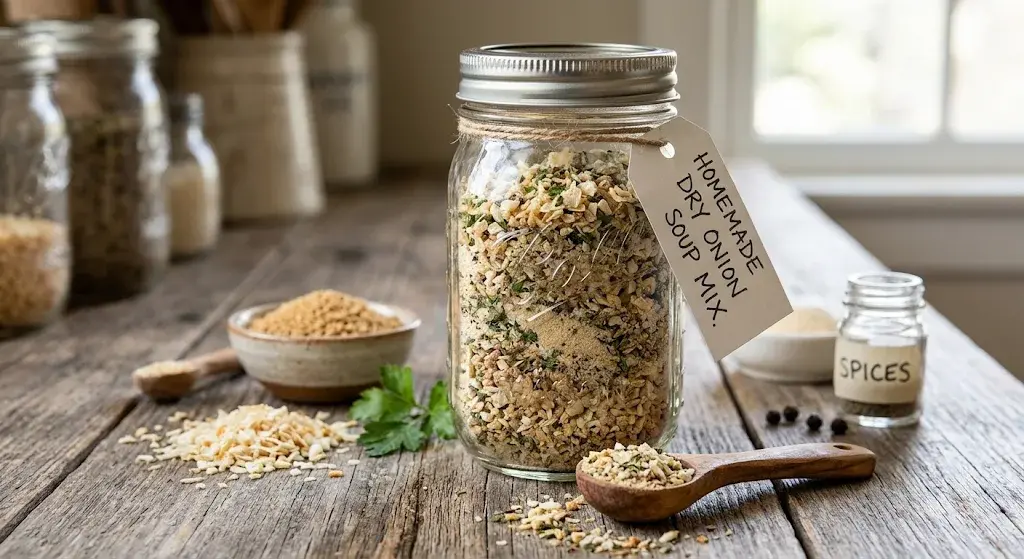
- Transfer the mixture to a clean, dry airtight jar.
- Label the jar with the name and the date you mixed it.
- Store it in a cool, dark, dry pantry.
How Much Homemade Mix Replaces One Packet?
For this particular large-batch formula, use approximately 5 tablespoons when a recipe calls for one packet of dry onion soup mix.
Why do you sometimes see 3 tablespoons online instead?
Because homemade recipes vary. Some contain a larger proportion of concentrated bouillon and seasoning and therefore require less mix per use.
Do not apply the 5-tablespoon rule to every recipe you find. Use it with this batch. If you change the proportions substantially, taste and adjust the amount in the finished dish.
What Each Ingredient Does
Dried Minced Onion
This provides the visible onion pieces and much of the classic texture. Once added to a moist recipe, the pieces soften and release onion flavor.
Beef Bouillon
Bouillon adds salt, savory flavor, and the broth-like character associated with dry onion soup mixes.
Brands vary widely in salt content, ingredients, and intensity, so the final mixture can taste different depending on the bouillon you choose.
Onion Powder
Onion powder fills in the flavor between the larger dried onion pieces and makes the mix taste more evenly seasoned.
Celery Seed
A small amount adds a savory herbal note. Crushing the seeds before mixing helps distribute their flavor more evenly.
Paprika and Black Pepper
These add mild warmth, color, and background seasoning without turning the mix spicy.
Parsley
Parsley is optional. It contributes color and a mild herbal flavor more than it changes the base onion profile.
Sugar
A tiny amount can round out salty and savory flavors, but it is completely optional.
Bouillon Is the Ingredient to Watch
Bouillon determines much of the sodium level in this recipe.
If you prefer more control over salt, choose a lower-sodium bouillon or start with slightly less bouillon and adjust the finished dish later.
Also check the package label if you need to avoid specific allergens or ingredients. Bouillon formulas differ significantly between brands.
Can You Make It Without Beef Bouillon?
Yes, but it will no longer taste exactly like the traditional beef-based dry soup mix.
You can experiment with:
- Vegetable bouillon
- Chicken bouillon
- Mushroom seasoning
- A homemade savory seasoning blend
Remember that every substitution changes salt concentration and flavor, so start with less mix in the finished dish and add more if needed.
How to Store Homemade Onion Soup Mix
The most important storage rule is simple: keep the mix dry.
Store it in:
- A clean glass jar with a tight lid
- An airtight food-storage container
- A cool pantry
- A dark cabinet away from the stove
Avoid dipping a damp spoon into the jar. Moisture can cause the bouillon powder to clump and can reduce storage quality.
How Long Does It Keep?
A practical goal is to make an amount you can use within several months.
Extension dry-mix guidance emphasizes airtight storage in a cool, dry location, and some current extension recipes recommend roughly six months for best pantry quality.
The actual limiting ingredient may be your bouillon, dried herbs, or onion, so check the dates and storage directions on the ingredients you use.
Should You Vacuum Seal It?
You do not need to vacuum seal a small jar that will be used regularly.
A tight airtight lid and dry storage are usually enough for a working pantry mix.
For larger batches, divide the mix into smaller containers so you are not repeatedly exposing the whole supply to humid kitchen air.
8 Easy Ways to Use Homemade Onion Soup Mix
1. Pot Roast
Add the mix to a slow-cooked beef roast along with the liquid and vegetables in your recipe.
2. Roasted Potatoes
Toss cubed potatoes with oil and onion soup mix before roasting until browned and tender.
3. Onion Dip
Stir the mix into sour cream and refrigerate long enough for the dried onions to soften and the flavors to blend.
4. Meatloaf
Use a smaller amount as part of the seasoning for ground meat. Remember that bouillon already contains significant salt.
5. Burgers
Mix a little into ground beef before forming patties for extra onion and savory flavor.
6. Casseroles
Use it in recipes that normally call for a packet of dry onion soup seasoning.
7. Gravy or Pan Sauce
A small spoonful can add onion and beef flavor to gravy. Add gradually so the sauce does not become too salty.
8. Quick Soup Base
Simmer a measured portion of the dry mix in water, then adjust seasoning and add vegetables, noodles, or other ingredients as desired.
Easy Onion Dip
For a simple dip, stir one packet-equivalent portion of your homemade mix into about 16 ounces of sour cream.
- Add the sour cream to a bowl.
- Stir in about 5 tablespoons of this large-batch mix.
- Mix thoroughly.
- Cover and refrigerate for at least 1–2 hours so the dried onion has time to soften.
- Taste before serving and adjust only if needed.
Roasted Onion Potatoes
This mix is especially useful on potatoes because the dried onion, bouillon, and spices create a savory coating while the potatoes roast.
- 2 pounds potatoes, cut into bite-size pieces
- About 1/4 cup homemade onion soup mix
- About 1/3 cup olive or other cooking oil
- Heat the oven to 450°F.
- Toss the potatoes with oil and dry mix.
- Spread in a single layer on a baking sheet.
- Roast until browned and tender, stirring during cooking for more even browning.
This is based on an extension dry-mix use idea; exact cooking time depends on the size of your potato pieces and your oven.
Can You Reduce the Sodium?
Yes, and making the mix yourself makes that easier.
Try one or more of these adjustments:
- Choose reduced-sodium bouillon.
- Use slightly less bouillon and more dried onion.
- Do not add extra salt to the dry mix.
- Wait until the finished dish is cooked before adding additional salt.
Because bouillon products vary so much, taste the finished dish rather than assuming it needs more salt.
Can You Make It Gluten-Free?
The dried onion and spices are naturally simple ingredients, but the bouillon is the product that requires careful label checking.
If gluten avoidance is important for you, choose a bouillon specifically labeled for your dietary needs and check every ingredient rather than assuming all bouillon powders are the same.
Can You Use Home-Dehydrated Onions?
Yes, if the onions are completely dried and stored safely before being added to the seasoning mix.
Any residual moisture can reduce the shelf stability of the whole jar.
Chop dehydrated onions into fairly small pieces so they distribute evenly and rehydrate reasonably quickly in recipes.
Small Batch Version
If you do not use onion soup mix often, make a single recipe-equivalent batch instead of storing a large jar.
- 1/4 cup dried minced onion
- 2 tablespoons beef bouillon granules
- 1/4 teaspoon onion powder
- 1/4 teaspoon dried parsley
- 1/8 teaspoon celery seed
- 1/8 teaspoon black pepper
- 1/8 teaspoon paprika
Mix everything thoroughly and use the batch in place of one packet-equivalent portion in a recipe.
Large Batch vs. Small Batch
| Version | Best For | Approximate Use |
|---|---|---|
| Large jar | Frequent cooking and pantry stocking | About 5 tbsp per packet-equivalent portion |
| Small batch | Occasional recipes | Use the entire batch as one packet substitute |
Common Mistakes to Avoid
Using a Damp Jar
Even a small amount of moisture can cause dry ingredients to clump and shorten pantry quality.
Adding Extra Salt Before Tasting
Bouillon can already be very salty. Let the dish cook before deciding whether it needs more.
Using Five Tablespoons of Every Homemade Recipe
The substitution amount depends on the formula. Five tablespoons fits this large batch, but other recipes may call for only three tablespoons.
Storing It Above the Stove
Heat and steam make the cabinet above a stove a poor location for dry seasoning mixes.
Ignoring the Bouillon Label
Bouillon determines much of the sodium, allergen profile, and flavor of the finished blend.
Homemade Onion Soup Mix FAQ
How much homemade onion soup mix equals one packet?
For the large-batch recipe in this article, use about 5 tablespoons. More concentrated homemade recipes may use closer to 3 tablespoons, so do not treat one measurement as universal.
Can I leave out the sugar?
Yes. It is optional and used only in a very small amount to balance flavor.
Can I leave out parsley?
Yes. Parsley adds a little color and herbal flavor but is not essential to the onion base.
Can I use celery salt instead of celery seed?
You can, but celery salt adds additional sodium. Reduce other salty ingredients if needed and taste the finished dish carefully.
Why did my mix clump?
Bouillon and other fine powders absorb moisture from humid air. Store the mixture tightly sealed and always use a dry measuring spoon.
Can I make this in bulk?
Yes. A larger jar is convenient if you use the mix often. Label it clearly and keep it airtight, cool, dark, and dry.
The Bottom Line
Homemade onion soup mix is one of the easiest dry pantry staples to make yourself.
Dried onion provides the texture, bouillon creates the savory base, and a few simple spices round out the flavor.
Make it in a completely dry bowl, store it in an airtight jar, and use about 5 tablespoons of this specific large-batch recipe when you need a packet-equivalent portion.
The biggest advantage is flexibility: you can adjust the salt level, leave out optional ingredients, make a small batch or a full pantry jar, and always have onion seasoning ready when a recipe needs it.
Sources
- University of California Agriculture and Natural Resources — Do-It-Yourself Dry Mixes
- K-State Research and Extension — Dry Onion Soup Mix