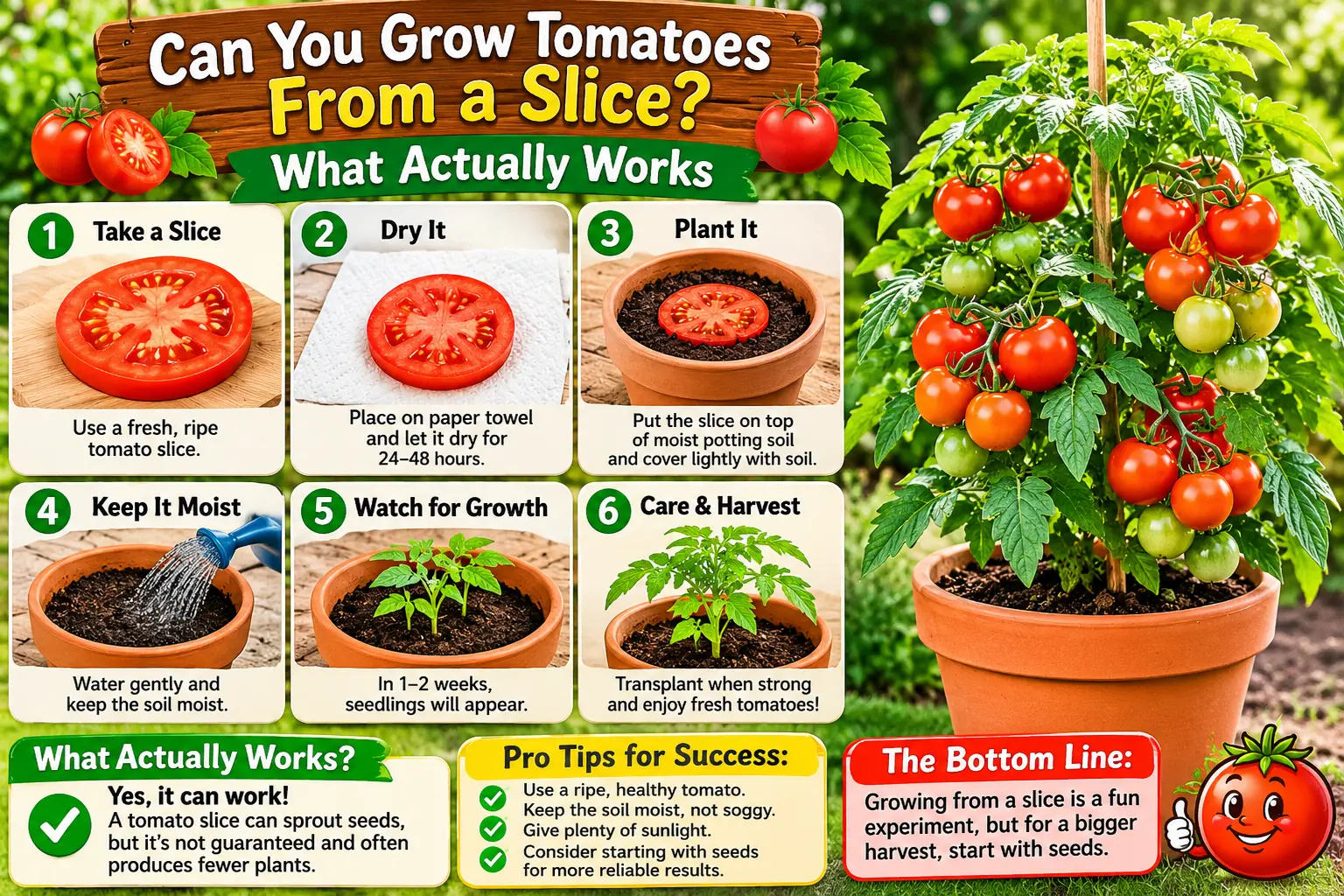
Yes, tomato seeds inside a fresh slice can germinate—but planting the entire slice is more of a fun experiment than the best way to start healthy tomato plants.
The Pinterest method is simple: cut a ripe tomato, let the slice dry, place it on potting mix, cover lightly, keep it warm and moist, and wait for seedlings.
That can work because the seeds inside the tomato are alive. The problem is that one slice may contain many seeds packed into a very small area, while the wet fruit tissue can encourage mold and make seedling separation harder later.
Quick answer
You can try the slice method, but for stronger and easier-to-manage seedlings, remove the seeds from a ripe tomato, clean them, sow them individually in seed-starting mix, and thin or transplant seedlings before they crowd each other.
Why a Tomato Slice Can Sprout
A ripe tomato contains mature seeds surrounded by a gelatinous coating.
When the slice is placed in moist growing media, some of those seeds may eventually germinate if temperature, moisture, and seed viability are suitable.
So the basic Pinterest claim is possible.
What the image leaves out is that the fruit flesh is not needed. The seed itself is what produces the new plant.
Does the Slice Need to Dry for 24–48 Hours?
Not necessarily.
Drying the slice may reduce some excess surface moisture, but it is not a required tomato-seed germination step.
For proper seed saving, extension guidance usually focuses on separating the seed from the gelatinous pulp, cleaning it, and drying the cleaned seeds before storage rather than drying an entire tomato slice.
The Biggest Problem: Too Many Seeds in One Spot
One tomato slice may hold dozens of seeds.
If many of them germinate together, the seedlings compete for:
- Light
- Root space
- Water
- Nutrients
- Airflow
That is why a pot full of seedlings is not automatically a successful result. You eventually need to thin or separate them.
A Better Way: Remove the Seeds First
If you want reliable tomato seedlings from a ripe fruit, separating the seeds first gives you much more control.
- Choose a healthy, fully ripe tomato.
- Cut it open and remove several seeds.
- Separate as much pulp and gel as practical.
- Rinse or process the seeds if you are preparing them for storage.
- Sow only the number of seeds you actually need.
- Cover them lightly with seed-starting mix.
- Keep the mix evenly moist, not waterlogged.
- Provide strong light as soon as seedlings emerge.
If your goal is saving seeds for next season: tomato seeds benefit from being separated from the gelatinous pulp, cleaned, and thoroughly dried before storage.
What About the Gel Around Tomato Seeds?
Tomato seeds are naturally surrounded by a slippery gel inside the fruit.
Penn State Extension recommends fermenting seeds for seed saving so the pulp and gel can be separated before drying and storage.
That process is useful when you want clean seed to keep for the next growing season. It is different from simply burying a tomato slice in potting soil.
Will a Grocery Store Tomato Grow?
Possibly.
If the seeds are mature and viable, they may germinate.
But you may not know whether the tomato was:
- A hybrid
- Open-pollinated
- An heirloom
- Selected for greenhouse production
- Suited to your climate
The resulting plant may therefore be different from what you expect.
Hybrid Tomatoes May Not Come True From Seed
This is one of the most important details missing from viral tomato-slice posts.
Hybrid tomato plants can produce viable seeds, but those seeds do not reliably reproduce the same combination of traits as the hybrid parent.
You might get tomatoes that differ in:
- Fruit size
- Flavor
- Color
- Plant vigor
- Disease resistance
- Yield
Open-Pollinated Tomatoes Are Better for Seed Saving
If you want seedlings that are more likely to resemble the parent plant, start with a known open-pollinated or heirloom tomato variety.
Tomatoes are largely self-pollinating, which makes many open-pollinated varieties good candidates for home seed saving.
Should You Cover the Pot With Plastic?
A humidity cover can help keep seed-starting mix from drying out before germination.
However, the Pinterest image appears to seal the entire pot tightly.
That can create excessive condensation, especially when decomposing fruit is also present.
If you use a humidity dome or loose cover, remove or vent it once seedlings emerge.
Do Not Keep the Soil Soaking Wet
The phrase “keep it moist” is correct, but moist does not mean saturated.
Overly wet seed-starting mix reduces air around young roots and can encourage seedling problems.
Use a container with drainage holes and water gently.
Seedlings Need Strong Light Immediately
A “bright location” is not always enough indoors.
Tomato seedlings can become tall, pale, and weak when they stretch toward insufficient light.
Use your brightest suitable window or a proper grow light if indoor sunlight is limited.
When Should You Separate the Seedlings?
Do not wait until the pot becomes a tangled mass.
If you use the slice method and many seeds sprout, thin or transplant the strongest seedlings while they are still manageable.
Handle young plants gently and avoid tearing apart heavily intertwined roots if possible.
Hardening Off Comes Before the Garden
The Pinterest infographic jumps directly from seedlings to a mature outdoor tomato plant.
Real seedlings need time to adjust to outdoor sun, wind, and temperature changes.
Penn State recommends hardening tomato seedlings gradually over about a week before transplanting them outdoors.
Tomatoes Need Plenty of Sun
Once transplanted, tomatoes need a sunny growing location.
Penn State recommends at least six hours of direct sunlight per day for tomatoes.
What the Pinterest Method Gets Right
- Tomato seeds inside a ripe fruit can be viable.
- Warm, moist growing media can support germination.
- Seedlings can later be transplanted.
- The experiment is simple and inexpensive.
- It can be a fun way to demonstrate how seeds inside fruit become new plants.
What the Pinterest Method Oversimplifies
| Pinterest Step | What to Know |
|---|---|
| Dry the whole slice | Not required for germination; cleaned seeds are easier to manage. |
| Plant the entire slice | Can work, but may produce many crowded seedlings and decaying fruit tissue. |
| Cover tightly | High humidity can help before germination, but excess condensation is not ideal. |
| Seedlings appear | They may need thinning and strong light immediately. |
| Transplant and grow | Seedlings should be hardened off first and the variety may not match the parent if it was a hybrid. |
Best Method if You Still Want to Try the Slice Experiment
- Use a ripe, healthy tomato.
- Cut a thin slice rather than a very thick chunk.
- Use a clean pot with drainage holes.
- Fill it with fresh seed-starting or potting mix.
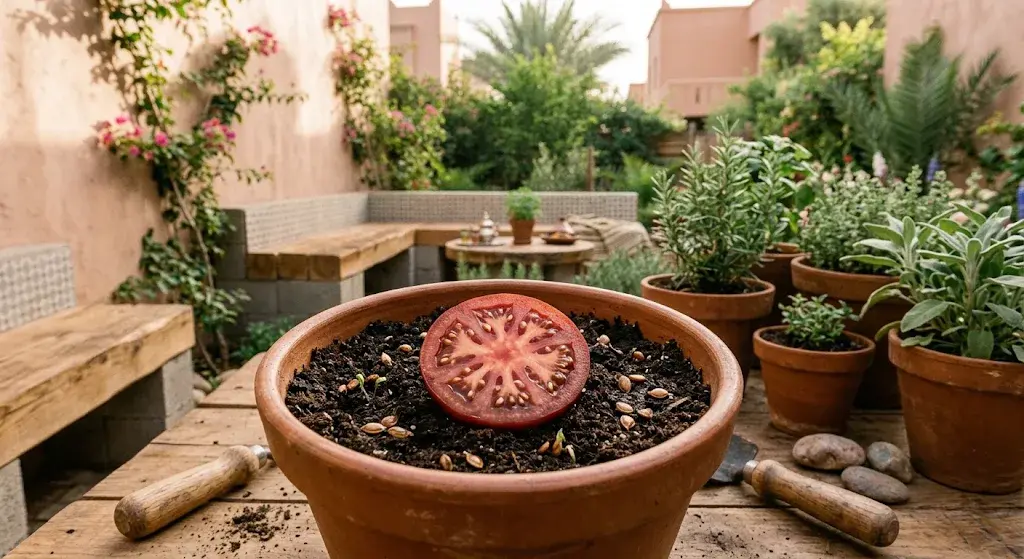
- Lay the slice on the surface.
- Cover it with only a thin layer of mix.
- Keep the medium warm and evenly moist.
- Provide strong light as soon as seedlings appear.
- Thin aggressively if too many seedlings germinate.
- Pot the strongest seedlings individually.
- Harden them off before planting outdoors.
Better Method for Serious Growing
- Use a known open-pollinated tomato if possible.
- Remove individual seeds from ripe fruit.
- Clean the seeds.
- Sow a small number in seed-starting mix.
- Give seedlings strong light.
- Pot up the strongest plants.
- Harden them off gradually.
- Transplant after frost danger has passed and weather is suitable.
Tomato Slice Growing FAQ
Can you really grow tomatoes from a tomato slice?
Yes. Viable seeds in the slice can germinate. However, separating and sowing the seeds individually is usually cleaner and easier to manage.
Do you need to dry the tomato slice first?
No specific 24- to 48-hour slice-drying step is required for tomato seeds to germinate.
Can supermarket tomato seeds grow?
They may germinate if mature and viable, but the resulting plants may not match the original fruit, especially if the tomato came from a hybrid variety.
Will tomatoes grown from supermarket fruit taste the same?
Not necessarily. Seeds from hybrid tomatoes can produce offspring with different traits. Open-pollinated varieties are more predictable for seed saving.
Why are all my tomato seedlings crowded together?
A single tomato slice can contain many viable seeds. Thin or transplant the strongest seedlings before their roots become badly tangled.
Do tomato seeds need fermentation?
Fermentation is especially useful when preparing tomato seeds for saving and storage because it helps separate the gelatinous pulp from the seeds.
The Bottom Line
The viral tomato-slice trick is not completely fake. A ripe tomato contains seeds, and some of those seeds can germinate when the slice is buried in moist growing media.
But the slice itself gives the seedling no special advantage.
If you want a fun experiment, try one slice. If you want predictable, healthy tomato seedlings, separate the seeds and sow them individually.
And if you want the next generation to resemble the tomato you started with, choose an open-pollinated variety rather than assuming every supermarket hybrid will grow true from seed.
Sources
- Penn State Extension — Seed Saving Basics
- University of Minnesota Extension — Saving Vegetable Seeds
- Penn State Extension — Tomatoes: From Seedlings to Fruit
- University of Illinois Extension — F1 Hybrid vs. Heirloom Vegetable Seed