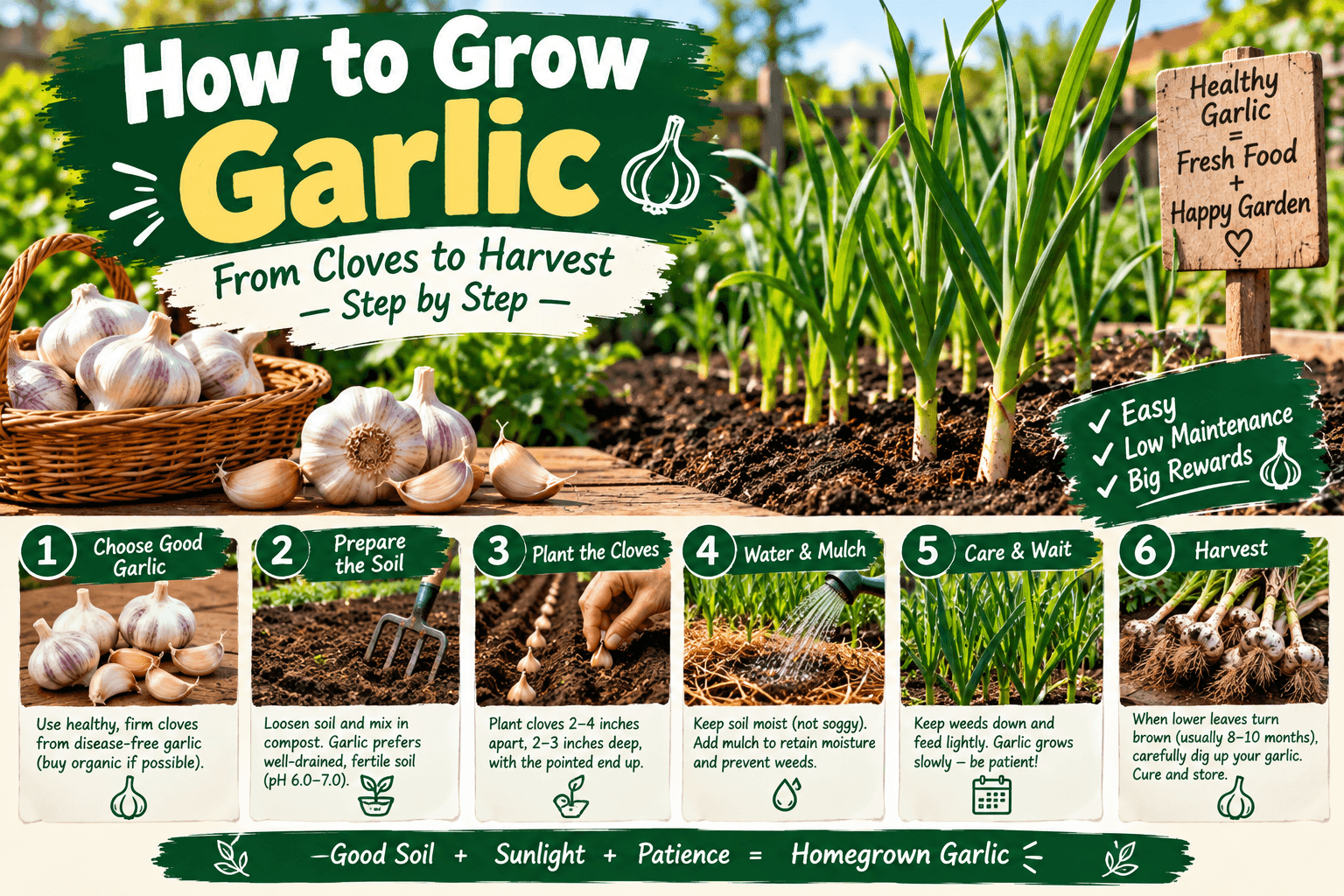
How to Grow Garlic . I’ll be honest, I didn’t take garlic very seriously when I first started gardening. I figured you stick a clove in the ground, wait a while, dig it up, and there you go.
Well… mostly.
My first garlic harvest was pretty sad. I planted some cloves from the grocery store, put them in a spot that didn’t get enough sun, watered them way too much, and then wondered why I ended up with tiny little bulbs.
That was my introduction to how to grow garlic.
Thankfully, garlic is pretty forgiving once you understand a few basic things. These days, garlic is one of the crops I look forward to planting every year. It doesn’t take up a crazy amount of space, it stores well, and having your own garlic sitting in the pantry is one of those little homesteading wins that feels better than it probably should.
So let me show you how I grow it, including the mistakes I don’t plan on making again.
When Should You Plant Garlic And How to Grow Garlic?
For most gardeners, garlic is planted in the fall.
That surprised me the first time I learned it.
I thought garlic was something you planted in spring along with tomatoes and cucumbers.
Not always.
Garlic is generally planted several weeks before the ground freezes in colder climates. This gives the cloves time to establish roots before winter, while the plants remain relatively small above ground.
In warmer climates, planting times can be different.
The exact timing depends on where you live and the type of garlic you’re growing.
The important thing is not to plant blindly by the calendar.
Watch your local weather and growing season.
I like to get garlic into the ground after the worst of the summer heat is gone and when the soil is still workable.
What Kind of Garlic Should You Plant?
Here’s where I made another beginner mistake.
I went to the grocery store, bought a nice-looking head of garlic, and planted the cloves.
Some grew.
Some didn’t.
The results were all over the place.
Grocery-store garlic isn’t always the best choice for planting because it may have been treated to prevent sprouting, and it may not be suited to your local growing conditions.
These days, I prefer planting garlic that was specifically grown for planting.
There are lots of varieties out there, and they can behave differently depending on climate.
You’ll commonly hear about hardneck and softneck garlic.
Hardneck garlic usually produces a central flower stalk called a scape and is often valued for strong flavor.
Softneck garlic generally doesn’t produce the same type of scape and is often known for good storage.
Neither one is automatically better.
I grow what performs well in my garden.
That’s the real trick.
Pick a Sunny Spot
Garlic isn’t the vegetable I’d put in the darkest corner of the backyard.
Give it sun.
A spot with plenty of direct sunlight is much better for growing strong plants and good-sized bulbs.
When I plan my garden, I try to save the sunniest beds for crops that really need it.
Garlic gets one of those spots.
If you’re doing urban homesteading and only have a small garden, don’t worry.
Garlic can fit nicely around other garden crops as long as you give it the conditions it needs.
I’ve even grown garlic in containers.
More on that in a minute.
Garlic Likes Good Soil
You don’t need perfect soil.
I’ve never had perfect soil.
If I waited for perfect soil, I’d still be standing around waiting.
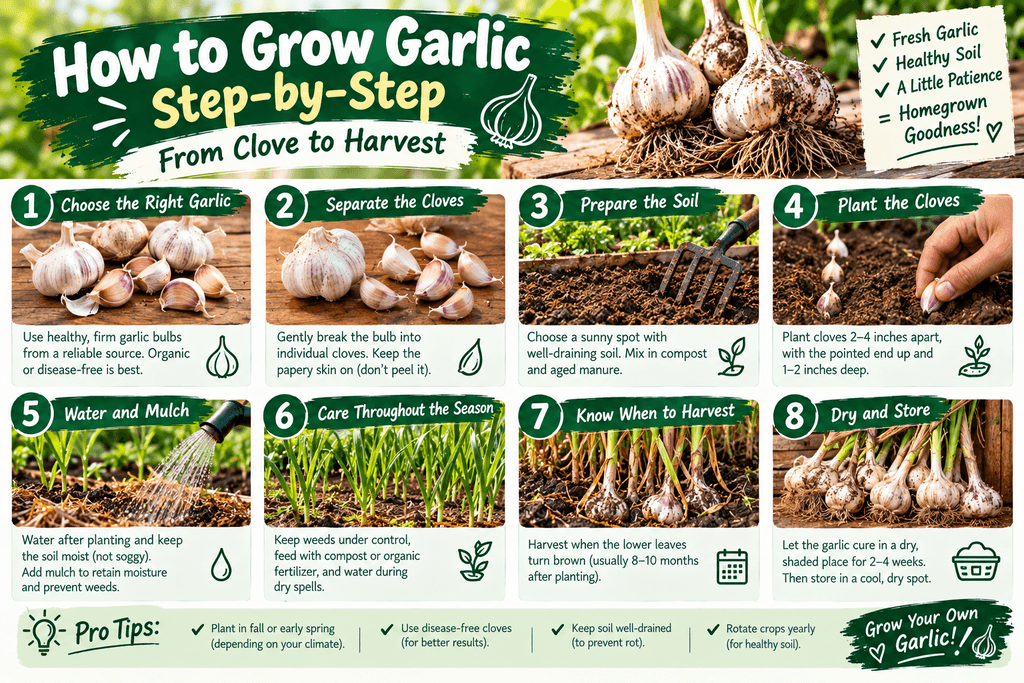
But garlic does appreciate soil that drains well and contains plenty of organic matter.
I usually work compost into the garden bed before planting.
Not a giant pile.
Just enough to improve the soil and give the plants a good place to grow.
One thing I don’t want is constantly soggy soil.
Garlic cloves sitting in wet soil can rot.
That’s a lesson worth remembering.
Good drainage is more important than drowning the plants with water.
How I Plant Garlic Cloves
This part is pretty easy.
First, separate the garlic bulb into individual cloves.
Keep the papery skin on each clove.
Don’t peel them like you’re getting ready to cook dinner.
Choose the biggest healthy-looking cloves for planting.
I’ve found that starting with good planting material gives me a much better chance of getting good bulbs later.
Then I make a small hole in the soil.
Place the clove with the pointed end facing up and the flatter root end facing down.
Cover it with soil.
That’s basically it.
Don’t get too fancy.
The exact planting depth and spacing should match your variety and local growing conditions, but I generally give individual cloves enough room to develop a bulb without being crowded.
Don’t Plant the Clove Upside Down
You’re gonna laugh.
I’ve done it.
More than once.
The garlic will still try to grow, but planting it upside down makes the plant work harder to get itself moving in the right direction.
Now I always look at the clove before putting it into the ground.
Pointy side up.
Flat side down.
Easy.
Until you’re outside with 50 cloves and start second-guessing yourself.
Should You Mulch Garlic?
Absolutely.
Mulch is one of my favorite tools in the garden.
After planting garlic, I like using a layer of suitable organic mulch.
Straw is a popular option.
The mulch helps protect the soil, reduce weeds, and moderate moisture and temperature swings.
And here’s the part I really appreciate:
less weeding.
Anything that saves me from pulling weeds on my knees is a good thing.
Just don’t pile wet, heavy material directly against the plants in a way that could encourage rot.
Keep an eye on the bed as the season changes.
Watering Garlic Without Killing It
Garlic needs water while it’s actively growing, but more water isn’t always better.
This was one of my old habits.
I’d walk through the garden with the hose and think, “Well, everybody could use a drink.”
No.
Some days the soil was already plenty moist.
I just added more.
These days I check the soil first.
If it’s reasonably moist, I leave it alone.
If it’s dry and the plants need water, I water deeply enough to reach the root zone.
As harvest gets closer, watering usually needs to be reduced.
You don’t want to keep the soil overly wet when the bulbs are approaching maturity.
Feed Your Garlic, But Don’t Go Crazy
Garlic needs nutrients to grow properly.
This is where compost can be really useful.
Before planting, I like preparing the bed with finished compost.
During the growing season, some gardeners also use an appropriate fertilizer depending on soil conditions.
But don’t fall into the “more fertilizer equals bigger garlic” trap.
I did.
It doesn’t work that way.
Too much nitrogen can encourage lots of leafy growth without necessarily giving you the bulbs you were hoping for.
The goal is healthy plants, not garlic plants that look like they’ve been hitting the gym.
What Are Garlic Scapes?
If you’re growing hardneck garlic, you may get something really tasty called a garlic scape.
It’s the curly flower stalk that comes up from the plant.
When the scape starts curling, I like harvesting it while it’s still tender.
Don’t throw those things away.
You can chop them into eggs, stir-fries, potatoes, soups, pesto, or pretty much anything that could use a little garlic flavor.
My favorite thing about scapes is that they give me an extra harvest before the actual garlic bulbs are ready.
That’s a pretty good deal.
When Is Garlic Ready to Harvest?
This is where patience becomes important.
Garlic usually isn’t ready just because you suddenly feel like digging it up.
The leaves give you clues.
As the plant matures, the lower leaves will begin turning brown.
You generally want several green leaves remaining while the lower leaves start dying back.
The exact timing varies by variety and growing conditions.
I usually check a plant or two before harvesting the entire bed.
That’s my insurance policy.
Dig one up.
Look at the bulb.
If it looks well developed and the skins have formed properly, it’s getting close.
Don’t Pull Garlic Like a Weed
Here’s another thing I learned the hard way.
Don’t grab the leaves and yank the garlic out of the ground.
Use a garden fork or similar tool to loosen the soil.
Then lift the bulb carefully.
Garlic bulbs can be surprisingly easy to damage.
A little nick or cut can create storage problems later.
And after you’ve spent months growing something, the last thing you want is to stab it with your garden fork on harvest day.
Trust me.
I’ve done that too.
How I Cure Garlic After Harvest
You don’t want to throw freshly harvested garlic straight into a kitchen drawer and forget about it.
Garlic needs to be cured for storage.
After harvesting, I gently remove loose dirt, but I don’t wash the bulbs.
Then I hang or lay them somewhere dry, well ventilated, and out of direct sunlight.
I leave the leaves attached while the garlic cures.
The goal is to let the outer layers dry down properly.
Depending on conditions, curing can take a few weeks.
Don’t rush this part.
Good curing can make a big difference in how well garlic stores.
How to Store Homegrown Garlic
Once the garlic is fully cured, I trim the roots and prepare the bulbs for storage.
I keep the best bulbs for eating and select some of the biggest, healthiest bulbs to use as planting stock for the next season.
That’s one of my favorite parts of growing garlic.
You can save your own planting material and continue the cycle.
That’s very much the self-sufficient side of homesteading.
Store garlic somewhere cool, dry, and well ventilated.
Don’t seal it inside a plastic bag and expect it to stay happy.
Garlic likes air.
Can You Grow Garlic in Containers?
Yep.
If you’re gardening in an apartment, small backyard, patio, or urban space, containers can work.
The container needs good drainage and enough depth for the garlic roots and bulbs.
I wouldn’t cram dozens of cloves into one tiny pot.
Give them room.
A larger container filled with good-quality potting mix is much easier to manage than trying to grow garlic in a shallow decorative pot.
And make sure the container gets plenty of sunlight.
My Garlic Mistakes You Can Skip
After years of growing it, here are the mistakes I’d really try to avoid:
Planting grocery-store garlic without knowing what you’re buying.
It might work, but dedicated planting stock is usually a better starting point.
Planting too shallow.
The cloves need enough soil protection.
Overwatering.
Garlic doesn’t want to sit in mud.
Ignoring weeds.
Garlic has a relatively limited root system, and heavy weed competition isn’t helpful.
Harvesting too early.
Small bulbs are disappointing when you know you could have given them more time.
Damaging bulbs during harvest.
Be gentle.
Skipping curing.
This one can hurt your storage life.
Can Garlic Help With Food Storage?
Absolutely.
This is one reason garlic fits so nicely into my homesteading garden.
Unlike some fresh vegetables, properly cured garlic can be stored for a good while under suitable conditions.
That means you can grow a crop during one season and continue using it in your kitchen afterward.
I use garlic in almost everything.
Soups.
Sauces.
Roasted vegetables.
Pickles.
Meat.
Beans.
Tomato sauce.
Honestly, I probably use too much.
But nobody has complained yet.
And if you’re already doing canning and food preservation, having your own garlic on hand is another small piece of the bigger food-storage puzzle.
A Simple Garlic Routine I’d Follow
If you’re starting from scratch, don’t overthink it.
Here’s what I’d do:
- Choose a garlic variety suited to your growing conditions.
- Pick a sunny garden bed with good drainage.
- Add finished compost to the soil.
- Separate healthy bulbs into individual cloves.
- Plant cloves with the pointed end facing upward.
- Cover them with soil.
- Add suitable mulch.
- Keep moisture consistent without keeping the soil soggy.
- Watch for weeds and signs of plant problems.
- Harvest when the bulbs are mature.
- Cure them properly.
- Save some of your best bulbs for next year’s planting.
That’s it.
No complicated system.
No expensive machine.
Just garlic, soil, patience, and a little attention.
Frequently Asked Questions
How long does garlic take to grow?
Garlic is generally a long-season crop. When planted in fall, it often grows through winter and spring before being harvested in late spring or summer, depending on variety and climate.
Can I plant garlic from the grocery store?
You can try, but it isn’t always the best option. Grocery-store garlic may have been treated to slow sprouting and may not be well suited to your local climate. Garlic sold specifically for planting is usually the better choice.
Does garlic need full sun?
Garlic generally performs best with plenty of direct sunlight. If you’re growing in a backyard, choose one of your brighter garden spots. Container-grown garlic should also be placed where it gets adequate sunlight.
The Best Thing About Growing Garlic
There’s something satisfying about planting a little clove in the fall and forgetting about it for a while.
Winter comes.
The garden gets quiet.
You almost forget what’s underground.
Then spring arrives and those green garlic leaves start pushing up.
A few months later, you’re digging into the soil and pulling out a full bulb that came from one tiny clove.
That’s why I keep growing it.
How to grow garlic isn’t really complicated once you get the basics right. Give it good planting material, sunlight, decent soil, proper moisture, enough time, and don’t mess with it too much.
And that’s probably the biggest lesson I’ve learned from growing garlic: sometimes the best thing a gardener can do is stop fussing over the plant every five minutes.
Give it what it needs.
Then let the garlic do its thing.
If you’re just starting your first garlic bed, start small. Plant a few varieties if you can and keep notes about which ones perform best. Next year, you’ll know exactly what worked in your backyard.
And if you mess up a few bulbs along the way?
Don’t worry.
I still do.