I’ve been growing hostas for years, and honestly, these plants have taught me something important about gardening: sometimes the plants you pay the least attention to are the ones that do the best.
When I first started my backyard garden, I was obsessed with tomatoes, peppers, cucumbers, and anything that produced food. Hostas? I thought they were just those leafy plants people put in shady corners because nothing else would grow there.
Then I planted a few.
Now I have them tucked around trees, along shady paths, beside the chicken area, and in spots where my vegetables would probably complain within a week.
And yes, I’ve made plenty of mistakes with them too.
I planted one in too much sun. Another got eaten by slugs so badly it looked like lace. I even forgot to water a few during a really hot summer.
Somehow, they kept coming back.
So lemme show you what I’ve learned about hostas, including where I plant them, how I care for them, and the mistakes I wouldn’t repeat.
What Are Hostas, Anyway?
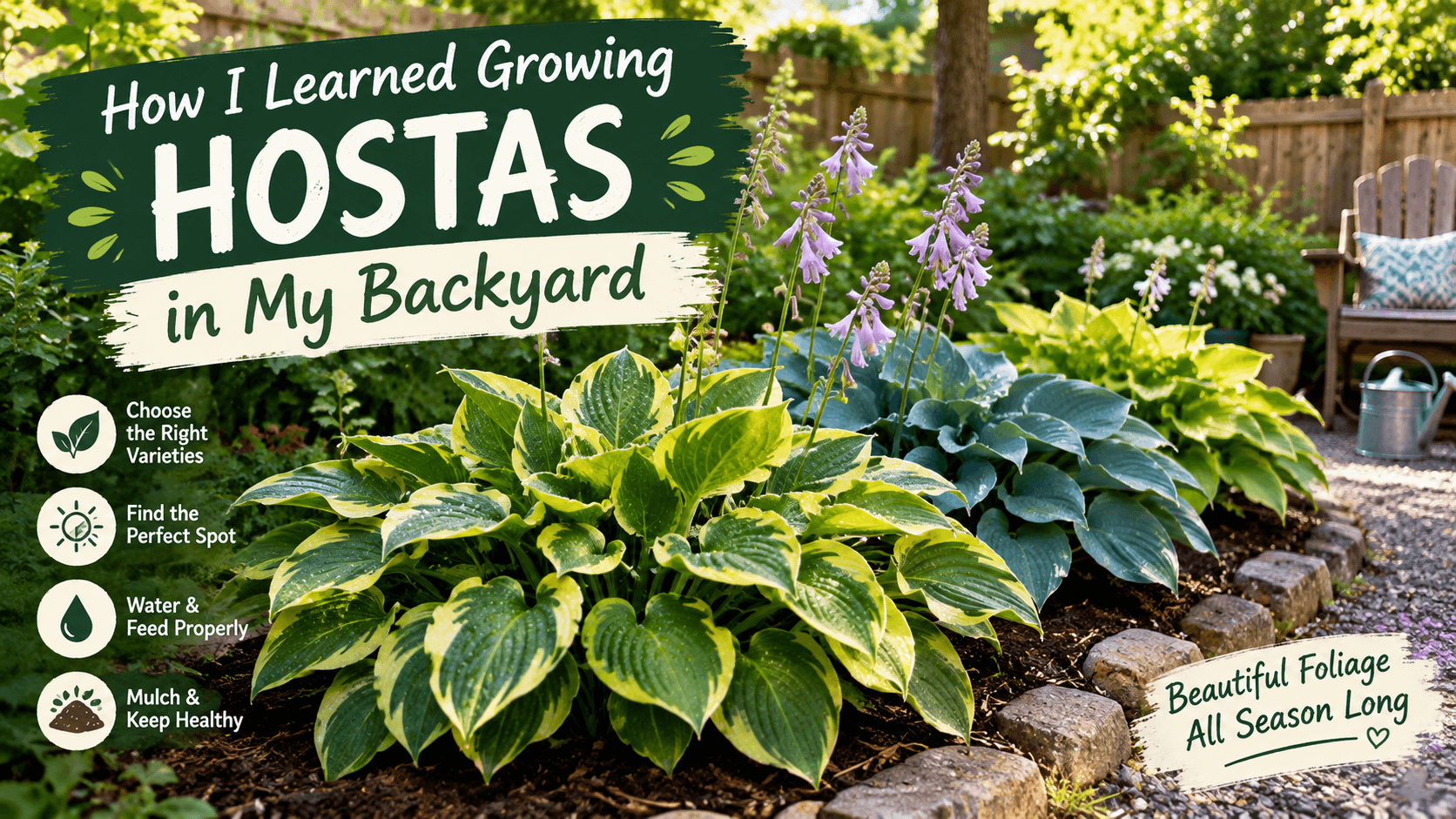
Hostas are perennial plants mostly grown for their beautiful foliage.
They’re famous for handling shade better than many garden plants, although that doesn’t mean every hosta wants a completely dark corner.
Depending on the variety, hosta leaves can be green, blue-green, yellow, cream, or combinations of those colors.
Some leaves are huge and round. Others are smaller and more pointed.
And that’s one thing I really like about them.
You can have several different hostas in one garden and they don’t all look alike.
They also come back year after year in suitable climates, getting larger as the plant matures.
For a backyard homestead, I like plants that don’t need me hovering over them every morning.
Hostas fit that job pretty well.
Where Do Hostas Grow Best?
Here’s where I made my first mistake.
I assumed hostas could handle any amount of shade because everybody calls them shade plants.
Not exactly.
They generally do very well in partial shade, especially when they get protection from the hottest afternoon sun. Some varieties tolerate more morning or filtered sunlight than others.
The amount of sun also depends on the variety.
My simple rule is this:
Morning sun + afternoon shade = usually a very good place to start.
I’ve had good results planting hostas:
- Under mature trees
- Along shady fences
- Beside buildings with afternoon shade
- Around woodland-style garden areas
- Along paths that don’t receive harsh afternoon sun
- In containers on shaded patios
One warning, though.
Don’t plant them directly underneath a tree and assume they’ll automatically be happy.
Trees are greedy.
Their roots can compete with hostas for water and nutrients, especially when the tree is large and established.
I learned this the hard way.
One summer, a hosta under an old tree looked miserable while another one only a few feet away looked fantastic. The difference was basically water availability.
So now I check the soil instead of just blaming the plant.
How Much Sun Do Hostas Need?
This is one of the questions I get asked most.
The short answer is: it depends on the hosta.
Many hostas prefer partial shade, but some varieties can tolerate more sunlight if they receive enough moisture.
Variegated hostas can be a little more sensitive to harsh sun, depending on their leaf pattern.
Blue hostas are another favorite of mine, mostly because those blue-green leaves look fantastic in a shady garden.
But here’s the trick.
If the leaves start looking scorched, pale, or crispy around the edges, take a look at the amount of afternoon sun they’re getting.
Don’t immediately start dumping fertilizer on them.
Sometimes the plant isn’t hungry.
It’s just getting cooked.
My Soil Trick for Healthier Hostas
Hostas aren’t particularly complicated about soil, but they appreciate soil that holds some moisture while still draining properly.
That sounds simple.
And it is.
I like working compost into the planting area before putting in hostas. You don’t need some fancy soil recipe.
Good garden soil plus organic matter is usually a much better starting point than trying to create the world’s most complicated soil mixture.
Here’s what I usually do:
- Loosen the soil around the planting area.
- Mix in some finished compost.
- Dig a hole wider than the root ball.
- Set the hosta at about the same depth it was growing before.
- Fill around the roots with soil.
- Water it well.
That’s it.
I used to think gardening needed twenty steps for everything.
It doesn’t.
Sometimes simple works better.
Watering Hostas Without Overdoing It
Hostas like moisture, especially while they’re getting established.
But wet soil that never drains is a different story.
The goal is consistent moisture, not a swamp.
During hot weather, I check the soil with my finger before watering.
If the surface looks dry but the soil underneath still feels reasonably moist, I don’t automatically water again.
If the soil is dry several inches down, that’s a different story.
Newly planted hostas need more attention than established plants, especially during hot or dry weather.
And if you’re growing hostas underneath trees, check them more often.
Tree roots can suck up a surprising amount of available moisture.
Trust me, I learned that one the annoying way.
Do Hostas Need Fertilizer?
They can benefit from feeding, but I wouldn’t go crazy with it.
Healthy soil containing compost can provide plenty of what the plant needs.
If I use fertilizer, I prefer following the product directions rather than guessing.
One thing I don’t recommend is thinking that more fertilizer automatically means bigger and better hostas.
That’s how you can end up with problems.
I’d rather improve the soil and keep the plant properly watered than constantly throw fertilizer at it.
Your hosta doesn’t need a breakfast, lunch, and dinner of fertilizer.
It’s a plant, not my teenage nephew.
The Biggest Hosta Problem: Slugs
Oh boy.
If you’ve grown hostas, you probably already know what I’m talking about.
You walk outside expecting these beautiful leaves.
Instead, you find holes everywhere.
Then you see the slimy trails.
Slugs.
Hostas are often attractive to slugs, especially in damp, shady gardens.
And my garden has plenty of shady, damp places.
A perfect slug hotel.
One thing that helps me is simply checking plants regularly. If I see slug activity, I deal with it rather than waiting until half the leaves are destroyed.
Keeping garden areas from becoming excessively wet and cluttered can also help reduce hiding places.
Watering early in the day can help foliage dry before nighttime, too.
And don’t ignore the garden floor.
Boards, dense debris, and other damp hiding places can become slug hangouts.
I once moved an old piece of wood near my hostas and found enough slugs underneath to make me question every gardening decision I’d ever made.
You’re gonna laugh, but I actually jumped.
Should You Remove Damaged Hosta Leaves?
Yes, sometimes.
If a leaf is badly damaged, diseased-looking, or mostly destroyed by pests, I usually remove it.
But don’t go crazy with the scissors.
A few holes in a leaf doesn’t mean the whole plant needs to be chopped down.
The leaves are still helping the plant.
I learned this after one particularly aggressive pruning session where I basically turned a decent-looking hosta into a sad little haircut.
Not my finest gardening moment.
Now I remove only what really needs removing.
How Do You Divide Hostas?
One of the nice things about hostas is that mature plants can often be divided to create new plants.
Spring is a common time for division, especially as new growth begins to appear, although timing can vary by climate.
I usually wait until I can clearly see where the plant is growing before trying to divide it.
Here’s my basic approach:
- Dig around the plant carefully.
- Lift the root clump.
- Brush or wash away some soil if needed so you can see the crowns.
- Separate sections with healthy roots and growing points.
- Replant them promptly.
- Water thoroughly.
You don’t have to turn one huge hosta into twenty tiny pieces.
I’d rather have a few strong divisions than a pile of struggling little pieces.
Can You Grow Hostas in Containers?
Absolutely.
This is one of my favorite options for people with small yards or urban gardens.
A container lets you enjoy hostas even if you don’t have a traditional garden bed.
Just remember that container plants usually dry out faster than plants growing in the ground.
Choose a container with drainage holes.
And don’t put it somewhere that gets blasted by hot afternoon sun unless the particular variety can handle it.
I’ve had hostas looking fantastic in containers on shaded areas of the patio.
They’re also useful around outdoor sitting areas where you want greenery without building another garden bed.
Hostas Around a Backyard Homestead
I don’t think of hostas as food-producing plants, obviously.
But that doesn’t mean they don’t belong in a homestead garden.
My backyard isn’t just about vegetables.
I want it to look good too.
Hostas work nicely around:
- Garden paths
- Compost areas
- Chicken runs
- Shady sitting areas
- Trees
- Fences
- Raised garden beds
- Outdoor work areas
They can soften the look of all the practical stuff.
A chicken run isn’t exactly beautiful.
Put some hostas nearby and suddenly it looks a little more intentional.
Just make sure chickens can’t destroy newly planted hostas before they establish.
My Favorite Hosta Growing Tips
After all these years, here’s what I’d tell a friend who’s planting hostas for the first time.
Start with the location, not the plant.
Look at your sunlight first.
Don’t assume more water is always better.
Check the soil.
Watch for slugs early.
It’s much easier to deal with a slug problem before the leaves look like Swiss cheese.
Use compost.
Healthy soil makes almost everything easier.
Don’t overprune.
A damaged leaf isn’t automatically a dead plant.
Give them room.
That tiny hosta at the garden center may look small now, but some varieties get surprisingly large.
And finally, don’t panic if your hosta disappears in winter.
Depending on your climate, hostas can go dormant and die back to the ground.
The first time mine disappeared, I thought I’d killed it.
Then spring came.
There it was.
Like nothing had happened.
Common Hosta Mistakes I’ve Made
If you’re new to growing hostas, here’s where I’d save you some trouble.
Planting in too much hot sun: Some varieties handle sun better than others, but harsh afternoon heat can damage foliage.
Planting in constantly soggy soil: Hostas like moisture, but drainage still matters.
Ignoring slugs: Those little holes aren’t going to magically fix themselves.
Planting too close to tree roots: Trees can compete heavily for water.
Overfertilizing: More fertilizer isn’t automatically better.
Forgetting mature size: Check the variety before squeezing several plants into one tiny bed.
Moving plants constantly: Give them time to establish before deciding they hate the spot.
That last one was definitely me.
I used to move plants around every time they didn’t look perfect.
Sometimes they just needed time.
Hosta FAQ
Are hostas easy to grow?
Yes, I think they’re one of the easier perennial plants for a shady backyard. Give them suitable light, decent soil, enough moisture, and keep an eye on pests.
Do hostas come back every year?
Hostas are perennial plants and typically return after winter dormancy in climates where they’re hardy. They may disappear above ground during winter and return when conditions are right.
Can hostas grow in full shade?
They can tolerate quite a lot of shade, but “full shade” can mean different things. Some light or filtered sunlight can be helpful. Extremely dark locations may result in slower growth or less vigorous plants.
What I’d Do If I Were Planting Hostas Again
If I was starting from scratch tomorrow, I wouldn’t buy ten different varieties.
I’d start with two or three that I really liked.
I’d find a spot with morning light and afternoon protection, improve the soil with compost, mulch lightly, and watch how the plants respond.
Then I’d add more.
That’s really how I built most of my garden.
Not from some perfect master plan.
I tried something, watched what happened, screwed it up a little, and tried again.
That’s homesteading for you.
And honestly, that’s why I still enjoy it.
Hostas aren’t going to feed your family like tomatoes or potatoes, but a good backyard garden isn’t only about food. It’s about creating a place that’s useful, comfortable, and enjoyable to spend time in. If you give your hostas the right spot and pay attention to moisture and slugs, they can reward you with years of beautiful foliage.
If you’ve got a weird hosta problem in your backyard, leave a comment and tell me what you’re seeing. I may not have the perfect answer, but I’ve probably messed it up myself at least once.