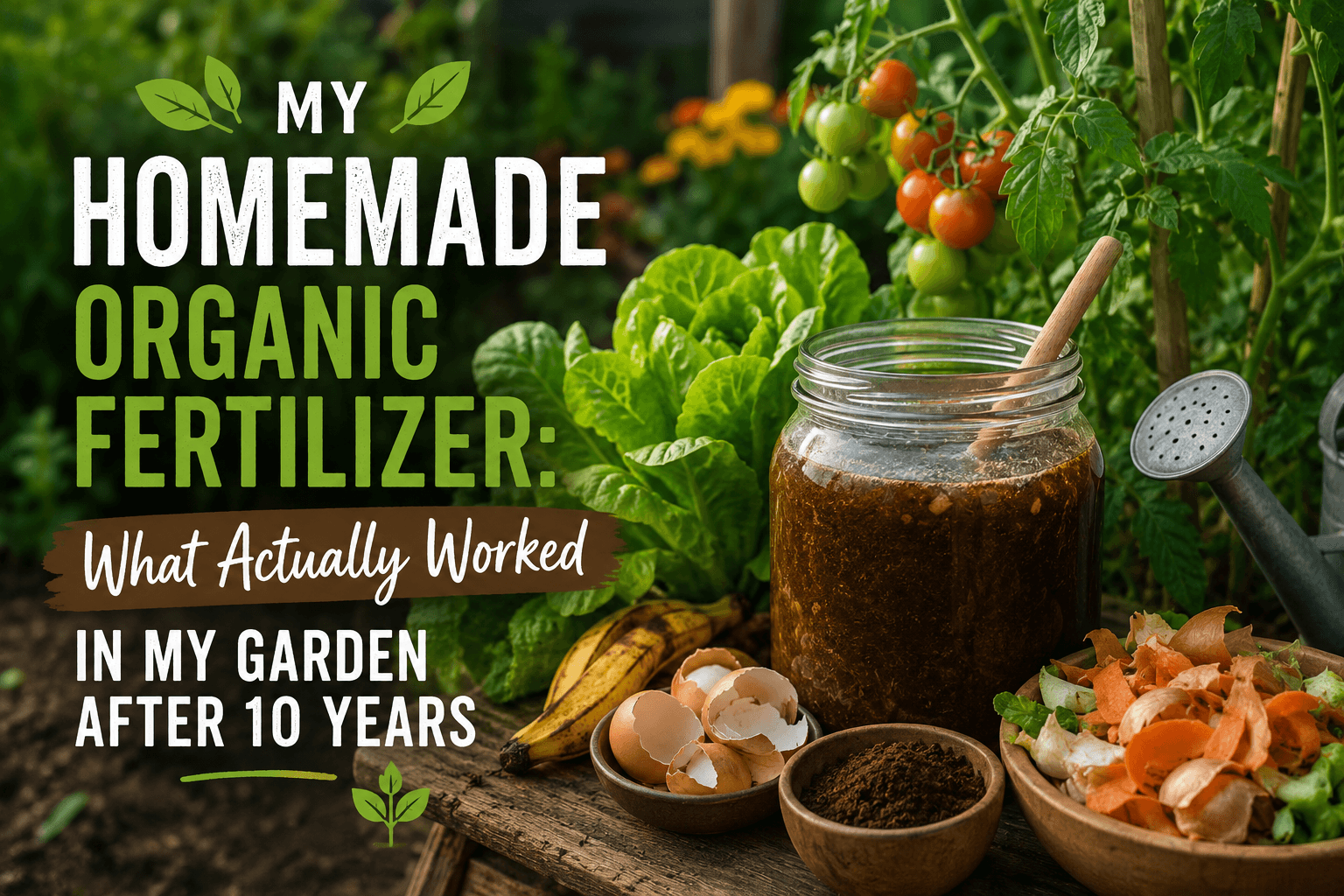
I’ve made a lot of homemade organic fertilizer over the years. Some of it worked great. Some of it smelled so bad my wife asked what had died in the backyard. And a few experiments… well, let’s just say the plants were not impressed.
When I first started growing vegetables, I thought fertilizer had to come in a fancy bag with a long list of ingredients. I was wrong. If you have a backyard, a few containers, some kitchen scraps, chickens, or even just a small urban garden, you probably already have things you can turn into useful plant food.
After more than 10 years of homesteading, I’ve learned that the best fertilizer is often the simple stuff. Compost, aged manure, coffee grounds, grass clippings, and a few other leftovers can help build healthy soil without spending much money.
And today I’ll show you what I actually use, what I stopped using, and a couple mistakes you definitely don’t need to repeat.
Why I Started Making My Own Organic Fertilizer
The biggest reason was simple: money.
When you have a vegetable garden, fertilizer adds up. One bag here, another bottle there, and suddenly you’ve spent more than you planned.
But there was another reason I started making homemade fertilizer. I wanted to know exactly what was going into my garden.
My backyard garden is not huge, but I grow tomatoes, peppers, herbs, greens, squash, and whatever else I can squeeze into the empty spots. I also use containers, which dry out and lose nutrients faster than garden soil.
So I started looking around the homestead.
Kitchen scraps? Useful.
Chicken manure? Very useful, but only when handled correctly.
Leaves? Gold.
Compost? Probably my favorite thing in the whole garden.
The funny part is that most of these things were already going into my trash or compost pile.
Homemade Organic Fertilizer Starts With Good Soil
Here’s something I learned the hard way: fertilizer can’t fix terrible soil overnight.
One year, I got excited and dumped a bunch of fertilizer around my tomato plants because they looked weak.
A week later, they looked even worse.
Turns out I was trying to feed plants that had poor soil, inconsistent watering, and not enough organic matter. The fertilizer wasn’t the magic answer.
Now I focus on the soil first.
I add compost every season. I leave some chopped leaves around plants as mulch. I avoid disturbing the soil more than necessary, and I try to keep the ground covered.
Healthy soil has living organisms, organic matter, minerals, air, and moisture. Homemade organic fertilizer works much better when you’re feeding that whole system instead of trying to force a plant to grow faster.
1. Compost Is My Number One Homemade Fertilizer
If you only make one thing, make compost.
Seriously.
My compost pile isn’t fancy. It’s basically a place where I put vegetable scraps, leaves, grass clippings, weeds that haven’t gone to seed, and other suitable organic material.
I try to keep a mixture of “green” and “brown” materials.
Green materials include things like:
- Vegetable scraps
- Fresh grass clippings
- Fresh plant material
- Coffee grounds
Brown materials include:
- Dry leaves
- Straw
- Shredded cardboard
- Dry garden debris
I don’t worry about making the perfect scientific recipe. I just avoid making the pile completely wet or completely dry.
Every so often I turn it with a pitchfork.
When the compost becomes dark, crumbly, and smells like soil, I know it’s ready.
I mix it into garden beds before planting and add a little around established plants during the growing season.
For me, compost is the foundation of organic gardening.
2. Chicken Manure — Powerful Stuff, So Don’t Get Crazy
If you keep chickens, you have access to one of the best free soil amendments around.
But there’s a big warning here.
Fresh chicken manure can be too strong for plants.
I learned this one the dumb way.
Years ago, I put fresh chicken manure around some young plants thinking I was giving them a nice organic boost.
Nope.
The plants got stressed, and I learned that fresh manure should generally be composted or aged before using it around growing plants.
Now I mix chicken manure with bedding and add it to my compost pile.
Once it has broken down properly, I use the finished compost to improve my garden soil.
It’s cheap, easy, and makes use of something the chickens are producing every day anyway.
Just wash your hands after handling manure and be sensible about where and how you use it, especially around food crops.
3. Coffee Grounds Are Useful — But Don’t Dump a Mountain on Your Plants
Coffee grounds have become one of those garden tips that gets repeated everywhere.
I use them, but not the way I used to.
I once dumped a thick layer of coffee grounds around a plant because I figured more must be better.
It wasn’t.
Now I add used coffee grounds to my compost rather than piling them directly around plants.
They become part of the organic matter in the finished compost.
If you want to use coffee grounds directly, keep the layer light and mix them into the soil instead of creating a thick mat.
Your garden doesn’t need to look like somebody dumped a coffee shop on it.
4. Grass Clippings Can Feed Your Garden
Grass clippings are another free resource.
After mowing, I sometimes use a thin layer of grass clippings as mulch around vegetables.
But there’s an important rule: don’t pile fresh grass clippings several inches thick around plants.
They can become wet, compacted, and smelly as they break down.
A thin layer works much better.
Also, be careful about grass clippings from lawns treated with herbicides or other chemicals. If you don’t know what was used on the lawn, I’d leave those clippings out of the vegetable garden.
I’d rather be safe than sorry.
5. Banana Peels: What I Actually Do With Them
Banana peels are another popular homemade fertilizer idea.
You’ll see people recommending banana peel water all over the internet.
I’ve tried it.
Honestly, I don’t consider it a miracle fertilizer.
These days, I usually put banana peels in the compost instead.
They break down and become part of the finished organic matter.
If you have a compost pile, there’s no reason to make everything complicated.
Banana peel goes in.
Compost does its job.
Garden gets the finished compost.
Simple.
6. Eggshells Take Time
I save eggshells from our kitchen, especially when we have a lot of eggs.
I rinse them, let them dry, and crush them before adding them to the compost or garden.
But here’s the thing: eggshells aren’t some instant plant booster.
They break down slowly.
So I think of them more as a long-term soil amendment than a quick fertilizer.
If you’re adding eggshells, crush them pretty fine. Whole shells can take a very long time to disappear.
And don’t expect a tomato plant that looks hungry today to suddenly become healthy tomorrow because you sprinkled eggshells around it.
Gardening doesn’t work that fast.
7. Weed Tea — My Smelly Little Garden Experiment
This one is not for everybody.
I sometimes make a simple weed tea using healthy weeds from the garden.
I put weeds in a bucket, cover them with water, and let the mixture sit for several days.
And yes, it smells.
Badly.
The first time I opened the bucket, I nearly fell backward.
The idea is to extract some nutrients from the plant material into the water. I dilute the finished liquid before using it around plants.
But I don’t make this my main fertilizer.
It’s more of a supplemental thing.
And never use weeds that may have been treated with herbicides or plants you suspect contain harmful chemicals.
Also, don’t use weed tea made from invasive or seed-heavy weeds if you’re going to put the solids back into your compost.
You don’t want to create next year’s weed problem.
What About Epsom Salt?
This is another one where I learned to slow down.
A lot of garden advice says Epsom salt can make plants greener and improve everything from tomatoes to peppers.
But it’s not a universal fertilizer.
Epsom salt provides magnesium and sulfur, but adding nutrients your soil doesn’t need isn’t automatically helpful.
These days, I don’t sprinkle Epsom salt around plants just because someone online told me to.
If I think there’s a nutrient problem, I’d rather test the soil first.
That little soil test can save you from throwing random things around the garden.
My Simple Homemade Organic Fertilizer Routine
After years of trying different things, I’ve made my routine pretty boring.
And boring is good when it works.
Before planting, I add finished compost to the garden beds.
During the season, I mulch with suitable organic materials such as dry leaves or a thin layer of grass clippings.
Kitchen scraps go into the compost.
Chicken bedding and manure go into the compost pile.
Eggshells go into the compost too.
That’s most of it.
I don’t make ten different fertilizer recipes every weekend.
I’d rather spend that time actually growing food.
Homemade Fertilizer for Container Gardens
Container gardening is a little different.
Pots have limited soil, and nutrients can wash out with repeated watering.
For my containers, I like starting with good-quality potting mix and plenty of mature compost.
Then I watch the plants.
If leaves become pale, growth slows, or the plant simply doesn’t look right, I don’t immediately dump fertilizer into the pot.
First I check:
- Is the plant getting enough sunlight?
- Is the soil staying too wet?
- Is it drying out too quickly?
- Are the roots crowded?
- Are pests damaging the leaves?
- Is the container large enough?
Sometimes what looks like a fertilizer problem is actually a watering or root problem.
That little checklist has saved me from killing more than one plant.
Three Mistakes I Don’t Make Anymore
First mistake: More fertilizer means more growth.
Nope.
Too much fertilizer can damage plants and create other problems.
Second mistake: Fresh manure is ready to use.
Not always. Fresh manure can be too strong and can create food-safety concerns. Composting or properly aging manure is the safer approach.
Third mistake: Every homemade fertilizer recipe is automatically good.
Also nope.
Natural doesn’t automatically mean harmless.
I don’t pour random kitchen mixtures onto my vegetables anymore. I keep it simple and use materials I understand.
Frequently Asked Questions
Can homemade organic fertilizer replace store-bought fertilizer?
Sometimes, but not always.
A healthy garden can get a lot from compost and organic materials, but specific nutrient deficiencies may require a targeted amendment. Soil testing is the best way to know what your soil actually needs.
What is the easiest homemade organic fertilizer for beginners?
I’d start with compost.
You don’t need fancy equipment. Start small with kitchen scraps, dry leaves, and other suitable organic materials. Give it time, moisture, and occasional turning.
Can I use homemade fertilizer on vegetables?
Yes, but use common sense.
Only use safe, properly composted organic materials, especially around food crops. Avoid fresh manure directly on edible plants and don’t use materials that may contain herbicide residues or other contaminants.
One Last Thing I Learned
After 10 years of growing food, I don’t chase the latest miracle fertilizer anymore.
I’ve killed plants with too much of a good thing. I’ve made buckets of fertilizer that smelled absolutely horrible. I’ve bought products I didn’t really need.
What works best for me is much simpler.
Build the soil. Compost what you can. Reuse what makes sense. Watch your plants. And don’t be afraid to admit when something isn’t working.
That’s really what homemade organic fertilizer is about for me. It’s not about making the perfect recipe. It’s about turning things you already have into something useful for your backyard garden and becoming a little more self-sufficient along the way.
If you’ve got a weird fertilizer experiment that worked — or completely failed — tell me about it. I’ve probably tried something just as strange myself.