
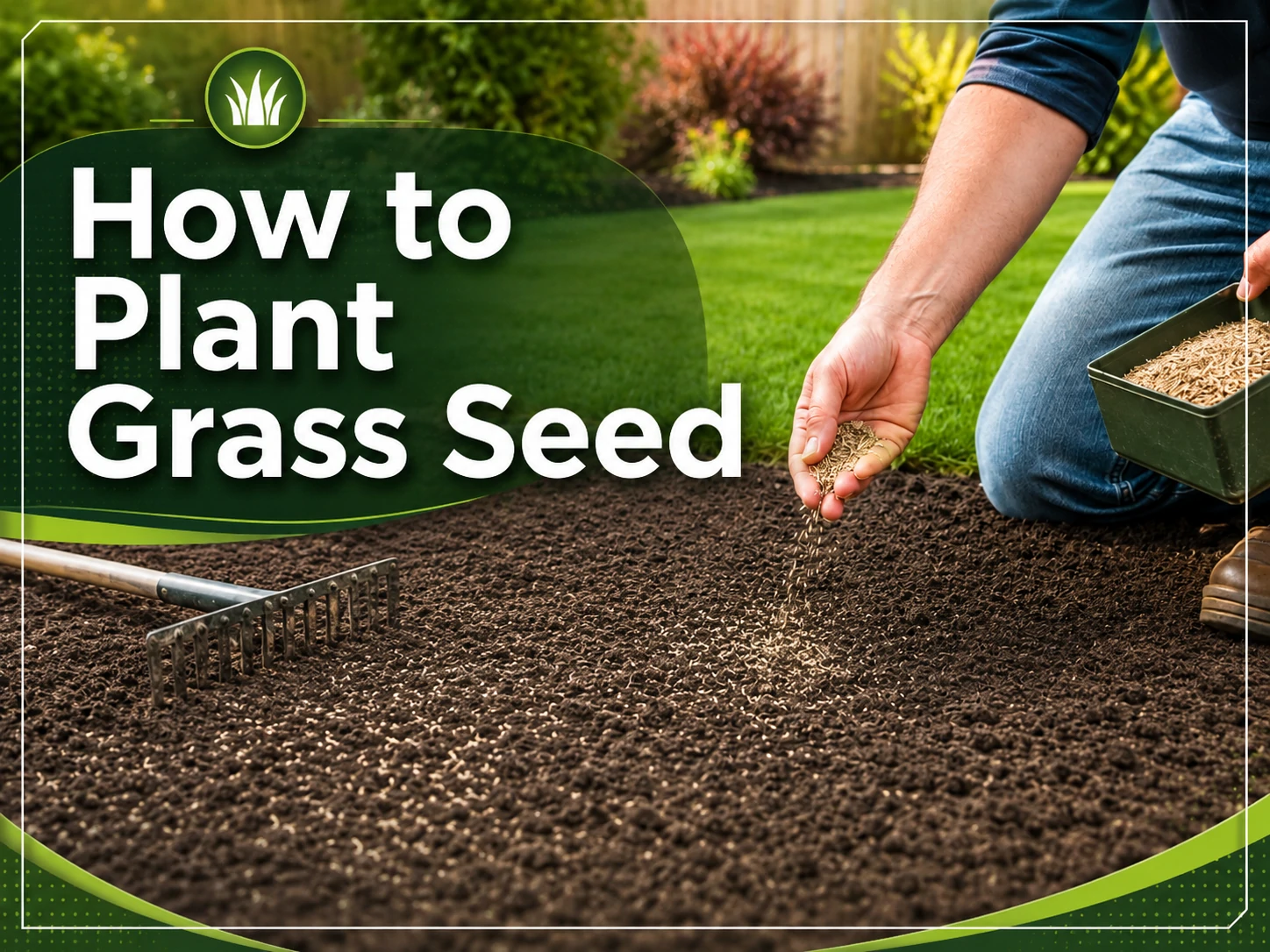
I used to think learning how to plant grass seed was about throwing some seed on the ground, watering it a few times, and waiting for a green lawn.
Yeah… I was wrong.
The first lawn I tried to fix looked great for about two weeks. Then the bare spots came back, weeds showed up, and somehow I ended up with more grass growing around the edges than where I actually wanted it.
After years of messing with my backyard, reseeding worn-out patches, fighting compacted soil, and learning when NOT to plant, I finally figured out a simple routine that works pretty darn well.
And the funny thing is, you don’t need fancy equipment.
You need decent seed, decent soil, moisture, and a little patience.
So if you’re trying to figure out how to plant grass seed without wasting bags of seed and your whole weekend, here’s what I’d do.
First, Don’t Throw Grass Seed on Bad Soil
This was probably my biggest mistake.
I’d see a thin patch in the yard and immediately grab the grass seed.
I’d sprinkle it everywhere.
Then I’d water it.
Nothing.
Or worse, a few little grass blades would show up and disappear a week later.
The problem wasn’t always the seed.
It was the soil.
Grass seed needs good contact with the soil to get started. If you’re throwing seed over hard, compacted dirt covered with dead grass, leaves, or thatch, you’re making the seed’s job much harder.
So before planting, I walk around the area and look at what I’m actually dealing with.
If the soil is hard enough that I can’t push my finger into it, I loosen it.
If there’s a thick layer of dead grass, I rake it out.
If the ground is mostly bare dirt, I’ll usually add a thin layer of good-quality soil or compost.
Don’t bury the seed under a mountain of dirt, though.
Grass seed is small. It doesn’t need to be planted deep.
Pick the Right Time to Plant
This is another one I learned the hard way.
I once planted grass seed right before a stretch of hot weather because I was impatient.
Bad idea.
I spent days watering the lawn, watching the soil dry out, then watering again. The little seedlings didn’t stand much of a chance.
The best planting time depends on where you live and what type of grass you’re growing.
For cool-season grasses, early fall is often a great time because the soil is still warm but the air is getting cooler.
Spring can work too, but you’ll usually have more weed competition and eventually hotter weather.
For warm-season grasses, late spring into early summer is generally the better window.
The important thing is not just the calendar.
Look at your weather.
You want enough time for the grass to establish before extreme heat, freezing temperatures, or a long dry spell makes things difficult.
What Grass Seed Should You Buy?
Here’s where the garden center can get confusing.
You’ll see bags labeled for shade, sun, drought, high traffic, quick green-up, and about fifteen other things.
Don’t just grab the cheapest bag.
I did that once.
The grass came up unevenly and looked completely different from the existing lawn. It wasn’t horrible, but it sure wasn’t pretty.
Start by figuring out how much sunlight your yard gets.
If the area gets full sun most of the day, choose a variety or mix made for sunny conditions.
If you’re planting under trees or beside the house, look for something that tolerates shade.
And if you have kids, dogs, or people walking across the same area all the time, you’ll want grass that can handle traffic.
For a backyard homestead, I also like thinking about maintenance.
I’m not interested in a lawn that needs babying every single day.
I want something that can survive normal backyard life.
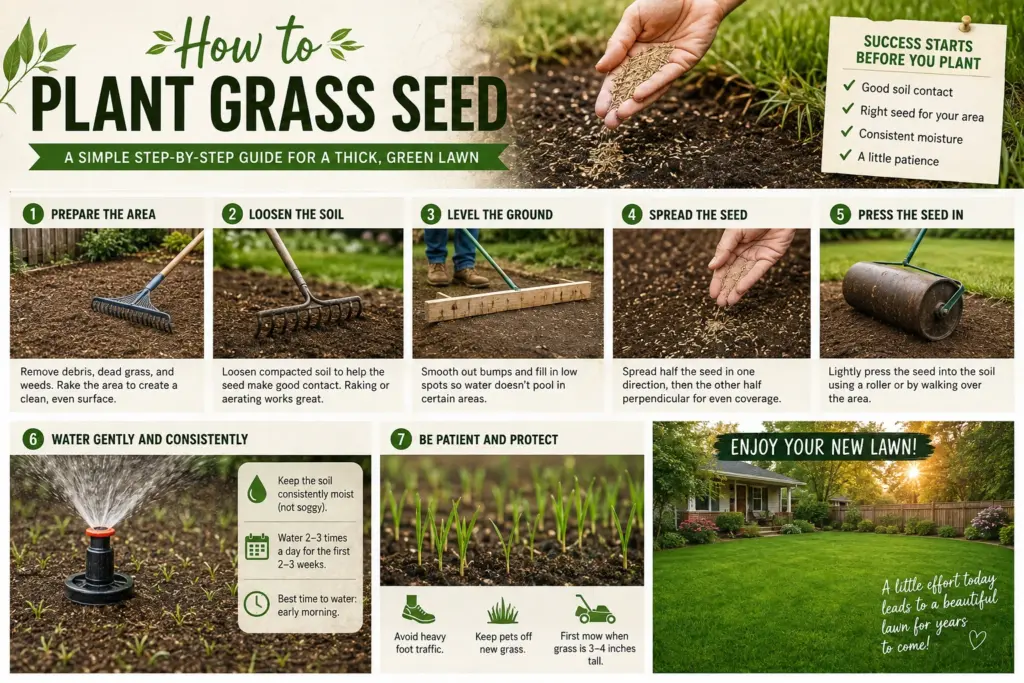
How I Prepare the Ground Before Planting Grass Seed
Once I know where the seed is going, I clean up the area.
Here’s my basic routine:
- Remove sticks, leaves, rocks, and dead grass.
- Rake away thick thatch.
- Loosen compacted soil.
- Level obvious bumps and holes.
- Add a thin layer of compost or quality topsoil if needed.
- Rake the surface smooth.
That’s really it.
You don’t need to turn your backyard into a construction site.
If you’re repairing a small bare patch, a hand rake is usually enough.
For a larger area, you might need a garden rake, dethatcher, or even a core aerator.
One thing I wouldn’t skip is making sure the seedbed isn’t full of huge clumps.
You want the soil reasonably loose and level so the tiny seeds have somewhere to settle.
How to Plant Grass Seed by Hand
This is probably the easiest part.
I usually divide the seed into two portions.
I spread the first portion going in one direction.
Then I spread the second portion going across the first direction.
Why?
Because it helps me avoid those embarrassing stripes where one side of the lawn is thick and the other side looks like a desert.
Don’t dump the whole bag in one spot and try to spread it from there.
Take your time.
If you’re covering a large area, a broadcast spreader makes things much easier.
Follow the seed bag’s recommended application rate. More seed isn’t always better.
That’s another mistake I made.
I figured if some seed was good, twice as much must be better.
It wasn’t.
Too much grass growing in one small area can create competition for water and nutrients.
Get Good Seed-to-Soil Contact
After spreading the seed, I gently rake the area.
Very gently.
You’re not trying to bury it.
You just want some of the seed to make contact with the soil.
You can also press the seed into the soil with a lawn roller, especially on larger areas.
For a little backyard patch, I’ve simply used the back of a rake or lightly walked over the area.
Don’t stomp around like you’re packing concrete.
We’re planting grass, not building a driveway.
Watering Grass Seed Without Killing It
Here’s where people usually get frustrated.
Grass seed needs consistent moisture while it’s getting started.
That doesn’t mean flooding the yard.
I used to water way too heavily.
I’d turn the hose on and create little rivers through the soil.
Guess what happened?
The seed moved downhill.
I ended up with a weird green line at the bottom of the patch.
Now I use a gentle spray.
The goal is to keep the upper layer of soil consistently moist without washing the seed away.
Depending on the weather, that can mean watering lightly and more frequently during the early stage.
As the grass grows, you can gradually reduce the frequency and encourage deeper root growth.
And keep an eye on the weather.
If Mother Nature gives you a good soaking rain, you probably don’t need to stand there with a hose five minutes later.
The First Few Weeks Are the Hardest
This is the part where patience matters.
You might see tiny green shoots and think you’re done.
You’re not.
Those little seedlings are fragile.
Try to keep people and pets off the area as much as possible.
I learned this after watching my dog run straight through a freshly seeded patch.
He didn’t care.
He was just happy to be outside.
I wasn’t.
If you have chickens, that’s another problem.
Chickens see freshly worked soil and basically think you’ve opened a buffet.
If you’re growing grass around a backyard chicken area, protect the freshly seeded section until the grass gets established.
A temporary fence can save you a lot of frustration.
Don’t Forget About Weeds
Here’s something nobody likes hearing.
When you disturb soil, weeds often show up too.
You might plant grass seed and then suddenly think, “Well, I planted grass. Why is everything else growing?”
Because weeds are opportunists.
They were waiting.
The best thing you can do is get the grass established and maintain healthy soil and watering habits.
Don’t start throwing random weed killers around newly seeded grass without checking the product instructions. Some products can damage young grass.
I learned to stop trying to fix everything at once.
Sometimes the best move is simply giving the grass a chance to compete.
What If Your Backyard Soil Is Terrible?
If you’ve got rock-hard clay, sandy soil, or ground that’s been compacted by years of foot traffic, don’t expect grass seed to magically fix it.
I’ve had areas where water would sit on top after rain.
Other spots drained so quickly they seemed dry ten minutes after watering.
That’s when soil improvement becomes more important.
Adding organic matter can help improve the structure of many garden soils, although the exact approach depends on what you’re starting with.
A simple soil test can also tell you things you can’t see just by looking.
And don’t assume you need a truckload of fancy soil.
Sometimes improving the top layer gradually is more practical than completely rebuilding the yard.
My Biggest Grass-Planting Mistakes
I’ve made plenty.
Here are the ones I wouldn’t repeat.
Planting at the Wrong Time
I planted before hot weather and spent half my summer fighting to keep the seedlings alive.
Watering Too Hard
A hose can turn your carefully prepared seedbed into a tiny mudslide.
Use a gentle spray.
Using Cheap Seed Just to Save Money
The cheapest bag isn’t always the cheapest option if half of it never establishes.
Walking on Fresh Seed
Every shortcut through the newly seeded area can disturb the soil and seed.
Use another route for a while.
Giving Up Too Soon
This one is probably the biggest.
Grass doesn’t always appear overnight.
Give it time.
Can You Plant Grass Seed Over Existing Grass?
Yes, sometimes overseeding is exactly what your lawn needs.
If the existing grass is thin but basically healthy, you don’t necessarily need to tear everything out.
I usually mow the lawn fairly short, rake out dead material, loosen the surface, spread the seed, and keep it watered.
The new seed needs a chance to reach the soil.
If you’ve got mostly weeds, bare dirt, severe compaction, or a completely failed lawn, though, overseeding might not solve the bigger problem.
Sometimes you’ve got to bite the bullet and start over.
I’ve done both.
How Long Does Grass Seed Take to Grow?
This depends heavily on the grass type, temperature, moisture, and soil conditions.
Some grasses can start showing signs of germination fairly quickly.
Others take longer.
Don’t panic because your neighbor’s lawn turned green before yours.
Different grass varieties behave differently.
What matters is whether the conditions are right.
Keep the soil moist, protect the area, and watch for progress.
Once the grass is established enough to mow, don’t scalp it.
Use the recommended mowing height for your grass type and avoid removing a huge amount of the blade at once.
A Simple Routine I Use
If I were helping a friend plant grass seed this weekend, I’d tell him to keep it simple.
First, clean up the area.
Then loosen the soil.
Add a little compost or topsoil if the ground needs help.
Spread the right grass seed.
Rake it lightly.
Press it into the soil.
Water gently.
Then leave it alone as much as possible.
That’s the part people don’t like.
You can’t stare at grass and make it grow faster.
Trust me, I’ve tried.
Mini FAQ
Can I plant grass seed without tilling the whole yard?
Absolutely.
For small bare patches or overseeding, you usually don’t need to tear everything up. Prepare the surface, loosen compacted areas, and make sure the seed can contact the soil.
How often should I water new grass seed?
The goal early on is consistent moisture in the seed zone, not standing water. Weather, soil, and grass type all matter, so adjust your watering instead of following a rigid schedule.
Can I use compost when planting grass seed?
A thin layer of finished compost can be useful when improving the seedbed, especially if the existing soil needs organic matter. Don’t bury the grass seed under a thick layer, though.
Final Thoughts
Learning how to plant grass seed isn’t really about having the fanciest lawn equipment or buying the most expensive products.
It’s about getting the basics right.
Prepare the soil. Choose grass that actually fits your yard. Plant at a sensible time. Keep the seed moist. Protect it while it gets established.
And don’t make the mistake I made of trying to rush everything.
I’ve learned that the backyard usually tells you what it needs if you slow down and pay attention.
Some spots need better soil. Some need more sunlight. Some just need a little grass seed and a chance.
If you’re getting ready to plant your own lawn, start small if you’re nervous. Fix one patch, see what works, then tackle the bigger area.








1 thought on “How to Plant Grass Seed: What Actually Worked in My Backyard After Years of Trial and Error”