
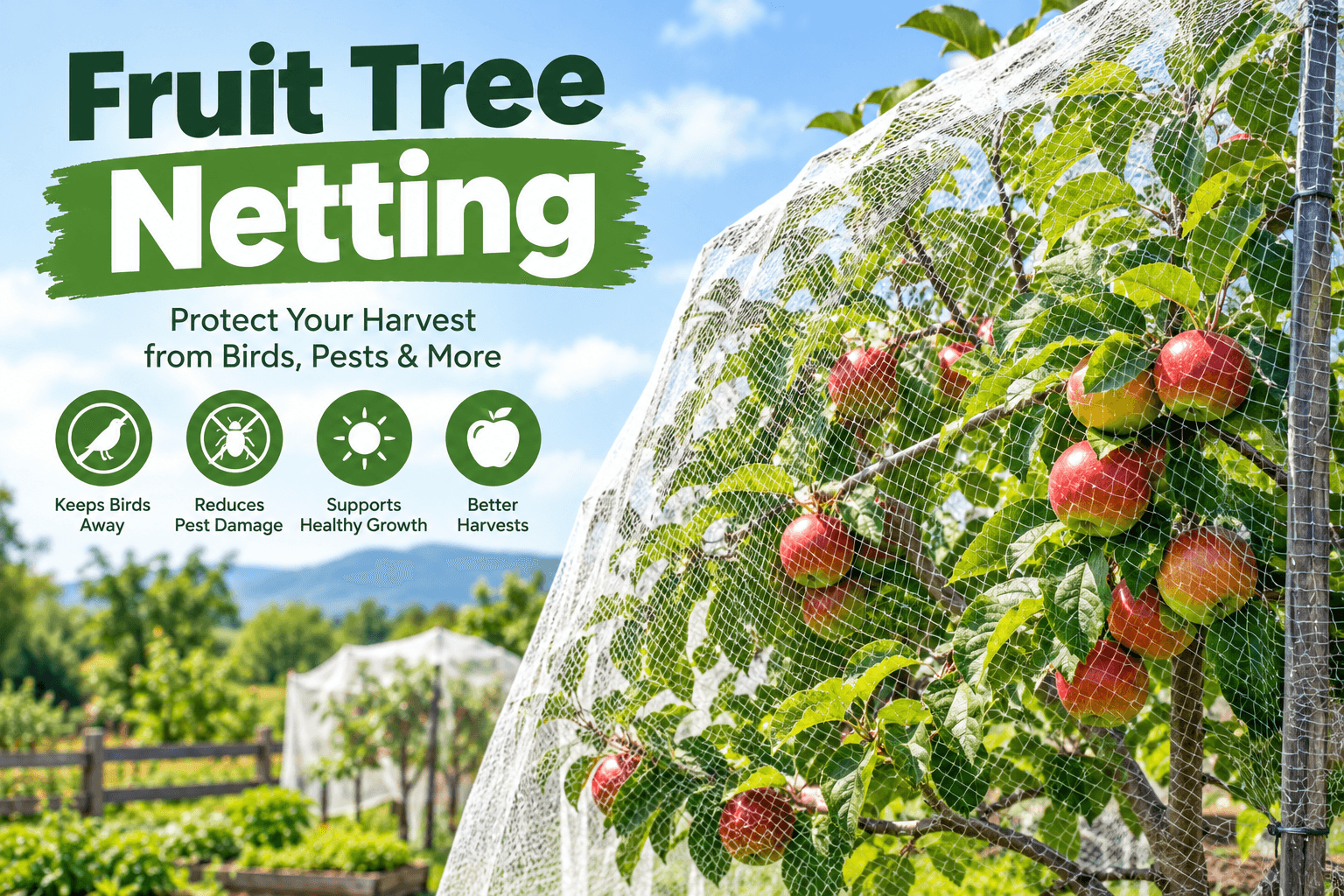
Fruit Tree Netting . The first year I had a decent crop of peaches, I was pretty proud of myself. I’d spent months watering, pruning, feeding the tree, watching for bugs, and generally fussing over it like it was one of my kids.
Then one morning I walked outside and found three birds having breakfast.
They weren’t eating a little bit either. They were going after the ripe peaches like they had a personal invitation.
That was the summer I learned why fruit tree netting is one of those simple homestead supplies that can save you a whole lot of frustration.
I used to think putting netting over a fruit tree would be a big, ugly job. Turns out, it doesn’t have to be. With the right size netting and a little patience, you can protect apples, peaches, cherries, plums, berries, figs, and other backyard fruit from birds and other hungry visitors.
But there are a few mistakes I made along the way.
So let me show you what I do now.
Why Fruit Tree Netting Is Worth Using
Growing fruit takes time.
You can’t plant a peach tree on Monday and expect a basket of peaches on Friday. You wait through seasons, deal with weather, prune branches, water during dry spells, and hope the squirrels don’t decide your tree belongs to them.
Then just when the fruit starts looking perfect, birds show up.
That’s where fruit tree netting comes in.
Good netting creates a physical barrier between your fruit and many pests. It can be especially useful for birds, which can quickly damage soft or ripe fruit.
And here’s something I learned the hard way:
Don’t wait until the fruit is ripe to install it.
By then, the birds may already know exactly where the food is.
I like to get the netting ready before the fruit becomes attractive.
What Kind of Fruit Tree Netting Should You Buy?
This is where I made my first dumb purchase.
I bought a cheap roll of netting that had holes so large I honestly wondered what I was supposed to be protecting the tree from.
A determined bird could walk right through it.
For most backyard fruit trees, I prefer a strong, UV-resistant garden netting with openings small enough to prevent the birds you’re dealing with from reaching the fruit.
The exact mesh size depends on the pest and crop, so don’t just grab the first net you see.
Also, don’t buy something so flimsy that it tears the first time you pull it over a branch.
Trust me on that one.
You want something you can use for more than one season if you take care of it.
Should You Cover the Whole Tree?
Usually, yes.
This sounds obvious, but I’ve seen people drape netting over the top of a tree and leave the bottom wide open.
That’s basically putting a screen door on a house with no walls.
Birds can simply fly underneath.
The netting needs to create a barrier around the fruiting area, and the bottom should be secured so animals can’t crawl underneath.
For a small dwarf fruit tree, this is pretty easy.
For a big mature tree, things get more complicated.
And honestly, if you’ve got a huge old apple tree, I wouldn’t try wrestling a giant piece of netting over it by yourself.
I did that once.
The net got stuck in the branches, I got stuck in the net, and for about ten minutes I looked like a man who had lost a fight with a fishing net.
Not my finest gardening moment.
How I Install Fruit Tree Netting
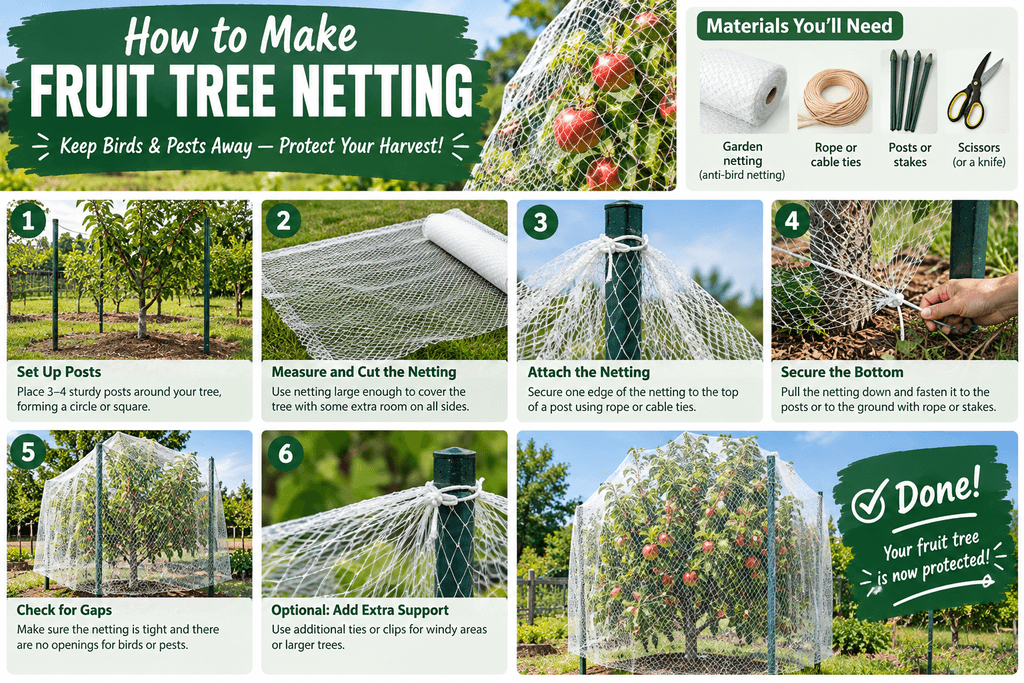
Here’s the simple method I use now.
1. Check the tree first
Before putting on the netting, look for dead branches, broken limbs, or obvious pest problems.
I also check that the fruit is developing normally.
Don’t cover a tree that’s already badly stressed and expect netting to fix the problem.
2. Choose the right time
I like installing netting when fruit is developing but before it becomes fully ripe and attractive to birds.
This timing can vary depending on the fruit and your local pest pressure.
If birds are already attacking the tree, don’t wait around.
3. Give yourself plenty of netting
This is another lesson learned the hard way.
Measure the tree, then allow extra material.
You need enough netting to reach around the sides and underneath the canopy without stretching it tight like a drum.
If it’s too small, you’ll fight with it the entire time.
4. Use a support if needed
For smaller trees, you may be able to drape the netting directly over the canopy.
For larger trees or delicate branches, a simple frame or support structure can make things much easier.
PVC pipe, garden hoops, poles, or a lightweight homemade frame can work depending on the size of your tree.
The goal is to keep the netting away from the fruit as much as practical.
5. Secure the bottom
This part matters.
Use clips, landscape pins, weights, or another suitable method to close the gap around the bottom.
Walk around the entire tree afterward.
Look for openings.
A bird only needs one easy entrance.
Don’t Let the Netting Sit Directly on Everything
One of my favorite setups is a simple frame over a smaller fruit tree.
The netting sits over the frame instead of directly on the branches.
Why do I like this?
First, it’s easier to remove.
Second, birds are less likely to reach fruit through the mesh.
Third, the net doesn’t get tangled in every little branch.
And believe me, removing tangled netting after harvest is not something you want to do when you’re tired and it’s 95 degrees outside.
For berries and small plants, hoops work especially well.
For a young apple, peach, or cherry tree, you can build a lightweight frame around the canopy.
You don’t need to make it beautiful.
It’s a fruit tree, not a guest house.
Fruit Tree Netting and Pollination
This is something beginners sometimes overlook.
If you’re covering a flowering fruit tree, you need to think about pollination.
Bees and other pollinators need access to flowers on many fruit crops. If you completely enclose a tree before pollination has happened, you could interfere with that process.
So don’t automatically throw netting over a tree the moment you see the first flower.
Understand the needs of the particular fruit tree you’re growing.
In my garden, I pay attention to flowering first, then fruit development, and then I use netting when protection is actually needed.
Timing makes a difference.
Can Fruit Tree Netting Stop Squirrels?
Sometimes it helps.
But I’m going to be honest here. Squirrels are a different kind of crazy.
A bird sees a barrier and thinks, “Nope.”
A squirrel looks at the same barrier and thinks, “Challenge accepted.”
For squirrels, you need stronger protection and very careful installation. They can chew through some materials and find surprisingly small gaps.
If squirrels are your main problem, choose netting specifically designed for animal exclusion and make sure it is securely supported.
For very determined animals, a more rigid barrier may be better than soft bird netting.
Watch Out for Small Animals Getting Trapped
This is probably the most important part of the whole article.
Never put up fruit tree netting and forget about it.
Check it regularly.
Birds, snakes, small mammals, and other wildlife can become tangled in poorly installed netting.
Use netting that is easy to see and manage, keep it properly secured, and inspect it frequently.
If you find an animal tangled in the net, don’t yank the net aggressively. You can injure the animal.
For larger or dangerous wildlife, contact local wildlife rescue or animal-control professionals for help.
I also prefer visible netting because it makes the barrier easier for both me and wildlife to see.
What About Bees and Other Pollinators?
This is another reason I don’t cover everything blindly.
Bees are doing important work in the garden.
If your fruit tree needs pollination, make sure your protection strategy doesn’t prevent pollinators from reaching the flowers.
Once the flowering period has passed and fruit is developing, netting becomes much more useful for protecting the crop.
This is especially important if you’re trying to build a backyard garden that works with nature instead of constantly fighting it.
That’s the whole permaculture idea I try to follow.
Protect the crop, but don’t create a problem for everything else.
My Biggest Fruit Tree Netting Mistakes
I’ve made plenty.
Here’s what I’d do differently if I were starting again.
I wouldn’t buy the cheapest netting.
Cheap netting can tear, stretch, tangle, and become a nightmare.
I wouldn’t wait until the fruit is ripe.
Once birds discover your tree, they’re going to keep checking it.
I wouldn’t install it alone on a large tree.
Get another person to help. It’s much easier.
I wouldn’t leave loose edges.
Always walk around the entire tree after installation.
I wouldn’t forget about it.
Check the net regularly for damage or trapped wildlife.
That last one is important.
Can You Reuse Fruit Tree Netting?
Yes, if it’s still in good condition.
At the end of the season, I carefully remove the netting instead of just pulling it off the tree.
Pulling hard is how you end up with half the net stuck in the branches.
I check it for:
- Tears
- Holes
- Tangled sections
- Broken clips
- Damaged edges
Then I clean it if needed, let it dry completely, and store it somewhere dry.
Don’t stuff wet garden netting into a bucket and forget about it.
You’ll open that bucket next spring and wonder what died in there.
I’ve made that mistake too.
Fruit Trees That Can Benefit From Netting
Depending on your local wildlife pressure, fruit tree netting can be useful for protecting many backyard crops.
I’ve used or considered it for:
- Apple trees
- Peach trees
- Cherry trees
- Plum trees
- Fig trees
- Pear trees
- Blueberries
- Raspberries
- Blackberries
- Grapes
The exact protection you need depends on what you’re growing and what is eating it.
Sometimes birds are the problem.
Sometimes squirrels.
Sometimes both.
And sometimes the biggest pest is your own family eating everything before you get a chance to harvest it.
That one is hard to solve with netting.
A Simple Backyard Setup I Like
If you have a young fruit tree, here’s the setup I’d start with.
Get a good quality piece of fruit tree netting, a few garden stakes or lightweight poles, and several reusable clips.
Build a simple support around the tree.
Drape the netting over the support.
Leave enough room so branches and fruit aren’t constantly pushing against it.
Secure the bottom all the way around.
Then check the tree every few days.
That’s it.
You don’t need some giant expensive orchard system if you’re protecting two or three trees in a backyard.
Start small.
See what works.
Then improve it next season.
Frequently Asked Questions
What size mesh should fruit tree netting be?
It depends on what you’re trying to exclude. Bird netting should have openings small enough to stop the birds you’re dealing with while still being practical to install and manage. Always check the manufacturer’s recommended use and inspect the barrier after installation.
When should I put netting over my fruit trees?
Generally, install it before fruit becomes ripe and attractive to birds, but take flowering and pollination into account. The ideal timing depends on the tree and local pest pressure.
Does fruit tree netting stop all pests?
No.
That’s important to understand.
Netting is a physical barrier, not a magic pest-control system. It can be very useful against birds and some animals, but it won’t solve insect pests, diseases, poor nutrition, or watering problems.
Don’t Make Fruit Growing Harder Than It Needs to Be
Growing your own fruit is one of those homesteading jobs that teaches patience.
You wait.
You water.
You prune.
You watch the weather.
You get excited when the first little fruit appears.
Then a bird eats it.
Yeah… that part isn’t fun.
But fruit tree netting is one of those simple tools that can make a big difference when used correctly. You don’t need an expensive orchard or a complicated setup. A few good pieces of netting, some basic supports, and regular inspections can help you protect the harvest you’ve worked so hard for.
And if you’re just starting out, don’t try to protect twenty trees at once.
Plant one or two.
Learn what the birds and squirrels in your area like.
Then build your system around that.
That’s how I approach most things on the homestead these days. Start small, pay attention, and don’t be afraid to change something that isn’t working.
Got a bird problem in your backyard orchard? Tell me what fruit you’re growing and what’s eating it. I might have fought the same battle already!









1 thought on “Fruit Tree Netting: How I Protect My Fruit Without Fighting Birds All Summer”