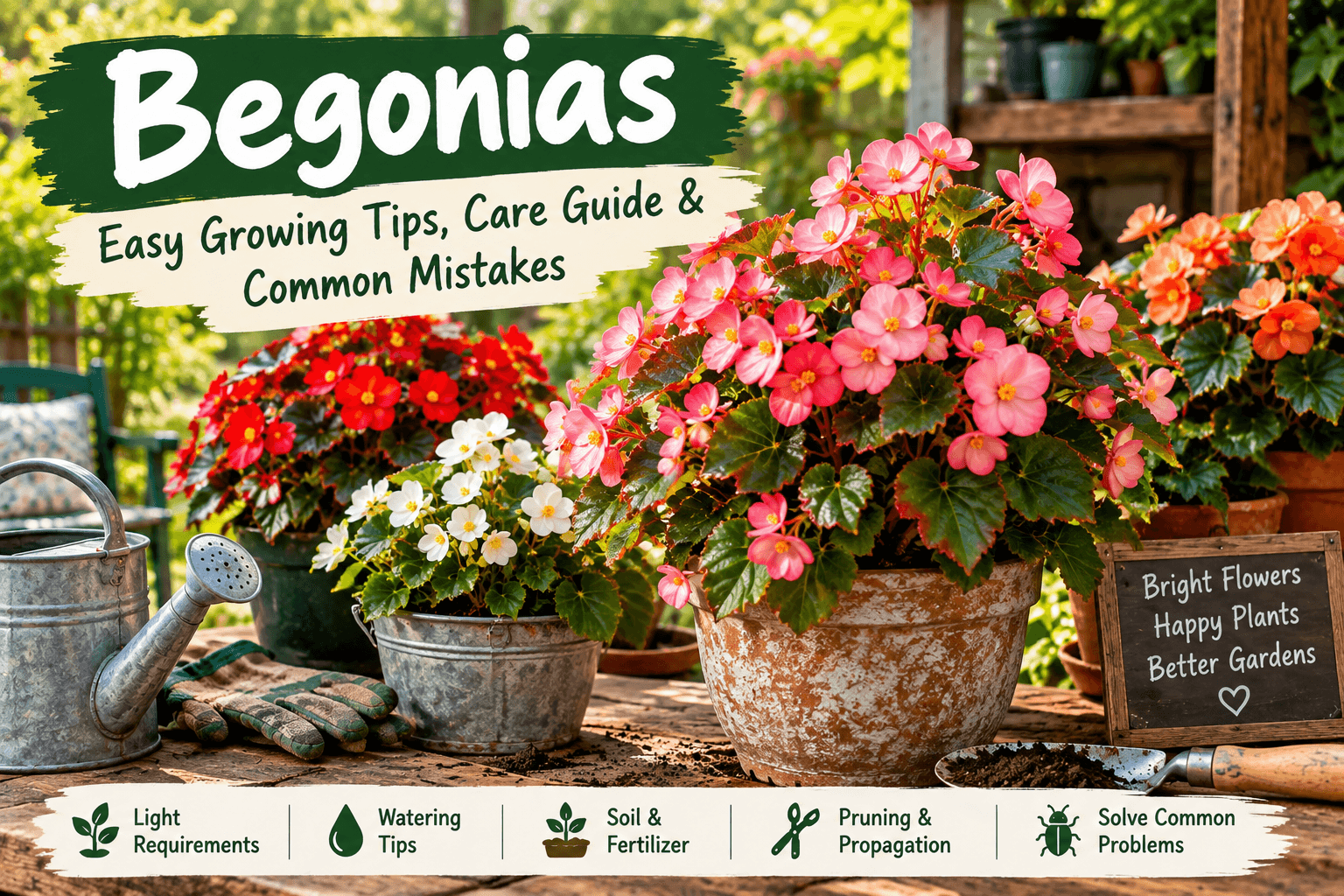
If you’ve never grown begonias before, you might think they’re one of those fancy flowers that need a greenhouse, special soil, and somebody standing around with a tiny pair of scissors all day. Nope. I’ve been growing flowers and vegetables around my home for years, and begonias are actually some of the easier plants once you understand what they like. They’re especially handy if you’ve got a shady backyard, a porch, balcony, or just a few containers around the house.
And I’ll be honest, I didn’t understand them at first.
I put one in a sunny spot because I figured more sun meant more flowers. Big mistake. By the end of summer, that poor plant looked like it had been through a boxing match.
So let me show you what I’ve learned about begonias, including where to plant them, how much water they really need, the mistakes I made, and how to keep them looking good for months.
Why I Keep Coming Back to Begonias
One thing I really like about begonias is that they don’t need a huge garden.
You can grow them in pots, hanging baskets, window boxes, raised beds, or tucked into a shady corner of the backyard. That makes them a great choice for urban homesteading too. You don’t need half an acre.
They also come in a crazy number of shapes and colors.
You’ll find flowers in shades of pink, red, white, orange, and yellow, while some varieties are grown as much for their interesting leaves as they are for flowers.
There are several broad groups of begonias, and they don’t all grow exactly the same way.
Some common types include:
- Wax begonias
- Tuberous begonias
- Rex begonias
- Cane begonias
- Angel wing begonias
- Fibrous-rooted begonias
For a beginner, I’d start with a hardy-looking wax begonia or another easy container variety. Rex begonias are beautiful, but I’ve found their dramatic leaves can make you think you’re doing something wrong when they’re simply being fussy about conditions.
Where Should You Plant Begonias?
This is where I screwed up in the beginning.
I used to think flowers needed full sun or they wouldn’t bloom properly. That’s true for some plants, but begonias generally appreciate protection from harsh afternoon sunlight.
A spot with bright, indirect light or morning sun and afternoon shade is often a good starting point.
In my garden, I like areas where a tree gives some filtered shade. A covered porch can work too, as long as there’s enough light.
If you’re growing begonias indoors, put them somewhere bright but don’t bake them against a hot window in the afternoon.
What about full shade?
Too much shade can cause problems too.
A begonia sitting in a very dark corner may grow slowly and produce fewer flowers. The trick is finding that sweet spot between bright light and scorching sun.
Think:
Bright + protected = happy begonia.
That simple rule has saved me a bunch of trouble.
Growing Begonias in Containers
If you’re short on garden space, containers are probably the easiest way to grow begonias.
I actually like containers because I can move plants around when the weather gets nasty. That’s something you can’t do with a flower bed.
Choose a pot with drainage holes. Seriously, don’t skip this.
I once reused an old decorative pot that looked great but had terrible drainage. After several days of rain, the soil stayed soggy and the plant started looking miserable.
The pot doesn’t have to be enormous. Begonias generally do well when the container is appropriately sized for the variety, with enough room for the roots to develop without sitting in a giant mass of wet soil.
Use a good quality potting mix rather than heavy garden soil.
Garden soil in a container can become compacted and drain poorly. Potting mix is lighter and usually works much better.
And put a saucer underneath if the pot is sitting on a porch or patio. Your spouse will appreciate that little detail. Ask me how I know.
How Often Do Begonias Need Water?
This is probably the question I get most often.
The answer is: don’t water them on a strict calendar.
Check the soil.
Stick your finger into the top inch or so. If it feels dry, it’s usually time to water. If it’s still damp, give it another day.
Begonias like consistent moisture, but they don’t like sitting in water.
That’s an important difference.
During hot weather, container-grown begonias may need watering more frequently because pots dry out faster. During cool or rainy weather, they may need much less.
I learned to stop treating watering like feeding the chickens.
Chickens get fed every morning.
Plants? Plants don’t care what day it is.
My simple watering routine
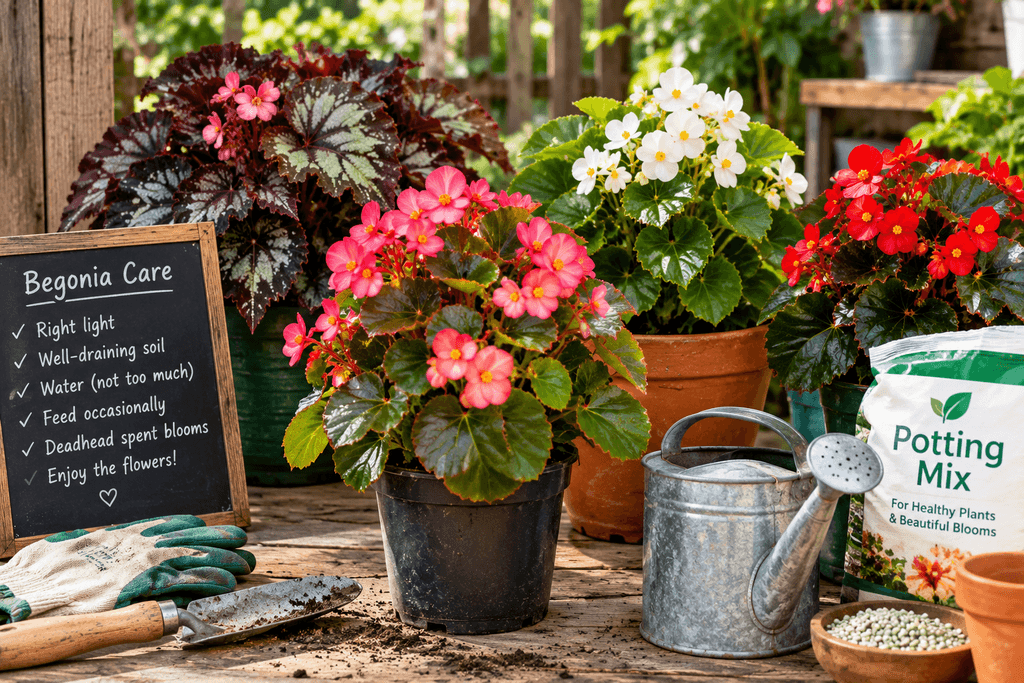
Here’s what I normally do:
- Check the soil with my finger.
- If the top layer feels dry, water slowly.
- Let excess water drain from the bottom.
- Avoid leaving the pot sitting in a tray of water.
- Check again later instead of automatically watering tomorrow.
Morning watering is usually a good habit because it gives foliage and soil time to dry during the day.
Don’t Overwater Your Begonias
If there’s one mistake I’d warn a beginner about, it’s overwatering.
A droopy plant doesn’t always mean it needs more water.
Sometimes the roots are struggling because the soil is staying wet for too long.
Look at the whole plant. Yellowing leaves, mushy stems, unpleasant-smelling soil, and generally declining growth can all be signs that something is wrong with the growing conditions.
Of course, yellow leaves can have several causes, so don’t immediately assume it’s a disease or nutrient deficiency.
Start with the basics.
Is the soil staying wet?
Does the container drain?
Is the plant getting appropriate light?
Those three questions solve a surprising number of garden problems.
What Kind of Soil Do Begonias Like?
Begonias aren’t asking for some magical homemade soil recipe.
They mainly need a growing medium that drains well while still holding enough moisture for the roots.
For containers, I like a quality all-purpose potting mix. You can improve drainage with materials commonly used in container gardening, but you don’t need to make things complicated.
And please don’t fill the bottom of the pot with a giant layer of gravel because somebody on the internet told you it improves drainage.
The better solution is a container with proper drainage holes and an appropriate potting mix.
For backyard beds, work organic matter into poor soil before planting. Compost can help improve soil structure, but don’t bury fresh kitchen scraps around your flowers. That’s just inviting problems.
Feeding Begonias for More Flowers
Begonias can flower heavily, especially when growing conditions are good.
I don’t like throwing fertilizer at a struggling plant. If the roots are drowning or the plant is getting cooked by afternoon sun, fertilizer isn’t going to magically fix it.
Get the basics right first.
Once the plant is actively growing, a balanced fertilizer used according to the product directions can help support healthy growth and flowering.
Don’t think that more fertilizer means more flowers.
I made that mistake years ago with container plants and ended up with beautiful green growth and fewer flowers than I wanted.
Sometimes less really is more.
Should You Remove Old Begonia Flowers?
Yep.
You don’t have to sit there every morning with tweezers, but removing old, faded flowers can keep the plant looking cleaner.
With many begonias, regular cleanup also helps the plant put energy into new growth.
I usually walk around the garden with my coffee and pinch off the ugly stuff while I’m checking everything else.
That’s my kind of garden maintenance.
Coffee first.
Flowers second.
Always.
How I Deal With Leggy Begonias
Sometimes a begonia gets tall and floppy instead of staying nice and bushy.
Usually I start by looking at the light.
A plant stretching toward light may simply not be getting enough.
You can also pinch back overly long stems to encourage a fuller shape, depending on the type of begonia you’re growing.
Don’t go crazy and remove half the plant at once.
Take a little off, give it time, and watch what happens.
That’s one thing I’ve learned after years of gardening: plants usually tell you what they need if you slow down enough to watch them.
Can You Grow Begonias From Cuttings?
Yes, many begonias can be propagated from cuttings.
This is one of the fun parts because you can turn one healthy plant into several plants without buying a whole tray from the garden center.
For suitable varieties, take a healthy cutting with clean tools and place it into an appropriate propagation medium. Keep it warm and reasonably humid while it develops roots.
Don’t keep it soaking wet.
That’s a common beginner mistake.
You’re trying to encourage roots, not grow a tiny swamp.
Rex and cane-type begonias are particularly interesting for propagation, and some can be started from leaf or stem cuttings depending on the variety.
If you’re new to propagation, I’d start with stem cuttings because they’re straightforward and you can actually see what you’re working with.
Begonias in a Small Urban Garden
Here’s something I really like about begonias.
They don’t demand a giant homestead.
If you live in an apartment, townhouse, or small urban backyard, you can still grow them.
Try a few containers near:
- A shaded porch
- A balcony
- A bright entryway
- A patio
- Under a tree with filtered light
- A shady garden path
Just make sure local rules or your rental agreement don’t restrict certain balcony or exterior plant setups.
And remember, containers dry out much faster than plants growing in the ground.
That little pot on your balcony might need more attention than a whole flower bed.
Common Begonia Problems I’ve Run Into
Let’s talk about the ugly stuff.
Because every gardening article seems to show perfect flowers.
My garden doesn’t look like that.
Yellow leaves
Check watering first.
Too much water, poor drainage, old leaves, environmental stress, and other issues can cause yellowing.
Don’t immediately dump fertilizer into the pot.
Brown or crispy leaves
Look at heat, direct sunlight, watering, and dry air.
A plant sitting against a hot wall in summer can get stressed even if you’re watering it regularly.
Flowers disappearing
Sometimes it’s simply the end of a flowering flush. Other times, light or general plant stress may be involved.
Give the plant a good inspection instead of assuming it needs more fertilizer.
Powdery-looking growth
Begonias can suffer from fungal and other plant health problems, especially when conditions stay humid with poor air movement.
Give plants enough space for air to circulate and avoid constantly wetting the foliage.
If you see a serious disease problem, remove affected material and consider a treatment appropriate for the specific problem and plant.
My 5 Biggest Begonia Mistakes
If I could go back and talk to myself ten years ago, I’d say:
1. Stop watering automatically.
Check the soil first.
2. Stop putting everything in full sun.
Some plants really do prefer protection.
3. Use pots with drainage holes.
Pretty pots aren’t worth killing a plant over.
4. Don’t over-fertilize.
More isn’t always better.
5. Watch the plant before changing five things.
Change one thing and see what happens.
That last one is probably the biggest.
When a plant looks bad, it’s tempting to move it, fertilize it, water it, prune it, and spray it all on the same afternoon.
Then you don’t know what actually helped.
A Simple Begonia Routine That Works for Me
I don’t have some fancy flower-garden schedule.
When I’m outside doing my normal homestead chores, I check my begonias along with everything else.
I look at the leaves.
I touch the soil.
I check for pests.
I remove dead flowers.
I look underneath leaves once in a while.
Then I move on to the chickens, compost, vegetables, or whatever else is making a mess that day.
That’s it.
You don’t need to stare at a begonia for 20 minutes every morning.
Frequently Asked Questions About Begonias
Are begonias easy to grow?
Yes, many common begonias are quite beginner-friendly when they’re planted in suitable light and well-draining soil. The biggest problems usually come from extremes—too much water, poor drainage, excessive heat, or unsuitable light.
Do begonias come back every year?
That depends on the variety and your climate. Some begonias can survive outdoors year-round in warm climates, while others are treated as annuals or brought indoors in colder areas. Tuberous begonias can also be stored and replanted in suitable climates and conditions.
Can begonias grow in shade?
Many begonias do very well in partial shade or bright filtered light. But very deep shade can reduce flowering and make growth weaker. Morning sun with afternoon protection is often a nice balance.
One Last Thing About Growing Begonias
I think we sometimes make gardening harder than it needs to be.
You don’t need the most expensive planter. You don’t need ten different fertilizers. And you definitely don’t need a perfect garden.
Start with one or two begonias.
Put them somewhere with good light but protection from harsh afternoon sun. Use a container that drains properly, keep the soil reasonably moist without keeping it soggy, and pay attention to what the plant is telling you.
That’s really most of it.
And if you kill your first begonia?
Don’t throw in the towel.
I’ve killed plenty of plants over the years. Some were supposed to be “easy,” which honestly made me feel even worse. Gardening is a lot of experimenting, and sometimes the best lesson comes from the plant that didn’t make it.
Give begonias another shot, try a different spot, and see what happens. You might end up with a porch full of colorful flowers before you know it.
Got a weird begonia problem? Leave a comment and tell me what your plant is doing. If I’ve seen it in my own garden, I’ll gladly share what worked for me.