A homestead does not need to become a full-scale farm business to earn money. A small garden, a flock of laying hens, a greenhouse, woodworking tools, an orchard, or even knowledge you have already learned can create one or more modest income streams.
The best homestead income ideas usually grow out of something you are already producing or doing. Selling ten extra herb seedlings every spring is very different from building a commercial livestock operation—and for a beginner, simpler is often better.
Start small: choose one product or service with low startup cost, confirm that you can legally sell it where you live, track every expense, and test whether real customers will pay for it before expanding.
Can a Small Homestead Really Make Money?
Yes, but “making money” and “replacing a full-time salary” are very different goals.
USDA recognizes several direct-to-consumer channels that small farms use, including farm stands, farmers markets, pick-your-own operations, Community Supported Agriculture programs, online sales, and agritourism.
USDA data also shows that small family farms play a major role in direct-to-consumer food sales.
For a small homestead, the goal is often not one giant revenue source. It is a combination of several compatible income streams.
Before You Sell Anything
Check your state, county, and city requirements before turning a hobby into a business.
Depending on the activity, you may need to consider:
- Business registration
- Local zoning
- Cottage-food rules
- Egg or dairy regulations
- Meat-processing requirements
- Sales tax
- Farm-stand permits
- Parking and signage rules
- Liability insurance
- Agritourism requirements
SBA notes that licensing and permit requirements depend on the business activity and location, so do not assume an idea shown online is automatically legal where you live.
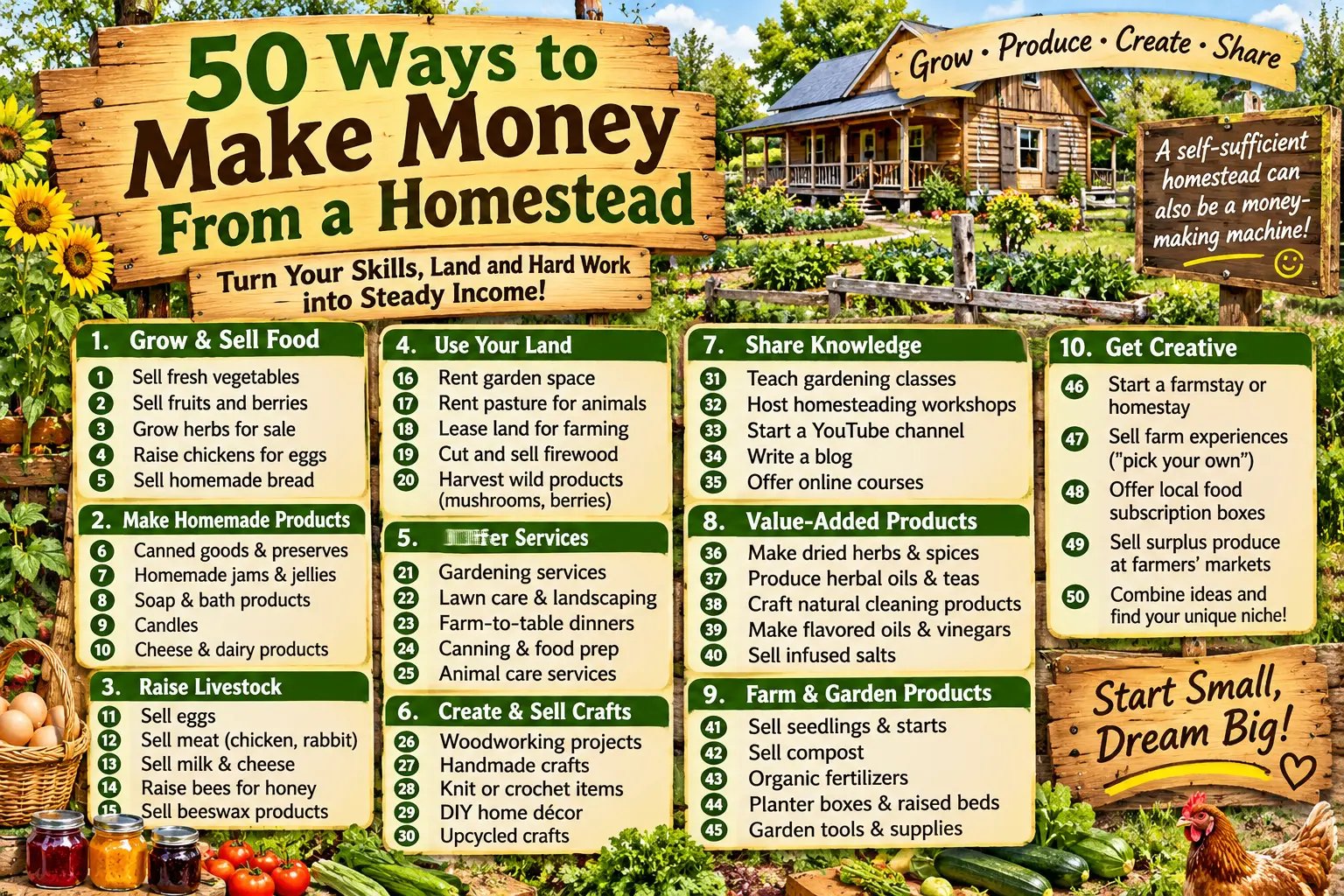
50 Homestead Income Ideas
1. Sell Fresh Eggs
If your hens consistently produce more eggs than your household uses, local egg sales can be one of the simplest farm products to explore.
Check local egg-grading, washing, refrigeration, labeling, and sales requirements first.
2. Sell Honey
Established beehives may produce surplus honey that can be bottled for direct sales where regulations allow.
Beekeeping also requires colony management, pest control, equipment, and realistic expectations about seasonal yields.
3. Grow and Sell Vegetables
Tomatoes, salad greens, cucumbers, peppers, herbs, garlic, and other high-demand crops can work at a roadside stand, farmers market, or through preorders.
4. Sell Herb Bundles
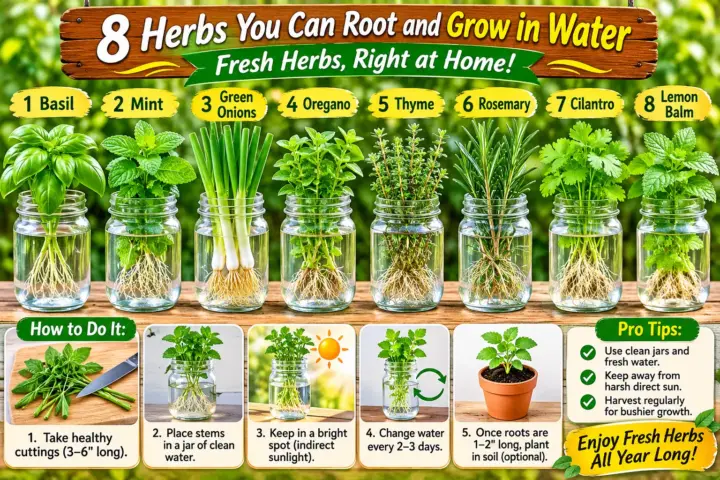
Basil, rosemary, thyme, mint, dill, cilantro, and parsley can be sold fresh in small bunches during the growing season.
5. Sell Vegetable Seedlings
Tomato, pepper, cucumber, herb, and flower starts can provide spring income before your own garden starts producing mature crops.
6. Sell Perennial Plants
Established perennials can sometimes be divided and sold as healthy rooted plants where nursery regulations allow.
7. Sell Fruit Trees or Berry Plants
A small propagation nursery can specialize in berries, figs, grapes, fruit trees, or other locally adapted plants.
Plant-sales and nursery certification requirements vary by location.
8. Sell Cut Flowers
Sunflowers, zinnias, dahlias, cosmos, tulips, and seasonal foliage can become bouquets for roadside stands, events, or local delivery.
9. Grow Garlic for Sale
Garlic stores better than many fresh vegetables and can be sold as bulbs, braids, or planting stock when permitted.
10. Sell Seeds
Experienced seed savers may eventually sell correctly identified seed from open-pollinated varieties, subject to applicable seed-labeling and sales rules.
11. Start a Small Farm Stand
A roadside stand can combine vegetables, flowers, eggs, plants, approved baked goods, or other legal farm products in one convenient sales point.
12. Sell at a Farmers Market
Farmers markets put your products in front of customers who are already looking for locally produced food and farm goods.
13. Start a CSA
Community Supported Agriculture typically involves customers paying for a membership or subscription in exchange for regular seasonal shares of farm products.
USDA recognizes CSA as a major direct-market channel.
14. Offer a Mini CSA
A small homestead may not be able to fill 50 weekly boxes, but five or ten reliable customers can be a much more manageable starting point.
15. Sell Homemade Bread
Bread can work well at roadside stands and preorder pickups where cottage-food rules allow it.
Check permitted products, labeling rules, required training, sales limits, and approved selling locations before starting.
16. Sell Other Approved Baked Goods
Cookies, brownies, muffins, granola, candies, and dry mixes may qualify under some cottage-food programs, but allowed foods differ by state.
17. Sell Jams and Jellies
Research-tested jams and jellies may be legal cottage-food products in some areas.
Never invent preservation recipes just because you intend to sell the finished jars.
18. Sell Dried Herbs
Properly dried culinary herbs can turn a summer harvest into a product that stores much longer than fresh bundles.
19. Make Herbal Tea Blends
Culinary herbal blends can be another option where food-production regulations permit.
Avoid unsubstantiated medical claims such as promising that a tea treats or cures disease.
20. Sell Dehydrated Produce
Properly dehydrated fruits, herbs, and approved vegetables can add value to produce that would otherwise have a short selling season.
21. Sell Compost
If you produce more mature compost than your property needs, screened finished compost may have value to local gardeners.
Avoid selling unfinished compost full of recognizable food scraps, weed seeds, or unstable material.
22. Sell Worm Castings
A vermicomposting setup can produce castings that gardeners use as a soil amendment.
23. Sell Mulch Materials
Clean wood chips, shredded leaves, straw, or other local materials may have value when you have a reliable surplus and legal source.
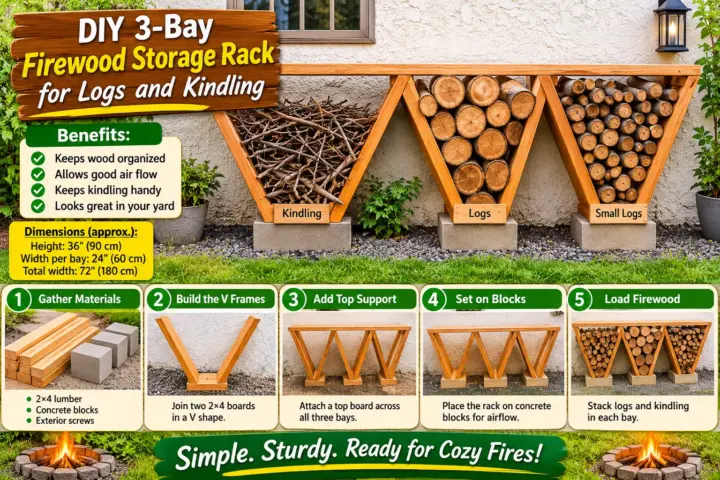
24. Sell Firewood
Properly seasoned firewood can become a seasonal product if your property produces usable wood sustainably.
Firewood movement may be restricted in some regions because of invasive insects and plant diseases, so check local rules.
25. Sell Kindling Bundles
Small dry splits and sticks can sometimes create more value when packaged as convenient kindling bundles rather than mixed into a larger woodpile.
26. Sell Wooden Garden Projects
Raised beds, trellises, garden benches, planter boxes, potting tables, and produce stands can turn woodworking skills into homestead income.
27. Build and Sell Chicken Equipment
Nest boxes, feeders, mobile runs, coop accessories, and storage racks can appeal to nearby backyard chicken keepers.
28. Sell Handmade Crafts
Baskets, woodworking, textiles, pottery, wreaths, dried-flower arrangements, and other practical crafts can fit naturally into a homestead brand.
29. Make Beeswax Products
Beekeepers may use surplus wax for candles, wraps, or other products where applicable safety and labeling requirements are met.
30. Sell Soap
Soap making can pair naturally with a homestead brand, but cosmetic or therapeutic claims can change how a product is regulated.
Sell it as what it legally is and avoid medical claims you cannot substantiate.
31. Raise Meat Chickens
Poultry meat can create income, but slaughter, processing, storage, labeling, and direct-sale rules need to be understood before buying a large batch of chicks.
32. Raise Meat Rabbits
Rabbits are sometimes raised on small farms because of their compact space requirements, but local processing and meat-sales laws still apply.
33. Raise Ducks
Depending on local demand, ducks may provide eggs, breeding stock, or meat where legal.
34. Sell Breeding Stock
Healthy, responsibly bred chickens, ducks, rabbits, goats, or other livestock can have more value as breeding animals than as ordinary production stock.
Animal welfare, disease prevention, accurate records, and honest genetics matter.
35. Sell Hatching Eggs or Chicks
A well-managed poultry flock can provide hatching eggs or chicks, especially when you keep desirable breeds.
Check poultry-health and interstate transport requirements before shipping birds or eggs.
36. Offer Farm Tours
A productive homestead can become an educational experience for families, schools, garden clubs, or beginning homesteaders.
USDA includes farm and ranch tours as an agritourism activity.
37. Host Gardening Workshops
Teach a practical skill you already perform confidently, such as seed starting, composting, raised-bed setup, trellising, or basic garden planning.
38. Teach Food-Preservation Classes
Experienced preservers can teach research-based basics of freezing, drying, or tested canning methods.
Avoid teaching untested canning shortcuts.
39. Offer Beekeeping Classes
An experienced beekeeper can offer beginner introductions, hive inspections, or seasonal workshops when insurance and local rules allow.
40. Create a Pick-Your-Own Area
Berries, flowers, pumpkins, apples, or other suitable crops can become a pick-your-own experience.
USDA identifies pick-your-own operations as a form of direct marketing and agritourism.
41. Offer Farm Camping
Some rural properties can host campsites, but zoning, sanitation, fire safety, access, insurance, and short-term accommodation rules can make this significantly more complicated than simply placing a tent site in a field.
42. Rent a Tiny Cabin
A permitted cabin or farm stay can become an agritourism income stream, particularly when paired with a real farm or garden experience.
43. Host Farm Dinners
Farm-to-table dinners can create a premium experience, but food-service licensing, commercial kitchen rules, alcohol rules, accessibility, parking, insurance, and event permits may apply.
44. Rent Out Equipment
Tillers, post drivers, log splitters, trailers, or specialty garden tools may have rental value, but equipment damage and liability need to be considered carefully.
45. Offer Garden Installation Services
If you have successfully built raised beds, irrigation, trellises, compost systems, or small food gardens, local homeowners may pay for setup help.
46. Offer Garden Maintenance
Seasonal garden cleanup, planting, harvesting help, pruning of appropriate plants, and vegetable-bed maintenance can provide service income without requiring more land.
47. Create Online Courses
Knowledge about chickens, gardening, composting, seed starting, food storage, or homestead planning can eventually become structured online lessons.
48. Sell Digital Homestead Plans or Printables
Garden planners, planting logs, harvest trackers, chicken-care sheets, pantry inventories, seed-starting calendars, and original woodworking plans can become digital products.
49. Create Homestead Content
A blog, newsletter, video channel, or social-media account can eventually earn through advertising, affiliates, sponsorships, digital products, or your own physical products.
Treat content as a long-term business asset rather than expecting immediate income.
50. Combine Several Small Income Streams
This may be the most realistic idea on the entire list.
For example, one homestead might sell:
- Seedlings in spring
- Vegetables and flowers in summer
- Garlic and storage crops in fall
- Firewood in winter
- Digital products year-round
That spreads risk and makes better use of the same land and equipment through the seasons.
Best Homestead Income Ideas for Beginners
| Idea | Startup Level | Why It Can Work |
|---|---|---|
| Vegetable seedlings | Low–moderate | Short production cycle and strong spring demand |
| Fresh herbs | Low | Can be grown intensively in small spaces |
| Cut flowers | Low–moderate | High value per small growing area |
| Eggs | Moderate | Repeat local customers when production is consistent |
| Garden woodworking | Depends on tools | Does not require additional growing land |
| Digital products | Low | No physical inventory after creation |
What Should You Sell First?
Start with what your homestead already produces reliably.
Ask yourself five questions:
- What do I already produce in surplus?
- What do people nearby actually buy?
- Can I produce it consistently?
- What does it really cost me to produce?
- Can I legally sell it from my property or chosen market?
Calculate Profit, Not Just Sales
Selling $500 worth of vegetables does not mean you made $500.
Track costs such as:
- Seeds
- Feed
- Packaging
- Soil amendments
- Water
- Electricity
- Market fees
- Fuel
- Equipment
- Payment-processing fees
- Insurance
- Your labor
A high-revenue product can still be a poor business if the labor and inputs are too expensive.
Direct Sales Can Improve Margins
USDA notes that direct marketing allows producers to sell directly to customers rather than selling through wholesalers or other intermediaries.
Common channels include:
- Farm stands
- Farmers markets
- CSA subscriptions
- Pick-your-own
- On-farm stores
- Online ordering
Do Not Start 10 Businesses at Once
The Pinterest list is inspiring, but trying to launch eggs, honey, bread, flowers, workshops, camping, rabbits, soap, and a CSA at the same time is a fast way to make the homestead harder to manage.
A better progression is:
- Choose one reliable product.
- Find the first 5–10 customers.
- Record real costs and labor.
- Improve the system until it is repeatable.
- Add a complementary product later.
Good Income Streams Work Together
The strongest small homestead businesses often reuse the same resources several times.
For example:
Seed-starting setup → seedlings → vegetable garden → farm stand → unsold produce for home preservation → compost from crop residue.
One system supports the next instead of creating five unrelated businesses.
Ideas From the Pinterest Graphic That Need Extra Caution
| Idea | Check Before Starting |
|---|---|
| Meat sales | Processing, inspection, refrigeration and sales laws |
| Milk or cheese | Dairy licensing and food-safety rules |
| Homemade canned food | Cottage-food rules and tested recipes |
| Natural remedies | Product classification and health claims |
| Farm camping | Zoning, sanitation, fire safety and insurance |
| Petting zoo | Animal welfare, public-health practices and liability |
| Farm dinners | Food-service and event requirements |
Homestead Income FAQ
What is the easiest homestead product to sell?
There is no universal easiest product. Seedlings, herbs, flowers, produce, eggs, or simple crafts can be relatively approachable when you already produce them and local regulations are straightforward.
Can you make money from one acre?
Potentially, yes. Small acreage favors high-value crops, seedlings, flowers, direct marketing, services, workshops, and products that use vertical or intensive production rather than low-value commodity farming.
Do I need a business license to sell from my homestead?
Possibly. Requirements depend on the product, business structure, state, county, municipality, zoning, and selling location. Check the applicable agencies before selling.
What can I sell year-round?
Potential year-round options include woodworking, crafts, approved preserved foods, digital products, courses, compost, firewood, and some greenhouse-grown products, depending on your climate and regulations.
Is a CSA good for a beginner?
A large CSA can be demanding because customers expect consistent shares throughout the season. A small pilot CSA with a few customers is a safer way to test your production capacity.
Should I sell online or locally?
Local sales often work well for perishable products, while digital goods, crafts, and some legally shippable products can reach customers farther away. Many homestead businesses use both.
The Bottom Line
You do not need 50 income streams to monetize a homestead.
A better strategy is to find one thing your homestead already produces well, make sure people actually want it, understand the legal requirements, calculate the real profit, and build a simple repeatable system. Once that works, add a second income stream that uses the same land, customers, equipment, or skills.
Sources
- USDA — Agritourism Resource Manual
- USDA Forest Service — Direct Marketing for Agroforestry Producers
- USDA Agricultural Marketing Service — Local Food Directories
- USDA Economic Research Service — Direct-to-Consumer Sales by Small Family Farms
- U.S. Small Business Administration — Launch Your Business