
Several kitchen herbs can form roots in a glass of water, making water propagation one of the easiest ways to multiply plants indoors. But there is an important difference between rooting an herb in water and growing it permanently in plain water.
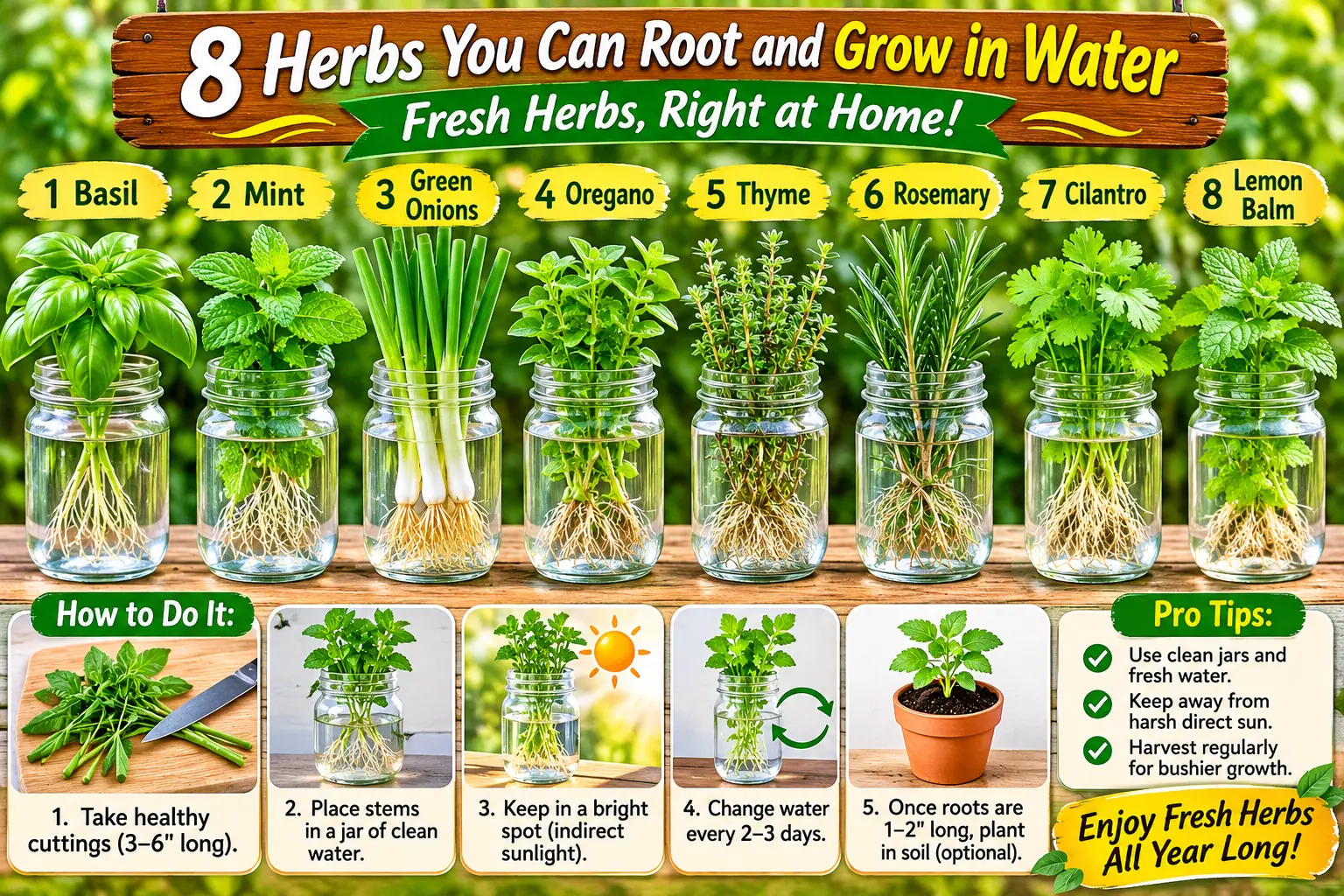
The Pinterest graphic shows basil, mint, green onions, oregano, thyme, rosemary, cilantro, and lemon balm growing in clear jars. Some of those are excellent choices for water propagation. Others can survive temporarily but are better moved into potting mix after roots develop.
Quick answer: basil and mint are among the easiest herbs to root in water. Green onions regrow quickly from their rooted bases. Oregano, lemon balm, thyme, and rosemary can also be propagated, although woody herbs are generally slower. Cilantro is the least convincing choice in the graphic because it is normally grown from seed rather than maintained as a long-term water cutting.
Rooting in Water vs. Growing Hydroponically
These two ideas are often mixed together online.
Water propagation means placing a cutting in water until it produces new roots.
Hydroponic growing means keeping a plant growing without soil while providing water, nutrients, oxygen, and other conditions the roots need.
A jar of tap water may be enough to start roots, but it is not automatically a complete long-term growing system.
1. Basil
Water propagation difficulty: Easy.
Basil is one of the best herbs for beginners to propagate from stem cuttings.
Take a healthy, non-flowering stem and remove the leaves from the lower portion. Put the bare nodes into clean water while keeping the remaining leaves above the waterline.
Basil is a warm-season herb and grows best with strong light. University of Minnesota recommends roughly six to eight hours of bright light for productive basil.
When to transplant basil
Once the cutting has developed a useful network of roots, move it into potting mix if your goal is a normal long-term herb plant.
2. Mint
Water propagation difficulty: Very easy.
Mint is naturally vigorous and is commonly propagated from stem or root cuttings.
Cut a healthy stem below a node, remove the lower leaves, and place the stem in water.
Mint is an especially good candidate for indoor propagation because it roots readily and grows aggressively once established.
Garden warning: mint can spread aggressively through underground stems. If you transplant rooted mint outdoors, growing it in a container is usually easier to control.
3. Green Onions
Water regrowing difficulty: Very easy.
Green onions are different from most of the herbs on this list because you normally start with the rooted white base rather than an unrooted stem cutting.
Leave a small section of white stem above the roots and place only the root end in shallow water.
New green leaves can begin emerging quickly.
This is useful for a few extra harvests, but the bulb is relying partly on stored energy. For stronger long-term growth, transfer it to soil or provide a proper hydroponic nutrient solution.
4. Oregano
Water propagation difficulty: Easy to moderate.
Oregano belongs to the mint family and can be propagated vegetatively.
Choose soft, actively growing stems rather than old woody stems. Strip the lower leaves and keep those nodes under water.
Once rooted, oregano normally performs best in a sunny location with well-drained growing media rather than keeping its roots permanently submerged in plain water.
5. Thyme
Water propagation difficulty: Moderate.
Thyme can be propagated from stems, division, or layering, but it is not as fast and forgiving in a water jar as mint.
Choose tender new growth instead of thick woody stems.
After rooting, thyme generally prefers a sunny, well-drained environment. Constantly wet conditions are the opposite of what an established thyme plant normally prefers.
6. Rosemary
Water propagation difficulty: Moderate to slow.
Rosemary is commonly propagated from cuttings, but it is woodier and slower to root than basil or mint.
Use healthy new growth with no flowers. Remove leaves from the lower portion and place the stem into the propagation medium.
University of Georgia propagation guidance lists rosemary as a plant commonly propagated from semi-hardwood cuttings.
For the most reliable results, rosemary is often rooted in a well-drained propagation medium rather than being kept indefinitely in a jar of water.
7. Cilantro
Water propagation difficulty: Poor choice compared with the others.
This is where the Pinterest graphic becomes misleading.
Cilantro is an annual herb that is normally grown from seed. Extension guidance specifically lists cilantro among herbs best started from seed rather than among the common herbs propagated from cuttings.
A store-bought cilantro stem may remain fresh in water for a while, but that is not the same as reliably creating a new productive cilantro plant.
Better approach: sow cilantro seeds in succession every few weeks if you want a steady harvest rather than relying on water propagation.
8. Lemon Balm
Water propagation difficulty: Easy.
Lemon balm belongs to the mint family and behaves much more like mint than rosemary.
Healthy new stems can be used for propagation, although established lemon balm can also be divided.
Like mint, lemon balm can spread strongly once planted outdoors, so choose its final location carefully.
Which Herbs Are Best for Water Propagation?
| Herb | Water Rooting | Best Long-Term Plan |
|---|---|---|
| Basil | Excellent | Transplant to pot or hydroponic system |
| Mint | Excellent | Container or hydroponic system |
| Green onion | Very easy regrowth | Soil or nutrient solution for sustained growth |
| Oregano | Good | Well-drained potting mix |
| Thyme | Moderate | Well-drained potting mix |
| Rosemary | Slow / variable | Well-drained rooting media or soil |
| Cilantro | Poor choice | Grow from seed |
| Lemon balm | Good | Pot or garden with spread control |
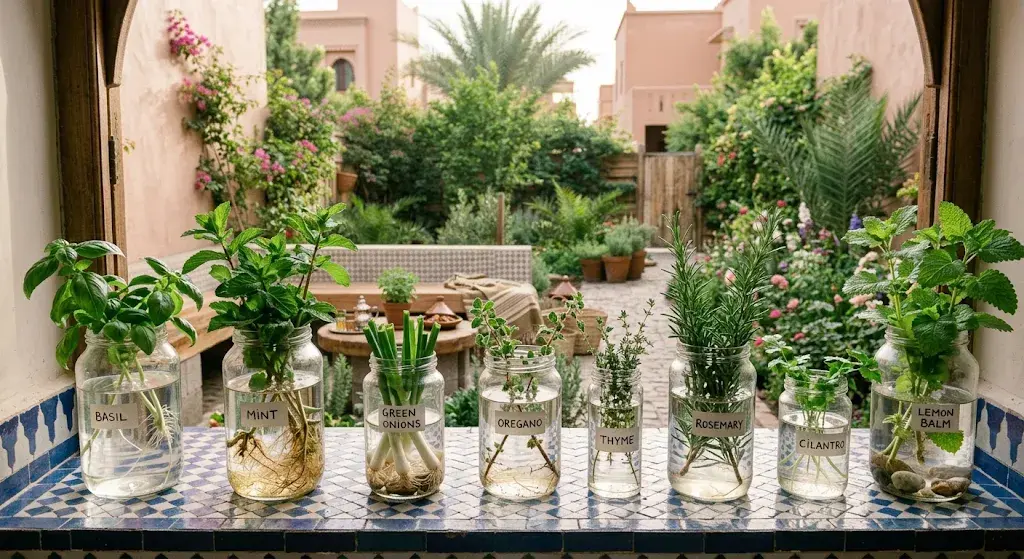
How to Root Herb Cuttings in Water
- Choose a healthy plant. Avoid stems with disease, insect damage, flowers, or severe stress.
- Cut a young stem. A cutting around 3–6 inches long works for many plants.
- Keep at least two nodes. Nodes are the points where leaves emerge and where roots commonly develop.
- Remove lower leaves. No leaves should remain submerged in the water.
- Put the cutting in a clean jar. Submerge the lower nodes but keep foliage above the water.
- Place it in bright indirect light. Avoid intense direct sun heating the jar.
- Change or refresh the water regularly. Do not allow it to become cloudy or foul smelling.
- Watch for roots. Rooting speed varies greatly among species.
- Transplant when appropriate. Once a useful root system develops, move the cutting into potting mix or a true hydroponic system.
Do You Really Need to Change the Water?
Yes, keeping the water clean is helpful.
A small jar has limited oxygen and can accumulate decaying leaf material, microorganisms, and debris.
If the water becomes cloudy, smells unpleasant, or develops slime, replace it and clean the container.
Do Not Submerge the Leaves
The Pinterest image shows clean stems entering the water, which is exactly what you want.
Leaves left below the waterline tend to decay and can quickly foul a small propagation jar.
How Much Light Do Water-Grown Herbs Need?
For newly cut stems, bright indirect light is a good starting point while roots are forming.
Once established, culinary herbs generally need much more light than people expect.
University of Minnesota notes that most herbs perform best with at least about six hours of direct sunlight outdoors, while indoor herbs may require around 12 hours of supplemental artificial light for strong growth.
A dark kitchen counter is unlikely to support dense, flavorful herbs for long.
Can Herbs Stay in Plain Water Forever?
Usually not if you expect healthy, productive long-term growth.
Plain water contains little or none of the nitrogen, phosphorus, potassium, calcium, magnesium, and micronutrients needed to keep producing new stems and leaves indefinitely.
A cutting can initially use energy and nutrients stored in its tissues, but those reserves are limited.
If you want to grow herbs permanently without soil, move from simple propagation to a properly managed hydroponic setup with an appropriate nutrient solution.
Water Roots and Soil Roots Are Different
Roots that develop underwater are adapted to a wet environment.
When you transplant a water-rooted cutting into potting mix, the plant may temporarily slow down while it adjusts.
Keep the potting mix evenly moist during the first stage after transplanting, but do not keep it permanently saturated.
Do You Need Rooting Hormone?
Fast-rooting herbs such as mint often do not need it.
For more difficult cuttings, rooting hormone can sometimes speed root development. Penn State notes that rooting hormones can be used with tip or leaf cuttings, but excessive amounts can actually slow root development.
Why Cuttings Sometimes Rot Instead of Root
Common reasons include:
- Leaves submerged below water
- Dirty jars
- Old or damaged stems
- Water left stagnant for too long
- Too little light
- Very hot direct sun on the jar
- Using flowering or stressed cuttings
How to Move a Water-Rooted Herb Into Soil
- Fill a small container with clean, well-drained potting mix.
- Pre-moisten the mix.
- Make a hole large enough for the new roots.
- Lift the cutting carefully from the water.
- Place the roots into the hole without crushing or sharply bending them.
- Firm the mix gently around the stem.
- Water thoroughly and let excess water drain.
- Keep the plant out of harsh direct sun during the first adjustment period.
- Gradually move it into the light conditions preferred by that herb.
Can You Harvest While the Herb Is Rooting?
Avoid heavy harvesting from a cutting that is still trying to build roots.
The leaves are helping the cutting produce the energy needed for root development.
Once the plant is established and actively producing new growth, light harvesting can encourage bushier growth in herbs such as basil and mint.
What the Pinterest Graphic Gets Right
- Water is useful for propagating many herb cuttings.
- Basil and mint are excellent beginner choices.
- Green onions regrow easily from rooted bases.
- Clean jars make root development easy to observe.
- Bright light is important for healthy herb growth.
- Regular harvesting can keep established leafy herbs productive.
What the Graphic Oversimplifies
- Rooting in water is not the same as permanent hydroponic growing.
- Plain water does not provide complete plant nutrition.
- Rosemary and thyme are slower and less forgiving than basil or mint.
- Cilantro is better started from seed.
- Oregano, thyme, and rosemary normally prefer well-drained conditions after rooting.
- A bright windowsill may still provide too little light for strong year-round indoor growth.
Herbs in Water FAQ
What herbs root fastest in water?
Mint and basil are among the easiest and fastest choices for beginners. Exact rooting speed depends on temperature, light, stem maturity, cultivar, and plant health.
Can rosemary grow in water?
Rosemary can be propagated from cuttings, but it is slower than tender herbs. For reliable propagation, a well-drained rooting medium is often preferred over keeping it indefinitely in plain water.
Can mint live in water permanently?
Mint can survive and root readily in water, but vigorous long-term growth without soil requires adequate nutrients, oxygen, light, and water management. A jar of plain water is primarily a propagation setup, not a complete hydroponic system.
Can cilantro be propagated in water?
Cilantro is much more reliably grown from seed. Keeping cut grocery stems fresh in water should not be confused with establishing a new productive plant.
How often should I change the water?
Refresh it whenever it becomes cloudy, develops debris, or smells stale. Keeping the jar clean is more important than following an exact calendar schedule.
Can I use tap water?
For many common herbs, ordinary potable tap water works for propagation. Extremely hard, salty, or otherwise poor-quality water may cause problems depending on local water chemistry.
When should I move the cutting to soil?
Once the cutting has formed a healthy root system rather than just one tiny root, it can be moved into a small pot of moist, well-drained potting mix.
The Bottom Line
A jar of water is a simple and inexpensive way to turn one healthy herb plant into several new plants.
Basil and mint are excellent beginner choices, green onions are easy to regrow, and oregano and lemon balm can also work well. Thyme and rosemary require more patience, while cilantro is better treated as a seed-grown herb.
The key correction to the viral graphic is simple: use plain water to start roots, not as a promise of endless harvests. For long-term growth, transplant rooted herbs into suitable potting mix or move them into a properly managed hydroponic system with nutrients and adequate light.
Sources
- Penn State Extension — Propagating Houseplants
- Penn State Extension — Growing Herbs Indoors
- University of Minnesota Extension — Growing Herbs in Home Gardens
- University of Minnesota Extension — Growing Basil in Home Gardens
- Illinois Extension — Mint
- University of Georgia Cooperative Extension — Herbs in Southern Gardens
- University of Georgia Cooperative Extension — Starting Plants From Cuttings