
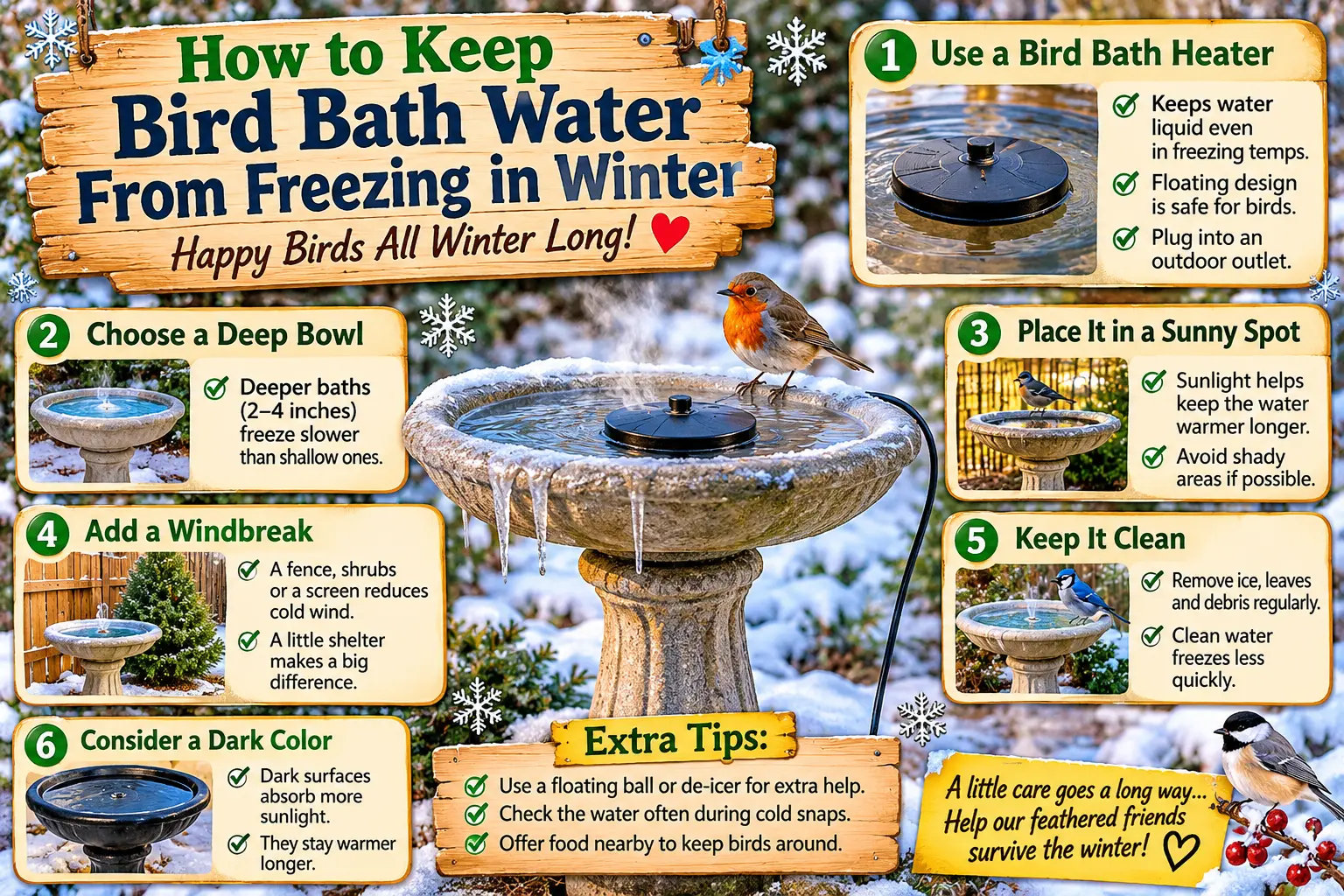
Winter water can be harder for backyard birds to find than food, especially during long freezing spells. A shallow bird bath, regular fresh-water refills, and a safe heater are more reliable than viral “hacks” that promise to keep water open without heat.
The Pinterest image suggests placing a dark brick in a shallow dish so sunlight warms the brick and keeps the center from freezing. A brick or rock can be useful as a perch and may absorb some solar heat, but it should not be treated as a dependable anti-freezing method in sustained cold weather.
Best winter setup: use a shallow, easy-to-clean bath, add a stone or textured perch, refill with clean water regularly, and use a thermostatically controlled bird-bath heater when persistent freezing makes open water difficult to maintain.
Do Birds Need Water in Winter?
Yes. Birds need water for drinking and bathing even during cold weather.
Penn State Extension notes that unfrozen water can be especially difficult to find during winter, and maintaining a bird bath can provide a dependable source.
How Deep Should a Winter Bird Bath Be?
Shallow water is best.
Audubon recommends bird baths generally no deeper than about 2 inches, with smaller birds often preferring around an inch.
A shallow basin is easier for birds to use and easier for you to empty, clean, and refill when temperatures drop.
Does the Brick Trick Really Work?
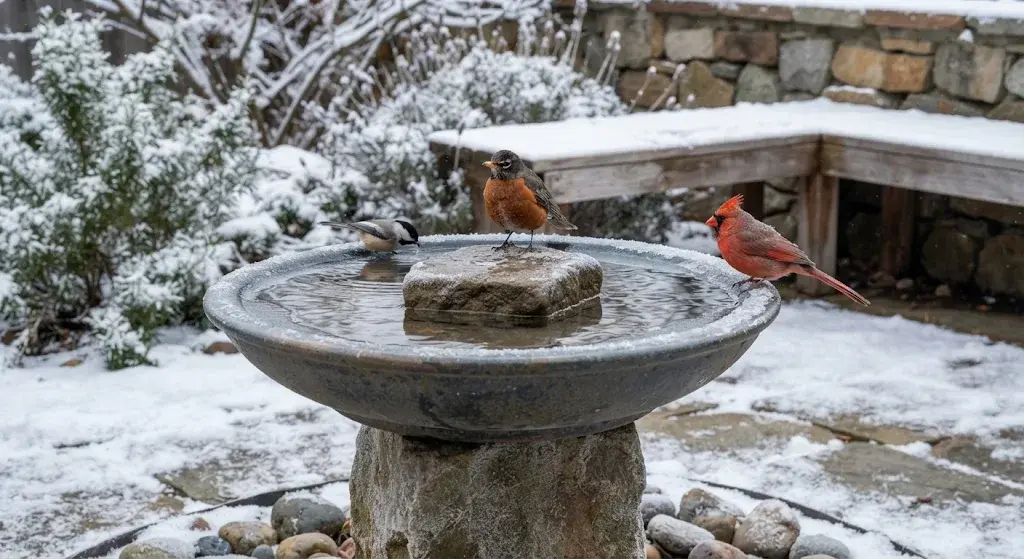
A dark brick can absorb sunlight and may warm slightly during a sunny winter day.
It can also provide a dry or partially dry perch where birds can stand near the water.
But there is no reason to expect one brick to keep an entire bath liquid through prolonged subfreezing temperatures, cloudy weather, nighttime cold, or strong wind.
Use the brick as a perch—not as your main freeze-prevention system.
1. Use a Shallow Plastic Basin
A shallow plastic dish is practical in winter because it is easy to carry indoors, dump out, clean, and refill.
Audubon cautions that ceramic bird baths can crack in freezing weather, making plastic or properly winter-rated materials a better choice.
2. Add a Stone or Brick for Footing
Cornell recommends stones or branches that rise above the water so birds can stand and drink without getting completely wet.
Choose a stable stone with a rough surface rather than a slippery object.
3. Refill the Bath at the Same Time Each Day
If you do not want to use electricity, Cornell suggests one of the simplest winter methods: put out a plastic bowl of fresh water regularly and bring it in or replace it when it freezes.
Consistency can help birds learn when fresh water is available.
4. Use a Heated Bird Bath During Hard Freezes
For long periods below freezing, a thermostatically controlled heated bird bath is the most reliable option.
Penn State and Audubon both recommend heated baths or submersible heaters when winter ice becomes a persistent problem.
5. Use an Immersion Heater Safely
Cornell notes that modern immersion-style bird-bath heaters are designed to prevent freezing and some models shut off automatically if the bath runs dry.
Use outdoor-rated electrical equipment and GFCI protection, and follow the manufacturer’s installation instructions.
6. Do Not Add Antifreeze, Glycerin, Salt, or Other Chemicals
Never add chemicals to bird-bath water just to lower the freezing point.
Audubon specifically advises against chemical antifreeze, and Cornell warns against glycerin because it can be harmful if birds ingest it and can interfere with feather condition.
7. Keep the Water Clean
Penn State recommends changing bird-bath water frequently and scrubbing the basin regularly to prevent debris and contamination from building up.
Do not put the bath directly beneath feeders where hulls, seed, and droppings can fall into it.
8. Place the Bath Near Cover—but Watch for Cats
Nearby shrubs or trees give birds a place to perch before and after drinking.
However, dense low cover can also hide predators. If outdoor cats are common, place the bath where birds have visibility and an escape route.
9. Moving Water Can Help
Moving water is attractive to birds and can delay surface freezing under mildly cold conditions.
Cornell notes that fountains and moving water can remain available longer as temperatures approach freezing, although movement alone will not overcome severe cold indefinitely.
10. Solar Heaters Have Limits
Solar bird-bath heaters exist, but Penn State notes that they depend on adequate sunshine and may not work well during cloudy or overcast winter weather.
What About the Claim That Eating Snow Costs Birds Energy?
Birds can obtain some water from snow and ice, and Cornell notes that they can often meet water needs this way when necessary.
However, the exact calorie number printed on the Pinterest graphic should not be repeated as a general fact without a reliable species-specific source.
Safe Winter Bird-Water Options
| Method | Reliability | Best Use |
|---|---|---|
| Fresh shallow bowl | Good if replaced often | No-electricity setup |
| Stone or brick | Useful as footing, limited freeze protection | Add to shallow bath |
| Moving water | Moderate in mild freezes | Fountain or dripper |
| Heated bird bath | High | Long freezing periods |
| Chemical additives | Do not use | Unsafe/unnecessary |
What This Pinterest Hack Gets Right
- Winter water is useful for backyard wildlife.
- A shallow dish is appropriate for birds.
- A stone or brick can give birds secure footing.
- Open water can become scarce during freezing weather.
What I Would Correct
- Do not promise that a dark brick will keep water liquid for hours in every freezing condition.
- Do not repeat a specific calorie cost for eating snow without a reliable source.
- Use a heated bath or safe immersion heater for persistent hard freezes.
- Never add antifreeze, salt, glycerin, or similar chemicals.
- Keep the bath shallow and clean.
Winter Bird Bath FAQ
Will a brick stop a bird bath from freezing?
Not reliably. A dark brick may absorb some sunlight and can serve as a useful perch, but sustained freezing temperatures can still freeze the surrounding water.
Can birds drink freezing-cold water?
Yes. Wild birds naturally use cold water during winter. The goal is simply to provide accessible liquid water.
Is it safe for birds to bathe in winter?
Healthy birds can safely bathe in cold weather. Audubon notes that their feathers shed much of the water and preserve the insulating down underneath.
Can I put salt in a bird bath to stop freezing?
No. Do not add salt, antifreeze, glycerin, or other chemicals to drinking and bathing water.
What is the easiest no-electricity method?
Use a shallow plastic basin, refill it with fresh water regularly, and bring it in or replace it when it freezes.
The Bottom Line
The “brick hack” has one genuinely useful idea: putting a stable rock or brick in shallow water gives birds a place to stand.
But it is not a dependable replacement for a winter bird-bath heater. During mild sunny weather, a dark object may delay some freezing; during sustained cold, regular fresh-water replacement or a thermostatically controlled heater is the more reliable approach.
Sources
- National Audubon Society — Frequently Asked Questions About Birds
- Cornell Lab of Ornithology — Attract Birds With Birdbaths
- Penn State Extension — Water for Wildlife: Bird Baths and Backyard Ponds
- Penn State Extension — Caring for Birds in the Winter
- University of New Hampshire Extension — Winter Bird Feeding