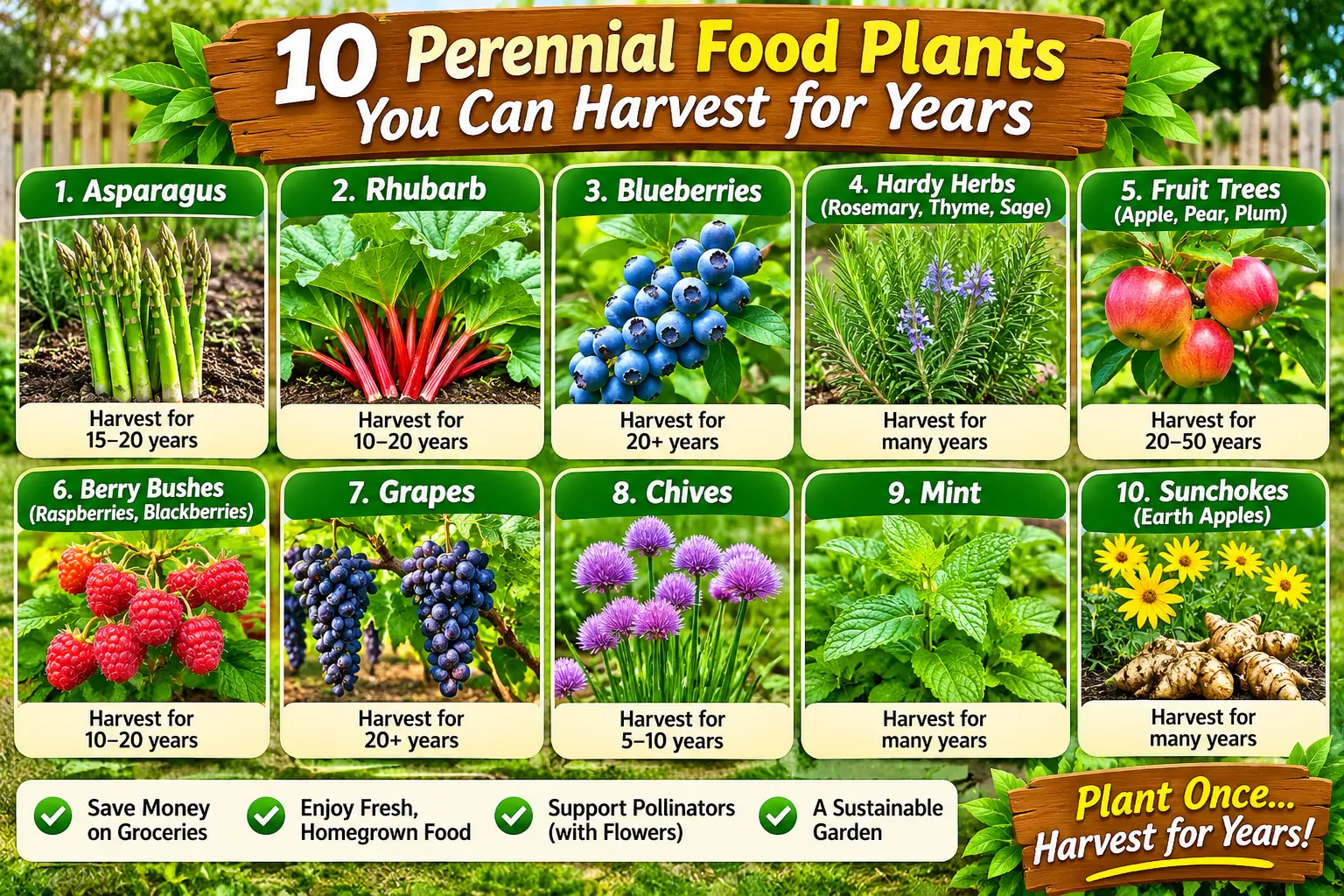
A perennial food garden can produce fruit, vegetables, and herbs for many years without being replanted every spring—but “plant once and forget it” is not realistic. Long-lived crops still need the right climate, soil, pruning, water, fertility, pest management, and occasional renovation.
The Pinterest image highlights blueberries, raspberries, asparagus, rhubarb, and perennial herbs as crops that can keep producing for years. The basic idea is excellent. The exact lifespan claims and the promise of thousands of dollars in grocery savings are much less predictable.
Think long-term, not maintenance-free. A perennial crop can stay in the same area for many seasons, but most productive plantings still need pruning, mulching, irrigation, weed control, soil care, or periodic division.
What Is a Perennial Food Garden?
A perennial food garden is built around edible plants that survive for more than two growing seasons and regrow or continue producing without being planted from seed every year.
That can include:
- Fruit shrubs
- Cane berries
- Perennial vegetables
- Fruit trees
- Long-lived culinary herbs
- Perennial alliums
- Groundcovers with edible crops
The advantage is not zero work. The advantage is that much of the planting structure stays in place from year to year.
1. Blueberries
Potential lifespan: several decades, sometimes 50 years or more.
Blueberries are among the longest-lived plants shown in the Pinterest graphic.
Oregon State University Extension notes that blueberry plants can bear fruit for more than 50 years when properly managed.
But there is a catch: blueberries are picky about soil.
They generally need:
- Acidic soil
- Excellent drainage
- Consistent moisture
- Organic mulch
- Regular pruning after establishment
- A cultivar suited to your climate
They are not instant producers either. Highbush blueberries may take several years to reach mature production.
2. Raspberries
Typical productive planting life: roughly 5–15 years, depending on type and conditions.
The Pinterest image says raspberries spread on their own “forever.” That is an exaggeration.
Raspberry roots and crowns are perennial, while individual canes normally live only two years.
New canes continually replace old ones, which is why a patch can appear permanent. Disease, viruses, pests, drainage problems, and declining vigor can eventually reduce production.
Raspberries need:
- Well-drained soil
- Good sunlight
- Regular cane pruning
- Support or trellising for many varieties
- Control of unwanted suckers
Do not plant raspberries where you cannot contain them. Red raspberries can sucker beyond the original row and may slowly invade neighboring beds.
3. Asparagus
Potential productive life: about 15 years or more, sometimes close to 20 years with good care.
Asparagus is one of the strongest examples of a true long-term vegetable planting.
Once a healthy crown becomes established, it can produce spring spears for many years.
The tradeoff is patience.
University extension guidance generally recommends allowing the crowns time to establish before harvesting heavily. Plants started from crowns may begin light harvesting after about two years, with a more substantial harvest later.
Choose the planting location carefully because mature asparagus produces tall fern growth after harvest season.
4. Rhubarb
Potential life: 15 years or more, although individual crowns may need division as productivity declines.
Rhubarb is extremely long-lived in climates that suit it, but the Pinterest phrase “outlives the gardener” is more marketing than gardening advice.
University of Minnesota notes that rhubarb plants can live 15 or more years with good care.
At the same time, mature crowns may become crowded and benefit from division. Oregon State notes that productivity may decline after several years and plants may need dividing and replanting.
Important rhubarb safety: eat the stalks, not the leaves. Rhubarb leaves should not be eaten.
5. Chives
Potential life: many years with periodic division.
Chives are one of the easiest perennial herbs to add around a food garden.
Once established, clumps return each spring and can be harvested repeatedly through much of the growing season.
Divide crowded clumps every few years to maintain vigor and create new plants.
6. Thyme
Potential life: several years in suitable climates and well-drained soil.
Thyme prefers the opposite conditions from moisture-loving plants.
Give it:
- Full sun
- Excellent drainage
- Moderate fertility
- Room for airflow
Overly wet winter soil can shorten its life dramatically.
7. Sage
Common culinary sage is a woody perennial in many climates and can provide harvests for several seasons.
Older plants may become woody and less productive, so gardeners often replace or propagate them rather than assuming one plant will remain perfect for decades.
8. Oregano
Oregano can return year after year in suitable climates and often spreads into a broad clump.
It works especially well along sunny edges where you can harvest it regularly without giving it control of an entire vegetable bed.
9. Horseradish
Horseradish is an extremely persistent perennial vegetable.
That is both its strength and its problem.
Small pieces of root left in the ground can regrow, so give horseradish its own permanent area rather than mixing it into carefully organized annual vegetable beds.
10. Fruit Trees
Apple, pear, plum, cherry, fig, citrus, and other fruit trees can form the long-term backbone of an edible landscape when the climate is suitable.
Tree lifespan varies enormously by species, rootstock, disease pressure, climate, and management, so avoid treating every fruit tree as a guaranteed 20-year producer.
Before planting, plan for:
- Mature canopy size
- Pollination requirements
- Rootstock size
- Pruning access
- Harvest access
- Future shade
- Irrigation
How Long Can These Crops Really Produce?
| Crop | Realistic Long-Term Expectation | Main Limitation |
|---|---|---|
| Blueberry | Several decades; potentially 50+ years | Acidic soil, pruning, moisture |
| Raspberry | Often 5–15 productive years | Disease, pests, cane management |
| Asparagus | 15+ years; sometimes around 20 | Drainage, weeds, overharvesting |
| Rhubarb | 15+ years possible | Crowded crown may require division |
| Perennial herbs | Several years to many years | Climate, drainage, woody decline |
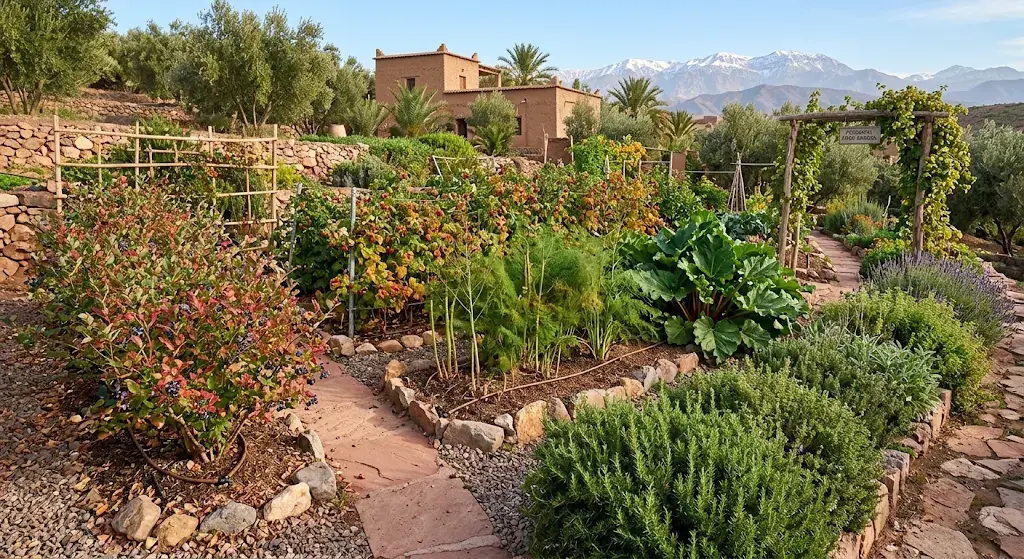
Do Not Put Every Perennial in the Same Bed
One of the biggest mistakes in perennial garden planning is treating all long-lived crops as if they want the same soil.
They do not.
For example:
- Blueberries need distinctly acidic soil.
- Asparagus prefers well-drained fertile soil and does poorly in waterlogged locations.
- Raspberries also dislike wet heavy soil.
- Thyme and sage prefer much drier conditions than blueberries.
- Rhubarb appreciates moisture and rich soil.
Design separate zones based on plant needs instead of forcing every perennial edible into one decorative border.
Put Long-Lived Crops Where They Can Stay
Annual vegetables can be moved next year. A 15-year asparagus bed cannot be moved nearly as easily.
Before planting a perennial food crop, check:
- Sun exposure
- Drainage
- Future shade
- Access to water
- Space at mature size
- Nearby paths
- Fences and property lines
- Future buildings
Perennials Still Need Fertility
“Plant once” does not mean the soil feeds the plant forever.
Every harvest removes nutrients from the system.
Depending on the crop, long-term management may include:
- Compost
- Mulch
- Soil testing
- Targeted fertilizer
- Organic matter replacement
Expect a Waiting Period
Perennial crops often trade fast results for long-term production.
Blueberries may take years to reach full production. Asparagus needs establishment time before heavy harvest. Young fruit trees can also take several seasons before meaningful production.
That is why a good food garden usually combines perennial crops with annual vegetables rather than replacing annuals completely.
Is the $8,000 Grocery Savings Claim Realistic?
There is no universal number.
Savings depend on:
- How many plants you grow
- Local grocery prices
- Yield
- Crop losses
- Irrigation costs
- Mulch and fertilizer costs
- Pest protection
- Your climate
- How much of the harvest your household actually eats
A productive perennial garden can absolutely reduce grocery purchases over time, but promising a fixed $8,000 return from $200 of plants is not responsible gardening advice.
A Better Starter Perennial Food Garden
Instead of buying every perennial at once, start with a small group that fits your climate and soil.
- Choose one dedicated asparagus bed.
- Add two or more compatible blueberry cultivars if your soil conditions work.
- Install a contained raspberry row with a simple trellis.
- Plant one or two rhubarb crowns if your climate suits rhubarb.
- Use sunny garden edges for chives, thyme, sage, and oregano.
- Leave enough space for mature plant size.
- Install irrigation before the plants become large.
- Mulch perennial areas to reduce weeds and moisture swings.
What the Pinterest Graphic Gets Right
- Perennial edible plants can produce for many years.
- Blueberries can be extremely long-lived.
- Asparagus is worth treating as a permanent bed.
- Raspberries regenerate new canes from perennial crowns and roots.
- Rhubarb can remain productive for many seasons.
- Perennial herbs reduce the need to replant every year.
What the Graphic Oversimplifies
- Not every crop reliably produces for 20 years.
- Raspberries do not stay productive forever.
- Full production does not automatically happen by year three for every crop.
- Blueberries may take longer to reach mature production.
- Rhubarb may need division and rejuvenation.
- Perennials still require pruning, water, fertility, and pest management.
- There is no guaranteed dollar savings from a fixed amount spent on plants.
Perennial Food Garden FAQ
What vegetables grow back every year?
Asparagus, rhubarb, horseradish, and some perennial alliums are common examples, although suitability depends on climate.
How long does asparagus produce?
A well-managed asparagus planting can commonly produce for 15 years or more, and some plantings remain productive for around 20 years.
How long do blueberry bushes live?
Well-managed blueberry plants can remain productive for several decades, and extension guidance notes that some can bear for more than 50 years.
Do raspberries really spread forever?
They spread by producing new shoots from their perennial root system, but a planting can decline because of disease, pest pressure, viruses, poor soil, or age.
Can I put blueberries and asparagus in the same bed?
Usually that is not ideal because blueberries prefer much more acidic soil than asparagus. Design separate planting zones for crops with very different soil requirements.
Are perennial gardens maintenance-free?
No. They reduce annual replanting, but still require watering, pruning, mulch, fertility management, weed control, and occasional renovation.
The Bottom Line
The strongest idea in the Pinterest image is not the promise of $8,000 in savings. It is the idea of putting some garden space into crops that can keep producing year after year.
Blueberries, raspberries, asparagus, rhubarb, perennial herbs, and fruit trees can reduce yearly replanting while adding long-term structure to a productive backyard.
Choose crops that fit your climate, give each one the soil conditions it actually needs, plan for mature size, and expect regular care. That is how “plant once” becomes years of useful harvests instead of a viral promise that disappoints.
Sources
- Oregon State University Extension — Blueberries in Your Garden
- Oregon State University Extension — Growing Raspberries in Your Home Garden
- University of Minnesota Extension — Growing Asparagus in Home Gardens
- University of Minnesota Extension — Growing Rhubarb in Home Gardens
- Oregon State University Extension — Grow Your Own Rhubarb