A basket weave brick wall can turn an ordinary garden boundary into a decorative screen with texture, partial privacy, light, and airflow. The woven look comes from changing the direction of the bricks, but outdoor freestanding walls still need proper structural support, foundations, drainage, and weather-resistant detailing.
What makes this wall different?
- Horizontal and vertical bricks create a woven visual pattern.
- Open sections can let light and air move through the garden.
- The pattern works well as a decorative screen or feature panel.
- Piers or solid wall sections can visually frame the patterned areas.
- The decorative pattern should not be assumed to provide structural stability by itself.

What Is a Basket Weave Brick Wall?
A basket weave brick wall uses groups of bricks laid in different directions so the finished surface looks woven rather than forming the usual long horizontal courses.
The idea is similar to basket weave brick paving, but in a garden wall the pattern may be used as a decorative panel, screen, or open section between more conventional masonry.
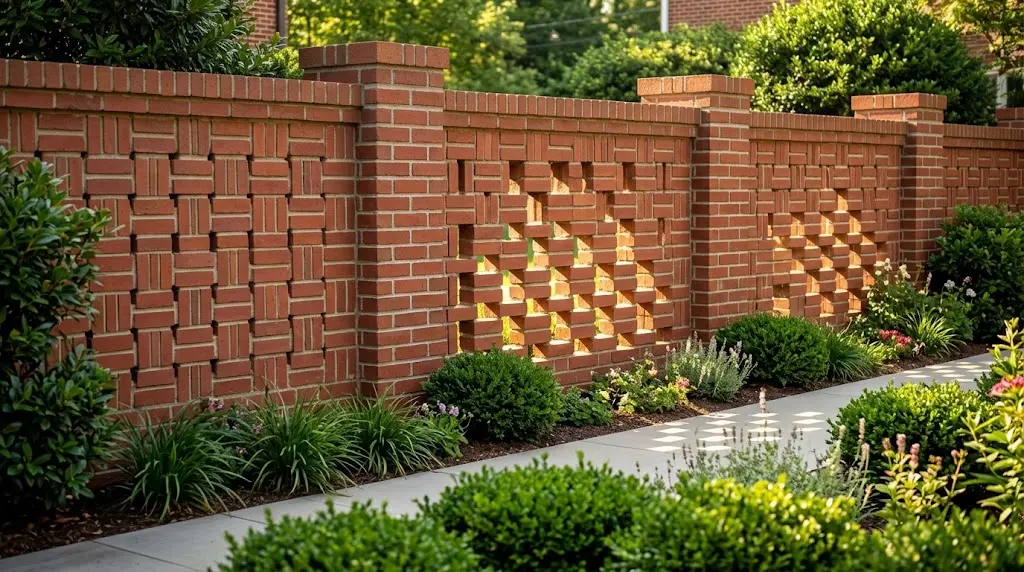
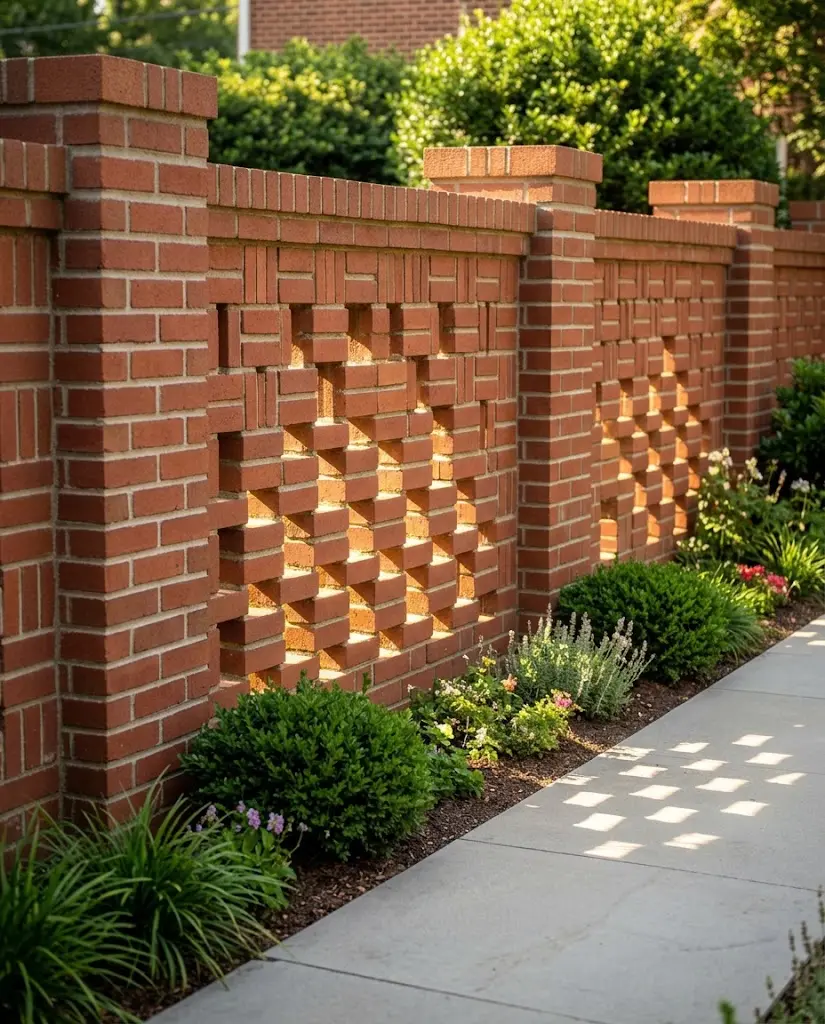
In the inspiration image, some bricks run horizontally while others stand vertically. Small openings remain between parts of the pattern, which gives the wall a lighter appearance than a completely solid brick boundary.
Basket weave is best thought of as a design pattern, not a universal structural bond. Brick industry references describe it primarily as decorative brickwork used in feature walls, garden walls, and infill panels.
Important: Do not copy the brick arrangement from a photo and assume it is safe as a tall freestanding wall. Wall height, thickness, piers, foundations, wind exposure, soil conditions, mortar, and local building requirements all affect stability.
7 Basket Weave Brick Wall Ideas for a Garden
1. Use It as a Partial Privacy Screen
A completely solid wall gives strong visual separation, but it can also make a small backyard feel enclosed.
An open basket weave panel can provide partial screening while allowing light and air to move through the openings.
This can work well beside a patio, garden seating area, outdoor shower, or utility zone where you want some visual separation without building a completely closed barrier.
FarmSolo’s outdoor shower design guide also explains why privacy, drainage, and location should be planned together rather than treating the screen as an afterthought.
2. Frame Decorative Panels With Solid Brick Piers
Instead of repeating the basket weave across a long wall, use the pattern in selected sections between solid piers or conventional brickwork.
Visually, this breaks a large boundary into smaller panels and makes the decorative brickwork easier to appreciate.
From a structural standpoint, the spacing, size, and role of piers should come from an appropriate wall design rather than being guessed for appearance.
3. Build a Low Garden Divider
A low decorative wall can separate different parts of the garden without acting like a tall boundary fence.
Use it to visually divide a patio from a planting area, frame a vegetable garden entrance, or separate a sitting area from a path.
A low wall also keeps the pattern closer to eye level when you are sitting nearby, where the woven brick detail is easier to notice.
4. Pair Red Brick With Green Planting
Traditional red and terracotta brick naturally contrasts with green foliage.
Place planting beds near the wall with grasses, herbs, shrubs, or flowering perennials selected for your climate and sunlight.
Leave enough access at the base of the wall to inspect mortar joints, drainage, and any developing movement rather than hiding everything behind dense plants.
5. Use the Pattern Near a Pergola or Patio
Basket weave brickwork can give an outdoor seating area more character than a plain fence panel.
A brick screen beside a timber pergola creates a useful contrast between warm masonry and wood while keeping the garden material palette simple.
If you are planning both features together, see FarmSolo’s backyard pergola ideas for shade and seating-zone planning.
6. Create a Garden Gate Feature
A patterned brick section can make an ordinary side entrance feel more intentional.
Use conventional masonry around the gate opening and reserve the decorative pattern for nearby panels.
Do not hang a heavy gate from a decorative brick panel unless the supporting pier or structure has been specifically designed for that load.
7. Repeat the Brick in Paths or Edging
If the basket weave wall is a strong feature, repeating the same brick somewhere else can make the garden feel more connected.
You could use matching brick as path edging, around a planting bed, or in a small paved detail without covering the entire yard in the same pattern.
The goal is repetition, not duplication. One or two smaller brick details are usually enough to connect the wall to the rest of the landscape.
Basket Weave vs. Regular Running Bond
| Feature | Basket weave | Running bond |
|---|---|---|
| Appearance | Decorative, woven texture | Simple horizontal pattern |
| Best use | Feature panels and decorative areas | General wall construction when properly designed |
| Layout | More planning and alignment | Straightforward repeated courses |
| Open screen option | Can be designed with visual openings | Usually built as a solid wall |
| Structural role | Should not be assumed structural | Can form part of structural masonry when correctly designed |
Why the Foundation Matters More Than the Pattern
The visible brickwork gets most of the attention, but an outdoor freestanding wall depends on what happens below it.
Brick industry guidance for freestanding walls considers ground conditions, wall height, wall thickness, foundations, weather exposure, mortar, and coping as part of the complete design.
A decorative pattern cannot compensate for an inadequate foundation or an unstable wall shape.
Conditions also change by location. Frost depth, soil, wind exposure, wall height, nearby slopes, and local building rules can all affect what is required.
Simple rule: Choose the decorative brick pattern after the wall’s foundation, height, thickness, support, and exposure have been planned. The pattern should fit the safe wall design, not determine it.
Do Openings Make a Brick Wall Safer in Wind?
Do not assume so.
An open pattern may allow some air to pass through, but it also changes the arrangement of the masonry and the way the wall behaves.
Wind stability is a structural question involving wall height, thickness, supports, geometry, foundations, materials, and exposure.
Freestanding masonry walls can collapse when they are inadequately supported, particularly during construction before the complete wall system is finished.
For a tall boundary wall, exposed location, unusual open pattern, retaining condition, or wall near a public path, use appropriate local professional advice rather than relying on an online pattern.
Use Bricks Made for Outdoor Exposure
Not every brick is equally suitable for an exposed garden wall.
Outdoor masonry has to deal with rain, moisture, temperature changes, and in colder climates repeated freeze-thaw cycles.
Select exterior bricks and mortar appropriate for your climate and the exposure of the site. If you are reusing old bricks, confirm that they are suitable for exterior use rather than assuming every reclaimed brick will survive outdoors.
Do Not Forget the Top of the Wall
Water entering the top of exposed masonry can contribute to long-term deterioration.
Freestanding brick wall guidance commonly includes coping or capping designed to shed rainwater away from the masonry below.
The exact detail depends on the wall design, brick, climate, and architectural style, but the top should not be treated as an unfinished edge simply because the pattern below looks decorative.
Basket Weave Brick Wall Mistakes to Avoid
- Copying a Pinterest wall as a structural plan. The photo does not show the footing, reinforcement, piers, soil, or wind design.
- Assuming the decorative bond is automatically strong. Basket weave is mainly used for visual effect.
- Building too tall without proper design. Wind loads become increasingly important as a freestanding wall gets taller.
- Ignoring the foundation. The visible pattern is only one part of the wall system.
- Using unsuitable interior or soft bricks outdoors. Exposure and freeze-thaw durability matter.
- Leaving the top unprotected. Proper coping or capping helps manage rainwater.
- Using a decorative screen as a retaining wall. A wall holding back soil has different structural and drainage requirements.
- Skipping temporary stability during construction. Partially built masonry can be vulnerable to wind and accidental loading.
If the wall is part of a larger backyard redesign, FarmSolo’s homestead garden layout guide can help you position paths, planting areas, work zones, and permanent structures before construction begins.
Basket Weave Brick Wall FAQ
What is a basket weave brick wall?
It is decorative brickwork that changes the orientation of groups of bricks to create a woven visual pattern. It can be used in garden feature walls, panels, paving, and other decorative masonry.
Is basket weave a structural brick bond?
It should not automatically be treated as one. Basket weave is commonly described as a decorative pattern. A freestanding wall needs a complete structural design appropriate for its height, materials, foundation, supports, and exposure.
Can a basket weave wall be used for privacy?
Yes, as a partial visual screen. Openings can preserve some light and airflow, but the wall will not provide the same privacy as completely solid masonry.
Can I use reclaimed bricks?
Possibly, but confirm that the bricks are suitable for outdoor exposure and are in good enough condition for the intended project. Reclaimed brick sizes can also vary, which makes a precise decorative pattern harder to set out consistently.
Does an open brick screen need a foundation?
A permanent masonry wall still needs an appropriate foundation and stable support. The required design depends on the wall, soil, climate, height, and local rules, so open gaps should not be treated as a substitute for proper foundations.
Can a basket weave wall hold back soil?
Do not assume so. A retaining wall has additional structural and drainage requirements because it must resist pressure from soil and water. A decorative garden screen should not be converted into a retaining wall without a suitable design.
Use the Pattern as Inspiration, Not the Engineering
The wall in the inspiration image is interesting because a basic red brick becomes much more decorative simply by changing direction and leaving carefully planned openings.
That idea can work beautifully in a garden screen, patio divider, entrance feature, or decorative wall panel.
But the visual pattern is only the part you can see. A durable outdoor wall also needs a suitable foundation, stable geometry, appropriate brick and mortar, weather protection, drainage, and a design that fits its location.
Get those parts right first, then use the basket weave pattern to give the garden wall the character that made the Pinterest idea stand out in the first place.