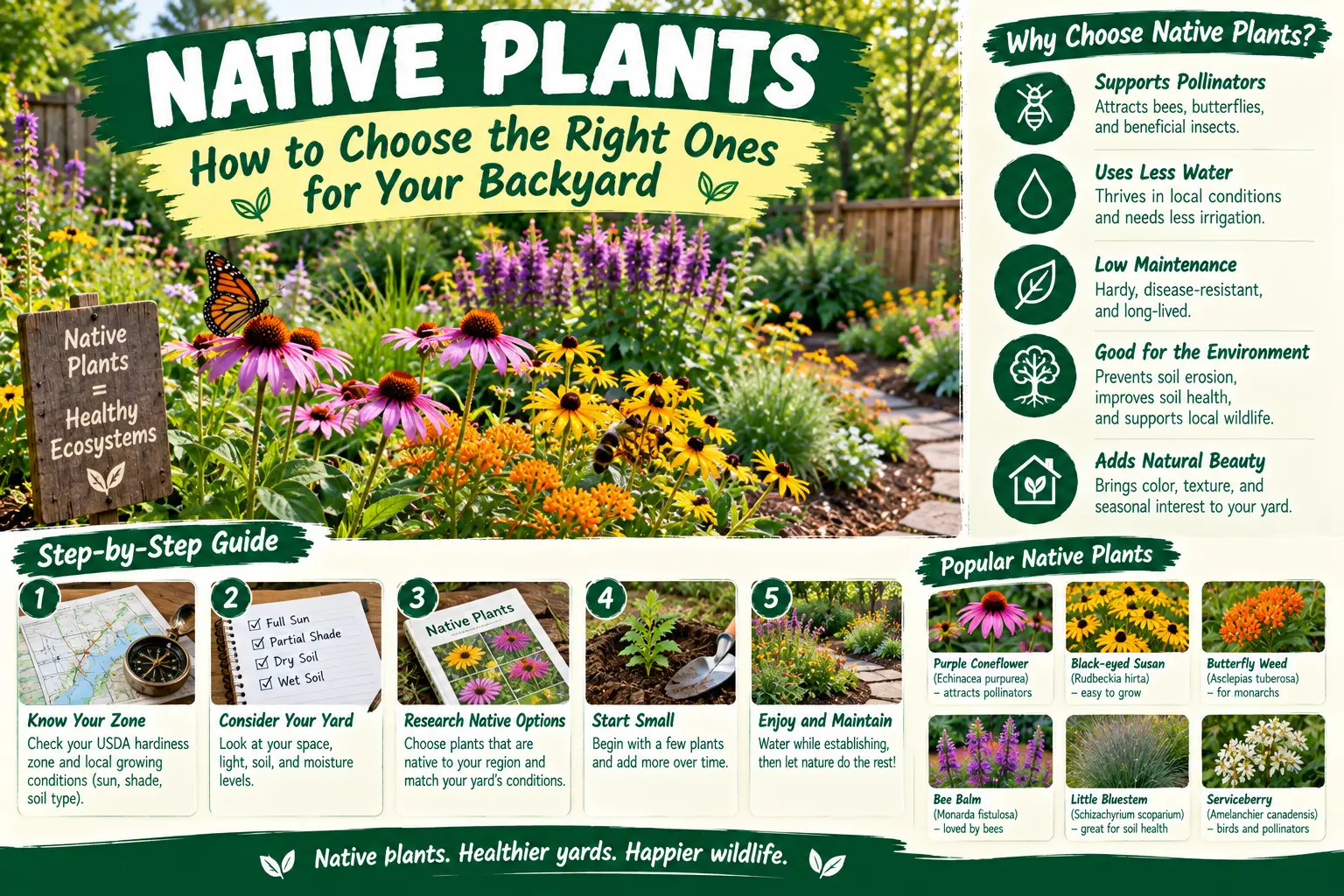
Native Plants: What I Learned After Planting the Wrong Things in My Backyard
Native Plants. I used to think a good garden meant filling the backyard with the prettiest plants I could find.
Big flowers. Fast-growing shrubs. Something green in every empty corner.
Then one spring I realized I was spending more time watering, trimming, feeding, and worrying about my plants than actually enjoying the yard. One plant needed more water. Another got attacked by bugs. A third looked great at the garden center but completely hated my backyard.
That’s when I started paying more attention to native plants.
And honestly, I wish I’d done it years earlier.
Native plants aren’t magic. They still need the right location, some care when getting established, and a little patience. But when I started choosing plants that naturally belong in my region, my backyard garden became easier to manage and much more alive.
Birds showed up. Pollinators started visiting. I saw more butterflies, bees, and other little creatures doing their thing.
So lemme show you what I’ve learned about using native plants around a backyard homestead, including a few mistakes I definitely wouldn’t repeat.
So, What Exactly Are Native Plants?
Put simply, native plants are plants that naturally occur in a particular region or ecosystem without having been introduced there by people from somewhere else.
The important part is your region.
A plant can be native to one part of the United States and not native to another. That’s why I don’t recommend simply searching for “best native plants” and buying whatever shows up first.
You want plants that are suited to your local area.
Before buying anything, I like checking local native plant groups, botanical gardens, extension resources, or reputable local nurseries.
And don’t be afraid to ask questions. I’ve spent plenty of time standing in a nursery looking confused while reading plant labels. You’re gonna laugh, but sometimes the person working there knows more in five minutes than I could figure out in an hour online.
Why I Started Using Native Plants in My Backyard
My biggest reason wasn’t even the wildlife.
It was work.
I wanted a backyard that looked good without needing constant attention.
When you’re managing a garden, compost, chickens, food preservation, and all the other little jobs around a homestead, you don’t want every ornamental plant demanding a special treatment plan.
Native plants can be a good fit because many are adapted to the local climate, soil conditions, rainfall patterns, and seasonal changes where they naturally occur.
That doesn’t mean you plant them and forget about them.
Young plants still need water while establishing roots. Weeds still show up. Some plants need pruning or protection.
But once established in the right location, many native plants can fit into a lower-maintenance landscape much better than plants that aren’t suited to your area.
My First Native Plant Mistake
Here’s where I messed up.
I bought a plant because the tag said it was drought tolerant.
Great, right?
Not really.
I planted it in an area that stayed damp after rain.
The plant didn’t care about my excitement. It struggled, looked miserable, and eventually died.
That taught me something I still use today: the right plant in the wrong place is still the wrong plant.
When choosing native plants, don’t just ask whether the plant is native. Ask where it likes to grow.
Does it prefer full sun?
Does it tolerate shade?
Does it like dry soil or moist soil?
Does it stay small or become a giant shrub?
How tall does it get?
And maybe the most important question for a small backyard: how much space will it need in five or ten years?
Native Plants Can Make a Backyard More Alive
This is the part I didn’t expect.
Once I started adding more native plants, I noticed more activity around the yard.
Bees were visiting flowers. Butterflies showed up. Birds were moving through the shrubs.
It wasn’t an instant transformation. But over time, the yard started feeling less like a collection of plants and more like a little ecosystem.
That’s one of the things I really like about permaculture too. Instead of thinking about every part of the yard separately, you start looking at how everything works together.
Your garden produces vegetables.
Your compost feeds the soil.
Your trees provide shade.
Your flowers attract pollinators.
Your shrubs can provide habitat for wildlife.
And suddenly that backyard is doing several jobs at once.
Native Plants and Vegetable Gardens Work Well Together
I don’t think you have to choose between a native landscape and a productive vegetable garden.
I actually like having both.
My vegetable beds are where I grow food. Around the edges, native flowers and shrubs can help create a more welcoming environment for pollinators and other wildlife.
Just be smart about placement.
Don’t put a huge shrub right next to your tomatoes if it’s eventually going to shade them all afternoon.
I made that mistake with a fast-growing plant once. At first it looked small and harmless. A couple years later it was basically standing there saying, “Good luck growing those tomatoes.”
Plan for the mature size, not the size of the plant sitting in the nursery pot.
How I Choose Native Plants Now
I don’t walk into a garden center anymore and just grab whatever looks pretty.
Here’s my simple process.
First, I look at the space.
Is it sunny, shady, wet, dry, windy, or somewhere in between?
Then I think about the job I want the plant to do.
Maybe I need ground cover. Maybe I want flowers for pollinators. Maybe I need a small shrub for privacy. Maybe I’m trying to improve a boring corner of the backyard.
Then I check the mature size.
This one saves me from a lot of trouble.
Finally, I check whether it’s actually native to my area.
Not just “native to North America.” That’s too broad.
I want information specific to my region.
Don’t Forget Native Trees and Shrubs
When people talk about native plants, they often think about little wildflowers.
Those are great, but don’t forget trees and shrubs.
A properly chosen native tree can become one of the most valuable parts of a backyard over time.
It can provide shade, shelter, flowers, fruit, seeds, or habitat depending on the species.
But please think before planting a tree.
I learned this lesson with an ordinary tree that seemed tiny when I planted it.
Years later, it wasn’t tiny anymore.
Branches were reaching places I didn’t expect, roots were becoming a concern, and I started wondering what version of myself thought planting it three feet from something important was a good idea.
Give trees room.
Future-you will appreciate it.
Native Plants Don’t Mean You Never Water
There’s a common misunderstanding that native plants don’t need water.
That’s not how I look at it.
A newly planted native plant may need regular watering while it establishes a strong root system, especially during hot or unusually dry weather.
Once established, the plant may be much better adapted to local conditions, but that doesn’t mean it can survive every drought without help.
During extreme weather, I pay attention to everything in the garden, native or not.
Sometimes a little water at the right time can save a plant that took years to establish.
What About Native Plants and Chickens?
Here’s another lesson from my backyard.
Chickens don’t care that a plant is native.
They care whether they can scratch around it.
And if there’s loose soil around a young plant, you can bet a chicken is going to investigate it.
I’ve had chickens scratch mulch away from plants, dig around roots, and generally behave like four feathered excavators.
So if you’re combining backyard farming with native landscaping, protect young plants until they’re established.
Simple fencing or temporary chicken wire can save you a lot of frustration.
Once the plants are bigger and stronger, they usually have a much better chance of handling a little backyard chaos.
Don’t Try to Make Your Native Garden Too Perfect
This took me a while to understand.
I used to think every garden bed needed to look clean all the time.
No leaves.
No dead stems.
No little wild areas.
Everything trimmed perfectly.
But a wildlife-friendly backyard doesn’t always look like a golf course.
Leaving some natural material in appropriate places can provide shelter and food for insects and other small creatures.
Now I don’t rush to clean every leaf the second it falls.
Some areas of my yard are neat because I like them that way. Other areas are a little more natural.
That’s a balance that works for me.
Native Plants Can Be Great for an Urban Homestead
You don’t need a huge property to use native plants.
Even a small urban backyard can have room for a few native flowers, herbs, shrubs, or a properly selected small tree.
If you have no yard at all, containers may be another option for some suitable species.
Just remember that container gardening is different. Containers dry out faster and have limited root space, so don’t assume a native plant will automatically be maintenance-free just because it’s in its natural region.
For renters, check local rules and your lease before making permanent landscaping changes.
My Simple Native Plant Plan
If I were starting a native plant garden from scratch today, I’d keep it simple.
I’d start with maybe three or four plants instead of buying twenty.
I’d choose plants that bloom at different times if possible.
I’d include different heights rather than putting everything in one straight row.
I’d leave enough room for the plants to reach their mature size.
And I’d keep the maintenance realistic for my schedule.
There’s no prize for having the most plants.
A small garden you enjoy caring for is much better than a huge landscape that becomes a chore by July.
Should You Remove Every Non-Native Plant?
No, not automatically.
This is one area where I think people can get carried away.
If you already have established ornamental plants that aren’t native, you don’t necessarily need to rip everything out tomorrow.
Instead, you can gradually add native plants where they make sense.
If a non-native plant is invasive in your area, that’s a different conversation. Check reliable local resources to understand which plants are considered invasive where you live.
For me, the gradual approach is easier and much less expensive.
3 Things I Wish Somebody Had Told Me
Number one: Don’t shop before you know your yard.
Spend some time watching sunlight, moisture, and drainage.
Number two: Buy for the mature plant.
That tiny little nursery plant isn’t going to stay tiny.
Number three: Be patient.
Native plants aren’t necessarily going to give you an instant magazine-looking landscape.
Some take time to establish. That’s okay.
I’ve learned that gardening rewards the people who can wait.
Native Plants FAQ
Are native plants easier to grow?
They can be, especially when you choose a plant suited to your local conditions and give it the right location. But native doesn’t mean maintenance-free. Young plants still need care while they establish.
Can I grow native plants in a small backyard?
Yes. You can choose smaller flowers, ground covers, shrubs, or container-friendly plants depending on your local area. Just pay attention to mature size.
Do native plants attract bees and butterflies?
Many native flowering plants provide useful resources for pollinators, but the exact wildlife you attract depends on the plant species, season, location, and other conditions in your yard.
What I Really Like About Native Plants
After more than a decade of messing around with gardens, compost, chickens, vegetables, and all the other crazy parts of homesteading, I’ve stopped trying to make my backyard perfect.
I want it useful.
I want vegetables growing where they should be. I want compost turning into dark soil. I want chickens doing their chicken thing without destroying everything. And I like having flowers and native plants bringing a little life into the spaces between it all.
That’s what makes a backyard feel like a homestead to me.
You don’t need acres of land. You don’t need expensive landscaping. You don’t even need to know everything before you start.
Start with one small area.
Learn what grows naturally in your region. Watch the sunlight. Improve the soil. Give plants enough room. And don’t panic when the garden gets a little messy.
My experience with native plants has taught me that sometimes the best thing you can do for a backyard is stop fighting the place you’re growing in and start working with it.
And if you make a mistake, don’t worry. I probably made a bigger one already.
Got a weird plant problem in your backyard? Leave a comment and tell me what’s going on. I actually enjoy this stuff, and maybe we can figure it out together.