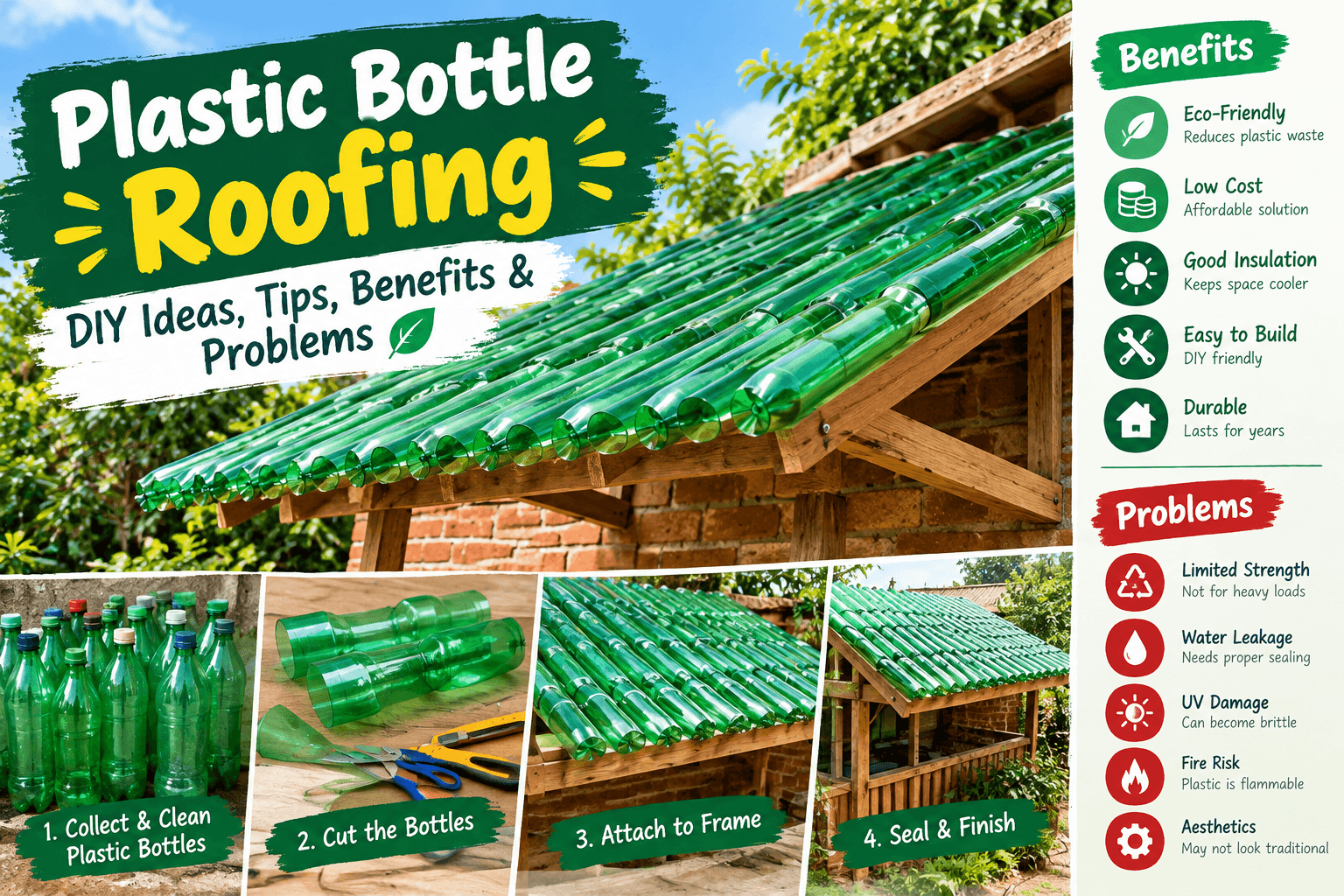
Plastic Bottle Roofing: A Crazy-Sounding DIY Idea That Can Actually Be Useful
The first time I heard about plastic bottle roofing, I honestly thought, “There’s no way that can work.” Then I started looking into how people reuse old plastic bottles for garden shelters, sheds, chicken areas and other small backyard projects. It’s not a magic replacement for a proper roof, but as a creative recycling project, it gets pretty interesting.
Homesteading has a funny way of making you look at ordinary trash differently.
An empty plastic bottle is usually something you toss into the recycling bin and forget about. But when you’re working on a tight budget, building a garden shelter, or trying to reuse materials around your property, you start asking a different question: “Can I use this for something?”
That’s where plastic bottle roofing comes in.
It can be useful for small, non-critical structures, especially when you’re interested in recycling and DIY projects. But there are some very important limits, and I’ll get to those because I don’t want somebody putting a bottle roof over their bedroom and blaming me when the next storm shows up.
So, What Is Plastic Bottle Roofing?
Basically, plastic bottle roofing means using discarded plastic bottles as part of a roof or roof-like covering.
There isn’t just one way to do it.
Some DIY builders use bottles as lightweight roof elements. Others cut, flatten or arrange plastic bottles and attach them to a supporting frame. Some projects use whole bottles while others use pieces of plastic as a water-shedding layer.
The important part is understanding that the bottles themselves aren’t normally the structural roof. You still need a properly supported frame or backing system.
Think of the bottles as the covering material in a creative reuse project, not as a substitute for structural framing.
Why Would Anybody Use Plastic Bottles on a Roof?
Well, there are a few reasons.
First, they’re cheap. Sometimes they’re completely free if you save your own bottles or ask friends, neighbors and local businesses to save clean containers.
Second, you’re reusing something that might otherwise become waste.
Third, plastic bottles are lightweight. That makes them easier to handle than many traditional roofing materials, although the supporting structure still needs to be designed properly.
And fourth, it can be a fun project.
That’s actually an underrated reason. Not every homestead project has to save $500 or produce 200 pounds of vegetables. Sometimes it’s nice to build something weird on a Saturday and see if it works.
Where Does Plastic Bottle Roofing Make Sense?
This is where I’d keep my expectations realistic.
Plastic bottle roofing can be interesting for small garden structures, decorative shelters, temporary projects, greenhouse-style experiments and other non-critical outdoor uses.
For example, imagine a little shelter over part of a backyard workspace. You’ve got a sturdy wooden frame, and the bottle material is being used as a lightweight covering.
That’s the kind of project where experimentation makes more sense.
I wouldn’t use an improvised bottle roof for a house, garage, occupied structure, or anywhere that requires a code-compliant weatherproof roof.
Local building codes, fire requirements, wind loads and weather conditions matter. A roof in a calm backyard is one thing. A roof in an area with hurricanes, heavy snow, extreme heat or strong winds is another story completely.
How Many Bottles Would You Need?
This is the question everybody asks.
And the annoying answer is: it depends.
The size of your bottles, how they’re arranged, the roof dimensions and how much overlap you use will all change the number.
A small garden shelter might take dozens or hundreds of bottles. A larger project could require a ridiculous number.
That’s why I recommend building a small test panel first.
Don’t collect 2,000 bottles and then discover your design looks terrible.
Make one little section. See how it handles sunlight, rain and wind. Then decide if it’s worth continuing.
What Bottles Should You Use?
For a DIY recycling project, consistency makes life easier.
If you’re using lots of different bottle sizes and shapes, your roof surface can become difficult to organize. Matching bottles give you a more predictable layout.
Clean, dry bottles are important too.
You don’t want old food or drink residue sitting inside hundreds of bottles around your backyard. That’s basically an invitation to insects and unpleasant smells.
Remove labels when practical and rinse everything thoroughly before using it.
Building the Supporting Frame
This is actually the part I’d spend most of my attention on.
A bottle roof is only as good as the structure holding it.
Start with a sturdy frame appropriate for the size of your shelter and the weather where you live. The frame needs to handle wind and the weight of the covering, plus rainwater and any other loads the structure may experience.
Don’t make the mistake of thinking, “The bottles are light, so the whole roof can be flimsy.”
Wind doesn’t care how light your bottles are.
A gust can get underneath a lightweight covering and turn your cute little garden roof into a flying plastic kite. That’s not a feature.
How I’d Experiment With a Bottle Roof
Here’s the simple approach:
- Build a small test frame. Don’t start with the entire roof.
- Clean and dry the bottles. Get rid of labels and residue where practical.
- Test your arrangement. Figure out how the bottles overlap or attach.
- Make water run-off the priority. You don’t want little pockets where water can sit.
- Secure every section. Wind is usually a bigger concern than people expect.
- Test it in mild weather first. Look for leaks, movement and weak attachment points.
Take your time with the first panel. Once you figure out a repeatable pattern, the rest gets much easier.
Can Plastic Bottle Roofing Keep Rain Out?
It can help shed water when designed properly, but I wouldn’t assume an improvised bottle roof will be completely waterproof.
Rain can find surprisingly small gaps.
I’ve watched water travel sideways across materials that looked perfectly dry from the outside. It has a talent for finding the one tiny opening you didn’t think about.
That’s why drainage and overlap matter so much.
Build the surface so water has a clear path downward instead of collecting in low spots.
And test it with a garden hose before you trust it with your tools, feed bags or anything else you don’t want soaked.
What About Sun and Heat?
This is one of the biggest questions with plastic.
Outdoor plastic can degrade when exposed to sunlight over time. Different plastics behave differently, so don’t assume a bottle will stay strong forever just because it looked fine when you installed it.
Heat is another concern.
I would keep improvised plastic roofing well away from fireplaces, wood stoves, grills and other high-heat sources unless the complete system has been specifically designed and approved for that application.
Plastic and uncontrolled fire are not a combination I’d experiment with.
Could You Use It for a Chicken Coop?
This is one place where people get interested quickly.
A lightweight recycled roof over part of a chicken run can sound like a great idea. And in some situations, recycled plastic material could be part of a shelter design.
But chickens are hard on things.
They peck. They scratch. They knock stuff around. And if your roof starts shedding little pieces of degraded plastic, that’s obviously not something you want around animals.
I’d inspect it regularly and keep the chickens from accessing loose pieces or sharp edges.
For the actual enclosed coop, I’d personally favor a durable, purpose-built roofing material over an improvised bottle roof.
Plastic Bottle Roofing for a Garden Shelter
This is probably where the idea gets most interesting.
Imagine a small covered garden workspace with a strong wooden frame and a recycled bottle covering. You could have a little potting bench underneath, hooks for tools, seed trays and maybe a compost area nearby.
It doesn’t need to be fancy.
That’s one thing I really like about homesteading. A crooked little garden shelter that you actually use is worth more than a beautiful project that never gets finished.
What I Don’t Like About Plastic Bottle Roofing
Let’s be honest about the downsides.
Collecting enough bottles takes time.
Cleaning them takes even more time.
The finished roof may look homemade. Some people love that. Some people definitely won’t.
Plastic can also age in sunlight, and the long-term durability of an improvised design can be difficult to predict.
Then there’s fire safety, wind and local building regulations.
So no, I wouldn’t call this a universal roofing solution.
It’s a creative reuse idea that can make sense for certain small projects.
My Three Favorite Tips for Trying It
1. Start ridiculously small
Build a panel before you build a roof. You’ll discover problems much cheaper that way.
2. Make the frame stronger than you think you need
Not because the bottles are heavy. Because outdoor wind can be nasty.
3. Think about maintenance
If you’re going to spend days collecting and preparing bottles, make sure you can replace damaged sections later. Don’t build something that has to be completely torn apart just to replace one piece.
Is Plastic Bottle Roofing Good for the Environment?
Reusing plastic can keep material in use instead of sending it directly into the waste stream, but that doesn’t automatically make every plastic reuse project environmentally friendly.
You still have to think about durability, eventual disposal, UV degradation and whether pieces could break off and become litter.
In other words, reuse it responsibly.
The goal isn’t just to move plastic from your trash can to your backyard. The goal is to make something useful and keep it maintained.
Plastic Bottle Roofing FAQ
Can plastic bottles really be used as roofing material?
They can be incorporated into some DIY roof coverings and small shelter projects, but they shouldn’t automatically be treated as a replacement for conventional structural roofing. The supporting frame and weather conditions matter a lot.
How long does plastic bottle roofing last?
There’s no reliable single lifespan for an improvised bottle roof. Bottle type, sunlight, temperature, attachment method, wind and maintenance all affect durability. Inspect it regularly and replace degraded material.
Can I use plastic bottle roofing on my house?
I wouldn’t recommend treating an improvised bottle roof as a residential roofing system. A home roof needs to meet structural, weatherproofing, fire and building-code requirements. Use approved roofing materials and professional advice where needed.
Would I Try It?
For a little garden shelter or creative backyard project? Sure, I can see the appeal.
For the roof over my living room? Nope.
That’s really the whole idea here. Homesteading gives us plenty of chances to reuse things, save money and get creative, but being frugal doesn’t mean ignoring safety.
Start with something small. Use clean materials. Build a strong frame. Watch what the sun and weather do to it. Check it after storms. And if something starts cracking, loosening or falling apart, fix it instead of hoping it’ll magically get better.
That’s how I’d approach plastic bottle roofing: as a clever recycled-material experiment for the right small project, not as a shortcut around proper roofing.
Got a Bottle-Roof Idea?
Maybe you’ve got a pile of bottles sitting around and a garden shelter you’ve been meaning to build. Tell me what you’re thinking about. Weird DIY ideas are half the fun of homesteading, and sometimes the strangest project ends up being the most useful one.