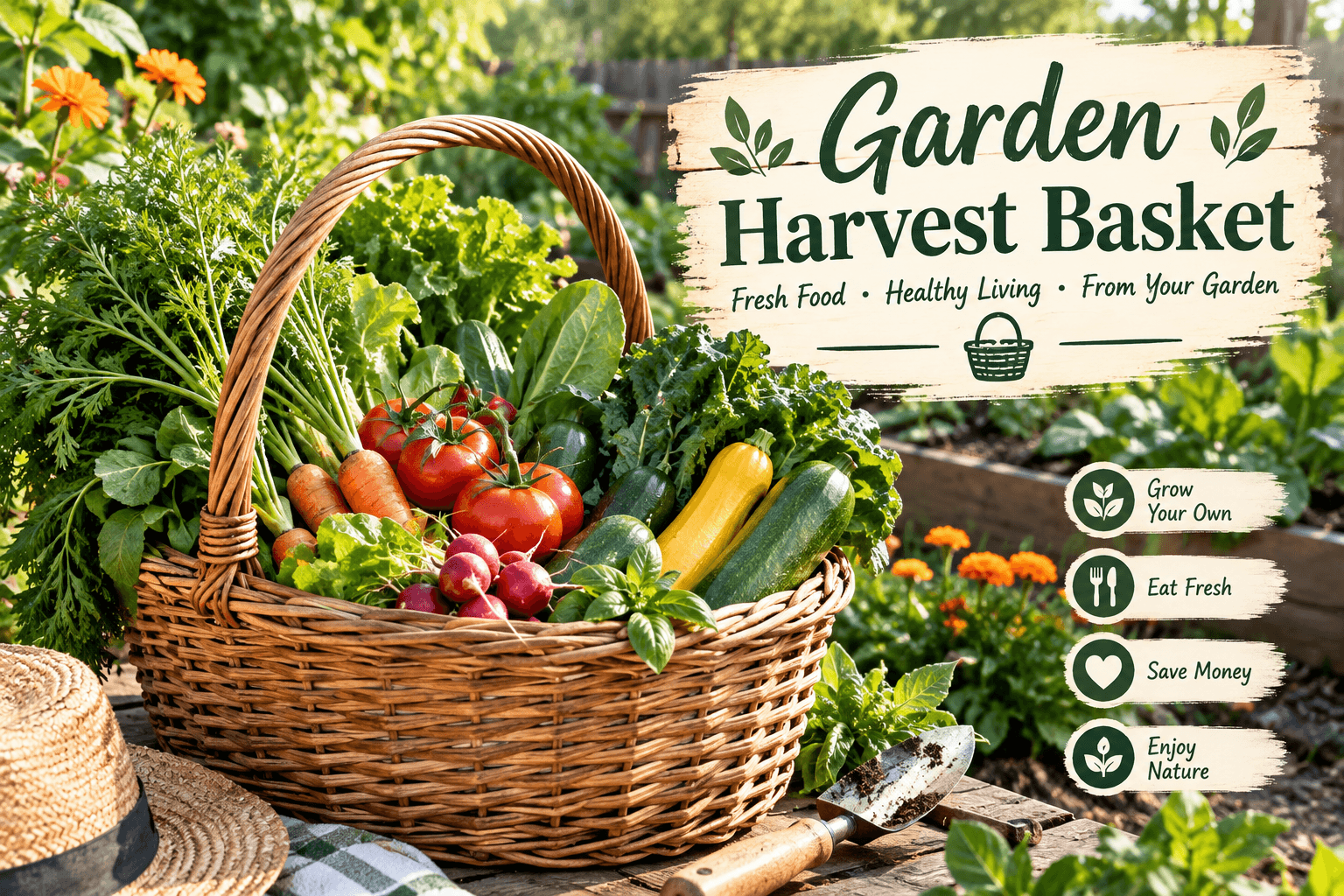
I used to walk into my backyard garden with one hand full of tomatoes and the other hand trying to carry cucumbers, peppers, and a bunch of herbs. You can probably guess how that ended. Yep, I dropped something almost every time. One afternoon I had three tomatoes roll under the chicken coop and I spent ten minutes crawling around in the dirt looking for them. That’s when I finally started using a garden harvest basket, and honestly, I wish I’d bought one years earlier.
A good garden harvest basket isn’t some fancy homesteading gadget you absolutely need. It’s just a simple container for bringing vegetables, fruits, herbs, and flowers from the garden back to the house. But after more than ten years of growing food in my backyard, I’ve learned that simple tools are often the ones I use the most. When harvest season gets busy, having one basket ready near the garden saves time, keeps produce from getting smashed, and makes the whole job feel a lot less chaotic.
Why I Keep a Garden Harvest Basket Near the Garden
Here’s a funny thing about gardening. You can spend hours planning the perfect vegetable garden, buying seeds, preparing the soil, building trellises, and watering everything. Then harvest day arrives and you realize you have absolutely nothing to carry the vegetables in.
That’s exactly what happened to me more than once.
I’d grab an old grocery bag, fill it with tomatoes, then discover the bag was too deep and all the tomatoes at the bottom were getting crushed. Another time I used a cardboard box that looked fine until I picked up the box and the bottom decided it had retired from service.
A garden harvest basket solves that little problem.
I like a basket because I can see what’s inside while I’m picking. I can spread tomatoes, peppers, cucumbers, beans, and squash out instead of piling everything on top of each other. That matters, especially with soft vegetables.
And there’s something satisfying about carrying a full basket of food into the kitchen. Maybe I’m just getting old, but I still like that feeling.
What Makes a Good Garden Harvest Basket?
You don’t need an expensive basket. I’ve used plastic tubs, wooden crates, old buckets, and actual harvesting baskets. Some worked great. Some were complete disasters.
The biggest thing I look for is easy handling.
If the basket is uncomfortable when it’s full, you’re going to hate using it. A basket that feels light when empty can become surprisingly heavy after you’ve loaded it with tomatoes, potatoes, cucumbers, peppers, and zucchini.
I also like baskets with ventilation.
Fresh vegetables can hold moisture, especially if you pick them early in the morning. A basket that allows air to move around the produce is much better than a sealed plastic container for carrying fresh garden harvests around.
Another thing I learned the hard way is that sharp edges are terrible.
One cheap plastic container I bought had a rough edge around the handle. I didn’t notice it until I grabbed it with wet hands. That thing gave me a nice little scratch every time I used it.
I stopped using it.
Life is too short for an angry harvest basket.
My Favorite Size for Backyard Harvesting
For a small or medium backyard garden, I prefer a medium-sized garden harvest basket rather than one giant basket.
Why?
Because a huge basket looks wonderful when it’s empty. Then you fill it with produce and suddenly you’re carrying what feels like a sack of potatoes.
I usually prefer something I can carry comfortably with one hand or two hands depending on the harvest. If I’m picking tomatoes and peppers, a medium basket is plenty. If I’m harvesting squash or cucumbers, I might need something larger or make two trips.
And yes, I know making two trips sounds less efficient.
But smashing half your harvest because you tried to carry everything at once isn’t exactly efficient either.
The Garden Harvest Basket I Use for Tomatoes
Tomatoes are where I really appreciate having the right basket.
A tomato may look tough when it’s hanging on the plant, but once you’ve picked it, you need to treat it with a little respect. If you pile twenty tomatoes into a deep container, the ones at the bottom can get bruised.
That’s why I like a shallow basket for tomatoes.
I put the tomatoes in gently, without throwing them in like I’m loading rocks. I try to keep ripe tomatoes toward the top and avoid stacking too deeply.
If I have a huge harvest, I use two baskets.
My younger self would’ve tried putting everything in one.
My older self has learned that sometimes the lazy-looking option actually saves work.
What About Cucumbers, Peppers, and Beans?
Cucumbers are pretty easy to harvest because they’re firm, but they can still get scratched or damaged if you throw them around.
Peppers are another favorite for the basket. I can walk down the garden row, pick the ripe ones, and place them directly inside without needing to carry a separate bucket.
Beans are especially convenient.
When my green beans start producing heavily, I can fill a basket surprisingly fast. That’s when I really understand why a good harvest container matters.
There’s a point during summer when the garden basically says, “Here, take all this food.”
And you’re standing there wondering what you’re going to do with it.
That’s a good problem to have.
Don’t Mix Everything Together
Here’s one little habit that made harvesting easier for me.
I don’t always mix every crop in the same basket.
If I’m harvesting soft tomatoes, I won’t put heavy potatoes on top of them. If I’m picking delicate herbs, I don’t bury them underneath cucumbers.
Instead, I’ll separate things by how fragile they are.
Sometimes I’ll put a clean cloth or paper towel between certain vegetables, especially if I’m carrying delicate produce. I don’t make this complicated. I’m just trying not to turn my harvest into vegetable soup before I reach the kitchen.
This is especially useful when you’re harvesting for food preservation.
If I know the tomatoes are going into sauce or canning later, I still want them in good condition. Damaged produce can spoil faster, and one rotten tomato has an impressive ability to make everything around it smell suspicious.
Should You Wash Vegetables in the Basket?
I don’t.
At least not usually.
I prefer bringing the harvest inside, sorting it, and washing what needs washing before using or preparing it. The exact handling depends on the crop and how you’re storing it, but I don’t like leaving wet produce sitting around in a basket.
This is another reason I like a basket that’s easy to clean.
Garden dirt gets everywhere.
You can pretend it won’t, but it will.
One morning I carried a basket of carrots inside and left a trail of dirt across the kitchen floor. My wife noticed it before I did.
I learned my lesson.
Sort and clean the harvest in an area where a little dirt isn’t going to cause a family meeting.
A Garden Harvest Basket Is Great for Herbs Too
I didn’t think much about harvesting herbs until I started growing more of them.
Now I use a small basket or shallow container for basil, rosemary, thyme, parsley, mint, and other herbs.
Herbs are different from big vegetables because they can wilt quickly after cutting, especially in hot weather. I try to harvest them when the weather isn’t brutally hot, then get them into the shade and process them fairly quickly.
For herbs I’m going to dry, I don’t want them crushed underneath heavy vegetables.
A small garden harvest basket is perfect for this.
I can bring the herbs inside, sort out damaged leaves, wash them when appropriate for the intended use, and then prepare them for drying or cooking.
It’s a tiny part of my routine, but it keeps the kitchen from becoming a mess.
Don’t Forget Flowers and Seeds
Here’s another use I didn’t think about when I started gardening.
Harvest baskets aren’t only for vegetables.
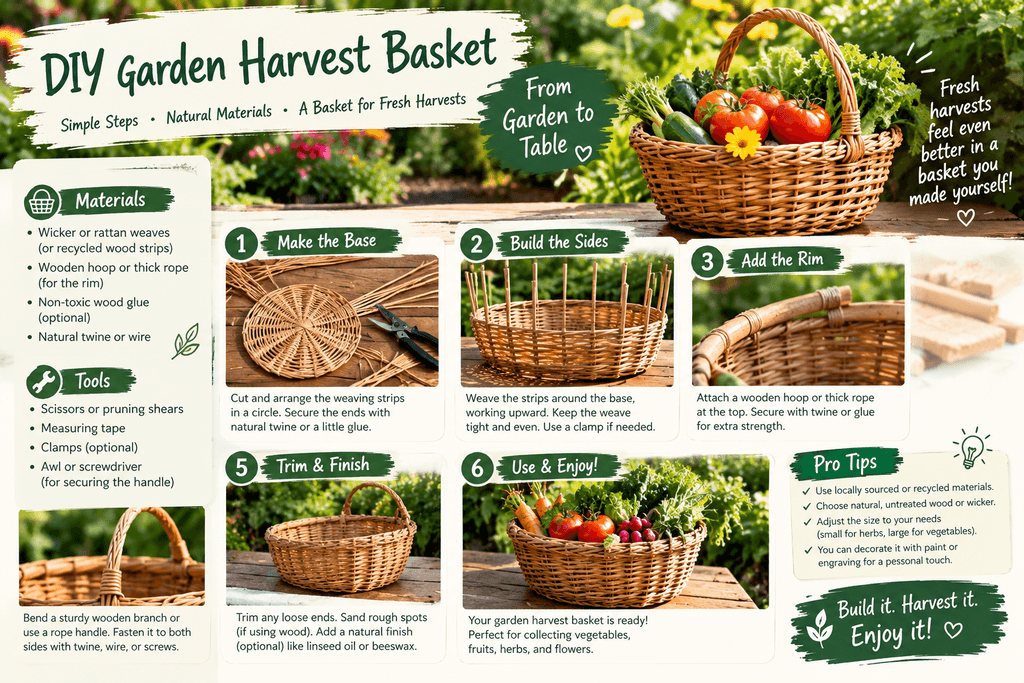
I use small baskets for flowers, seed heads, dried herbs, and sometimes materials I’m collecting for compost. Once you have a basket sitting beside the garden, you’ll probably find yourself using it for things you didn’t originally plan.
That’s the beauty of simple tools.
A fancy gadget usually has one job.
A basket has about fifty.
I’ve carried eggs, tomatoes, peppers, herbs, flowers, garden gloves, pruning tools, and even a roll of twine in mine.
I wouldn’t recommend putting sharp tools loose in the same basket with vegetables, obviously. But you get the idea.
How I Keep My Harvest Basket Clean
My basket doesn’t stay clean.
There’s no point pretending otherwise.
It’s going to get dirt on it. Maybe a leaf gets stuck inside. Maybe a tomato splits and leaves juice everywhere. Maybe one of the kids puts something weird in it.
It happens.
I give mine a good cleaning whenever it needs it and let it dry completely before storing it. If you’re using a wooden basket, pay extra attention to moisture because constantly leaving wood damp can create problems.
For plastic baskets, cleaning is usually pretty straightforward.
I also inspect the handles every so often. A basket that’s holding ten pounds of produce needs handles you can trust.
I’ve had enough things break in my hands to know this is worth checking.
Can You Use a Regular Basket Instead?
Absolutely.
If you’re just starting a backyard garden, don’t feel like you need to buy a special garden harvest basket.
Use what you’ve got.
A clean plastic tub can work. A sturdy crate can work. A shallow cardboard box can work for a while. Even a regular household basket may do the job.
The important thing is that it’s clean, easy to carry, appropriate for the type of produce you’re harvesting, and easy to clean.
If your garden gets bigger, then upgrade.
That’s how I approach most homesteading equipment now. I don’t buy the expensive version before I know whether I’ll actually use the thing.
My Simple Garden Harvest Routine
When harvest season gets busy, I try to keep my routine simple.
I’ll grab my garden harvest basket, a pair of garden scissors or pruners if needed, and maybe a small towel. Then I walk the garden slowly.
I don’t pick everything just because it’s there.
I look at what’s actually ready.
Tomatoes that need another day stay on the plant. Cucumbers that are getting too large come inside. Beans get picked regularly because letting them sit too long can change the quality of the crop.
I also keep an eye out for damaged vegetables.
If something is clearly spoiled, I don’t toss it into the basket with good produce.
Then I bring everything inside and sort it.
Some goes straight into dinner. Some goes into the refrigerator. Some gets preserved. Some gets shared with a neighbor.
And sometimes, let’s be honest, I stand in the kitchen eating a tomato over the sink.
That’s part of gardening too.
What I Learned After Years of Harvesting
After more than ten years, I’ve realized that the best garden tools aren’t always the impressive ones.
A good shovel matters.
Good pruners matter.
A reliable hose matters.
But a simple garden harvest basket? I use mine far more than I expected.
It helps me harvest without bruising everything. It keeps the process organized. It makes it easier to carry food from the backyard to the kitchen, and it gives me a place to put things while I’m working.
Most importantly, it makes harvesting feel like part of the fun instead of another chore.
And that’s what I want from my garden.
I don’t want every part of homesteading to feel like work.
I want to walk outside, get my hands dirty, bring some food inside, maybe make a mistake or two, and enjoy the whole crazy process.
Frequently Asked Questions
What size garden harvest basket should I get?
For most backyard gardens, I’d start with a medium-sized basket. It’s big enough for a useful harvest without becoming ridiculously heavy. If you grow lots of potatoes, squash, or other heavy crops, you may want a larger container for those jobs.
Can I use a normal basket for garden vegetables?
Yes. You don’t need a special basket. A clean, sturdy household basket, crate, or plastic container can work perfectly well. Just make sure it doesn’t have sharp edges and can handle getting dirty.
What’s the best basket for tomatoes?
I prefer a shallow, well-ventilated basket for tomatoes. This helps avoid putting too much weight on the tomatoes at the bottom. For a large tomato harvest, I’d rather use two baskets than overload one.
Should I wash vegetables immediately after harvesting?
Not always. I usually bring my produce inside, sort it first, and then wash what I’m going to use. Storage requirements vary by crop, so it’s worth learning the best handling method for each vegetable.
Do I really need a garden harvest basket?
Nope. You can absolutely garden without one. But once you’ve had a basket sitting beside the garden and used it through a busy harvest season, you’ll probably wonder why you didn’t have one sooner.
Conclusion: Keep Garden Harvesting Simple
A garden harvest basket isn’t going to magically make you a better gardener. It won’t stop tomato hornworms, fix poor soil, or convince zucchini to stop producing when you already have twenty sitting in the kitchen.
But it can make one of the best parts of gardening easier.
Harvesting should be enjoyable. You worked for those vegetables. You planted them, watered them, protected them from pests, pulled weeds, and probably complained about the weather a few times. When the food finally comes ready, you want a simple way to bring it inside without bruising, dropping, or crushing half of it.
So if you’re building your backyard homestead, don’t overlook the boring little tools. Sometimes the cheapest and simplest things end up becoming the tools you reach for every single day.
For me, that little garden harvest basket has earned its place right beside the garden gloves and pruners.
And yes, I still occasionally drop a tomato.
Old habits die hard.
If you’ve got a favorite harvest basket or some weird trick you use during harvest season, share it. I’m always looking for better ways to make this homesteading thing a little easier.