
Good outdoor firewood storage does three things well: it keeps wood off wet soil, allows air to move around the stack, and protects seasoned firewood from repeated rain and snow. A simple divided rack can also keep kindling, small branches, and larger split logs organized so you do not have to dig through one mixed pile every time you build a fire.
Before building a firewood rack
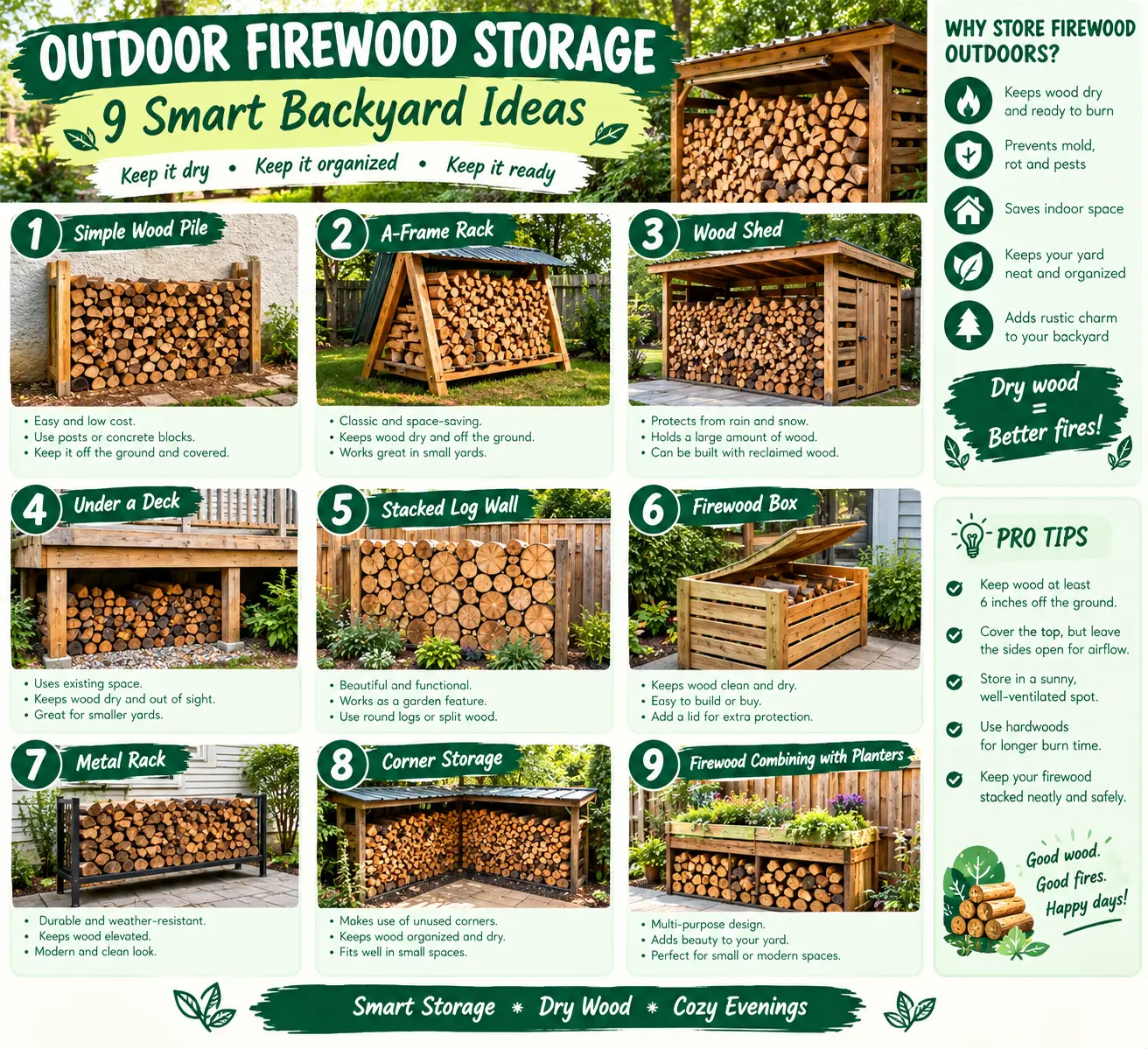
- Keep firewood raised above soil and standing water.
- Allow airflow through the sides of the stack.
- Protect the top from rain and snow without sealing the pile.
- Avoid stacking firewood directly against the house or shed.
- Separate kindling from larger logs so everything stays easier to use.
- Make the rack stable enough that loaded logs cannot push the frame over.

Why This Firewood Storage Idea Works
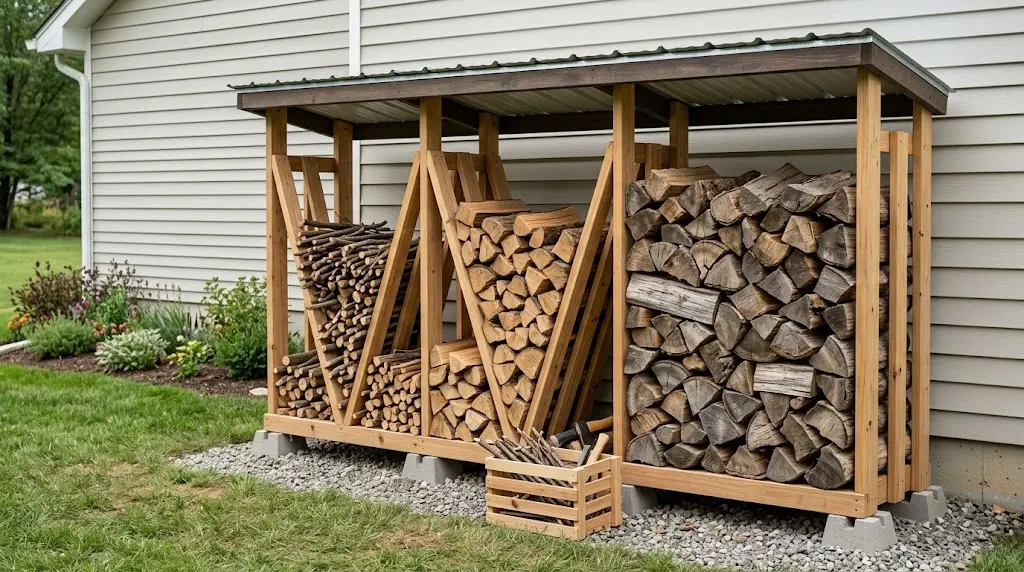
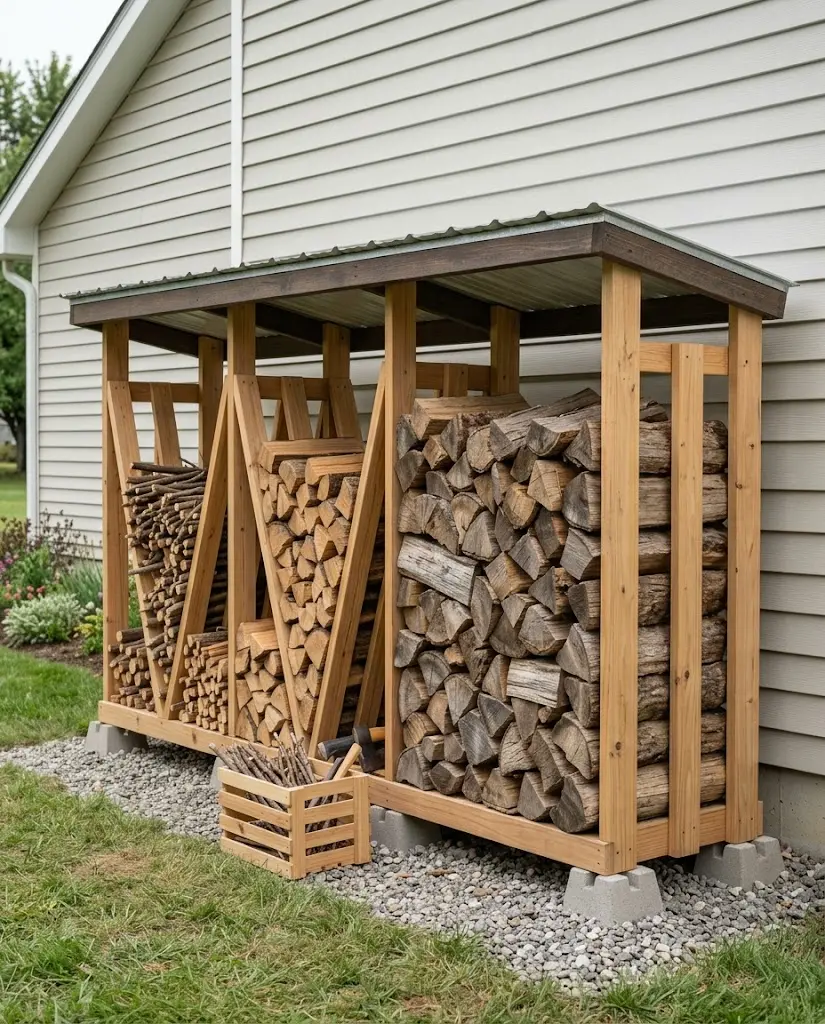
The inspiration image takes a messy pile of branches, boards, and logs and turns it into three simple storage zones.
The angled sides create deep V-shaped compartments. Thin sticks can go in one section, medium rounds in another, and larger firewood in the third.
That organization is genuinely useful because the materials you use to start a fire are different from the larger pieces that keep it burning.
But I would change two things before copying the setup exactly.
First, I would move the racks away from the building wall. Second, I would add top protection that keeps rain off while leaving the sides open for airflow.
University of Illinois Extension recommends keeping outdoor firewood off the ground and about 3 feet from structures when possible. Damp firewood stacked against a building is more attractive to termites, carpenter ants, and other insects.
Better version of the Pinterest idea: Keep the divided V-shape, elevate the wood, move the rack away from the house, and add a small roof or top cover that protects the stack without trapping moisture.
9 Outdoor Firewood Storage Ideas
1. Build a Three-Section Firewood Rack
The three-section layout shown in the image is useful when you regularly burn wood.
Use one compartment for thin dry kindling, one for medium splits, and one for full-size logs.
This prevents tiny sticks from disappearing underneath heavy firewood and makes it much easier to grab the right fuel in bad weather.
You do not need three equal compartments. Make the main firewood section larger because you will usually store much more fuelwood than kindling.
2. Use an Angled V-Shaped Rack
An angled frame naturally directs logs toward the center instead of letting them roll outward.
This can be especially useful for short branches and irregular rounds that do not form a tidy traditional stack.
The rack still needs a wide, stable base. Logs are heavy, and a tall narrow structure can become unstable as one side is loaded or emptied.
Test the frame before filling it completely and make sure the supports cannot spread apart under load.
3. Raise the Firewood Off the Ground
This is one of the most important improvements you can make.
Firewood that sits directly on soil stays wetter, dries more slowly, and is easier for insects and decay organisms to reach.
University of Illinois Extension specifically recommends stacking firewood off the ground. Penn State gives the same general guidance for reducing carpenter ant problems.
Concrete blocks can work as part of a simple elevated base when they are placed on stable ground and support the rack securely.
The goal is not to raise the wood several feet. Even a modest air gap under the bottom layer is much better than leaving logs directly in damp soil.
4. Add a Roof Instead of Wrapping the Pile
Once firewood is dry, repeated rain and snow can make it wet again.
A simple roof, plywood top, or properly positioned tarp can protect the upper surface.
But do not tightly wrap the entire woodpile in plastic.
The sides should remain open enough for air to move through the stack so moisture can escape.
Illinois Extension recommends covering seasoned firewood from above while still allowing airflow around the wood.
5. Keep Firewood Away From the House
The image places the racks almost directly against an exterior wall.
I would not copy that part.
Firewood can shelter spiders, wood-boring beetles, carpenter ants, termites, and other organisms.
Illinois Extension recommends keeping stacks at least about 3 feet from structures when practical. University of Minnesota and Penn State also recommend storing firewood away from buildings.
The space behind the rack also improves airflow and gives you room to inspect the exterior wall for moisture or pest activity.
6. Make a Separate Kindling Bin
The small wooden crate in the inspiration image is a simple idea worth keeping.
Very small dry sticks can fall through a larger rack or become buried under heavy logs.
A dedicated ventilated crate keeps the smallest fuel together and lets you carry an entire load of kindling to the fire when needed.
Keep the crate dry and avoid packing damp leaves or fresh green twigs into it, because those materials can hold moisture against the dry kindling.
7. Leave Space Between Rows of Wood
Air movement helps firewood season.
A rack that is packed so tightly that no air can move through it may look efficient, but it can slow drying.
Split larger pieces and stack them loosely enough that air can reach more than the outer surface.
Illinois Extension recommends stacking split firewood in ways that allow air circulation through the pile.
8. Keep the Rack Close Enough to Use, but Not Too Close
A firewood rack at the far end of a large property may be technically tidy but annoying every winter night.
Choose a location that is reasonably convenient to the fireplace, wood stove, or fire pit while still respecting pest, moisture, and fire-safety considerations.
A garden path or firm stepping surface between the rack and the house is useful during rain or snow.
If the firewood is mainly for a backyard fire feature, FarmSolo’s cinder block outdoor seating guide explains why the fire pit and surrounding seating should be planned before permanent patio features are built.
9. Build a Small Day-Use Rack Near the Door
You do not need the entire season’s firewood beside the house.
Keep the main pile in a properly ventilated storage area away from the structure and bring a smaller amount closer only when you expect to burn it soon.
Illinois Extension recommends bringing only a small amount of firewood indoors at a time because insects living in the wood can become active after warming up inside.
A small covered day-use rack can provide convenience without putting the main woodpile against the home.
How Far Should Firewood Be From the House?
There is no reason to keep the main woodpile pressed against the siding.
University of Illinois Extension recommends trying to keep outdoor firewood stacks at least about 3 feet from structures.
University of Minnesota gives broader advice to store firewood as far from buildings as practical, especially when carpenter ants are a concern.
The goal is to create a break between a potential insect shelter and the building while also improving airflow around the stack.
If local fire regulations, wildfire conditions, or your insurance policy require a larger separation, follow those requirements instead.
Simple rule: Keep the main firewood stack off the ground, away from the building, protected from rain above, and open enough on the sides to dry.
Should Firewood Be Completely Covered?
No.
Protecting seasoned firewood from rain is useful, but sealing the entire stack can trap moisture.
A small roof is often easier to manage than a tarp because you do not have to remove it every time you take wood.
If you use a tarp, cover mainly the top and allow the sides of the stack to breathe.
The right balance is simple: keep new water out while allowing existing moisture to escape.
Why Dry Firewood Matters
Wet wood wastes energy because part of the fire’s heat has to evaporate moisture before the wood can burn efficiently.
Illinois Extension notes that dry seasoned firewood produces more useful heat than green wood and that burning unseasoned wood indoors creates more smoke and can contribute to creosote buildup.
That is why a good firewood rack is not just outdoor organization.
It is part of the seasoning and storage process.
Does Firewood Attract Termites?
Firewood can provide suitable conditions for termites when it sits in contact with the soil.
Illinois Extension notes that termites nesting in the ground can tunnel into firewood stacked directly on the ground.
Carpenter ants are also more likely to use damp, rotting wood.
That does not mean every outdoor log contains a dangerous infestation.
It does mean that raising the pile, allowing wood to dry, and keeping the stack away from the house are simple precautions worth taking.
Do Not Spray Firewood With Insecticide
If you notice insects in the woodpile, do not automatically spray the logs.
University of Illinois Extension specifically advises against applying pesticides to firewood because treatments may not reach insects inside the wood and harmful fumes could be produced when treated wood is burned.
Instead, improve storage conditions: keep the wood dry, elevated, away from the structure, and bring only a small amount inside when you need it.
Do Not Move Firewood Long Distances
Firewood can move invasive insects and diseases from one area to another.
Illinois Extension notes that firewood movement has helped spread invasive pests because insects can travel hidden inside logs.
Use locally sourced firewood and follow any state, provincial, park, or forestry restrictions that apply where you live or travel.
This is especially important when taking firewood to campgrounds or moving wood between regions.
V-Shaped Rack vs. Traditional Firewood Rack
| Rack style | Best feature | Main limitation |
|---|---|---|
| V-shaped divided rack | Excellent for sorting irregular logs and kindling | Uses more wall width and needs stable angled supports |
| Traditional horizontal rack | Simple and space-efficient | Small branches can become mixed with larger logs |
| Covered woodshed | Best weather protection for a larger supply | More materials and construction |
| Small porch rack | Convenient for short-term use | Should not become the main season-long woodpile against the house |
Common Outdoor Firewood Storage Mistakes
- Stacking logs directly on soil. The bottom layer stays wetter and is easier for insects and decay organisms to reach.
- Putting the main pile against the house. Leave separation between firewood and structures.
- Wrapping the entire pile tightly in plastic. Protect the top while allowing side airflow.
- Mixing tiny kindling with large logs. Separate small fuel so it stays easy to find.
- Using a rack that becomes unstable when one side is empty. Design the frame for uneven loading.
- Storing green wood as if it is already seasoned. Fresh wood needs time and airflow to dry.
- Bringing a large pile indoors for winter. Bring only what you expect to burn soon.
- Spraying logs with pesticide. Do not burn chemically treated firewood.
- Moving firewood long distances. Hidden pests can travel with it.
Outdoor Firewood Storage FAQ
Should firewood be stored off the ground?
Yes. Raising firewood above the soil helps it dry faster and makes it less accessible to termites, carpenter ants, and moisture-related decay.
Can firewood be stored against the house?
It is better to keep the main stack separated from the building. Illinois Extension recommends about 3 feet of separation when practical, while other Extension guidance generally advises storing firewood well away from structures.
Should outdoor firewood be covered?
Protect seasoned firewood from rain and snow above, but keep enough of the sides open for airflow. Completely wrapping the stack can trap moisture.
Is it okay to use concrete blocks under a firewood rack?
Concrete blocks can help lift a rack off the ground when they are placed on a stable, level base and the rack is properly supported. Do not rely on loose or tipping blocks under a tall heavy stack.
Does firewood attract bugs?
Many insects and other small animals can live in or around firewood. Most are nuisance hitchhikers rather than insects that will immediately infest a dry home, but keeping the pile dry and away from buildings reduces problems.
How much firewood should I keep indoors?
Bring in only a small amount that you expect to burn soon. Wood stored indoors for longer periods gives insects hiding in the logs more time to warm up and emerge.
Is a V-shaped firewood rack better?
Not automatically. Its main advantage is organization. It is particularly useful for separating irregular branches, kindling, and larger logs. A traditional horizontal rack can be more space-efficient for uniform split firewood.
Organize the Wood, but Keep It Dry First
The Pinterest before-and-after works because it transforms an untidy pile into an organized system.
The three compartments make sense. The angled sides are useful. The separate kindling crate is practical.
But organization is only half of good firewood storage.
Keep the stack off the soil. Give air room to move through it. Protect the top from rain. Leave separation from the building. Bring only a small amount inside at a time.
With those changes, a simple rack like this can do more than make the backyard look cleaner. It can help keep your firewood drier, easier to use, and less attractive to pests.