
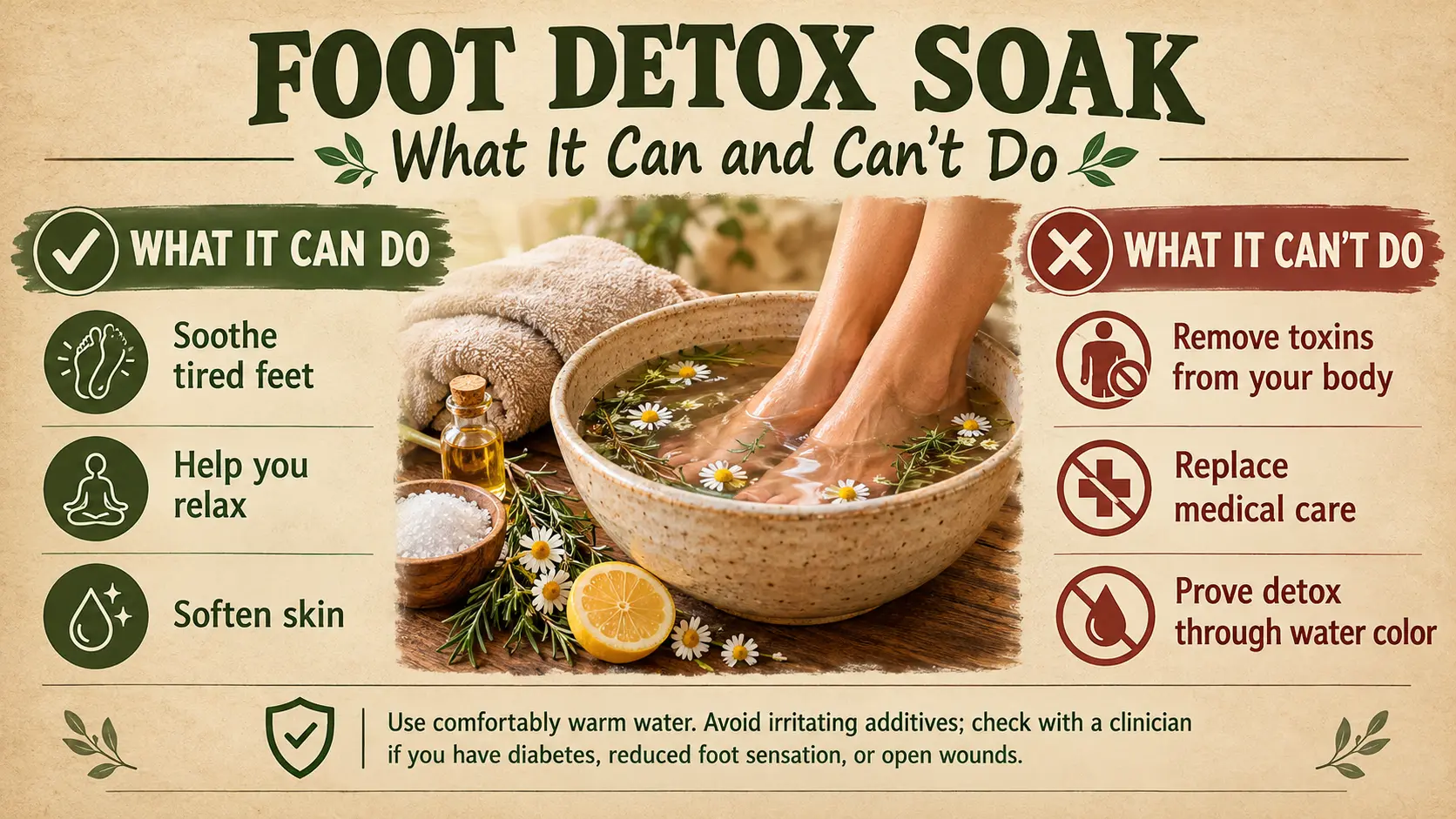
A warm foot soak can feel relaxing after a long day, but it does not “detox” your body through your feet. Epsom salt, apple cider vinegar, baking soda, and essential oils are often combined in viral foot-soak recipes, yet many of the claims attached to them go beyond the evidence. If your goal is simple warmth and relaxation, a much simpler routine is usually enough.
Quick reality check
- A foot soak has not been shown to pull toxins out of your body.
- Warm water may feel soothing, but comfort is not the same thing as detoxification.
- Epsom salt contains magnesium, but meaningful magnesium absorption through skin is not well established.
- Vinegar can irritate skin and is not necessary for a relaxing soak.
- Baking soda and vinegar react with each other instead of creating a stronger detox mixture.
- Essential oils can irritate sensitive skin.
- People with diabetes, neuropathy, poor circulation, or foot wounds should be especially cautious with soaking.

Do Foot Detox Soaks Actually Remove Toxins?
There is no good evidence that soaking your feet in water pulls toxins out of your bloodstream or organs.
Your body already has systems that process and remove waste, including the liver, kidneys, lungs, digestive system, and skin.
The National Center for Complementary and Integrative Health says research on commercial detox and cleansing programs is limited and does not provide compelling evidence that they remove toxins from the body.
Cleveland Clinic reaches a similar conclusion specifically for foot detox products: there is no valid scientific evidence showing that toxins are drawn through the feet.
That does not mean sitting with your feet in comfortably warm water is pointless.
You may simply enjoy the warmth, quiet time, and temporary softening of dry skin. Those are reasonable comfort goals. They just should not be confused with medical detoxification.
Better way to describe it: Call it a relaxing warm foot soak, not a body detox. That keeps the claim accurate while still giving readers a simple self-care idea after gardening, walking, or working outside.

What Does Epsom Salt Really Do?
Epsom salt is magnesium sulfate.
People often add it to bathwater with the idea that magnesium passes through the skin and then relaxes muscles or corrects a magnesium deficiency.
That explanation sounds simple, but the science is not strong enough to support it.
Cleveland Clinic notes that there are no definitive studies showing that magnesium from an Epsom salt bath is absorbed through the skin in amounts large enough to correct a deficiency.
For a healthy person who enjoys the feel of an occasional Epsom salt soak, that does not automatically make the experience harmful.
Just think of the salt as an optional bath ingredient rather than a medicine or a detox treatment.
Does Epsom Salt “Pull Toxins” Through Your Feet?
No convincing evidence shows that it does.
The fact that Epsom salt dissolves in warm water does not mean it creates a pathway that pulls harmful substances out of the bloodstream.
Likewise, cloudy water after a soak is not proof that toxins left the body. Water can change appearance because of salts, skin oils, dead skin, dirt, bath products, or chemical reactions between ingredients.
What Happens When You Mix Baking Soda and Apple Cider Vinegar?
The Pinterest recipe combines both.
That creates a familiar acid-base reaction.
Vinegar contains acetic acid, while baking soda is sodium bicarbonate. When they meet, they react and release carbon dioxide gas.
The bubbles can make the mixture look active or powerful, but fizzing is not evidence that toxins are being removed from your feet.
The reaction also changes the chemistry of both ingredients, so combining them does not simply give you “the benefits of vinegar plus the benefits of baking soda.”
Is Apple Cider Vinegar Safe in a Foot Soak?
Vinegar is frequently promoted online for foot odor, fungal infections, cracked skin, and “detoxing.”
That does not make it harmless.
Apple cider vinegar contains acetic acid and can irritate skin. Poison Control warns that prolonged vinegar contact can cause skin injury, including chemical burns.
Cleveland Clinic also notes that household ingredients such as vinegar may irritate sensitive skin and that many popular foot-soak remedies lack good evidence.
For a basic relaxation soak, there is no need to add vinegar at all.
What About Baking Soda?
Baking soda is another common DIY foot-soak ingredient.
It may change the pH of the water and can have a drying effect on skin.
But that does not make it a proven treatment for fungus, body toxins, poor circulation, or other medical problems.
Cleveland Clinic specifically warns that baking soda can dry the skin and should not be treated as a proven cure for athlete’s foot.
If your goal is only relaxation, leaving it out keeps the routine simpler.
Does Lavender Oil Make the Soak Safer or More Effective?
Lavender is mainly added for fragrance and the relaxing atmosphere people associate with its smell.
It does not turn a warm-water foot bath into a detox treatment.
Essential oils are concentrated plant products, and topical lavender products can cause allergic skin reactions in some people.
Do not assume that several drops of undiluted essential oil floating on water are automatically gentle just because the product comes from a plant.
If you want fragrance, a product specifically formulated and labeled for bath or skin use is easier to use safely than improvising with concentrated essential oil.
Simple is enough: For most healthy adults who simply want a relaxing experience, comfortably warm water is the main ingredient. Epsom salt can be optional if your skin tolerates it. A foot bath does not need four different household products to feel pleasant.
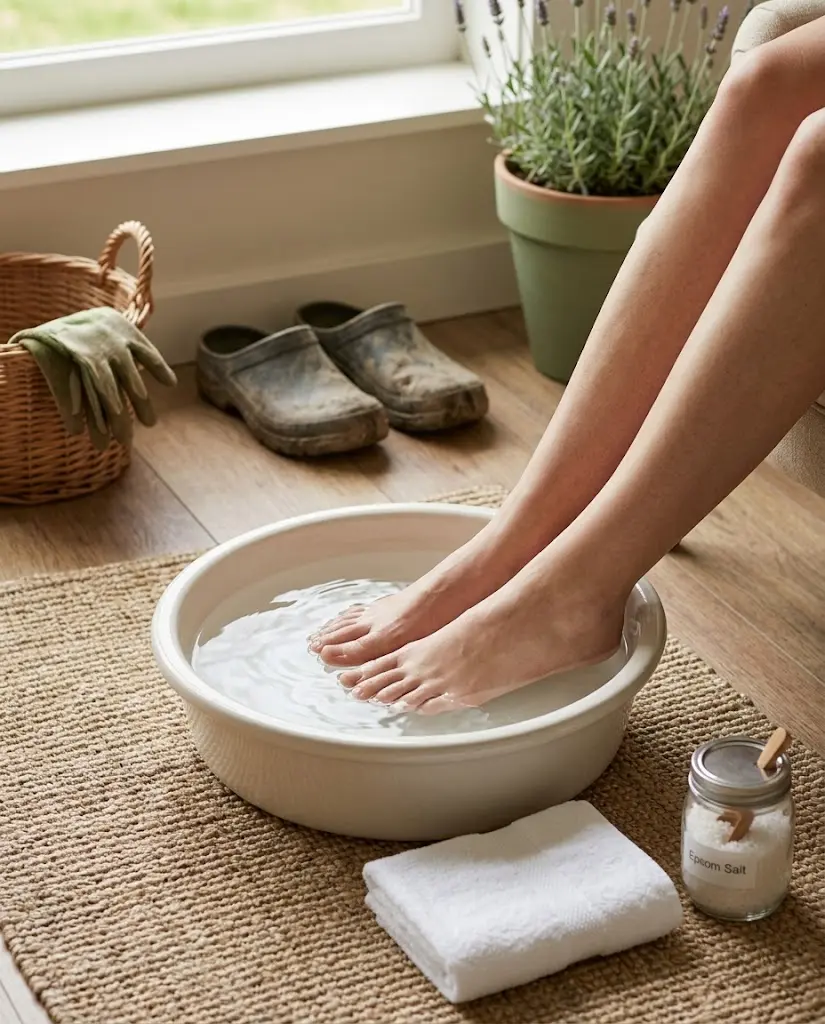
A Simpler Warm Foot Soak Routine
If you are a healthy adult and simply enjoy soaking tired feet after gardening, walking, or standing for a long time, keep the routine simple.
- Use a clean basin large enough for your feet.
- Fill it with comfortably warm water, not very hot water.
- If you enjoy Epsom salt and your skin tolerates it, use the product according to its label instead of assuming more is better.
- Skip vinegar, baking soda, and concentrated essential oils unless you have a specific reason and know they are appropriate for your skin.
- Keep the soak brief rather than leaving your feet wet for a long period.
- Stop immediately if you feel burning, stinging, itching, or irritation.
- Dry your feet carefully when you finish, especially around the toes.
The purpose of this routine is comfort, warmth, and a few quiet minutes at the end of the day.
It is not intended to treat an infection, remove toxins, correct poor circulation, or replace medical foot care.
Can a Warm Foot Bath Boost Circulation?
Warmth can temporarily change blood flow near the skin, but that is very different from treating a circulation disorder.
The Pinterest graphic says the mixture “boosts circulation” as though that were a proven treatment benefit.
I would not make that claim.
If you have persistently cold feet, leg pain, numbness, swelling, wounds that heal slowly, or known circulation problems, do not depend on a DIY foot bath to fix the cause.
Can Foot Soaks Help Tired Feet?
They can feel good.
After hours of digging, walking, harvesting, standing at a workbench, or working around the homestead, sitting down with warm water can be a simple way to slow down.
But the feeling of relaxation does not prove that Epsom salt, vinegar, or another ingredient is treating the muscles or removing waste products.
The rest itself may be a big part of why the routine feels helpful.
That is similar to many old-fashioned self-care routines: sometimes warmth, rest, comfortable positioning, and taking a break matter more than the special ingredient.
Who Should Be Careful With Foot Soaks?
A warm foot soak is not appropriate for everyone.
People with diabetes need particular caution because diabetes can cause nerve damage and poor circulation. That can make it harder to feel excessive heat or notice small injuries.
The American Diabetes Association advises people with diabetes not to soak their feet and recommends washing them in warm water instead, then drying carefully.
Extra caution is also sensible if you have neuropathy, peripheral artery disease, open cuts, ulcers, unexplained swelling, active skin infections, or reduced sensation in your feet.
If you have an ongoing foot problem, use proper foot care or medical advice instead of experimenting with acidic or strongly scented home remedies.
Skip DIY soaking and get appropriate medical advice if you have a foot wound, spreading redness, significant swelling, drainage, severe pain, loss of sensation, or a problem that is not improving.
Can Foot Soaks Make Skin Problems Worse?
Yes.
Long or frequent soaking can dry the skin. Warm, moist conditions can also make some fungal problems harder to manage.
Cleveland Clinic warns that frequent soaking can increase moisture around the feet and may contribute to fungal problems such as athlete’s foot.
If the skin becomes itchy, cracked, red, painful, or irritated after a soak, stop using the mixture instead of adding another ingredient to it.
Viral Foot Detox Claims: What Holds Up?
| Viral claim | Better answer |
|---|---|
| “Detoxes the body” | There is no good evidence that a foot soak draws toxins out of your body. |
| “Boosts circulation” | Warmth can feel pleasant, but a foot soak should not be presented as treatment for circulation problems. |
| “Epsom salt replaces magnesium” | Meaningful magnesium absorption through skin has not been established. |
| “Vinegar cleans toxins from feet” | Vinegar is acidic and can irritate or burn skin when misused. |
| “Baking soda and vinegar work better together” | They chemically react and produce carbon dioxide; fizz is not evidence of detoxification. |
| “Lavender oil makes it safe and calming” | Lavender aroma may feel pleasant, but topical lavender products can cause allergic reactions in some people. |
| “100% natural means safe” | Natural substances can still irritate skin or interact with health conditions. |
Foot Detox Soak FAQ
Can you detox your body through your feet?
There is no convincing scientific evidence that toxins are pulled from the body through the feet during a soak. A warm foot bath may feel relaxing, but it should not be described as a detoxification treatment.
Does Epsom salt remove toxins?
No reliable evidence shows that Epsom salt draws toxins out through the skin. It dissolves into magnesium and sulfate in water, but meaningful magnesium absorption through the skin has not been firmly established.
Can you mix Epsom salt and apple cider vinegar?
People do combine them in DIY recipes, but there is no need to do so for a simple relaxation soak. Vinegar may irritate sensitive or damaged skin.
Should I mix baking soda and apple cider vinegar in a foot bath?
They react with each other and release carbon dioxide gas. The fizz does not mean the mixture is detoxing your feet or becoming medically more effective.
Can lavender oil go directly into foot-soak water?
Concentrated essential oil can irritate skin and does not mix evenly with plain water. If you want fragrance, use a product specifically formulated for skin or bathing and follow its label directions.
Can someone with diabetes soak their feet?
The American Diabetes Association advises people with diabetes not to soak their feet. Diabetes-related nerve damage and poor circulation can increase the risk of unnoticed burns, skin damage, infection, and slow healing.
What is the simplest foot soak after gardening?
If you are otherwise healthy and have intact skin, comfortably warm water may be all you need for a short relaxing soak. Dry your feet thoroughly afterward and stop if the soak causes irritation.
Keep the Relaxation, Drop the Detox Claim
The Pinterest recipe mixes Epsom salt, baking soda, lavender oil, and apple cider vinegar and presents the bowl as a way to detox the body.
That is the part I would leave behind.
If your feet are simply tired after a long day, comfortably warm water and a few quiet minutes may feel good enough on their own.
You do not need bubbling chemistry, acidic vinegar, concentrated fragrance, or a promise that toxins are leaving your body.
Simple self-care is still useful even when it is not a miracle cure.