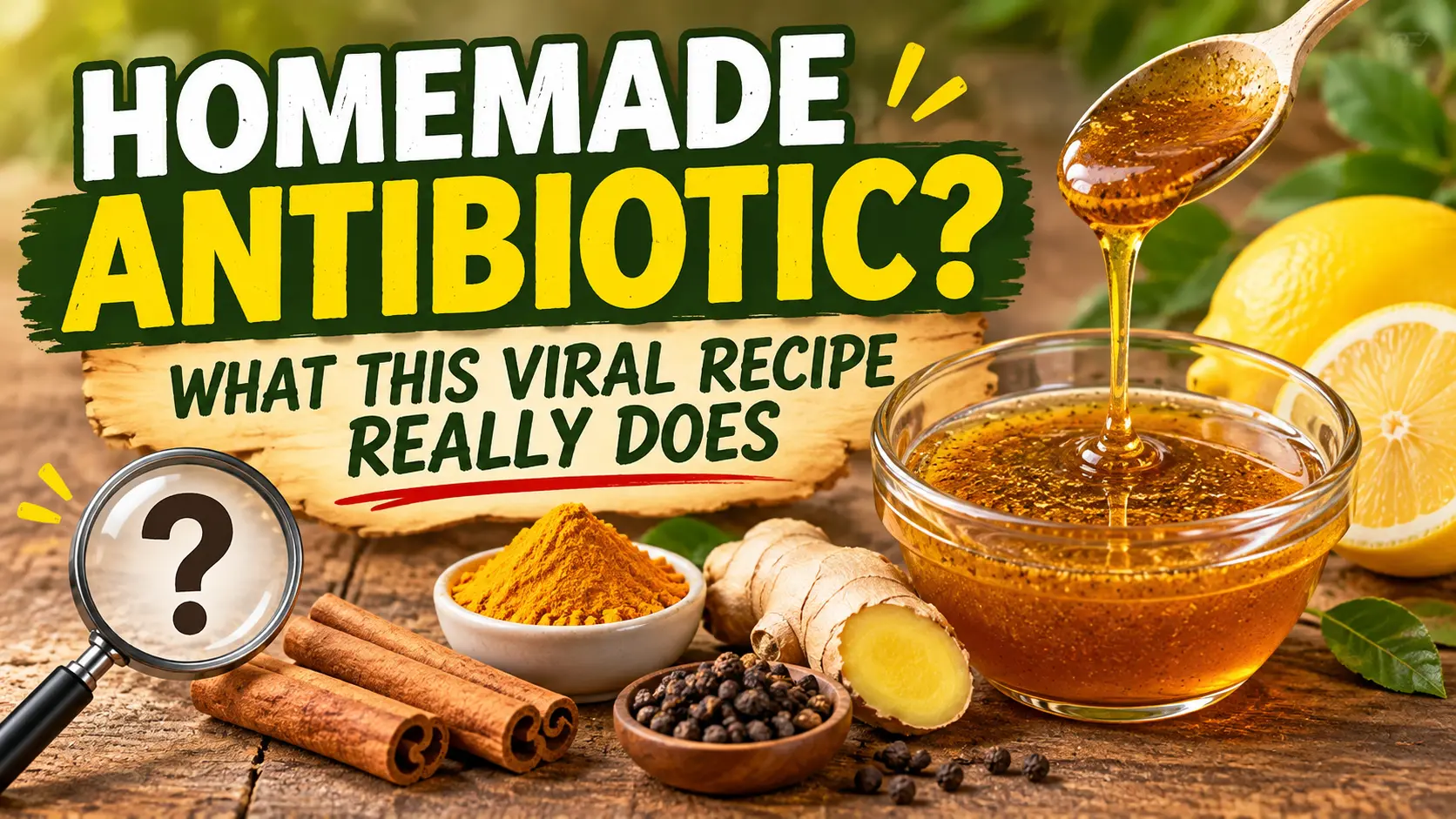
A viral Pinterest recipe combines honey, cinnamon, black pepper, ginger, turmeric, lemon zest, and vanilla and calls the result a “homemade antibiotic.” The ingredients are familiar, and several have been studied for different health effects. But that does not make the finished mixture an antibiotic or a proven treatment for an infection.
Quick answer
- This honey-and-spice mixture is not a medical antibiotic.
- It should not replace antibiotics prescribed for a bacterial infection.
- Honey may help soothe a cough in some people older than 1 year.
- Turmeric, ginger, cinnamon, and black pepper contain biologically active compounds, but that does not prove this recipe treats infections.
- There is no established medical dose of this mixture such as “1 teaspoon three times per day.”
What Is in the Viral “Homemade Antibiotic” Recipe?
The Pinterest graphic uses a mixture similar to this:
- Honey
- Cinnamon
- Black pepper
- Ground ginger
- Turmeric
- Lemon zest
- Vanilla
These are normal food ingredients. The problem is not that someone mixes them together. The problem is calling the mixture an antibiotic and giving it a medicine-like dosing schedule.
That wording can make a kitchen recipe sound as though it can replace medicines used to treat bacterial infections. The evidence does not support that conclusion.
Is This Really a Homemade Antibiotic?
No. “Antibiotic” has a specific medical meaning. Antibiotic medicines are used against certain bacterial infections.
The U.S. Centers for Disease Control and Prevention explains that antibiotics treat certain infections caused by bacteria. They do not work against viruses such as those that cause colds and flu.
Mixing several foods that contain interesting plant compounds does not transform them into an antibiotic drug.
Better description: Call this a honey-and-spice mixture, flavored honey, or culinary wellness-style recipe. Do not describe it as an antibiotic or a replacement for infection treatment.
What Does the Research Say About Honey?
Honey is probably the ingredient in this recipe with the clearest everyday use for respiratory symptoms.
Mayo Clinic notes that honey may be useful for coughs. That makes honey reasonable as a food or soothing ingredient for many adults and children older than 1.
But “may soothe a cough” and “treats a bacterial infection” are two very different claims.
If someone has pneumonia, strep throat, a urinary tract infection, or another infection that requires medical evaluation, swallowing honey does not replace appropriate diagnosis and treatment.
Important: Never give honey to a baby younger than 12 months. Honey can contain spores associated with infant botulism.
Does Cinnamon Act Like an Antibiotic?
Cinnamon contains many plant chemicals and has been studied extensively.
However, the National Center for Complementary and Integrative Health says research does not clearly support cinnamon for treating any specific health condition.
This is important because laboratory experiments showing that a plant compound affects microbes are not the same as clinical evidence showing that eating cinnamon treats an infection inside a person.
There is another reason not to treat cinnamon like medicine. Large or prolonged amounts, particularly of cassia cinnamon, can expose a person to more coumarin. That can be a concern for some people, including those with liver problems.
What About Turmeric?
Turmeric receives enormous attention online because it contains curcumin and related compounds.
Researchers have investigated turmeric and curcumin for several health conditions. But NCCIH says there still is not enough evidence to definitively conclude that turmeric or curcumin is beneficial for most of the health purposes for which it is promoted.
That certainly does not establish a honey-and-turmeric mixture as an antibiotic treatment.
Turmeric used in normal cooking is different from taking concentrated curcumin products. High-bioavailability curcumin products have also been linked to liver injury in some people.
Why Does the Recipe Include Black Pepper?
Black pepper contains piperine. It is often combined with curcumin because piperine can increase curcumin’s bioavailability.
Online recipes sometimes turn that fact into the claim that black pepper makes turmeric dramatically more medicinal.
That conclusion is too simple. Increasing absorption does not prove that a homemade mixture cures an infection, and changing absorption can also matter when medications are involved.
Is Ginger Useful?
Ginger has a long history as both food and traditional medicine.
Modern research has found evidence that ginger may help with some types of nausea. It has also been researched for menstrual cramps and other conditions.
Those findings do not establish ginger as an oral antibiotic for infections.
Ginger can also cause stomach discomfort, heartburn, diarrhea, or irritation in some people.
What About Lemon Zest and Vanilla?
Lemon zest adds aroma, acidity, and citrus flavor. Vanilla makes the strong spices easier to enjoy.
They are perfectly reasonable culinary ingredients. But adding them does not change the mixture into medicine.
This distinction is useful whenever you see viral natural-remedy recipes: an ingredient can be nutritious, flavorful, or interesting without being capable of treating disease.
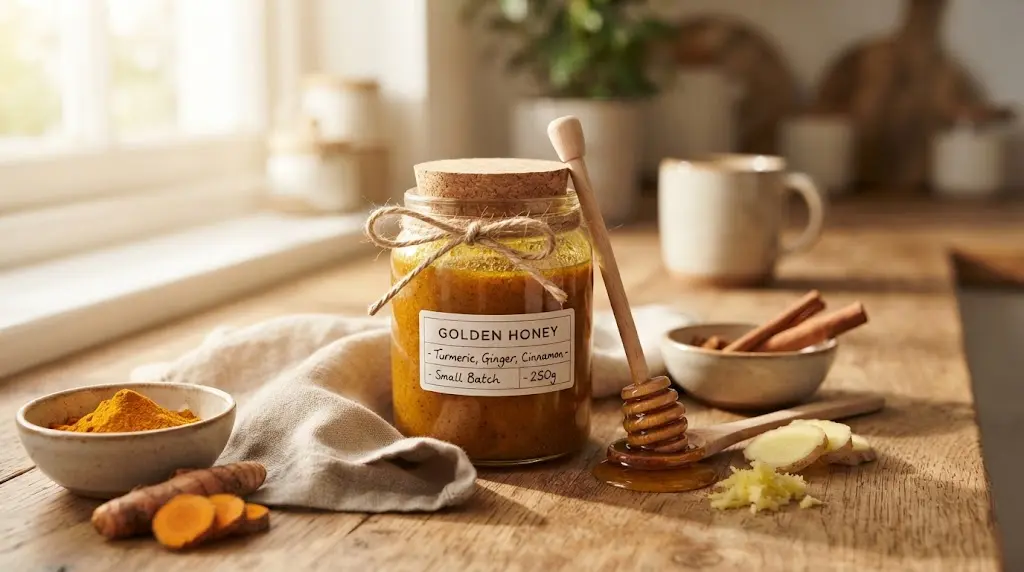
What About the “1 Teaspoon 3 Times a Day” Instruction?
This is one of the biggest problems with the viral graphic.
A specific schedule such as “one teaspoon three times per day” makes the recipe look like a tested medical treatment.
There is no established clinical dosing schedule showing that this particular homemade combination treats bacterial infections.
A Pinterest graphic should not be used to determine how an infection is treated.
Can You Still Make a Honey-and-Spice Mix?
Yes—if you enjoy these ingredients as food.
Honey, cinnamon, ginger, turmeric, lemon zest, pepper, and vanilla can be combined for flavor and used in ordinary culinary amounts.
For example, flavored honey can be stirred into tea, oatmeal, or other foods. There is no need to turn it into a medical dosing routine.
A safer way to think about it
Use the mixture because you enjoy the taste—not because you expect it to cure pneumonia, strep throat, a urinary infection, or another condition that may need medical treatment.
When a “Natural Antibiotic” Can Become Risky
The greatest risk may not come from the spices themselves. It can come from delaying appropriate care.
Someone who believes a homemade recipe is an antibiotic may wait while a bacterial infection becomes worse.
Seek appropriate medical care for severe or worsening symptoms, difficulty breathing, dehydration, confusion, severe pain, persistent high fever, or symptoms that concern you.
People who take medications, are pregnant, have liver disease, or have ongoing medical conditions should also be cautious about using concentrated herbal preparations regularly.
Viral Homemade Antibiotic Claims: Fact-Checked
| Claim | What the evidence says |
|---|---|
| “This is a homemade antibiotic.” | No. The recipe is a mixture of foods and spices, not an antibiotic medication. |
| “It can replace prescribed antibiotics.” | No. A bacterial infection that requires antibiotics needs appropriate medical treatment. |
| “Honey can help a cough.” | Reasonable evidence supports honey for soothing some coughs in people older than 1 year. |
| “Turmeric kills infections inside the body.” | Not established by clinical evidence for this homemade recipe. |
| “Cinnamon is a natural antibiotic.” | Laboratory findings do not prove that eating cinnamon treats bacterial infections in people. |
| “Take one teaspoon three times daily.” | There is no established medical dose for this mixture as an infection treatment. |
Homemade Antibiotic FAQ
Can honey work as an antibiotic?
Honey has interesting antimicrobial properties and certain specially prepared medical-grade honey products are used in some wound-care settings. That does not mean ordinary kitchen honey swallowed at home acts like an antibiotic drug for an internal bacterial infection.
Does turmeric replace antibiotics?
No. Turmeric should not be used as a replacement for an antibiotic when a clinician determines that an antibiotic is needed.
Can cinnamon and honey cure an infection?
There is not good clinical evidence showing that a homemade cinnamon-and-honey mixture cures bacterial infections.
Can I take the Pinterest recipe every day?
There is no medically established reason to follow the recipe’s three-times-daily schedule. Large or prolonged amounts of some ingredients may also be unsuitable for certain people or may interact with medications.
Is honey safe for children?
Honey should never be given to children younger than 1 year because of the risk of infant botulism.
Do antibiotics help colds and flu?
No. Colds and flu are caused by viruses, and antibiotics do not treat viral infections.
The Bottom Line
Honey, cinnamon, turmeric, ginger, black pepper, lemon zest, and vanilla can make an interesting food mixture.
But a collection of natural ingredients does not automatically become a medicine.
The viral Pinterest recipe should not be called a homemade antibiotic, and its “1 teaspoon three times daily” instruction is not an evidence-based treatment for infection.
Enjoy spices and honey as foods if they suit you. If you think you have an infection that may require treatment, get appropriate medical advice instead of relying on a viral recipe.
Related FarmSolo guide
Another common viral claim is that oils and beeswax can be turned into a “homemade Neosporin.” Read our fact-check: Homemade Neosporin? What This Viral Salve Gets Wrong.
Sources
- CDC — Healthy Habits: Antibiotic Do’s and Don’ts
- CDC — Manage Common Cold
- NCCIH — Turmeric: Usefulness and Safety
- NCCIH — Cinnamon: Usefulness and Safety
- NCCIH — Ginger: Usefulness and Safety
- Mayo Clinic — Honey
This article is for general educational information and is not a diagnosis or treatment recommendation. Seek appropriate medical care for symptoms of an infection or other health concerns.