A small roadside bakery stand can turn homemade bread, cookies, brownies, cinnamon rolls, and other baked goods into an inviting little farm business. With a simple roof, shelves, good signs, weather protection, attractive packaging, and an easy payment system, even a tiny booth can look polished and professional.
But there is more to a successful bakery stand than copying a beautiful Pinterest photo.
Before building shelves and hanging a sign, you need to think about food safety, local cottage-food rules, refrigeration, customer access, weather, pests, product labels, security, and how the stand will actually work on a busy baking day.
The basic idea
A good roadside bakery stand should be cute enough to make people stop, simple enough to restock quickly, and protected enough to keep packaged food clean and safe. The best design depends on what you are legally allowed to sell where you live.
What Is a Roadside Bakery Stand?
A roadside bakery stand is a small selling area located on a farm, homestead, residential property where permitted, or another approved location.
It can be as simple as a covered table or as elaborate as a miniature walk-up bakery with shelving, a counter, lighting, refrigeration, and a permanent roof.
Common products may include:
- Artisan bread
- Sourdough loaves
- Cookies
- Brownies
- Granola
- Muffins
- Quick breads
- Dry baking mixes
- Candy or confections
- Approved jams or preserves
Exactly what can be sold from a home bakery or roadside stand depends on your state and local regulations.
Check Your Cottage-Food Rules Before You Build
This should be step one—not the final task after your booth is finished.
Cottage-food laws in the United States vary considerably by state. They can control:
- Which homemade foods you may sell
- Where you may sell them
- Whether registration or a permit is required
- Required food-safety training
- Label wording
- Annual sales limits
- Whether online ordering is allowed
- Whether delivery or shipping is allowed
- Whether an unattended roadside stand is permitted
County and municipal zoning rules may add another layer. A state may allow cottage-food production while your local zoning rules restrict roadside retail activity, parking, signs, or permanent structures.
Before spending money: Check your current state cottage-food rules and contact the appropriate local health, agriculture, zoning, or licensing authority. Do not assume that a stand shown on social media would be legal in your location.
Start With Shelf-Stable Products
For many small cottage bakeries, shelf-stable baked goods are the easiest products to manage.
Examples commonly allowed under various cottage-food programs include products such as plain breads, cookies, brownies, certain cakes, candy, and other foods that do not need refrigeration for safety.
The exact list is different from state to state.
Be careful with refrigerated baked goods
Products containing cream, custard, cream cheese, certain dairy-based fillings, or other high-moisture ingredients may require refrigeration and may not qualify under a basic cottage-food exemption.
Cheesecakes, cream pies, custard-filled pastries, and some frostings are common examples of products that can trigger additional food-safety requirements.
Do not decide whether something is shelf stable simply because it looks fine at room temperature.
Do You Need the Mini Refrigerator Shown in the Inspiration Photo?
Maybe—but a refrigerator is not a way around cottage-food restrictions.
If your local rules do not allow a particular refrigerated food under your cottage-food exemption, putting it inside a small display refrigerator does not automatically make the product legal to sell.
You may need a different license, approved kitchen, or other regulatory approval.
For foods that are legally permitted and require cold holding, the FDA Food Code uses 41°F (5°C) or below as the standard cold-holding temperature for time/temperature control for safety foods.
Practical tip: If you use refrigeration, use a reliable thermometer and design the stand so the refrigerator is shaded, ventilated according to its manufacturer instructions, protected from rain, and supplied by safe electrical wiring.
Choose the Right Location
A beautiful stand in a bad location will struggle.
Look for a location that is:
- Legally approved for the activity
- Easy for customers to see
- Safe to enter and leave
- Away from dangerous traffic blind spots
- Firm and level underfoot
- Protected from mud
- Convenient for restocking
- Reasonably shaded during hot weather
Do not encourage customers to stop where they would block a road, shoulder, driveway, emergency access route, or neighboring property.
A Simple Roadside Bakery Stand Layout
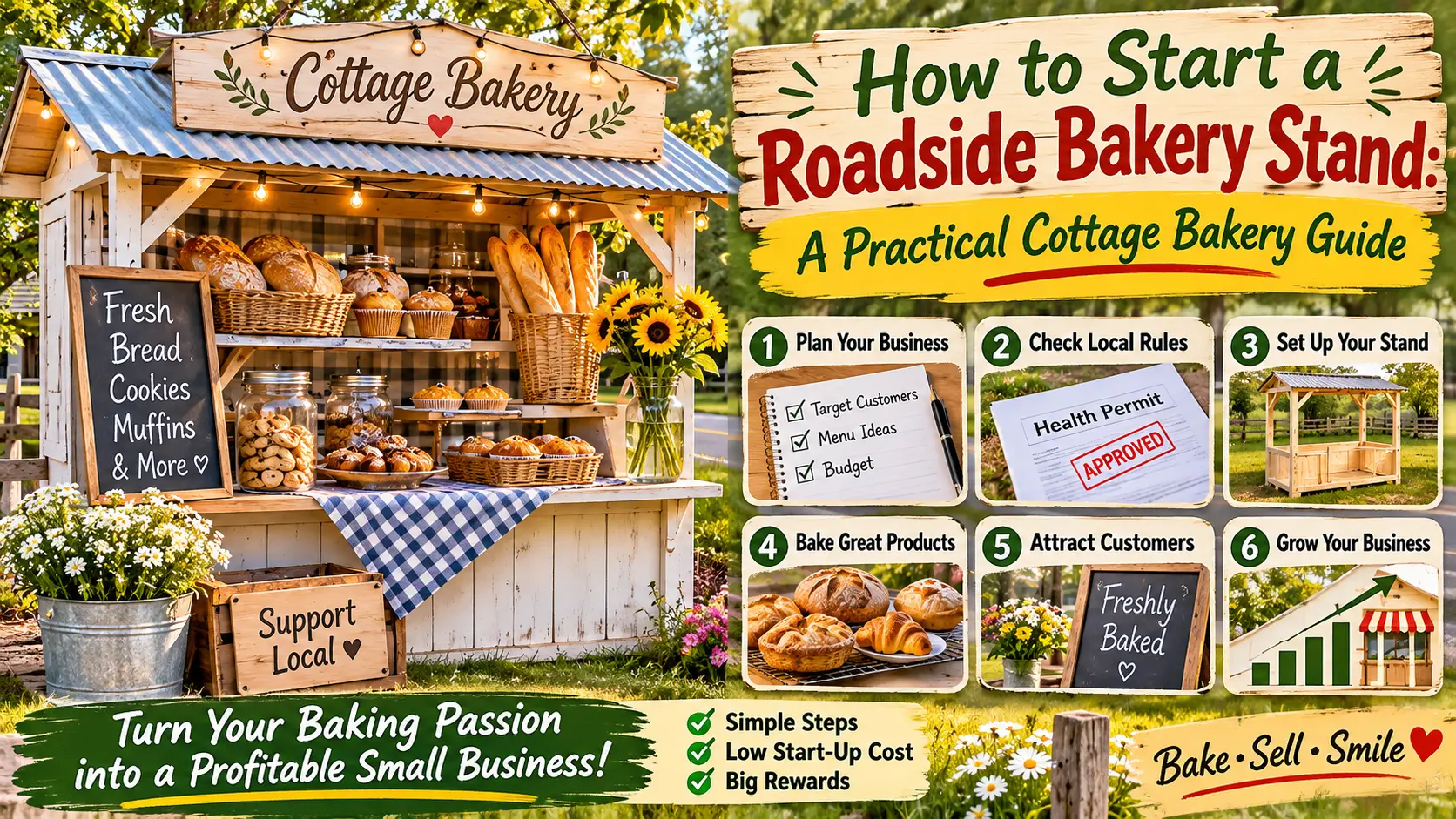
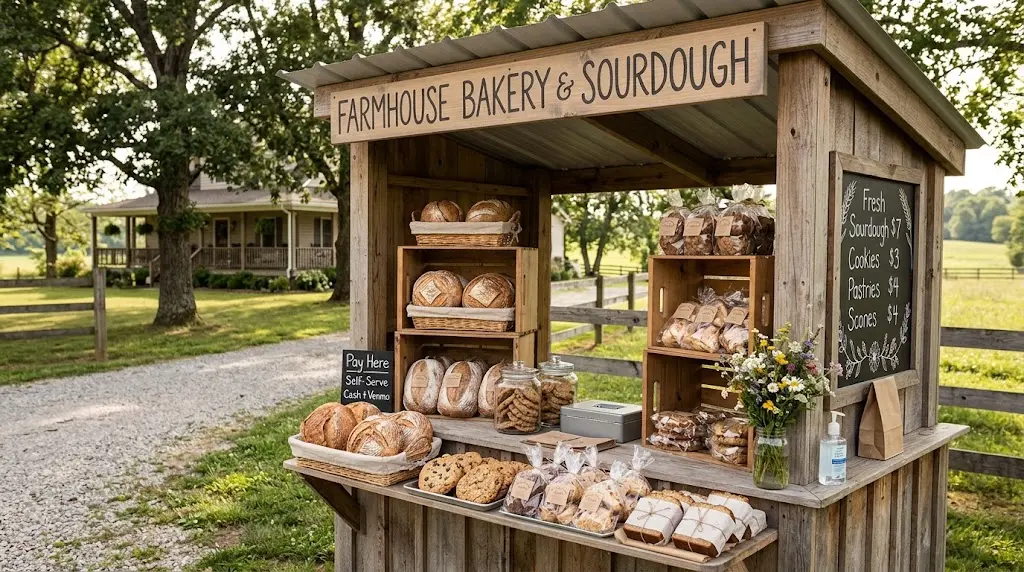
The inspiration photo works because it has clear visual zones.
| Area | Best Use |
|---|---|
| Top sign | Business name and what you sell. |
| Upper shelves | Packaged bread, dry goods, or attractive display pieces. |
| Eye-level shelf | Best sellers and clearly labeled prices. |
| Counter | Checkout information, bags, payment QR code, or staffed transaction area. |
| Lower storage | Backup packaging and supplies in closed, clean storage. |
| Side sign | Menu, hours, payment instructions, or sold-out information. |
Build a Roof With Real Weather Protection
The little corrugated roof in the Pinterest design is more than decoration.
A good bakery stand roof should help protect products and customers from:
- Direct sunlight
- Rain
- Dripping water
- Falling leaves
- Bird droppings
- Dust and debris
Use enough overhang that normal rain does not immediately blow onto your shelves.
The roof should slope away from the front counter so runoff does not fall onto customers or packaged food.
Protect Food From Dust, Pests, and Customers
Outdoor food display needs more protection than an indoor kitchen shelf.
The FDA Food Code emphasizes protecting displayed food from contamination. An outdoor setting adds wind, insects, dust, animals, moisture, and customer handling to the equation.
For a small bakery booth, individually packaged products are often much easier to protect than open trays of bread, cookies, or pastries.
Good display habits include:
- Package baked goods before displaying them.
- Keep food off the ground.
- Use closed containers for backup inventory.
- Keep pets and livestock away from the stand.
- Remove damaged packages immediately.
- Protect products from rain and condensation.
- Clean display surfaces regularly.
- Do not leave food exposed overnight.
Make the Packaging Part of the Design
The bakery stand in the inspiration image looks attractive partly because the packaging is consistent.
You do not need expensive custom boxes.
A simple farmhouse look can come from:
- Clear food-safe bags
- Simple kraft bread bags
- Plain bakery boxes
- Matching labels
- Neutral paper bands
- Consistent typography
Packaging should first protect the product. Decoration comes second.
Do Not Forget Food Labels
Many cottage-food programs require specific information on each package.
Depending on your location, required information may include items such as:
- Product name
- Producer or business information
- Ingredient list
- Allergen information
- Net weight or quantity
- A statement explaining that the food was made in a home kitchen or other wording required by law
Never copy another state’s cottage-food disclaimer onto your labels. Use the exact requirements that apply where you sell.
Create a Menu Customers Can Understand in Seconds
People driving past a farm stand usually make quick decisions.
A simple menu board is more useful than a long decorative paragraph.
For example:
TODAY’S BAKES
Sourdough Loaves
Chocolate Chip Cookies
Cinnamon Rolls
Brownies
Granola
Seasonal Special
Put the prices directly next to each item whenever possible.
Should Your Bakery Stand Be Self-Serve?
An unattended honor-system bakery stand sounds ideal for a homestead because you do not need to sit beside it all day.
But first check whether your local rules allow unattended sales.
Some jurisdictions place restrictions on where cottage foods can be sold and whether the producer must be present.
If unattended sales are permitted, think about:
- Food tampering
- Weather exposure
- Insects
- Wildlife
- Payment theft
- Product theft
- Hot temperatures
- How often someone will inspect and restock the stand
Give Customers More Than One Way to Pay
Cash-only stands lose customers who no longer carry cash.
Where permitted and practical, you can combine:
- Cash
- Secure cash box
- Card reader
- QR-code payment
- Approved mobile payment service
Keep payment instructions large and simple. Customers should not need to message you just to figure out how to buy a loaf of bread.
Keep the Farmhouse Look Simple
The inspiration booth works because it has a consistent visual style rather than dozens of unrelated decorations.
A similar look can be created with:
- Warm white or cream siding
- Natural wood accents
- Galvanized metal roofing
- Simple black or dark green lettering
- Neutral gingham fabric used sparingly
- Wooden shelves
- Small chalkboards
- Herbs or flowers around the stand
- Warm outdoor-rated string lights
Avoid placing decorative plants where soil, water, pollen, or insects can contaminate packaged food.
Use Lighting Safely
Small string lights make a bakery stand look welcoming in the early morning or late afternoon.
If electricity is used outdoors:
- Use equipment rated for outdoor use.
- Keep connections protected from water.
- Do not create extension-cord trip hazards.
- Use appropriate electrical protection.
- Have permanent wiring installed correctly.
A refrigerator adds a much larger electrical load than decorative lighting, so plan electrical service before building the cabinet around it.
Build Shelves for Real Bakery Packaging
One easy mistake is building beautiful shallow shelves that do not actually fit your products.
Before cutting lumber, measure:
- Your largest bread bag
- Bakery boxes
- Cookie packages
- Jars
- Baskets
- Display trays
Leave enough height between shelves that products do not look crushed together.
Slightly raised front edges can also prevent packages from sliding off shelves.
Design for Cleaning, Not Just Photos
White wood, baskets, gingham fabric, chalkboards, and flowers look wonderful in a photo.
But your working surfaces should also be easy to clean.
Avoid:
- Raw splintered wood directly under food packages
- Deep cracks that trap crumbs
- Permanent fabric liners that stay damp
- Unsealed surfaces that absorb spills
- Decorations that block cleaning access
Make shelves removable if possible. The easier the booth is to clean, the more likely it will actually stay clean.
Plan for Hot Summer Days
A roadside booth can become much hotter than the outdoor air temperature when sunlight hits the roof and walls.
Heat can affect product quality even when the food is shelf stable.
Chocolate can melt. Frosting can soften. Bread can sweat inside packaging. Condensation can develop. Some products can become unsafe if they require temperature control.
Shade, airflow, shorter selling periods, and frequent restocking may work better than putting a full day’s inventory outside at sunrise.
What About Rain and Humidity?
Humidity can soften cookies, affect crisp baked goods, damage paper packaging, and create condensation problems.
Keep products sealed and use packaging suitable for the food you sell.
If heavy rain is expected, closing the stand for the day may be better than trying to protect food in an open-front booth.
A Practical Build List
Your exact materials will depend on the design, but a small permanent stand may use:
- Pressure-treated lumber where appropriate for structural outdoor use
- Exterior-rated framing lumber
- Exterior plywood or siding
- Corrugated roofing
- Exterior-grade screws
- Weather-resistant paint or finish
- Durable shelving
- Door or cabinet hinges
- Secure latches
- Outdoor-rated lighting if used
- Signage
- Food-safe storage bins
Follow applicable building and electrical requirements for your area, particularly if the stand is permanent or connected to power.
A Smart Build Order
- Check cottage-food, zoning, signage, and roadside-selling rules.
- Decide exactly which products you will sell.
- Choose a legal and safe location.
- Measure the packages and containers you use.
- Build a stable floor or base.
- Frame the walls and roof.
- Add weather protection.
- Install cleanable shelves.
- Add lockable storage where useful.
- Install approved electrical equipment if required.
- Create large, readable menu and payment signs.
- Set up a cleaning and restocking routine.
10 Roadside Bakery Stand Ideas That Actually Help Sales
1. Put bread where customers see it first
Large sourdough loaves create a strong visual focal point and immediately tell customers what kind of stand they found.
2. Use one large sign instead of five small ones
Drivers should understand your stand before they pass it.
3. Display today’s menu
Customers enjoy seeing that products are made in small batches and may change from day to day.
4. Keep prices visible
Hidden pricing creates unnecessary friction.
5. Create a best-seller shelf
Put your most popular bread, cookie, or seasonal product at eye level.
6. Sell bundles
A bread-and-cookie bundle or weekend breakfast box can make ordering easier when permitted by your cottage-food rules.
7. Add a sold-out sign
A simple reversible sign prevents customers from stopping when nothing is available.
8. Add your social handle
Customers who discover you on the road can follow future baking schedules and product announcements.
9. Keep decorations away from food
Use flowers around the structure instead of crowding food shelves with pots and watering cans.
10. Make restocking fast
Design the stand so you can carry a crate from your bakery area to the booth and restock everything in a few minutes.
7 Mistakes to Avoid
1. Building before checking the rules
A beautiful booth is useless if local zoning does not allow you to operate it.
2. Selling refrigerated food without understanding the requirements
Cottage-food exemptions often focus on foods that do not require refrigeration for safety.
3. Leaving baked goods uncovered
Outdoor dust, insects, customers, animals, and wind make open food display a poor choice.
4. Making the stand impossible to clean
Decorative baskets and fabrics should never prevent regular cleaning.
5. Ignoring afternoon sun
A shaded stand at 8 a.m. may be sitting in direct summer sun at 2 p.m.
6. Making customers guess how to pay
Post clear payment instructions and prices.
7. Copying a Pinterest design exactly
Use inspiration photos for style ideas, then redesign the booth around your products, climate, property, regulations, and customer flow.
Roadside Bakery Stand FAQ
Can I sell homemade baked goods from a roadside stand?
Possibly. Cottage-food and direct-sale rules vary by state, county, and municipality. Check the rules for your exact location before selling.
Do I need a permit for a bakery stand?
Requirements differ by location and business model. You may face cottage-food registration, food licensing, zoning, sign, building, sales-tax, or other requirements depending on where and what you sell.
Can I sell sourdough bread?
Plain shelf-stable breads are commonly included in cottage-food programs, but you still need to verify your state’s allowed-food list and labeling requirements.
Can I sell cinnamon rolls?
It depends on the recipe and local rules. A topping or filling that requires refrigeration can change how the product is regulated.
Can I leave the stand unattended?
Only if your local rules allow that sales method. You also need a plan for contamination, weather, security, temperature, restocking, and payment.
Should I put a refrigerator in the stand?
Only when it fits your legally permitted products and operating requirements. Refrigeration does not automatically make a product eligible for cottage-food sale.
What style works best for a farm bakery stand?
A simple farmhouse look works well: light siding, natural wood, a metal roof, clean shelves, restrained decoration, and one strong business sign.
The Bottom Line
A roadside bakery stand can be one of the most charming ways to sell small-batch baked goods from a farm or homestead.
The booth does not need to be large or expensive.
It needs to be easy to understand, easy to clean, weather protected, safe for food display, convenient to restock, and appropriate for the products you are legally allowed to sell.
Start with the rules and your product list. Then build the pretty farmhouse stand around those requirements—not the other way around.
That approach gives you a bakery stand that looks beautiful in photos but also works in the real world.
Sources
- U.S. Food and Drug Administration — FDA Food Code 2026
- National Agricultural Law Center — State Cottage Food Law Compilation
- Association of Food and Drug Officials — Cottage Food Regulatory Guidance
- University of Minnesota Extension — Cottage Food Guidance
- University of Minnesota Extension — Frosting and Dessert Fillings
Food business, licensing, cottage-food, zoning, and tax rules vary by location and can change. This article provides general educational information. Verify current requirements with the appropriate state and local authorities before producing or selling food.