A backyard fire pit seating area can become one of the most inviting spaces in a landscape, but the safest designs start with clearance, noncombustible surfaces, drainage, and access—not with chairs and flowers.
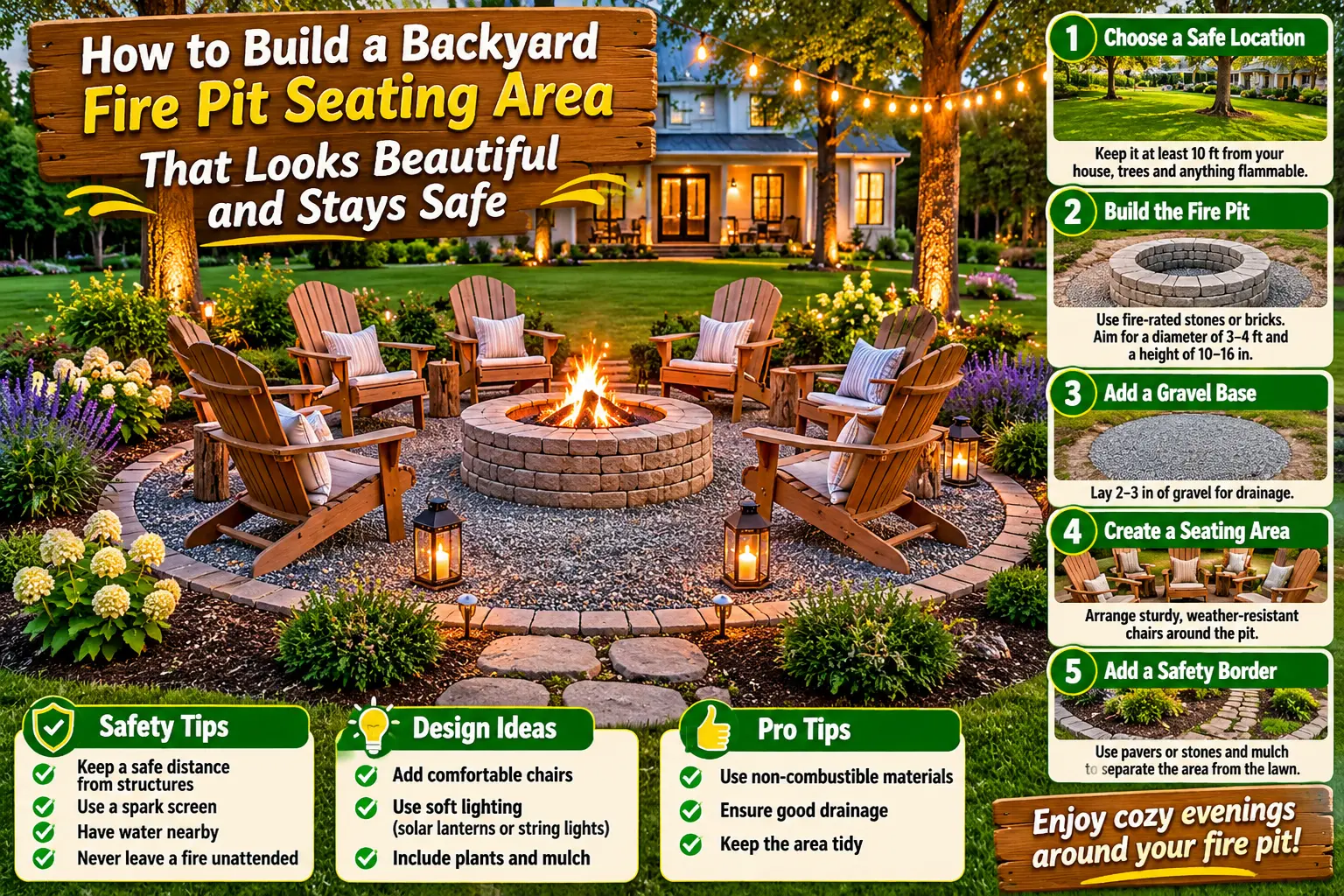
The Pinterest design uses a circular gravel seating area, a masonry fire pit, Adirondack chairs, stone edging, a stepping-stone path, low landscape lighting, and layered planting around the outside.
The overall layout is attractive and easy to recreate, but some details need extra care around an open flame, especially nearby trees, bark mulch, dry vegetation, overhanging branches, and the distance from the house.
Safety first: NFPA guidance says contained fire pits should be at least 10 feet from anything that can burn. Local fire codes can require more distance, so always check local rules before choosing the location.
1. Choose the Fire Pit Location Before Designing the Garden
The most important decision is not the shape of the patio. It is where the fire will sit.
Look for a location with generous clearance from:
- The house
- Decks and porches
- Sheds
- Fences made from combustible materials
- Tree trunks and low branches
- Dense shrubs
- Wood piles
- Propane storage
- Dry grasses
Do not force a fire pit into the prettiest corner if that corner does not have safe clearance.
2. Check Local Fire Rules First
Fire pit rules vary by city, county, neighborhood, drought conditions, and season.
Before construction, check whether your area regulates:
- Open burning
- Recreational fires
- Fire pit size
- Property-line setbacks
- Burn bans
- Spark screens
- Permits
A design that is acceptable in one community may not be permitted in another.
3. Use a Noncombustible Surface Around the Fire
The Pinterest area uses gravel, which is a practical choice around a fire pit.
Other suitable hardscape materials can include:
- Crushed stone
- Gravel
- Pavers
- Brick
- Concrete
- Natural stone
Avoid placing the fire pit directly over bark mulch, wood chips, artificial turf, wooden decking, or dry grass unless the product and local code specifically allow it.
4. Make the Seating Circle Large Enough
A common design mistake is making the circle look perfectly proportioned from above but leaving too little room around the chairs.
You need space for people to:
- Sit comfortably
- Pull chairs backward
- Walk behind occupied chairs
- Reach the path safely
- Keep an appropriate distance from the flame
Mark the full layout with garden paint or a hose before excavating.
5. Do Not Put Chairs Too Close to the Flame
Chair distance depends on fire pit size, fuel type, flame height, wind, and the chair material.
Leave enough room that people are not constantly leaning away from heat, and keep combustible furniture farther from the flame than noncombustible seating.
The seating radius should also leave a clear escape path rather than surrounding the fire so tightly that everyone must step around another chair to leave.
6. Prepare the Base Properly
The visible gravel is only the final surface.
A durable gravel seating area usually needs:
- Removal of grass and organic topsoil.
- Grading for drainage.
- A compacted aggregate base where needed.
- Edge restraint.
- A final layer of compactable gravel or decorative stone.
Without proper preparation, chair legs can sink, weeds can establish quickly, and the surface may become uneven.
7. Plan Drainage Before Adding Gravel
A circular depression can accidentally become a shallow basin.
Do not excavate the seating area lower than the surrounding lawn without giving stormwater somewhere to go.
The area should drain rather than hold standing water around the fire pit and chair legs.
8. Use Edging to Keep the Circle Crisp
The stone or brick ring around the Pinterest seating area gives the design a clean finished edge.
Edging helps:
- Keep gravel out of the lawn
- Keep grass from spreading into the seating area
- Define planting beds
- Make mowing easier
9. Keep Combustible Mulch Away From the Fire Zone
The landscaping in the inspiration photo uses dark mulch close to the seating circle.
Dry bark mulch and wood chips can burn.
Near the immediate fire zone, use noncombustible materials such as:
- Gravel
- Rock
- Pavers
- Stone edging
OSU wildfire guidance also recommends using hardscape and reducing continuous combustible mulch around fire-sensitive areas.
10. Watch Overhanging Tree Branches
The mature trees are one of the most beautiful features in the Pinterest image, but they deserve careful attention around an open flame.
Remove low, dead, or overhanging branches that could be exposed to sparks or rising heat.
Also remove dry leaves, twigs, and accumulated debris around the area before lighting a fire.
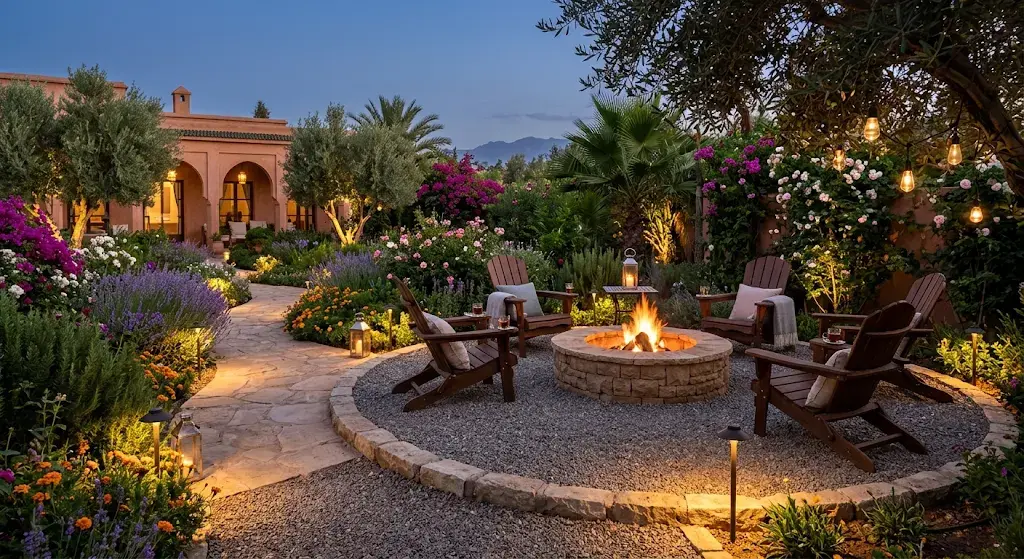
If you cannot achieve safe clearance from tree trunks, branches, fences, the house, or other combustible features, move the fire pit rather than trying to landscape around the risk.
11. Create a Clear Path to the Seating Area
The stepping-stone path in the Pinterest design makes the space feel connected to the house instead of isolated in the lawn.
For everyday use, a path should be:
- Stable
- Easy to see at night
- Wide enough for comfortable walking
- Free of loose trip hazards
- Usable while carrying drinks or firewood
Widely spaced stepping stones can look beautiful but may be less convenient for guests with limited mobility.
12. Use Lighting for the Path, Not for the Fire
Low-voltage landscape lights can make the route safer without overpowering the glow of the fire.
Good lighting locations include:
- Path edges
- Steps
- Changes in grade
- Outer planting beds
Avoid creating glare directly at seated eye level.
13. Keep Electrical Components Away From Heat
Landscape lights, extension cords, string-light wiring, and transformers should be installed according to their listing and local electrical requirements.
Do not route electrical cables through places where they can be damaged by heat, sparks, shovels, lawn equipment, or foot traffic.
14. Plant Outside the Immediate Fire Zone
The layered planting around the Pinterest circle helps the hardscape feel integrated into the landscape.
Use plants outside the immediate fire-clearance area rather than crowding vegetation against the pit.
Choose plants based on:
- Your climate
- Sun exposure
- Water needs
- Mature size
- Maintenance requirements
15. Avoid Dense Dry Plantings Beside the Pit
Ornamental grasses, dry seed heads, dead perennial stems, and accumulated leaves can become highly combustible when dry.
Keep vegetation healthy, spaced, and maintained rather than creating a dense ring of fuel immediately around the seating area.
16. Keep a Hose or Water Source Nearby
NFPA recommends having a hose, bucket of water, or shovel with dirt or sand available whenever an outdoor fire is burning.
Do not wait until an ember escapes to discover that your hose will not reach the fire pit.
17. Never Use Gasoline to Start the Fire
Never use gasoline or similar flammable liquids to start or revive a recreational fire.
Use appropriate fire-starting materials and follow the fire pit manufacturer’s instructions.
18. Avoid Fires on Windy or Very Dry Days
Wind can carry sparks and embers far beyond the seating circle.
If conditions are windy, extremely dry, or subject to a local burn restriction, skip the fire.
19. Keep Children and Pets Away From the Pit
NFPA recommends active supervision and a roughly 3-foot kid-free zone around campfires.
A physical seating ring can help establish a visual boundary, but adults still need to supervise children and pets while the fire is burning.
20. Keep the Fire Small
A backyard fire pit is not a bonfire pit.
Smaller fires are easier to manage and produce less intense radiant heat and fewer escaping embers.
21. Do Not Burn Trash or Treated Wood
Do not burn:
- Plastic
- Painted wood
- Pressure-treated lumber
- Construction debris
- Trash
- Aerosol containers
These materials can release harmful smoke or create dangerous fire behavior.
22. Extinguish the Fire Completely
Never leave the fire unattended, even when it looks almost finished.
Extinguish it completely before leaving the area and confirm that no hot embers remain capable of reigniting.
A Simple Backyard Fire Pit Layout
| Zone | Purpose |
|---|---|
| Center | Contained fire pit |
| Immediate ring | Noncombustible gravel, stone, brick or pavers |
| Seating ring | Chairs with safe clearance and walking space |
| Outer landscape | Maintained plants positioned outside fire clearance |
| Path | Stable connection back to the house |
What This Pinterest Design Gets Right
- Uses a generous circular seating layout.
- Places gravel around the fire pit.
- Creates an obvious path from the house.
- Uses edging to separate gravel and lawn.
- Adds low landscape lighting for nighttime access.
- Layers plants around the hardscape rather than filling the center with vegetation.
- Leaves enough space for multiple chairs.
What I Would Change
- Measure the exact fire-pit clearance from every tree and combustible feature.
- Keep bark mulch farther from the immediate fire zone.
- Prune low or overhanging branches.
- Use more noncombustible hardscape immediately around the pit.
- Confirm chairs cannot be pulled dangerously close to the flame.
- Keep a hose or water source within immediate reach.
- Check local fire restrictions before every burn during dry periods.
Backyard Fire Pit FAQ
How far should a fire pit be from the house?
NFPA guidance states that contained fires such as fire pits should be at least 10 feet from anything that can burn. Local codes or the manufacturer’s instructions may require greater clearance, so follow whichever requirement is more restrictive.
Can a fire pit go under trees?
Avoid locations with low or overhanging branches exposed to heat or sparks. If adequate clearance cannot be maintained, choose another location.
Is gravel good around a fire pit?
Gravel can make a useful noncombustible seating surface when the base is properly prepared and the material is stable enough for furniture and walking.
Can I put mulch around a fire pit?
Combustible mulch should be kept away from the immediate fire area. Use gravel, stone, pavers, or another noncombustible material close to the pit.
How many chairs should go around a fire pit?
The right number depends on the diameter of the seating area and the required clearance from the flame. Do not add so many chairs that circulation becomes difficult.
Do I need a fire extinguisher outside?
At minimum, keep an immediately available means of extinguishing the fire, such as a hose, bucket of water, or suitable fire-control equipment, and follow local fire-safety guidance.
The Bottom Line
The Pinterest design succeeds because it treats the fire pit as a destination rather than simply dropping a metal ring into the lawn.
The circular gravel pad, pathway, planting beds, chairs, and lighting all work together to create an outdoor room.
But the most important design feature is invisible in a beautiful photo: safe clearance. Start with distance from the house, trees, branches, fences, mulch, and other combustible materials. Then build the landscaping around that safe zone.
Sources
- National Fire Protection Association — Outdoor Fire and Campfire Safety Guidance
- Oregon State University Extension — The Home Ignition Zone
- Oregon State University Extension — Fire-Resistant Plants for Home Landscapes